Lean concepts about Operations management
ABC Production Analysis
The segmentation of items into groups based on demand: A items are high-volume, B items medium-volume and C items low-volume. It is used to decide how much inventory to hold and for which products.
Andon
A visual management tool that shows the status of operations in an area at a single location and signals when something abnormal occurs. See : Jidoka, Visual Management.
Automatic Line Stop
Ensures that a production process stops whenever a problem or defect occurs. On an automated line, this usually means installing sensors and buttons that automatically stop the line when an abnormality is detected. See: Error-Proofing, Fixed-Position Stop System, Jidoka.
Autonomation
See : Jidoka.
Batch and Queue
A mass-production approach to operations in which large lots of parts are processed and moved to the next process, regardless of actual need, where they wait in a queue. See : Continuous Flow, Lean Production, Overproduction, Push Production.
Brownfield
Production facilities usually managed according to the philosophy of mass production. Compare with : Greenfield.
Built-in Quality, Building in Quality
See: Jidoka.
Cell
A location where the processing steps for a given item take place immediately one after another, so that parts, documents, etc. can move in a flow very close to continuous, whether one unit at a time or in small batches, maintained throughout the complete processing sequence. See: Continuous Flow, Operator Balance Chart, Standardized Work.
Chaku-Chaku
A method of conducting one-piece flow in a cell in which the machines unload parts automatically, so that the operator (or operators) can carry a part directly from one machine to the next without stopping to unload it, thereby saving time and motion. See : Cell, Continuous Flow.
Changeover
The process of switching production from one product to another on a machine (for example, a press or an injection molding machine) or on a series of linked machines (an assembly line or cell) by changing parts, dies, fixtures, molds, etc. (Also known as setup.) Changeover time is measured as the time elapsed between the last part of the run just completed and the first good part after the changeover. See : Single-Minute Exchange of Die - SMED.
Continuous Flow
Producing and moving one item at a time (or a small batch of items) through a series of processing steps as continuously as possible, with each step making just what is requested by the next step. See : One-Piece Flow, Batch and Queue, Flow Production.
Cycle Time
The time required to produce a part or complete a process, as actually measured.
Demand Amplification
A tendency observed in multi-step processes, in which the production orders received by each upstream process are more erratic than the actual production or sales of the downstream steps. Also known as the Forrester Effect (after Jay Forrester of MIT, who first characterized this phenomenon mathematically in the 1950s) and the Bullwhip Effect. See: Build to Order, Heijunka, Level Selling.
Error-Proofing
Methods that help operators avoid mistakes in their work, such as choosing the wrong part, assembling a part incorrectly, forgetting a component, etc. Also known as poka-yoke (defect-proofing) or baka-yoke (foolproofing). See : Inspection, Jidoka.
Every Part Every Interval
The frequency with which each part is produced in a production process. See: Heijunka.
First In, First Out (FIFO)
The principle and practice of maintaining precision in the sequence of production and material movement, ensuring that the first part to enter a process or storage location is also the first part to exit. This ensures that stored parts do not become obsolete and that quality problems are not hidden in inventory. FIFO is a necessary condition for implementing a pull system. See: Kanban, Pull Production, Supermarket.
Five S
Five related terms, all beginning with the letter S, that describe workplace practices useful for visual management and lean production. The five Japanese terms are: Seiri: Separate needed items from unneeded ones - tools, parts, materials, documents - and discard the latter. Seiton: Arrange what remains, defining a place for everything and putting everything in its place. Seiso: Cleaning. Seiketsu: Standardization resulting from good performance in the first three Ss. Shitsuke: Discipline to keep the first four Ss going. See: Standardized Work.
Fixed-Position Stop System
A method of dealing with problems on production lines by stopping the line at the end of the work cycle, that is, at a set position, if a problem is detected and cannot be solved within the work cycle. See: Andon, Automatic Line Stop, Jidoka.
Articles
New infrastructure cycle will demand management maturity
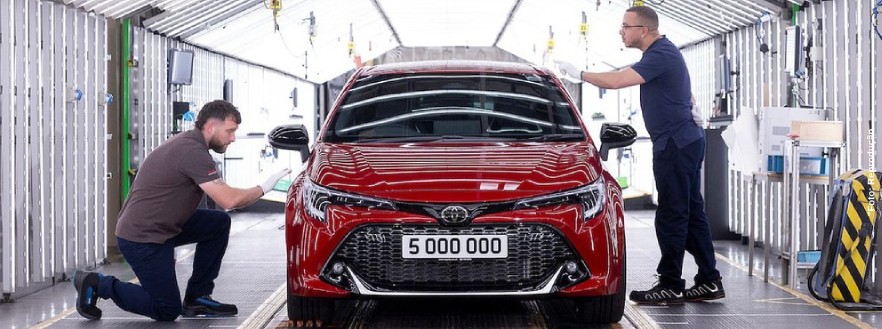
Toyota's 'Circular Factory' in Europe is an example of sustainability in practice
How to “tackle” middle-management weaknesses in civil construction
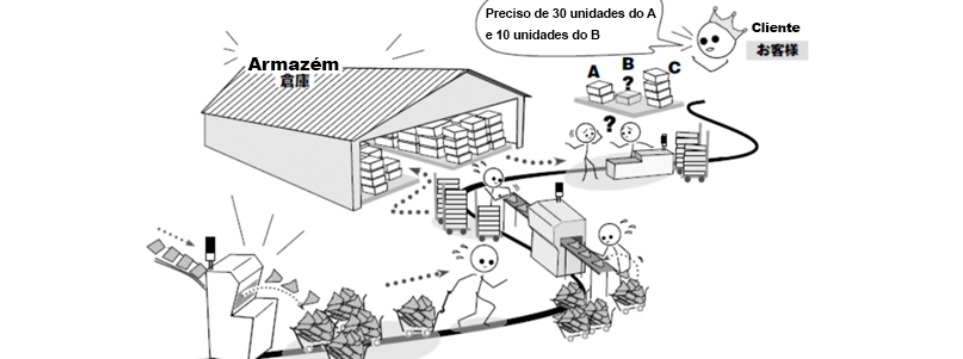
Pull production: the future of supply chains
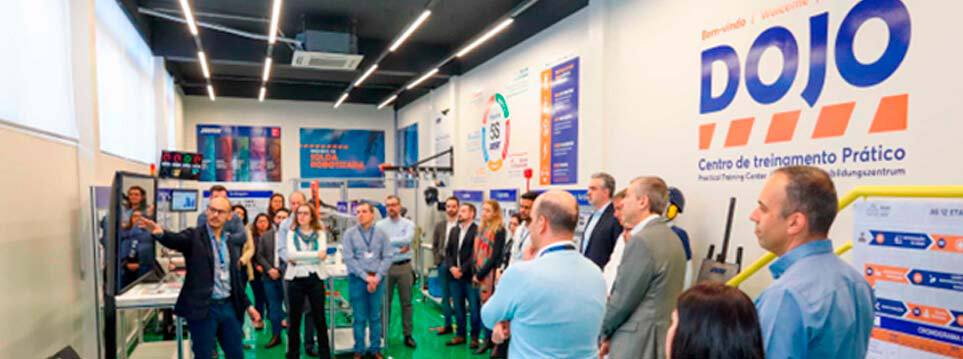
Dojos change minds
Key points highlighted by heavy construction at Lean Summit 2023 can improve builders' competitiveness
Read articleFacing and overcoming challenges with lean: more than lean construction
Ensuring deadlines and increasing revenue in mining projects
Consortium raised productivity by 18% and revenue by 32% with lean in residential gas network installation projects
Read articleLean integrates and optimizes every stage of EPC Projects - Engineering, Procurement, and Construction
How Lean can drive Construction 4.0 and boost the sector's productivity
Ensuring deadlines in port construction with lean thinking
Read article
Increasing productivity on an industrial construction project with lean
Using lean to create a new product and a new process
Seven lean tips to improve OEE
Planning for higher productivity and lower environmental impact in urban development projects
Lean to speed up the launch of new medicines
The 19-billion-dose challenge
Building frontline leaders to solve problems at Nestlé
Lean in retail: a new way of thinking and acting in a dynamic market
Lean ASAP!
Applying Lean in Healthcare
Transforming healthcare is complex: start with a model cell
Read articleImproving Performance in a Customer Relationship Center
Where is the waste in healthcare?
Read articleEmergency departments use lean principles in an effort to improve the patient journey
Read articleDesigning Hospitals in Collaboration with Patients and Families
Read articleThe promise of lean in healthcare
Read articleCreating Lean Flow in Office and Service Processes
Who needs a waiting room?
Visual management – the good, the bad and the ugly
Read articlePut Your Team to Work Across Organizational Boundaries
Read articleWant to learn more about Operations management?
Get in touch with our experts.