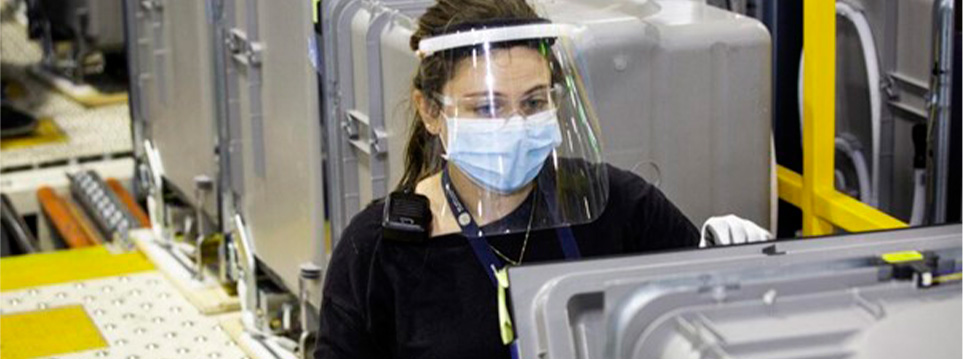
Using lean to create a new product and a new process
Roberto Priolo: In 2020, you were responsible for a very successful project to develop a production system and launch a new product at GE Appliances. Can you tell us a little about the context?
Alison Seward: I led an $80 million investment in our dishwasher line, which is part of our kitchen line. We were not only developing a new dishwasher; we had to develop and bring up a new production line. Since we were going to install this line in a factory that was already running, we often joked that it was like changing the tires on a moving car. As if that weren't challenging enough, our launch date was November 2020, which meant we had to do a lot of testing and building during the worst months of the pandemic.
RP: What was your first step?
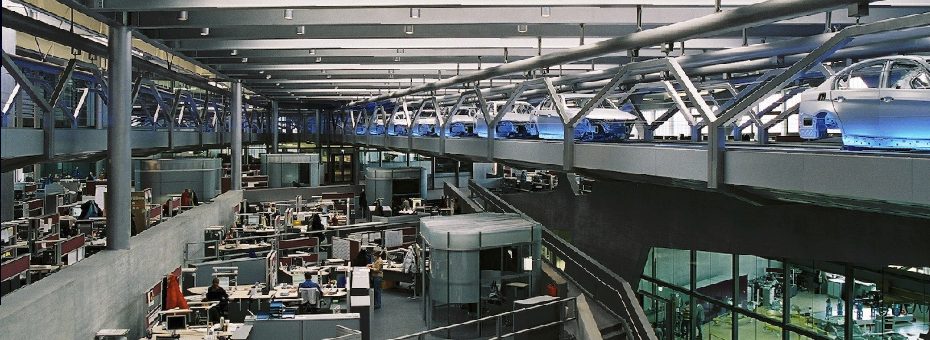
AS: One of the first things I did when I joined the project was to restructure the way the team worked. We were very focused on our functional silos - design, quality, the commercial team, etc. The work of the different areas was completely segregated. To take on the challenge, we needed a different approach. So, I reorganized the team physically. I asked people to move their desks, and we reorganized the lay out of the entire office. The move was unpopular at first, but it was important to break the status quo.
I knew that to succeed, everyone would need to think beyond their functional areas. Of course we needed the depth of each area's technical expertise, but we also needed people to take into account the impact of their respective work on the bigger project.
RP: You mentioned that the decision to move people around was not popular. How did you get through that transition?
AS: The team was fantastic at trying out the new system, but a lot of coaching and mentoring was needed at the beginning, because it was a different process, with different principles. It wasn't necessarily that people were resistant; it was that it was a new system for them. It is natural for us human beings to resist change, so, at the beginning, a lot of energy and effort was needed to transition the team and to train them in a new way of working.
I had a lot of support from all the functional leaders on the production line, who were aware of the change. I would like to give a lot of credit to the team, who went along with all my crazy ideas, got on board and made it happen. In the end, everyone understood the challenge and the reason I was suggesting the change.
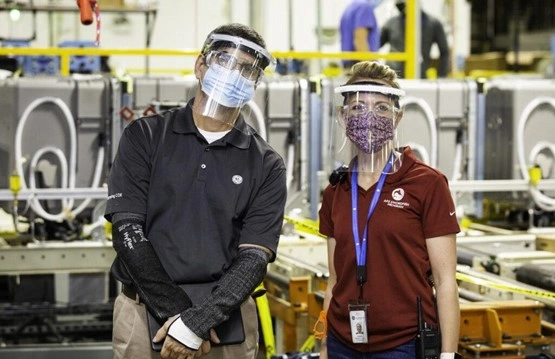
Alison with Plant Manager Doug Wichmann
RP: For the team involved in this project, was this the first experience with the principles and practices of LPPD?
AS: For most of them, yes. We had done a lot of LPPD work in different product groups, but we hadn't gotten to the dishwasher line yet. Many people on the team were not familiar with the subject. We gave a lot of training and offered other opportunities to close that gap. For example, I took my design manager to one of our LPPD learning sessions with partners, to see how we could teach these ideas effectively. I also organized a training session for my team with John Drogosz of the Lean Enterprise Institute, to bring in someone other than me to talk about these principles.
RP: What were the main milestones in the process of implementing the new system?
AS: We started by understanding the work in depth. Everyone on the program team went to the production lines and worked there. We were strategic about where to place people, of course. For example, our senior manufacturing engineers, the people who designed our equipment, were asked to do some of the most physical and challenging jobs, in the hope that they would get ideas on how to improve them for the new line. So, we started by making sure everyone understood in depth what the work on the line was. We combined this with some basic training on standardized work for everyone on the team, so that we could talk about the more technical aspects of lean.
From there, we had a very iterative process of looking at the layout from the point of view of the equipment and of the work. We were lucky that seven of our team leaders, who were part of our hourly workforce, would be supervisors on the new production line when it opened. They were brought into the program about a year and a half ahead of time, and were responsible for helping us understand how the work would be transferred to the line. We could then combine this with the equipment layout. .It was a constantly iterative process to find a common solution in which we had a good layout for the equipment and a good work structure for the employees.
RP: When they think of LPPD, most people think of product development. But there is the other part, which is process design. In your experience, what are the challenges inherent to process design?
AS: When the process is new, you don't know what you don't know, and that can be dangerous. For the dishwasher project, we built a mock up of the production line (we called it a dojo), with different conveyors that we could move around to simulate different areas of the line. We could speed them up or slow them down. We used foam structures at times. Basically, we tested things (things may seem to work on paper or in your head, but until you test them, you don't know). Through these experiments, we learned some hard lessons. When a configuration didn't work, we had to go back and try again. The most important thing was to learn what didn't work while we were using foam and 3D-printed parts, rather than when we were using steel on the floor and parts off production tooling. We pushed to find problems early. Really, that is the main advantage of LPPD over traditional product and process development; you will eventually run into problems, but it is much better to find them when they don't cost a ton of rework and money.
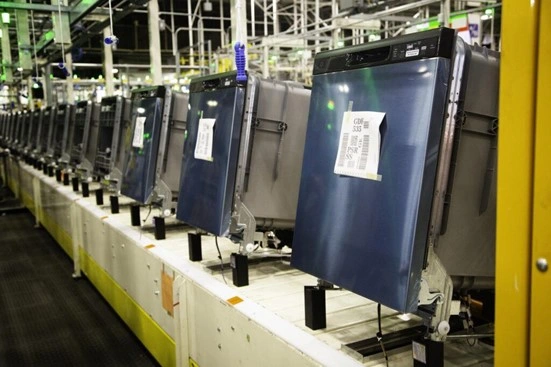
RP: You configured the assembly line as a fishbone. Can you explain what it looked like?
AS: The different bones represent different parts of the product - the body, the door, and so on - and they fed the main process, represented by the fish's backbone. We structured the teams around these “bones”, so that they had the autonomy to decide on various trade-offs within their respective bones, as long as they didn't affect the other groups.
RP: Which LPPD techniques and tools proved most useful in this project?
AS: We used several. I already mentioned the mock-ups, which were very important in developing a new process. We also had an Obeya room, which was a super important piece of the puzzle for the team. All the relevant information was on the walls, and everyone could always access it, at any time. The project leadership was physically located in the Obeya too, which made it accessible to the team. Really, the Obeya was critical to connecting all the other LPPD practices we believed in.
We had a daily meeting with the entire program team, which lasted 30 minutes or less. It aligned expectations for the day. On Mondays, we reviewed the schedule, using the wall that contained a task list for the team, specifying what had to happen, when, and who was responsible (the list was color-coded, too, which made it very visual).
On Wednesdays, we did PDCA with the bone teams. For each problem flagged, we asked people to suggest a solution. During the meeting, teams took turns sharing the macro topics they were working on or the problems they were trying to solve, asking for help whenever necessary.
Finally, on Fridays, we made decisions with our “diamond” system. A few months into the project, we realized that we were good at tracking individual tasks, but we had difficulty tracking the progress of the program as a whole. So, we took a step back and started thinking about the critical decisions we needed to make for the program to move forward. The number of decisions to be made went down as we continued and moved into the execution phase, but, at the beginning, the number of decisions to be made was staggering (especially with the pandemic throwing new challenges at us at every turn).
On Tuesdays and Thursdays, the meeting topics changed, based on where we were in the program cycle.
RP: What results were you able to achieve?
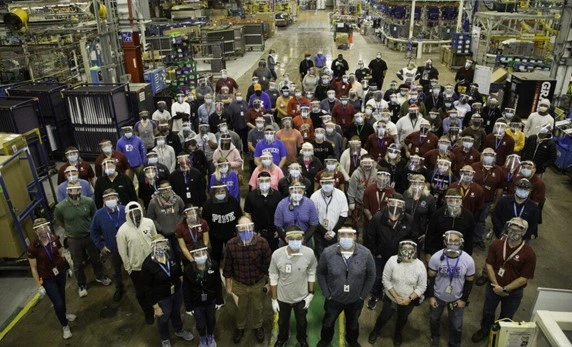
AS: First of all, we managed to stay on schedule, even with the pandemic, which is impressive (for the appliance industry, getting products out before Black Friday is incredibly important). We managed to meet our product cost expectation and the sales targets considering the objective set for the product. Our capex spending was kept within our $80 million budget. We also saw an improvement in our ratings, which reflects the customer's experience with the product. Lastly, the assembly line was fully utilized: having started with one shift, two more have been added since then.
It was quite a project! There is no doubt that what made the successful launch possible was the use of LPPD principles and the fact that we already had a structure in place from before the pandemic.