

Lean in retail: a new way of thinking and acting in a dynamic market
Amid the intense dynamism of the retail sector, the companies that stand out have a few things in common: a great ability to adapt to change and a sense of continuous improvement in their processes and services, always aiming at excellence in the customer journey. The customer must always be the crucial point. It is not enough just to deliver a service or sell a product; consumers need to see value in the shopping experience and in the final product they are buying.
With this in mind, Grupo Carrefour, a multinational company with more than 85,000 employees spread across more than 470 points of sale in Brazil, understood that the key would lie not only in implementing a few one-off continuous improvement tools, but rather in a cultural change of the organization as a whole, transforming the way employees think and act, from operations all the way to senior leadership.
That is how, at the beginning of 2020, the Group decided to incorporate the LEAN philosophy into its DNA and spread it to the whole organization. It brought in some professionals from the market to lead this effort and invited Lean Institute Brasil to collaborate in delivering the first results. Let us tell you a little about the beginning of this journey.
Creating a Center of Excellence
At the beginning of 2020, Grupo Carrefour understood that, in order to improve, it needed to invest in creating a Center of Excellence, as many organizations do. With the success of some projects carried out in the company in 2019 using the LEAN methodology, and with the support of the Board, it understood that this could truly be a great differentiator for the entire organization, and, knowing that some companies in the sector had already undertaken some isolated initiatives, Grupo Carrefour, in a structured way, made the strategic decision to create a Center of Excellence that would ensure all the alignment and governance of the program.
At that point, we (Renato Marinuchi and, shortly afterwards, Vanessa Maranho) arrived to become part of the group with the aim of leading the LEAN transformation in the organization.
What sets Grupo Carrefour's Center of Excellence apart from traditional centers is precisely one of the foundations of lean: the general awareness that improvements are not “an exclusive function of the continuous improvement staff”; for them to happen sustainably and to spread throughout the organization, these improvements must be embraced by everyone, bringing a sense of accountability for improving one's own work.
This only happens when we change the way we think and act about our daily functions and activities, when we have leadership that encourages employees and focuses on developing people, and when we show that this new way of doing things brings benefits to everyone involved in the process.
The Practical Lean Training Program (PPFL)
When we at Lean Institute Brasil arrived at Carrefour to begin supporting the lean transformation of its culture, there was a consensus on both sides that, to disseminate this new way of thinking, we would need a training program for employees, who would later become multiplier agents. After some reflection, we understood that adopting the Practical Lean Training Program would be the most appropriate choice, since it is one of the most complete training programs.
The strategic team chose key employees from several areas to take part in the program, such as accounting, tax, supply chain, operations, maintenance, e-commerce, gas stations, drugstores, etc. As we know, in every PPFL, the goal is to develop the person through training and to create A3s with mentoring and guidance. In addition, since the program was entirely dedicated to Carrefour, close follow-up was done in the gemba to observe and support what was happening.
The most impactful problems/opportunities were chosen to be addressed in the A3s and, out of the 21 participants in the program, nine teams of two or three people were formed to work on these problems. Here we can highlight one of the most interesting learning points: working as a team, with people from different areas, brought a holistic and multidisciplinary view to everyone, reinforcing for the group the idea that working in an integrated value chain, and not just in silos, brings many more opportunities for improvement.

Redesign of the label printing process by aisle.
In addition to developing the A3s, the managers of each of the areas involved in the PPFL were invited to take part in the “Lead with Respect” training. This leadership development was intended to enable them to support the change agents in the best possible way and to break down the centralized view of decision-making in the company, developing their teams through greater autonomy in how work is carried out and in problem solving.
One of the great challenges faced during the program was certainly the transition from in-person to virtual, due to the arrival of the pandemic. Moving through a change of this size is never easy – people tend to show a certain resistance and do not initially understand what is happening and what will happen until they begin to see results emerging. Doing this in the midst of a global crisis, besides being extremely challenging, revealed even more that what we were doing was fundamental. Some adaptations were made to the program, but we managed to achieve our objectives all the same. And here we can mention another lesson: discipline. All of us came to understand at that moment that staying focused and faithfully following the method is essential for change to happen.
Results are the consequence of change...
During the eight months of PPFL in Company training, in addition to training employees in lean methods and tools, Grupo Carrefour also achieved practical results with its projects; results that some employees made a point of highlighting on the closing day of the course.
- Lead time reduced by 60%;
- 90% improvement in the quality of correct and complete information;
- 100% improvement in the accuracy of information;
- Reduction/elimination of waiting times between process steps;
- Redesign of new flows for new businesses focused on customer experience and satisfaction;
- New ways of carrying out indirect purchasing that helped reduce lead time and improve the quality of deliveries;
- Significant reduction in product replenishment times in stores;
- New model for contracting third parties, reducing waiting and raising the level of satisfaction for both contractor and contracting party.
Beyond these issues that directly impact business results, we can point to the reach this has had among employees as a great gain. We can measure that at least five departments, so far, are optimizing their processes; we have already delivered 40 hours of employee training and reached approximately 450 people.
All these qualitative and quantitative results, once the implementation of all the action plans from the A3s developed during the program is completed, bring the organization a potential financial gain of 3 million reais.
And there is still great potential gain ahead, both in what directly impacts the company's financial results and in what affects the quality of our employees' daily work and, fundamentally, in what generates much more value for consumers in their experience with the company.
Lean is about learning, always!
Every lean journey, at any stage of maturity, brings many challenges and difficulties. This happens because lean causes a culture shock in the company and in its employees. And, as a result, there is always a certain initial distrust and resistance, which need to be overcome and broken down so that we can truly go further.
Difficulties are inevitable. Some that we went through during this period, and that are common to practically all organizations embarking on lean, are:
- Understanding the importance of everyone's roles and responsibility for improvement.
- Systemic issues (how to handle the digital environment, for example, since whenever we think of lean, we picture being present in the gemba, with post-its, everyone standing in front of a physical board).
- Facing the idea that often what was planned is not being carried out (and, from there, putting lean into practice, looking for the causes and analyzing the problems in depth).
- Getting used to triggering the help chain (understanding how it really works in day-to-day practice).
- And the actual implementation of the action plans developed in the A3s (since people are still apprehensive about this new reality).
However, all these difficulties are fundamental for learning and for acquiring all the experience that the method brings. In addition to the large quantitative gains we have already discussed, we can mention some very significant lessons learned:
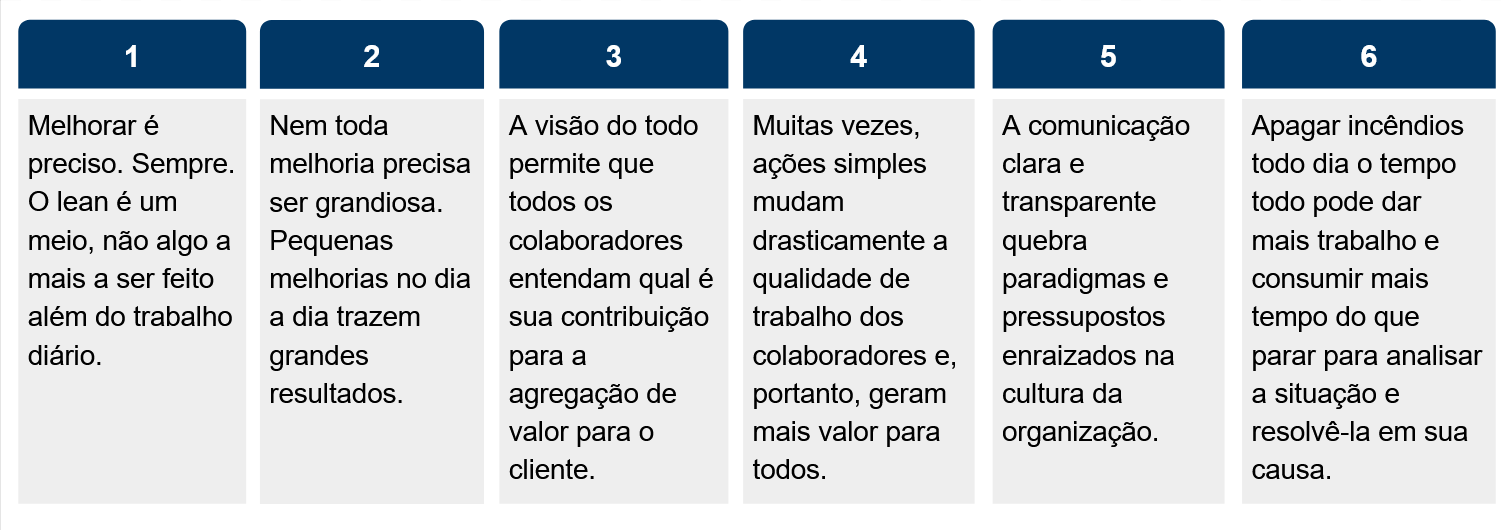
We are just getting started...
Here at Carrefour we are just at the beginning of the lean journey. There are already results beyond what was expected at the start of the program, and there is still great expectation of potential gains in the coming years. Lean opens the way to countless opportunities. Initial results can be exciting, but persistence and patience are needed for a global change across the organization. We are not just looking for training focused on tools; beyond that, we want a change in the way we act and think!
Our recommendation for those of you who are excited and also want to start on this journey is: begin! Whether it is a corporate movement or a process improvement in a specific area, just begin. Start in a simple way, involving people and listening to them, collaboratively (change is never made alone), engaging leadership and, from there, spreading it to everyone.
Acknowledgments
João Margenet – Director of Process Simplification and Robotization – Carrefour Varejo
Luciene Petroni – Head of Tax – Carrefour Varejo
Vanessa Maranho – Continuous Improvement Coordinator – Carrefour Varejo







