

Facing and overcoming challenges with lean: more than lean construction

The infrastructure sector has been undergoing significant market changes that directly impact customers. Its backlog of projects, which used to be highly constant, is becoming increasingly uncertain, and the raw material used has been rising steadily. With new entrants charging lower prices and exposing the sector's inefficiencies, which were previously covered by a cash “cushion”, the liquidity of large groups is no longer enough to cover projects' shortcomings. With fewer projects and higher costs, it becomes essential for the sector to find a solution to make processes more efficient and offset these difficulties.
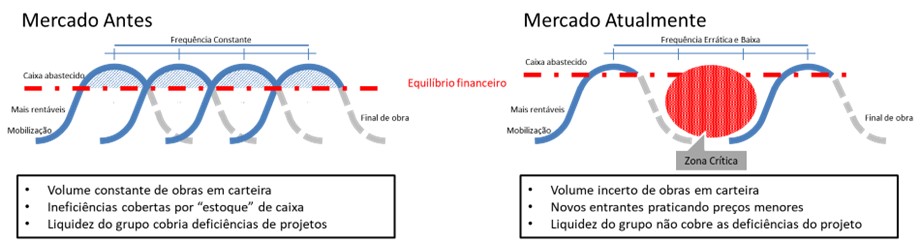
Situation of the companies
In response to this scenario, the large companies in the infrastructure sector have been implementing management measures aimed at overcoming these obstacles. These measures, however, tend to be applied without a holistic view, without looking at the processes of their venture, of their construction project, as a whole, which limits their gains to small efficiency improvements in specific services, rather than an improvement in overall efficiency. In addition, the tools used in these management measures tend to be more traditional (and sometimes obsolete), and are not enough to connect the different processes with a systemic view.
More efficient and more holistic measures need to be taken by companies in the sector if they truly want to overcome these difficulties, and this is where lean thinking can help. Lean is used to optimize a construction project in three distinct situations:
- When everything is fine: Even when the project is on schedule, using lean thinking is essential to ensure that it does not go off the rails and that it can improve its results. In this context, it acts in the pre-planning and in the pull planning of the project, in ensuring the production pace and productivity, and in the pursuit of an ideal cash cycle, managed liquidity and guaranteed margins.
- When the project is “going down the drain”: At that moment when you realize that deadlines are being compromised and the margin is being eroded, the lean way of thinking can act to bring everything back into place. In addition to acting in the areas mentioned in the previous item, here lean can seek to reduce waste in the field and devise a feasible cash cycle to recover margins.
- When the project is already late and its margin eroded: Finally, in a situation where things are already quite bad, lean can act, in addition to the areas mentioned in the previous items, with break-even targets and loss containment.
But how exactly can lean act? With the LIB Way to Construct, which is more than lean construction; it is lean. It proposes acting from the macro to the micro in continuous flow. This makes it possible to find the waste gaps to ensure more efficient execution, always connected to the company's “true north” and with the selection of a few process standardization and delivery logistics tools that are suitable for that moment and situation. And also with planning that is able to manage the project well, instead of a planning area that simply keeps updating schedules with a predominantly financial focus.
The LIB Way to Construct methodology presents a new paradigm: a planning “process” focused on delivering in order to achieve results, and not only with a financial focus. There are four foundations to this new paradigm:
- Planning as a multidisciplinary process, and not just an area or department. Companies usually have a planning area, but it does not usually have a control process, limiting itself to recording what was produced, with nothing very robust.
- Management of deliveries and execution pace, more than a purely financial focus. In construction, there are usually billing constraints that put pressure on staff to hit the milestones needed to be able to bill soon, causing them not to worry about the production pace of the services and the continuous flow of work.
- Liquidity and cash flow balanced according to the pace of the project. Although it is important always to keep an eye on billing, it is essential to take into account the pace of partial deliveries, in small batches, of the execution stages.
- Measurement as a consequence, not the main focus. With all this, measurement becomes a consequence of the work, ceasing to be the main focus for companies.
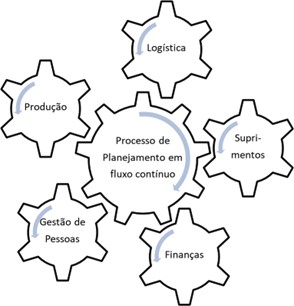
Multidisciplinary planning process
In an environment as uncertain and changeable as the one we are living in, seeking ways to improve process efficiency and connect processes to the view of the whole is a matter of survival. The lean way of thinking brings a new perspective on how to face current challenges and, more than that, prepares the team to face every situation and define the most suitable tool with a situational approach to the moment of the project; in other words, rather than trying to impose tools, it is about knowing how to select and adapt them according to their purpose. The LIB Way to Construct aims to develop competencies so that the people in your company are able to define their purposes and be adaptable to each situation and scenario that constantly challenge your business and your results. That is why it means facing and overcoming challenges with lean, more than with lean construction.







