Lean concepts about People, HR and development
Change Agent
Leader of a lean transformation with the authority and initiative to undertake the fundamental changes. The change agent, who often comes from outside the organization, does not need in-depth knowledge of lean philosophy at the start of the transformation. Compare with: Sensei.
Chief Engineer
Term used at Toyota for the manager with full responsibility for the development and success of a product line; formerly known by the Japanese term shusa. See : Value Stream Manager.
Coaching
Helping others develop the problem-solving capability needed to implement lean tools and principles and to create a business culture of continuous performance improvement. In lean management, the coach uses open questioning instead of telling the learner what to do.
Group Leader
At Toyota, the first-line supervisor who typically leads a group of four teams, or about 20 workers; kumicho in Japanese. Group leaders plan production, coordinate improvements, develop people and audit the team leaders' work daily.
Kaizen Promotion Office
See: Lean Promotion Office.
Kata
A term that usually refers to the fundamental movements of Japanese martial arts, but also to any basic form, routine or pattern of behavior. In lean management, kata refers to two interlinked behaviors: the improvement kata and the coaching kata.
Labor Linearity
A philosophy for flexibly managing the amount of labor needed in a production process (particularly in a cell) so that the number of operators increases or decreases with production volume. See : Capital Linearity.
Muri
Overburdening equipment or operators by requiring them to run at a higher or harder pace, with more force or effort, for a longer period of time than they can withstand.
Plan for Every Person
A program for training and developing employees that shows the skills required and the skills already developed. See: Multi-Process Handling.
Quality Control Circle
A small group of workers and their group leader who collectively identify, analyze and provide solutions to problems identified in the work area.
Resident Engineer
An engineer from a supplier who is sent to Toyota to work jointly on project development and problem solving; sometimes also called a “guest engineer”.
Sensei
Japanese for teacher. Used by lean thinkers to denote a master of lean knowledge, the result of years of experience in transforming the gemba (the place where the work is done). A sensei must also be a teacher who inspires his or her students and whose teachings are easy to understand. Compare with : Change Agent.
Shojinka
Japanese term meaning “flexible manpower line”: the ability to adjust operations to production requirements by changing the number of workers as demand varies. Also called labor linearity.
Shusa
A project leader, like the chief engineer in Toyota's product development system. See: Chief Engineer.
Team Leader
At Toyota, the person who leads a team of five to eight workers (hancho in Japanese). Team leaders are the first line of support for operators: they have no fixed work position and no disciplinary role, respond to andon calls and lead kaizen activities.
Training Within Industry (TWI)
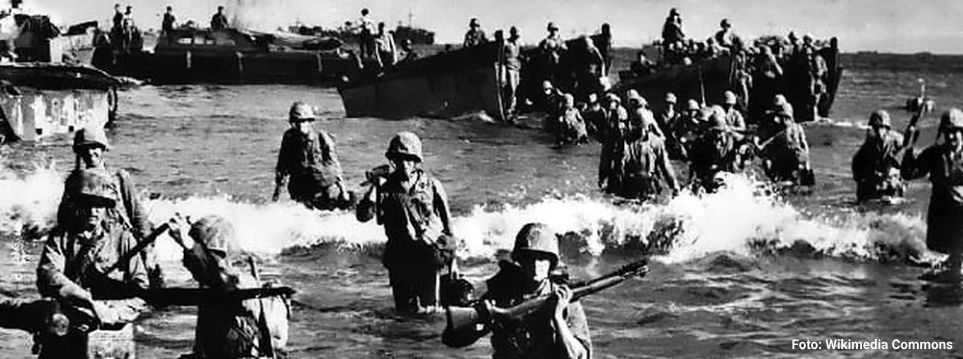
A series of training programs developed in the United States during World War II so that companies could quickly hire and train large numbers of new workers. Its three main programs, the “J” programs, are Job Instruction, Job Methods and Job Relations.
Usable Knowledge
The value created by lean product development processes. Because almost all defective designs result from not having the right knowledge in the right place at the right time, lean companies generally spend proportionally more development time creating and capturing knowledge, and less creating hardware.
Work
Human actions (movements) involved in making products. These actions can be divided into three categories: value creation, incidental work and waste.
Articles
Por que devemos projetar organizações mais humanas na era da IA
Para que serve um gerente?
Boreout: quando a gestão desperdiça inteligência
From centralizing hero to developer leader
Learning where and when the work happens
Talent shortage: industry must learn to develop what it can no longer hire
The bridge between strategy and execution: how daily management and hoshin kanri work together
Work makes people sick when management fails
Designing succession: the role of management in business continuity
When the future learns from experience
Workplace safety: a non-negotiable value
'Happiness at work' is possible, but it depends on management
Lessons from sports and music: leadership is what makes others 'play well'
3 attitudes to awaken the “learner leader”
Read article

Yokoten: How a Japanese concept can accelerate learning in companies
Leading from the front, leading from behind the scenes
Why the countryside needs “lean managers”
Work must create value, not "more work"
Management against the labor shortage
Stability: the "invisible" foundation that defines success
The solution to the talent shortage may lie in World War II
The art of being who you are – even at work
Difficult conversations at work should not be avoided
Good management can "calm" the generational conflict
In 2024, adjust your mindset and focus on problem solving
Lean Supply Chain Leaders
8 steps to radical quality improvement
Leading a quality revolution
A business transformation through Daily Management
People power: adapting to changing times
To be lean, a leader must be socially evolved and multidimensional
Ask Art: What is the best lean leadership development program?
Process improvement combined with people development brings millions in gains to CBA
Emotions at the gemba
How a focus on people accelerated a lean transformation
Want to learn more about People, HR and development?
Get in touch with our experts.