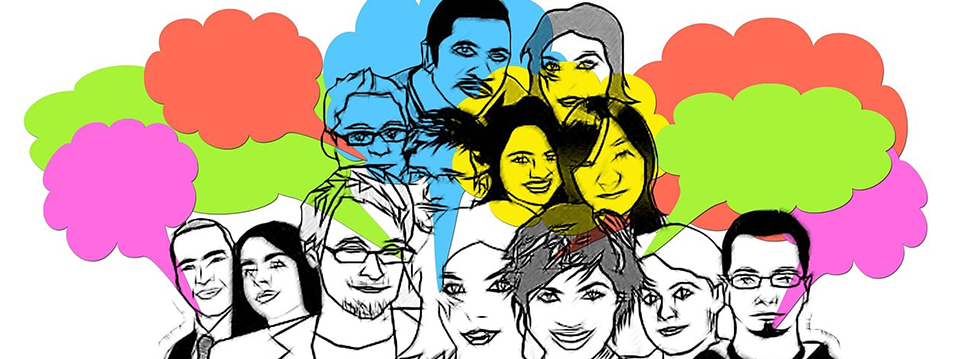
To be lean, a leader must be socially evolved and multidimensional
Implementing lean transformation in a company is no easy task. Lean principles seek simplicity, but everyone who tries to apply them realizes that putting them into practice is complex, because it challenges paradigms and takes people out of their comfort zones.
This is because lean, at its core, represents a true sociotechnical revolution in the company. In other words, in addition to everyone in the organization needing to learn the technical aspects, which are the lean processes, routines and tools, profound social changes need to occur in the way people relate to each other, cooperate, solve problems, etc.
For this to actually happen, avoiding superficial lean implementations that do not go very far, it is necessary to develop new practices among the company's leaders, because they are the key factor for people to understand, engage with and practice lean concepts on a daily basis.
Imagine a leader, at any level of the company – which can range from a CEO to a team leader – in an organization that seeks to apply lean. Everyone who finds themselves in this position (and perhaps you are one of them) realizes that they will need to learn many new things in order to really contribute and perform the role of leader better and better.
The first step many people take is to understand the technical aspects involved. The lean leader needs to master the basic and essential lean “tools” that support the elimination of waste and the maximization of value added. This means mastering, for example, the A3 method, PDCA, Value Stream Mapping, Just-in-Time, Daily Management, Kaizen, Hoshin Kanri… and various other “tools” that are the foundation of lean knowledge and practice.
Those who work in this area know that “just this”, mastery of the “tools”, is already a lot and is far from easy learning, requiring daily effort and practice. However, if this technical dimension is already a challenge, the fact is that it alone is not enough, because lean leadership has a sophisticated “multidimensional" character. That is, it demands the assimilation and daily practice of a series of complex and distinct skills and capabilities. If they are assimilated and integrated properly, they complement each other in a unique way, forging, in theory, the ideal leadership.
One of them is certainly the “social dimension”. In other words, the ability to relate in a healthy way, creating genuine, constructive, positive and sustainable connections with what is considered today by the most attentive and well-informed thinkers to be the main “force” in any type of organization: people. This is the greatest challenge for leadership, because it will require elements that lie outside the traditional domain.
For example, knowledge, skills and capabilities related to the fields of psychology and sociology. After all, people's everyday attitudes and behaviors – which are the foundations of everything that happens in a company – are the result of their respective individual mindsets, combined with the social relationships that take place every day inside and outside a company.
Thus, it is necessary to learn how to capture and understand, in a deeper and everyday way, the values and motivations of individuals. In the sense of trying to put oneself “in the other person's shoes”, to understand their rational, emotional or social reactions and behaviors that lead them to be who they are and do what they do.
Unconscious “noise” and “biases” often generate judgments that harm the work environment, bringing fear and, consequently, a culture in which problems are covered up, preventing the evolution of the business and the substantial change needed to deliver value to customers.
In this context, there is also the “communication dimension”, more essential every day. For example, improving writing and iconographic skills, in order to make messages and content clear, didactic, objective, impactful and persuasive. Knowing how and when to listen, more than to speak.
Developing not only “oratory” but also, as the educator Rubem Alves wrote, “listenatory”. Understanding the most productive ways to ask questions, avoiding hasty and sometimes oppressive judgments. Understanding how to read between the lines of speeches, narratives and accounts.
Learning to perceive body language, the meanings of “silences”… A whole somewhat “invisible” part of communication that, make no mistake, is always present. And which, if perceived correctly, can tell us a lot about people and direct relational and communication efforts in a healthier and more productive way.
There is also the “ethical dimension”. In practical terms, it is revealed when, in the organizational universe, what is “right” is understood and practiced every day, without any kind of “flexibilization” of values, structuring the organization so that all its members move in this same direction.
Fortunately, this aspect has been receiving increasing attention in organizations and in society, and various compliance and governance methodologies have evolved. It is worth highlighting here that it is impossible to imagine a company that considers itself lean if it does not fully address ethical issues. The lean concept of maximizing value added goes beyond customer satisfaction and also involves contributing positively to society and the environment and fully respecting all the people involved, inside and outside the organization.
Of course, we have discussed here only some of the “multidimensional” elements of a lean leader. There are certainly others, depending, among other things, on the context of each business. In any case, this is a path of knowledge and skills that, more than multidisciplinary, is increasingly proving to be “inter” or even transdisciplinary today. And that, therefore, needs to be pursued and built in a conscious, disciplined, organized, planned and constant way.
Only then will it be possible to form, in a sound and integrated way, a truly lean leadership, capable of creating environments and people that are truly safe and highly prepared to establish solidly lean organizations fully focused on continuous improvement.