

A business transformation through Daily Management
Supergasbras belongs to SHV Energy, the world leader in liquefied petroleum gas (LPG) distribution, and distributes 140,000 tonnes of LPG, serving approximately 11,000 resellers, 10 million Brazilian families and more than 50,000 industrial and commercial customers throughout the country. In addition, it has twenty business units with 17 bottling plants, more than 40 depots and a cylinder manufacturing and requalification plant.
With the many changes the gas market has undergone in recent years, Supergasbras felt challenged to pursue excellence in its operations in order to deliver more and better value to its customers. To do so, it began a Lean Journey.
The main results were:
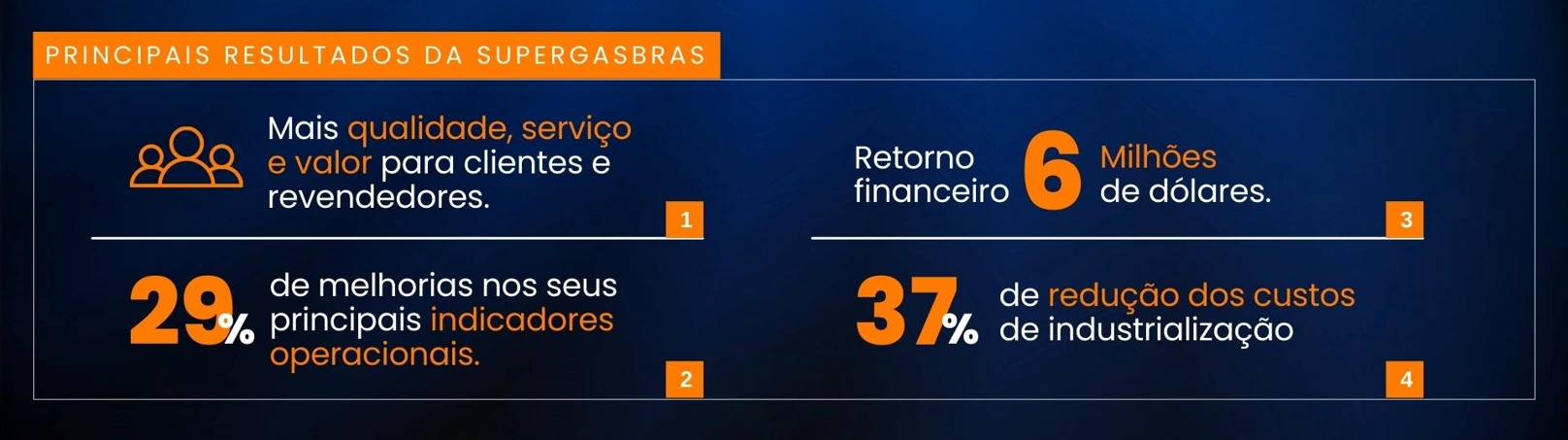
The start of the journey and the definition of priorities
The company began its lean journey in 2017, in a pilot unit where the implementation model for all of Brazil was created, as well as the way to measure the progress of this journey through maturity levels.
Implementation in each business unit started with the operations and logistics areas and has since been expanding to support areas such as sales, industrial facilities, finance and HR. Supergasbras' work with lean involves implementing six basic elements of the Lean management system. The elements are:
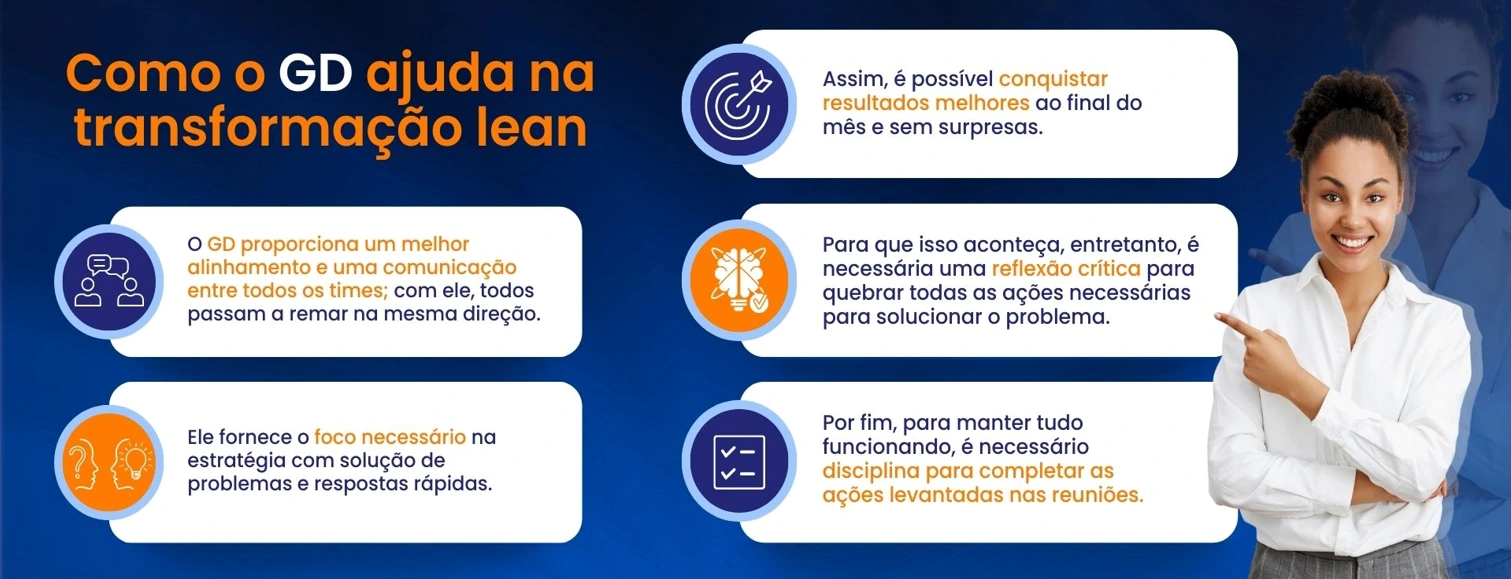
1) Performance Management (GD) is a system of interlocking meetings to assess performance and prioritize the main problems to be solved.
2) Problem solving is the element that structures, through an 8-step scientific method also known as A3, the handling of the problems exposed in the GD meetings.
3) Standardization is the element that ensures the results of the solutions implemented through the A3s are sustained and expanded.
4) 5S – is the element that helps create standards in the work environment or process, making it more organized and safer, making the identification of abnormalities easier and faster, and helping to train the team to eliminate waste.
5) Gemba – is the element that develops leaders to go to the gemba to confirm standards and/or develop people for continuous improvement using open questions.
6) Leader standard work is the element through which leaders structure and standardize their daily activities in a schedule and block out time to carry out the activities that are essential for a Lean leader to sustain and develop the culture of continuous improvement.
To assess the progress of the journey, a Maturity scale from 0 to 5 was created, in which level 1 corresponds to the start of implementation in a pilot area of the unit, and level 5 corresponds to implementation in all areas of the business unit with full maturity.
Today all business units have already started their Lean journey, although they are at different maturity levels.
GD as the foundation for executing strategy
At Supergasbras, GD begins with strategy deployment, as shown in the figure below:
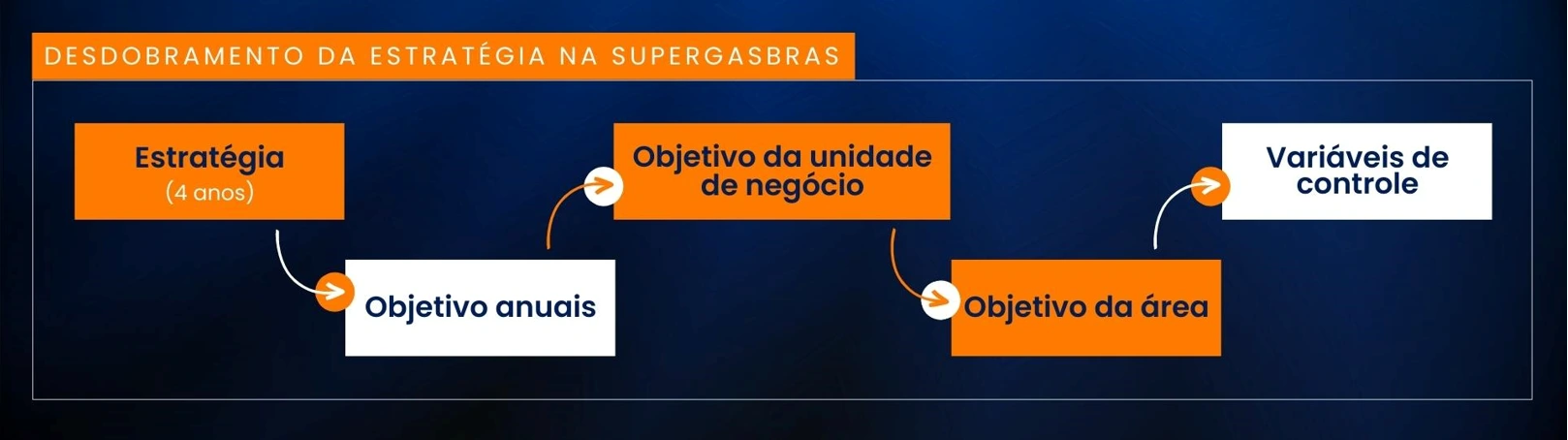
Based on this deployment, each area at each level has clear objectives to achieve. Next, the control variables (indicators) that the area will measure to achieve these objectives are defined. It is important that these variables are highly visual, directed toward the target and make it easy to tell whether or not the team is winning (see the example below).
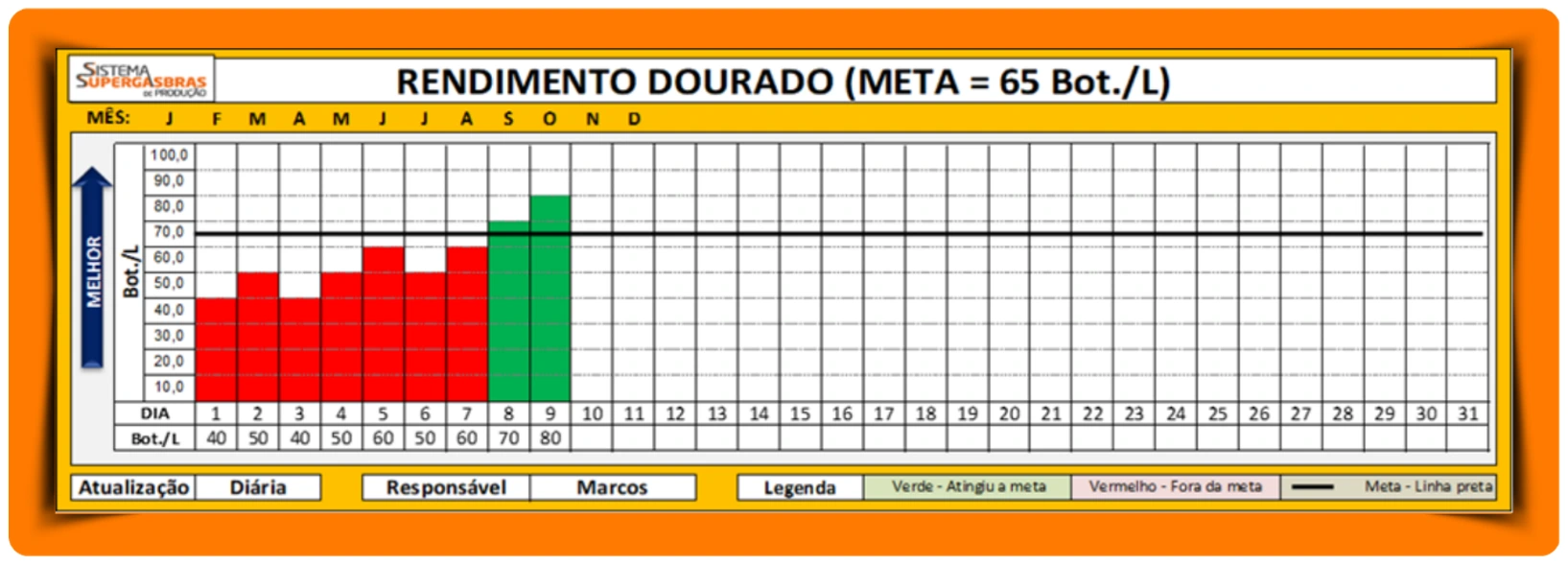
These variables are placed on the performance board that will be monitored in the GD.
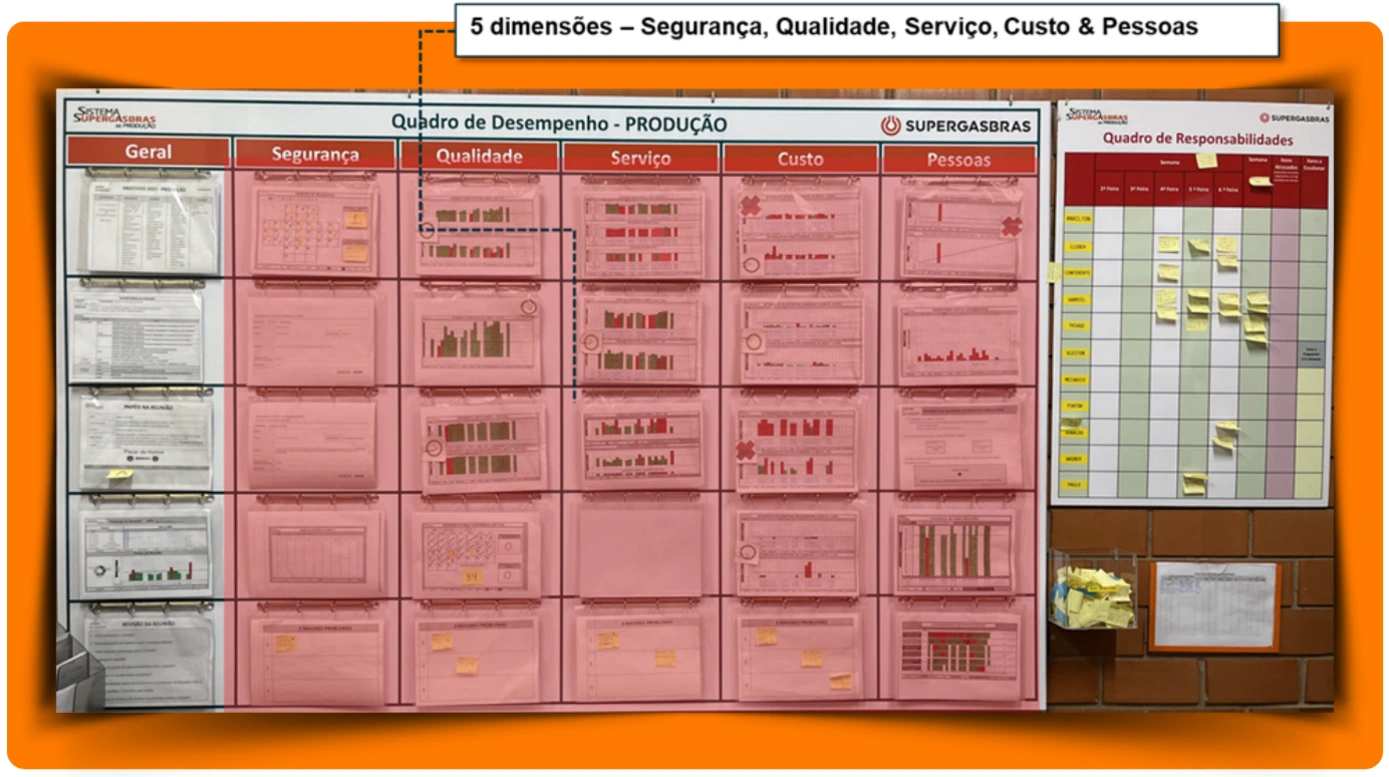
Another important point when setting up the GD structure is to think about how the meetings interlock, level after level.
But how does GD work at Supergasbras?
The meeting levels
Supergasbras established four meeting levels in its management model with GD, each with its own board:
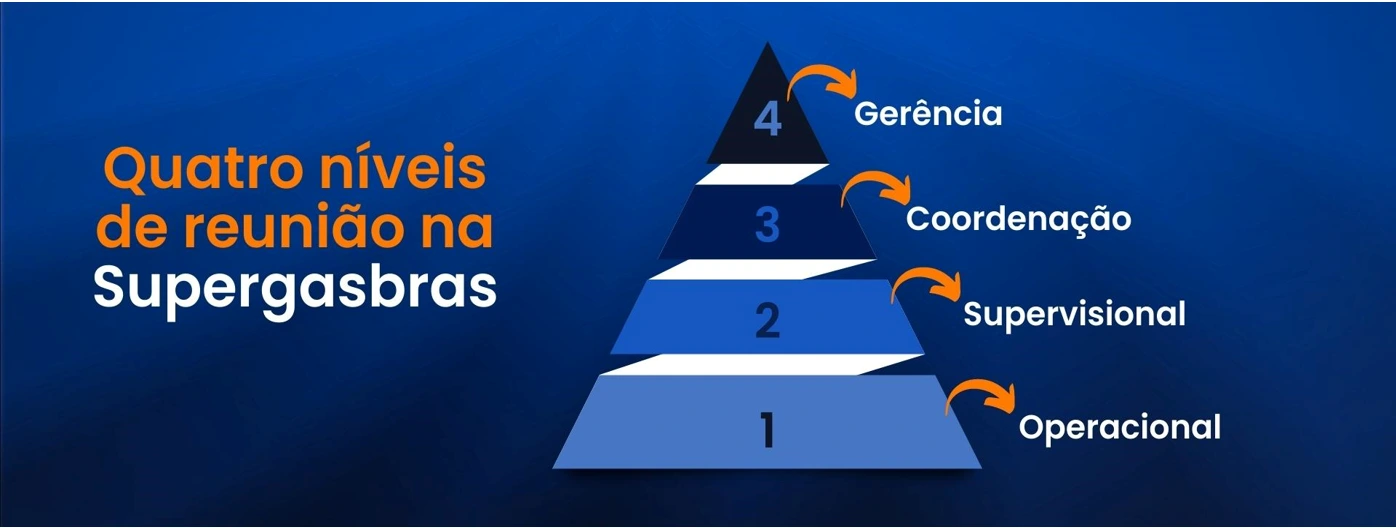
The line board is filled in hourly by the operators themselves, relying on the help chain to escalate problems when necessary.
The other boards are filled in daily, and the meeting is attended by the area leader and their direct reports, analyzing the problems that occurred in the last 24 hours and/or were escalated from the level below.
The meetings are short and always take place in front of the board, usually with people standing. They need a clear agenda, discussing the last and the next 24 hours of work. These meetings are not for solving the problem, but rather for assessing performance gaps in the control variables, assigning actions to restore the desired performance and/or defining which actions will be escalated to the next level (actions the team does not have the autonomy to resolve).
Solving problems by involving everyone every day
The GD meetings are constantly exposing problems, and different approaches can be used depending on their level of complexity. For example, simple problems, called see-and-act problems, which do not require root cause analysis, only need an action assigned to resolve them. More complex problems, however, require a scientific methodology to solve them, using a tool we know as A3.
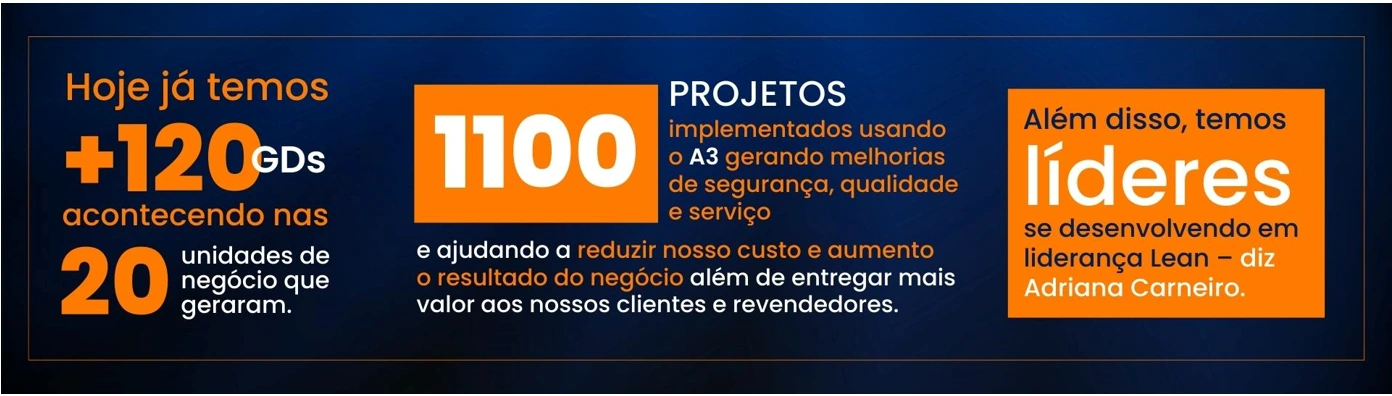
So, in summary, what can we learn from Supergasbras?
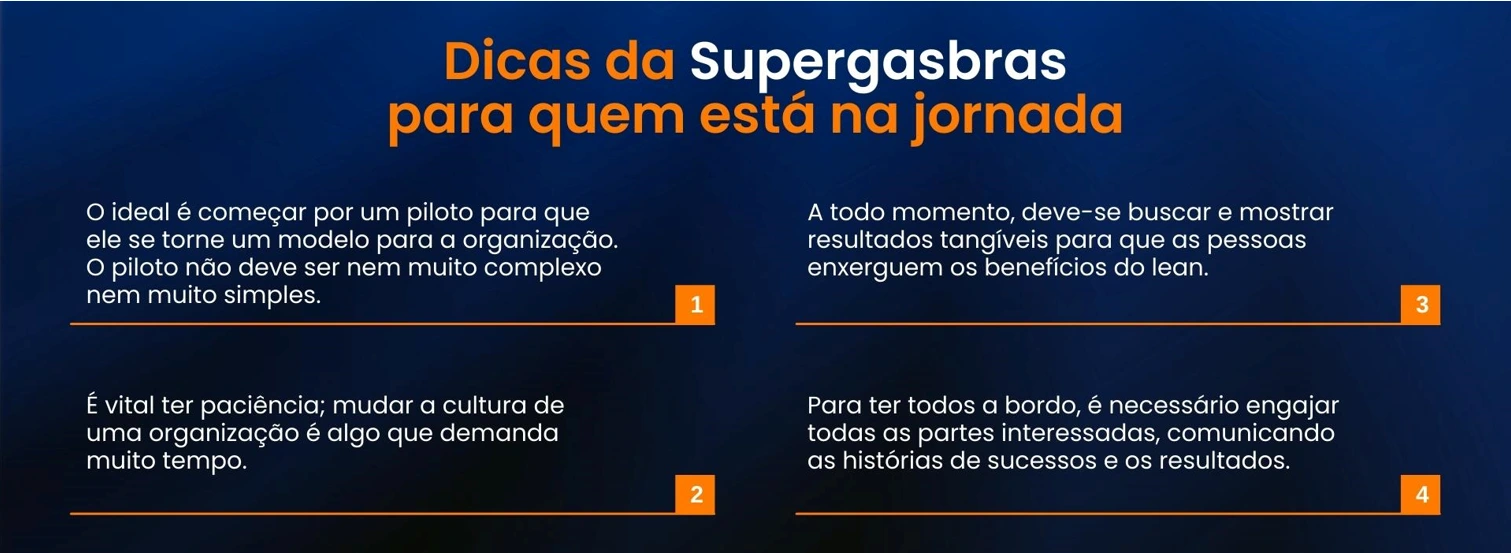
Our lessons learned and tips for those just starting out
After a few years on the journey, Supergasbras has already gathered a number of lessons learned from its efforts.
The Supergasbras team believes that some elements helped a great deal along the journey:
In the end, the lean implementation at Supergasbras is yet another example of the successful application of the philosophy in the most varied sectors.
What the company emphasizes is that lean tools and practices, although vital to success, represent only 20% of the path. The other 80% lies in developing people, in engagement and in the culture that must be created.
Part of the new behaviors desired so that problems are exposed and solved by everyone at all levels is the creation of psychologically safe environments, where individuals speak up, share their opinions and ideas openly, take risks, admit failures, learn from failures and have honest and open discussions.
Psychological safety and the constant fight against the culture of fear when exposing and addressing problems need to be worked on purposefully, involving leaders and team members across all of the organization's value streams.
The company understands that the road is long and that only together, learning from one another, can we help people do their work better, achieve excellent results, deliver ever more value to their customers and improve society.
Video presentation of GD at Supergasbras: https://conteudo.lean.org.br/gerenciamento-diario-gd







