
Ask Art: What is the best lean leadership development program?
Lean leadership differs from traditional leadership as much as a lean company differs from a conventionally managed one. That is why developing leaders for your lean organization requires you to teach them to think and act differently. Lean requires teamwork, constant learning, active participation and a flat organizational structure – approaches that constantly challenge traditional notions about how everything gets done.
Your leaders will have to look beyond “point optimization” and short-term gains and think about the long-term improvement of the entire work system for every person. These mindsets require a completely different approach to leadership development. You cannot manage the transition to lean; you must lead it.
I divide this leadership development challenge into the following broad areas:
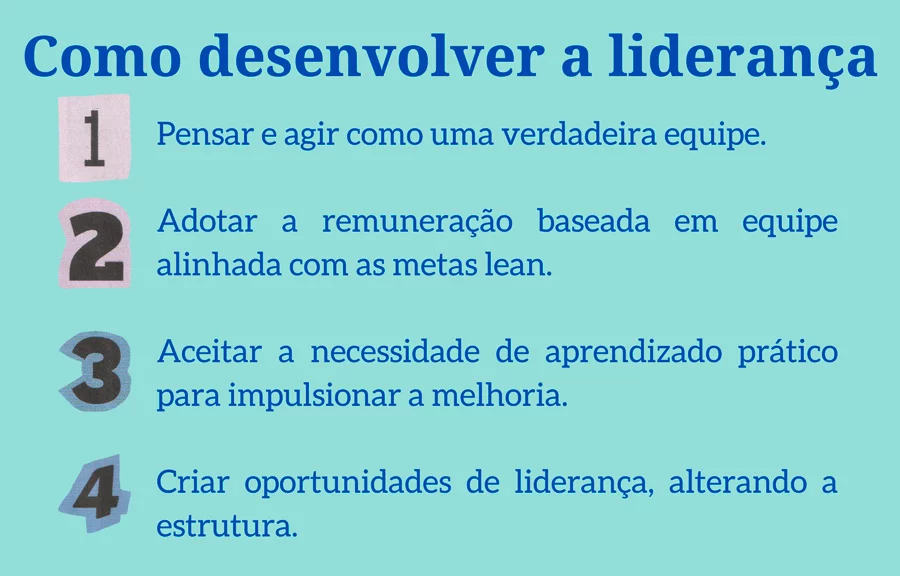
Insist on teamwork
Your current management team got where it is by leading the traditional way, and most will have strong beliefs about “the right way” to do almost everything.
Unfortunately, the traditional “right way” is not the lean way. As a first step toward promoting teamwork across the organization, you will have to help your management team see the need for it at the senior level. The head of sales, for example, can no longer run to the CEO's office to complain about something in manufacturing and expect the CEO to act as referee and settle the dispute. That kind of interaction is not teamwork and will not work with lean.
One of the first essential steps in developing leaders will be to get your senior team on the same page, which will not be easy. You can start this challenging task by getting everyone to take part in something simple, such as company decisions. Encourage people, such as the head of human resources or finance, to contribute to discussions outside their traditional sphere of influence. Reach out to them and ask: “Betty, what do you think of this idea?”. As people realize that their opinions are truly heard and valued, the CEO can stop playing referee and focus on more important matters.
Adopt team-based compensation
You can accelerate your new approach to teamwork by changing the way you compensate the senior team and those eligible for bonuses. Most traditional companies base most of any bonus payment on individual objectives. This approach works against teamwork and the achievement of broader lean goals. If, for example, you base most of the supply chain vice president's bonus on reducing the per-item cost of purchased materials while, at the same time, you set the operations vice president's bonus target on reducing inventory, you will put the two in check, since they will have opposing purposes. The supply chain vice president will try to reduce the price per item by buying large quantities, which trigger volume discounts. This tactic will increase inventory, which the operations vice president is trying to reduce.
So stop doing that. Replace the individual component with a compensation system that rewards everyone as a team based on the company's overall performance. And align bonus targets with lean goals. At Wiremold, we set our bonus targets as follows:
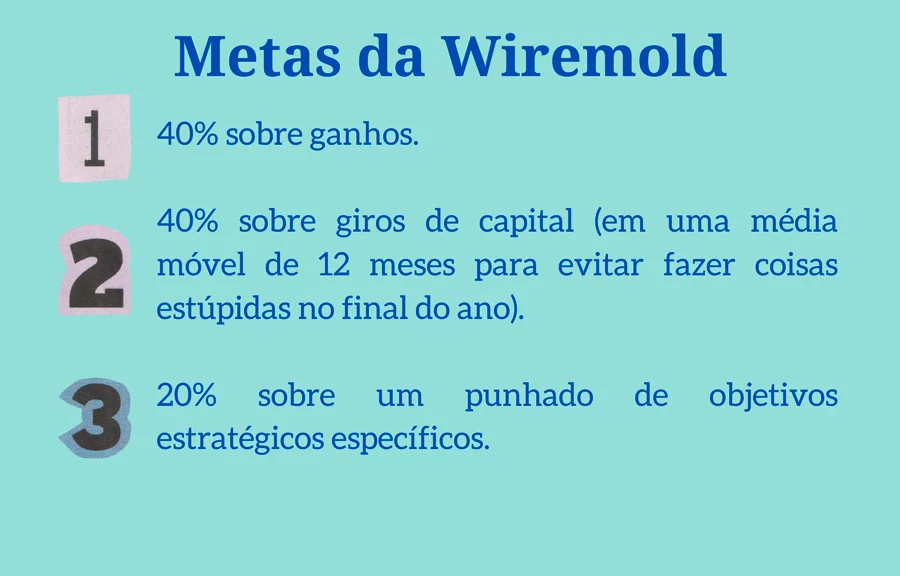
These targets eliminated the problem of inadvertently setting one function against another, while preserving the ability to determine how an individual contributes to the team. We then used the annual review to set salary increases and the granting of stock options and to discuss whether an individual had contributed to or hindered the move to lean. Is he on the team or not?
Develop lean knowledge
As I said earlier, you must lead a transition to lean. But, of course, you cannot lead something you do not fully understand; so a large part of developing your leaders is helping them gain lean knowledge. You can start with training on lean fundamentals, clarifying the changes and the results expected for the company. This training should include all employees, not just senior leadership.
This initial training is vital, but do not overdo it. Lean is something you can only learn by doing, so the real learning will come through kaizen activity and by putting everyone on a kaizen team as quickly as possible. A typical kaizen improvement activity lasts a week (this is not a hard rule) and involves a group of eight to ten people (half salaried and half hourly), who will be on the kaizen team full time. The lean instructor or coach will briefly explain some lean concepts and challenge them with stretch goals to be met during the week. Then the participants will go to the shop floor (or to the office, if it is an office kaizen), where they will apply the concepts and make practical changes. Kaizen is a hands-on activity, not a planning activity, so physical changes should begin on the first day.
Participation in kaizen should be as mandatory as jury duty. If you are called, you must go. Require your senior leadership team to take part in five to six weeklong kaizens per year as part of their leadership development. The CEO should take part in at least twelve weeklong kaizens in the first two years. This pace will rapidly increase the senior team's lean knowledge, while at the same time communicating to everyone the need to move to lean.
On many of the first kaizen teams, be sure to include your union leadership or hourly leaders. Including them will help reduce resistance and is an excellent development tool for your hourly team. In addition, I suggest that your outside sales force take part in the first kaizens. They will learn a lot and will spread the word to customers about your company's remarkable improvements.
Create lean leadership opportunities
As your organization becomes lean, it will shift from a traditional functional approach to one in which you work in value streams. This shift will create development opportunities for those you select as value stream leaders. Typically, a value stream leader may be responsible for a product family and for obtaining all the equipment needed to make all the products in the family. Taking this approach creates an opportunity to put some of your highest-potential people in leadership roles and give them a crash course in lean.
For example, at Wiremold, we chose our company's auditor, a marketing person, a woman from inside sales, another from IT, a young engineer and some of our former supervisors. We then asked them to move their desks to the shop floor and held them accountable for achieving our operational excellence goals (which were, in fact, our lean roadmap).
We also created a full-time kaizen promotion office (KPO) to organize, lead and follow up on the kaizens. We staffed it with another group of high-potential associates. After two years in the KPO, they would have enough lean knowledge for us to promote them to the next level. This strategy also applied to some of our best hourly employees – we assigned them to work in the KPO after their kaizen activity ended.
Using the KPO for leadership development worked well because we were buying many small but strategically important companies with the cash we freed up through kaizen. We needed managers with lean knowledge to run them. In two cases, we promoted our best regional sales managers to vice presidents of operations at these acquisitions. Then, after a few more years learning lean leadership, we made them presidents of one of our new subsidiaries. To be clear: you could never be the president of one of our subsidiaries if you were not a lean expert and did not do lean every day.
Of course, at Wiremold, everyone took part in lean training – even the newly hired, brilliant young engineering graduates for our product development department. We had them spend their first two years on the shop floor learning lean and our manufacturing capabilities before letting them start developing new products. Likewise, some of our hourly employees became so good at lean that we promoted them to salaried jobs.
Develop lean thinking capability in your leaders
If you are serious about developing lean leaders, you need to help everyone in your company see work through “lean eyes”. That is why lean companies never hire new CEOs from outside – they always promote someone who has become a lean expert from within. Toyota is the best example of this approach.
Remember that you are not just developing people; you are creating an entirely new way for your team to think and act, and it will take time for everyone to “see” waste and act on it. Your senior management team will have to work as a unit, constantly driving lean throughout the organization. They need to become leaders, not managers. You cannot have operations reducing inventory turns while the sales team is chasing large batch orders. Everyone needs to understand why this rivalry cannot happen. And any good lean leader can explain that to you.