Lean concepts about Lean culture
Change Agent
Leader of a lean transformation with the authority and initiative to undertake the fundamental changes. The change agent, who often comes from outside the organization, does not need in-depth knowledge of lean philosophy at the start of the transformation. Compare with: Sensei.
Gemba
Japanese term for "actual place," usually used for the shop floor or any place where value-creating work takes place. Also spelled with an "n": genba.
Gemba Walk
A management practice for understanding the current situation through direct observation and inquiry, at the place where value is created, before taking any action.
Hansei
Japanese term for “self-reflection”: the practice of looking back and thinking about how a process or a dimension of personal life can be improved. In the Toyota Production System, hansei meetings take place at key milestones and at the end of a project.
Kaizen
Continuous improvement of an entire value stream or an individual process in order to create more value with less waste. There are two levels of kaizen (Rother and Shook 1999): System or flow kaizen, which focuses on the overall value stream. Led by management. Process kaizen, which focuses on individual processes. Led by work teams and team leaders. See : Kaikaku, PDCA, Process Islands, Value Stream Mapping.
Lean Enterprise
A continuing agreement among all the companies sharing the value stream for a product family to correctly specify value from the end customer's point of view, eliminating wasteful actions and making the value-creating activities occur in continuous flow pulled by the customer. The method for conducting the necessary analysis is described in Womack and Jones 2002.

Lean Management
A set of practices that develop people to understand their own problems and align resources to achieve the organization's purpose, engaging everyone in designing processes to continuously solve problems and improve performance while consuming as few resources as possible.
Lean Mindset / Lean Thinking
A five-step thought process proposed by Womack and Jones in 1996 to guide managers through a lean transformation. The principles are: Specify value from the standpoint of the end customer by product family. Identify all the steps in the value stream for each product family, eliminating, whenever possible, those steps that do not create value. Make the value-creating steps occur in a continuous sequence so the product will flow smoothly. As flow is introduced, let customers pull value from the next upstream activity. As value is specified, value streams are identified, wasted steps are removed, and flow and pull are introduced, begin the process again and continue it until a state of perfection is reached in which perfect value is created with no waste. (Adapted from Womack and Jones 1996) See : Toyota Production System (TPS), A3, Strategy Deployment, Value Stream, Value Stream Mapping.
Lean Promotion Office
A support team for a lean transformation, often formed from pre-existing groups in industrial engineering, maintenance, facilities management and quality.
Nemawashi
The process of gaining acceptance and pre-approval for proposals by evaluating the idea, and then the plan, with managers and other stakeholders, to gather information, recognize resistance early and align the change with other priorities in the organization. In Japanese, it means “preparing the ground for planting.”
Ohno, Taiichi (1912-1990)
Toyota executive considered the chief architect of the Toyota Production System (TPS) and author of several important books on TPS.
Perfection
When a process delivers pure value, as defined by the customer, without any kind of waste. See : PDCA.
Toyoda, Kiichiro (1894-1952)
The son of Sakichi Toyoda, founder of the Toyota group, he led the company's effort to enter the automotive industry in the 1930s. Kiichiro believed it was possible to sustain the entire production process with just the needed stock of products if the preceding process simply responded to the exact needs of the next downstream process. He called this system Just-in-Time, which became one of the two pillars of the Toyota Production System. See : Toyoda, Sakichi; Toyota Production System.
Toyoda, Sakichi (1867-1930)
Founder of the Toyota group, he invented a self-monitoring device for the looms in his factory in the early 20th century that stopped the machines if a thread broke. This innovation allowed one operator to run several machines and led to the concept of Jidoka, which means "automation with human intelligence." It is one of the two pillars of the Toyota Production System. See : Toyoda, Kiichiro; Toyota Production System.
True North
An organization’s strategic and philosophical vision or purpose. It is a link that can include "hard" business objectives, such as revenue and profit, as well as visionary goals that appeal to the emotions. (Adapted from Dennis 2007).
Yokoten
Japanese term for the horizontal deployment of concepts, ideas or policies across the organization. For example, if a defective valve is found on a machine in a given plant, yokoten is the process that ensures all similar valves are examined for the same defect.
Articles
Cultura: gestos valem mais que treinamento
Read article
Huddles na Saúde: Reuniões Rápidas e Cultura de Segurança
Read article
Gestão de Risco: Seu Próximo Erro na Saúde Será Fatal?
Quando ser um profissional experiente se torna um risco
Laços fracos: as redes sociais e a saúde
Mudança de Cultura e Novos Hábitos na Saúde
Quando a mudança vira um novo padrão
Por que devemos projetar organizações mais humanas na era da IA
O que os acidentes aéreos revelam sobre a segurança do paciente
Para que serve um gerente?
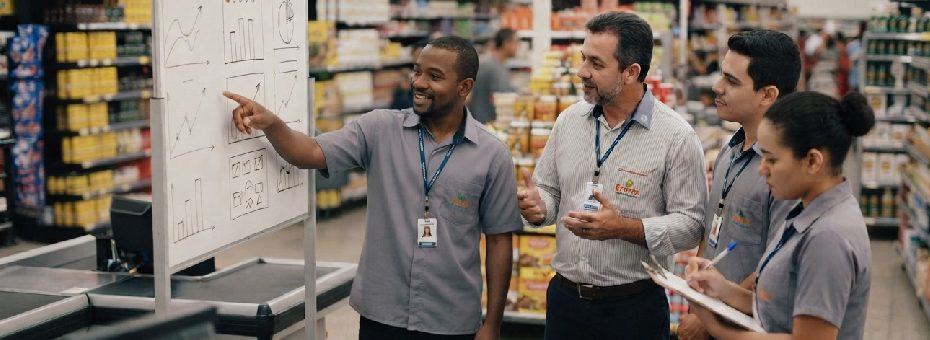
Como ‘pessoas lean’ podem revigorar o varejo brasileiro
Boreout: quando a gestão desperdiça inteligência
From centralizing hero to developer leader
The waste the company has learned to sustain
Productivity theater: why being busy is not the same as delivering value
Why AI demands more human processes
Lean leadership: concepts, practices and applications at a Hospital in Foz do Iguaçu
Read article
Knowing how to ask has never been so important
Work makes people sick when management fails
Designing succession: the role of management in business continuity
Trust creates the space where learning happens
When the future learns from experience
Foundations for smart standards
Leading with purpose in times of artificial intelligence
Building a learning hospital
Workplace safety: a non-negotiable value
In times of AI, growing means learning together
Lean without Jidoka is just Fordism
'Happiness at work' is possible, but it depends on management
Facts or data?
Executing strategy through Daily Management
Read article
3 attitudes to awaken the “learner leader”
Read article
Lean management and leadership as a strategic differentiator to attract and retain talent in logistics
Lean in a chaotic world
Rethink management to avoid “innovation under pressure”
Want to learn more about Lean culture?
Get in touch with our experts.