

Lean management and leadership as a strategic differentiator to attract and retain talent in logistics

JOBS AVAILABLE! THE DIFFICULTY OF ATTRACTING AND RETAINING LABOR IN LOGISTICS
In our recent years working as consultants in companies of different sizes and segments, we have observed that one of the biggest obstacles to the growth and evolution of these companies stems from workforce instability. This problem only grows in the current scenario, in which the market is heated, with high worker rotation (high turnover) and fierce competition for talent1.
According to data from the General Register of Employed and Unemployed Persons (CAGED), in the 12 months through August 2024, 8.2 million workers voluntarily resigned. Worker turnover in the period is 34.74%, which means that more than one third of the workforce is being renewed. According to Lucas Assis, an economist at the consulting firm Tendências, this turnover occurs mostly in the first year of employment — and it has been growing in recent months, breaking records, according to CAGED itself.
The global scenario also shows a widespread difficulty in filling positions. According to the Global Talent Shortage 2024 report, produced by ManpowerGroup, 76% of logistics and transportation companies around the world report difficulties in finding qualified professionals. The overall index is in line with the levels of 2022 and 2023, the highest recorded by the survey since it was created. In Brazil in particular, the logistics sector — although it has been growing in recent years and plays a fundamental role for the entire economy — has traditionally held little appeal for professionals in the market.
This low attractiveness of logistics is often related to the false belief that work in the sector is always physically exhausting. This affects the hiring of both unskilled labor — for example, for road transportation or distribution center operations — and skilled labor. With regard to skilled labor, some of the hardest positions to fill involve customer service specialists, data analysts, logistics engineers, and specialists in cybersecurity, automation technologies and new technologies. This strongly impacts the capacity for innovation and technological updating of companies in the sector.
Another factor that contributes to the labor shortage in general, and in the logistics sector in particular, is the entry of Generation Z, the digital natives (born approximately between 1996 and 2010), into the job market. This group's relationship with work is quite different from that of previous generations. Although they are very concerned about having economic stability (many of them lived through or suffered the consequences of the 2008 financial crisis and have a more pragmatic attitude toward money), they are quite pessimistic about the future (they do not believe in the possibility of retirement or even of buying their own home). They tend to have multiple jobs, work independently, and are known for their impatience for immediate results and for seeking flexible work models with a greater degree of autonomy — a phenomenon amplified by the new work models driven by the Covid-19 pandemic.
This behavior only accentuates the challenges related to attraction and retention and partly explains the growing turnover in the first year of employment. This turnover can be further aggravated if the company is not aligned with the values held by this generation, such as having a clear purpose that goes beyond profit, having and applying sustainability-related policies (ESG), and valuing diversity and inclusion in the workplace. When faced with work environments that, to some extent, violate their values, Generation Z natives do not hesitate to look for new opportunities that better connect with their individual causes or that bring them more immediate satisfaction.
HOW LEAN MANAGEMENT CAN HELP
Applied as a powerful management philosophy, Lean practice helps solve the main problems and challenges identified in this current context. To show how this happens in practice, we will present the essential factors that Lean practice develops and deepens, supporting human resources management.
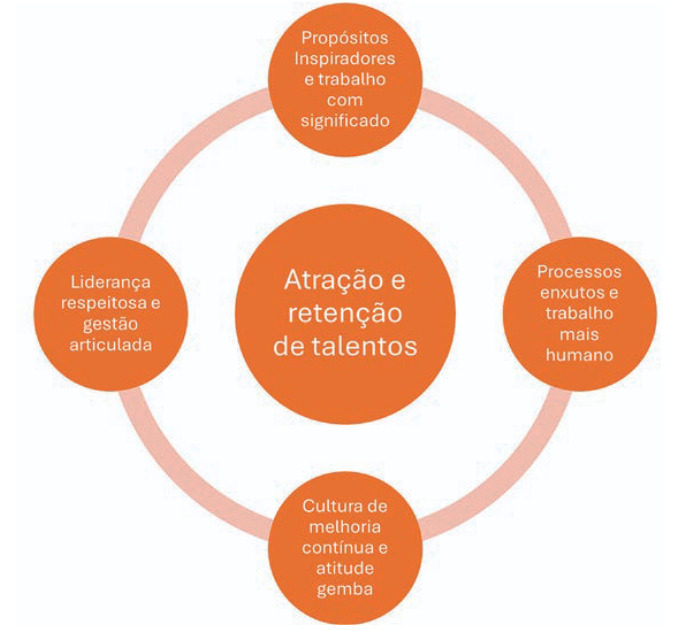
Figure 1 — The essential factors of Lean management for promoting talent attraction and retention
To begin with, it is important to consider that the practice of Lean management is not only about the pursuit of operational efficiency. In other words, Lean thinking is not limited to using tools exclusively for process optimization. On the contrary: it involves a comprehensive and sustainable approach that connects people, processes and leadership in the continuous pursuit of a common purpose of value. This means a flexible and adaptable way of thinking that continuously seeks effectiveness (efficacy and efficiency) for a logistics system. It is these sociotechnical aspects that make Lean management a model with truly transformative potential for organizations and supply chains as a whole.
INSPIRING PURPOSES AND MEANINGFUL WORK
Lean management holds that every company or every organizational transformation should start from a clear purpose, associated with creating value for the customer and, in many cases, for society. “Purpose” refers to the greater cause, the fundamental reason, the why of the logistics company's existence. This purpose of value — which, therefore, is not related exclusively to financial return — must be formulated, communicated and deployed to all levels of the organization, so that it is clear to all its employees, making each of them, to some extent, connected to the whole and acting in its favor. This definition, deployment and communication of purpose, when done using Lean approaches such as Hoshin Kanri2., enables employees to know and understand their specific role and to connect, day to day, to a greater and inspiring purpose.
The value that a logistics company delivers to society brings together a series of attributes associated with the offering itself, such as the perceived quality of the service, the price charged and availability, but also the way the organization treats its employees — particularly those on the front line, since these employees are the foundation that supports the entire logistics operation. Many front-line workers have shown a stronger bond with their teams than with leadership or the company and report a feeling of insecurity, caused by a lack of trust in the organization. However, companies that promote value alignment with transparency can stand out by creating more collaborative and meaningful environments, where employees feel connected to the organization's greater purpose.
In this sense, adopting Lean management in logistics steers the organization's path toward a common purpose, which allows the team to stay on the right course and understand the genuine meaning of its work. Building meaningful work environments encourages the authentic involvement of everyone in building the value delivered to the customer. This dynamic leads the organizational culture and the people to recognize the meaning of work and to become essential pillars for achieving the inspiring purpose.
LEAN PROCESSES AND MORE HUMAN WORK
In the Lean view, work should be designed, performed and improved, with method, by those who do it, in order to generate ever more value and less waste. In addition to reducing, in general, the efforts associated with work, this relentless pursuit of waste reduction — that is, of generating more value while consuming fewer and fewer resources, through lean processes — connects strongly with the ideals of sustainability/ESG.
In the logistics sector, with its fast pace and urgent demands that often put pressure on teams, initiatives to make work leaner have a direct impact on attracting and retaining talent. Optimizing operational processes through collaborative work with the teams generates results based on real operational needs, which also improves the employee experience by creating a more engaged and less stressful environment.
Even though work in logistics is greatly impacted by new technologies and automation (including as means of making processes leaner), technological innovations do not eliminate the dependence on the human component. The coexistence of humans and technologies in logistics should be seen as an opportunity to transform and humanize work. With the automation of repetitive activities, employees will be able to focus on innovation and continuous improvement, areas that require exclusively human skills, such as value-adding creativity and strategic vision. The dynamics in the workplace will be different, but the engagement of professionals will be more crucial than ever to ensure the success of operations.
To deal with emerging technologies and continuously make processes leaner, it is necessary to train employees to perform and improve work with the most appropriate methods. This ultimately means developing people so that they have the autonomy to improve their own work, solving problems day to day. Empowering people to design their own work is a powerful tool for the humanization so necessary for talent retention.
Furthermore, problem-solving capability is incremental and can only be developed in practice. In Lean organizations, by enabling people to solve increasingly complex problems, we progressively develop a powerful “muscle” in employees. Starting from solving problems in a contingent and palliative way (Type 1 problems – Containment), moving on to solving problems at their root causes, preventing recurrence and restoring the desired standard for which the process was originally designed (Type 2 – Deviation from Standard), evolving toward solving problems that generate new levels of performance (Type 3 – Target Condition) and finally reaching innovation (Type 4), we create in-house the specialists capable of leading the organization into the future.
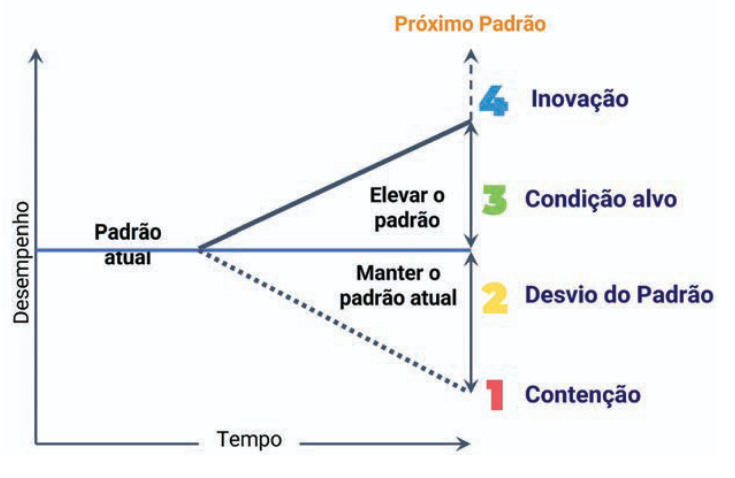
Figure 2 — The 4 types of problems (Source: Adapted from the book of the same name by Art Smalley, published by Lean Institute Brasil in 2019)
If, to begin with, we do not have skilled professionals applying for our positions, we can invest in intentionally developing professionals who are already on our staff. With Lean tools such as standardized work, skills matrices and A3s, we can create “development/career plans” that help close our labor gap. We develop people by challenging them to solve increasingly complex business problems and, in doing so, we create a virtuous circle of development, empowerment and engagement that, on top of everything, brings ever more results for the process and, consequently, for the company.
RESPECTFUL LEADERSHIP AND ARTICULATED MANAGEMENT
The responsibility of Lean leaders and managers is, first and foremost, to create an environment of respect and psychological safety, in which people feel included and can ask learning questions and make mistakes in the process of learning. Psychological safety means that employees, particularly those on the front line, can raise problems, contribute new ideas and solutions and challenge the status quo without fear of being punished for putting themselves in a vulnerable position. In these environments, where inclusion and diversity prevail, Generation Z feels welcomed and can thrive, unlike what happens in environments dominated by “command and control” behavior.
In addition, Lean leadership sets the example of attitudes that foster respect: it is present in the Gemba (the actual place where the operation happens), listens, challenges (toward the purpose) and supports, teaches, learns and encourages teamwork, creating a truly respectful environment — that is, one more conducive for those who want to develop and act with autonomy. It is the Lean leader's responsibility to ensure that their employees succeed and that each of them brings “to the game” the most of their potential and contribution. This respectful attitude on the part of leadership, as long as it is genuine and authentic, is capable of engaging and retaining employees.
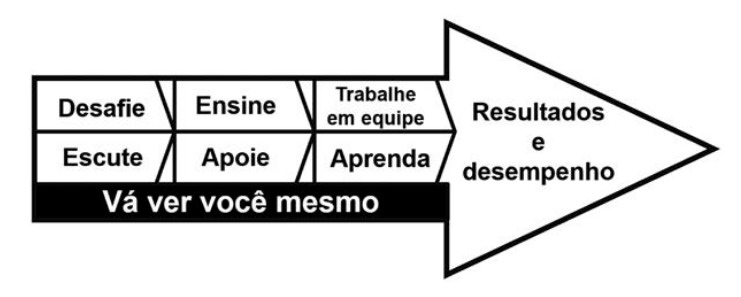
Figure 3 — The practices to “Lead with respect” (Source: Adapted from the book of the same name by Michael Ballé and Freddy Ballé. Published by Lean Institute Brasil in 2014)
Moreover, much has been said about Generation Z and mental health problems. This generation has come to be known as the “anxious generation,” which is strongly related to its impatience for immediate results, narrow focus and multitasking tendency, heightened by the constant use of social media and by more hybrid and remote work models. These characteristics also show up in the workplace and explain, to a certain extent, the difficulty this generation has in developing more consistent social bonds. On the other hand, in a kind of vicious circle, the lack of solid bonds generates more anxiety and, consequently, more dissatisfaction and job changes.
However, as a social approach, the Lean management philosophy takes into account and values elements that are essentially human, such as communication and relationships. Through an articulated management system — with clear standards and routines for monitoring performance, making it possible to intervene to the right extent, as well as artifacts such as Value Stream Mapping and the A3, which break down walls and bring people and areas closer together —, it is natural for social interactions to be fostered (between the leader and the employee; the leader and the team; the employee and the team; and among peer areas) with a clear purpose. These interactions, in turn, foster the creation of more empathetic, solid and lasting bonds and relationships, leading to a virtuous circle of improved communication, reduced anxiety and openness to addressing and solving problems, which creates a positive environment that is always evolving.
This is also a factor that improves the employee experience and helps with engagement and retention, while also increasing the company's attractiveness in the medium and long term, creating a solid and sustainable differentiator for its employer brand.
CULTURE OF CONTINUOUS IMPROVEMENT AND GEMBA ATTITUDE
By encompassing the beliefs about what is “normal” within an organization, organizational culture involves cognitive assumptions. These assumptions are, most of the time, deduced or extrapolated from the perceived behavior of leadership and from corporate practices, such as the evaluation and reward system.
Here, the Lean system offers organizations the opportunity to transform people management practices into spaces where continuous learning and collaboration are integrated into the routine. One example of a practice is the “Suggestion Program,” designed to involve and value teams, in addition to promoting continuous improvement. If well designed, the program reflects employees' willingness to identify problems and propose solutions routinely. This approach contributes to team engagement by establishing a solid foundation for building resilient, innovative organizational cultures prepared for challenges that demand excellence.
Indeed, the most visible and actionable part of culture is corporate practices and rituals. By adopting practices and artifacts for leadership that are, by their very nature, inclusive and that favor teamwork, such as “Daily Management (DM),” a pleasant collaborative environment is created in which Generation Z and other employees feel safe and challenged to learn, contribute and innovate. And this can be a competitive differentiator for a sector facing challenges such as those in logistics.
By bringing leadership closer to day-to-day operations, leading everyone to pay attention to the Gemba, DM allows a closer connection between the leader and the everyday challenges of each team member. This favors the leader's involvement in the reality of the operation, where tangible problems occur every day. Here, the Gemba attitude is fundamental — being present at the place where the work actually happens, following the classic triad “go see, ask why and show respect.” If practiced genuinely, this can directly involve employees in problem solving, fostering a sense of belonging and appreciation.
This attitude can raise issues directly related to the employee experience that may be neglected or not directly perceived by senior leadership.
LEAN MANAGEMENT AS THE KEY TO ATTRACTING, RETAINING AND DEVELOPING TALENT
In summary, Lean management can promote talent attraction and retention by integrating four essential factors. First: inspiring purposes and meaningful work create a sense of purpose that engages employees. Second: lean processes and a more human work environment focus on delivering value and promote a more satisfying experience. Third: a culture of continuous improvement combined with the Gemba attitude encourages active participation and problem solving right where problems occur. Fourth: respectful leadership and articulated management value people and strengthen commitment and collaboration, creating a sustainable environment for talent development.
Throughout this article, we hope to have shown that, by implementing the Lean management and leadership philosophy, logistics companies can stand out by creating an attractive environment, capable of developing employees with distinctive problem-solving and innovation skills, closing their gaps in attracting and retaining labor. Considering the general market scenario, and that of the logistics sector in particular, this can become one of the organization's main competitive differentiators, enabling it to survive, evolve and thrive into the future.
- Source: Economia & Negócios section of the newspaper O Estado de São Paulo, October 27, 2024.
- Of Japanese origin, Hoshin Kanri is a Lean management method for ensuring that a company's strategy is executed throughout the hierarchy.







