

Lean transformation in procurement: The SKIC case in civil construction
In a traditional sector such as construction, innovation and incremental improvements in supply management are paramount to companies' vitality in the face of market competition. By adopting Lean principles and investing in technology for digitalization, SKIC's purchasing processes were redesigned with a focus on agility and efficiency. Covering everything from the issuing of the purchase requisition to the receipt of products and services — and subsequent payment —, the “Procure-to-Pay” value stream was redesigned end to end. This article shares the improvement journey that enabled SKIC Brasil to reduce costs, optimize resources and deliver projects with higher quality.
Getting to know SKIC and its strategic purchasing function
SKIC (Sigdo Koppers Ingeniería y Construcción) is a Chilean-owned company that leads the large-scale construction and assembly industry, with operations in Chile, Brazil and Peru. Since its founding in 1960, it has taken part in major projects involving engineering, construction and assembly. The company has extensive experience in EPC projects (Engineering, Procurement, and Construction, a contracting model in which the contractor is responsible for every stage of the undertaking, which demands high levels of specialization) and has completed more than 800 projects in mining, energy and other segments.
In Brazil, the company began operating in 2016 and today has more than 3,500 direct and indirect employees. Its activities in the country began in the energy sector — with more than 2,000 kilometers of transmission lines installed, two 500kV substations and the execution of a 636MWp Photovoltaic Plant (UFV). It continues to advance in the mining and steel market with more than 12 projects under contract. Now SKIC is seeking to expand its presence in other sectors of the Brazilian market, such as pulp and paper, heavy industry, oil and gas, sanitation and ports.
In the construction sector, materials and equipment can account for about 65% of a project's total cost, which reinforces the importance of the purchasing area as vital to the business. Since management is not limited to negotiating prices and supply conditions, Purchasing's responsibilities include attention to social and environmental responsibility, contract management and monitoring of delivery flows for compliance with deadlines and quality, always ensuring transparency and compliance. The processes of selecting, evaluating, qualifying and developing suppliers cut across the fulfillment of these objectives and involve strong joint participation of other organizational areas, particularly Engineering and Quality.
Thus, the strategic view of each activity in Purchasing guides the development of an overall plan for the projects, which can be a challenge in a market that is not yet mature in its planning proficiency. Similarly, in the Logistics area, the challenges of inventory planning and control, maintenance control and equipment utilization — and ensuring its availability — are an important driver of the undertaking's final cost. Just like the design and execution of the project, Purchasing and Logistics can determine whether or not the undertaking succeeds.
For SKIC, the purchasing area is defined as much more than just a department supporting operations; it is a strategic function that directly impacts the efficiency, quality and success of projects. With a well-defined process structure and an approach focused on excellence, it can help ensure that the operation is carried out efficiently and competitively, ultimately promoting the sustainability and growth of the business. In a challenging and dynamic environment such as construction and engineering, the purchasing process is decisive for overcoming obstacles and adapting quickly to new demands. The factors that guide the strategic view of purchasing must therefore be based on the best negotiations, efficiency of internal processes, effectiveness of the flow of deliveries to sites, transparency and integrity.
Necessity is the “mother” of lean: motivations for a transformation in purchasing
Despite the orientation toward, and recognition of, Purchasing's strategic view, it is possible to observe several “pain points” and inefficiencies that directly affect the needs of the projects and that can be influenced by supply flows. Examples of “symptoms” found in purchasing execution in the construction sector include: fragmented processes, inefficient supplier management, outdated cost and schedule estimates, administrative overload, lack of technical specifications for the budgeting process, logistical challenges in meeting project demands and a shortage of local suppliers.
In addition, the construction market has faced several challenges in recent years, especially associated with productivity problems and waste. In this scenario, applying Lean practices stands out as an effective approach to optimize processes and reduce costs, and is particularly relevant in the area of Purchasing and supply Logistics.
By exploring, based on the SKIC Brasil case study, the main reasons why Lean implementation can transform supply management, we aim to contribute to partners and other stakeholders in this business segment.
Supply management in the construction sector, where deadlines and budgets are often tight, is also characterized by a unique dynamism. Crises and changes caused by various phenomena are common, such as weather events, changes in the workforce, out-of-scope services and engineering adjustments. This macro context also reinforces the relevance of applying Lean principles: by instilling more continuous flows of materials and information, with an eye on adding value, Lean supply management can translate into the continuous elimination of waste, managing processes in the right measure, genuine team engagement and leadership with respect.
“Laying the foundations” to tackle purchasing challenges with lean thinking
The work began in mid-November 2023. Starting with rounds of interviews with the main process actors at SKIC's headquarters in São Paulo (SP), at the projects in progress and with the company's top leadership, this stage was essential to understand the current context and “hear the voice” of internal customers, which made it possible to define the main guidelines for the project:
- Delivery to the sites on time, within specification, with quality and within budget;
- Efficiency of the purchasing process in negotiation, long-term partnerships and cost management;
- Transparency: visibility at all levels of parameters, purchase quality and inventories;
- Integrity to reduce risks, from the purchase requisition to delivery at the sites.
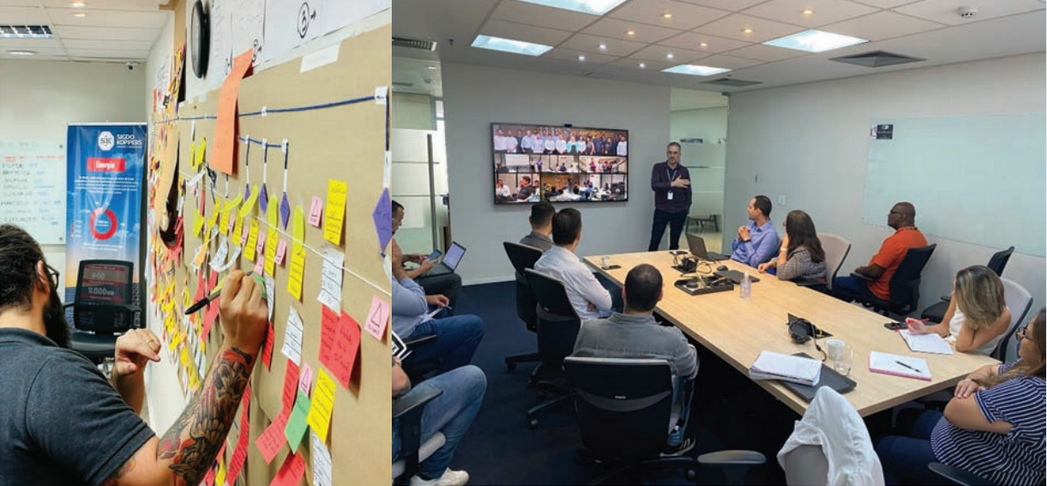
Next, the main people involved in the project went to the Gemba (the sites, where value is actually added). This made it possible to collect information based on facts and data with the intention of ensuring impartial observations, avoiding subjectivity that could steer the project toward undesired results, or results that did not optimize the whole “Procure-to-Pay” flow. Back from the field, an in-person workshop was held with several leaders of the processes involved.
Called “Learning by Doing” (from the English “Learning by Doing”), the joint activity provided an immersion in Lean practices, and the entire “Procure-to-Pay” value stream was mapped in its “Current State.” This promptly brought out the main “pain points” and opportunities that fed the next wave of work: a new workshop, in which participants from the different areas involved in the flow jointly developed the design of the “Future State,” including quick wins and other countermeasures structured into an implementation plan. Action squads were then defined, with teams, leaders and sponsors allocated to each front in the practical implementation of the “Future State.”
Implementing lean in purchasing: raising the building
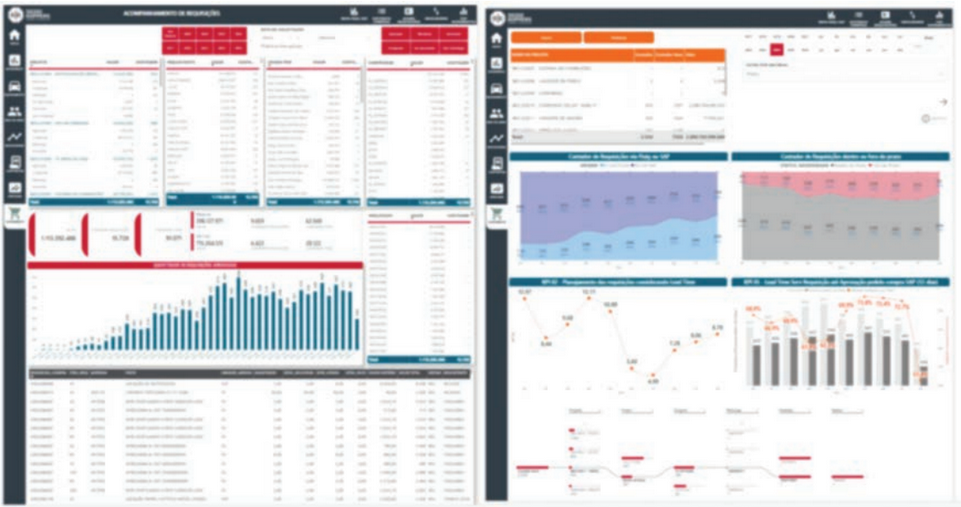
SKIC Brasil, in its effort to implement Lean practice, identified opportunities for substantial improvements in its operational efficiency, resulting in 27 initiatives distributed among leaders across the company. Among them, digital transformation countermeasures for the processes of material requisitions, approval flow and technical specifications have demonstrably contributed to the efficiency of purchasing processes. Also, the definition of integrated workflows and the preparation of a database made the entire process visible, which made it easier to identify bottlenecks between the “Procure-to-Pay” steps.
SKIC Brasil's “Procure-to-Pay” value stream covered the scope from issuing requisitions for materials and services, through their receipt at the construction sites, to the payment processes. By analyzing and restructuring the flow, the purchasing teams were able to make sure the right materials arrived at the right time, avoiding project delays and minimizing excess inventory — which often generated additional costs. The improvement also fostered greater connection between different areas of the organization, making it possible to improve negotiating conditions among them and with suppliers, as well as to mitigate risks that could cause irreversible losses, such as exposure of the company's image, serious accidents, and delays that could doom the success of the undertaking.
One point worth highlighting is the importance of data analysis in Lean management. By collecting and interpreting relevant data, the purchasing teams were able to identify consumption patterns, predict future needs and make better-informed decisions. Once it becomes a habit, this not only makes it possible to improve efficiency but also to contribute to the sustainable management of resources — an increasingly relevant topic in construction. This learning contributes to the construction ecosystem: inevitably, companies in this segment feel the same “pain points” and can, based on these reflections, arrive at valuable insights to drive their own initiatives for operational efficiency.
Measuring results, impacts and lessons learned
The improvement work, which is still under way, has already achieved significant results. More than 20 thousand material registration codes were cleaned up in the ERP to standardize material requisitions; a significant volume of requisitions became digital, corresponding to 7,500 items on the virtual platform developed for this purpose, representing a considerable financial value in purchases. Over the last six months, it was possible to achieve an average of 70% of requisitions for contracting services within the lead time challenged in the “Future State,” and the same for planning requisitions “within the lead time” according to product categories, which resulted in an average fulfillment rate of 75%.
Add to this the intangible benefits in running the project. A strong integration and a genuine change of mindset among those involved were witnessed. The methodology for tracking actions, involving daily management and weekly reports of results, ensured visibility and a leading role for employees. With top leadership drawing closer, a boost in the sense of belonging and ownership in “making it happen” was perceived as a factor of motivation and engagement, which was even reflected in talent retention.
Carrying out a project with a scope as broad as “Procure-to-Pay” across the entire supply chain in the construction sector was a major challenge. Not only because of the number of processes and steps involved, but also because of the challenges of the “scale barriers” every construction company has: obstacles that limit or hinder increases in capacity and efficiency on projects as the size or complexity of operations grows. This is challenging, given that every project is unique and has its own particularities, whether on the part of the client, the region, the culture or the “work habits.”
An important lesson in dealing with these specificities and ensuring the continuity of the improvement process was the creation of process guardians. The guardians' mission is to ensure that attention is turned to the new standards established during the mobilization of new projects, considering best practices, and to accompany new employees for a period on “our way of doing things.” This also aims to address cognitive assumptions that are perceived — for example, through phrases loaded with confirmation bias, such as “that doesn't work on a construction site” or “on a construction site it's always been this way.” The process guardian role proved effective: projects that adopted this practice achieved 100% adherence to the new improvement standards designed, which also strengthened the bond with the site manager to articulate and maintain his essential sponsorship for sustaining the improvements.
Lean in purchasing: effectiveness in facing contemporary challenges
The reality of the construction sector is marked by significant challenges, but also by promising opportunities. Among the main challenges is the need to increase efficiency, reduce waste and improve project quality. Adopting Lean practices in the construction supply chain emerges as an effective response to these challenges, promoting a culture of continuous improvement and process optimization.
These practices, combined in purchasing functions, offer valuable opportunities for the construction sector. They encourage collaboration between teams, efficient use of resources and the elimination of activities that do not add value. In addition, they help projects be completed on time and within budget, increasing customer satisfaction, workforce commitment and the company's competitiveness.
It should be emphasized that Lean implementation in purchasing is not just a matter of seeking operational efficiency, but of transforming the organizational mindset. Adopting Lean principles requires commitment at all levels of the organization, promoting a continuous improvement mindset. This can lead to a significant transformation in the way construction companies operate, from the construction site to strategic decisions.
In conclusion, Lean management in the purchasing area of the construction sector proves to be an effective strategy for facing contemporary challenges. By eliminating waste, improving processes and fostering partnerships, companies can not only reduce costs and increase efficiency, but also secure a competitive edge in a constantly evolving market. Purchasing management should not be seen merely as an operational function, but as a strategic element in the pursuit of operational excellence and the delivery of value to the customer.
All professionals in the sector are invited to reflect on their current operations and consider how small changes can lead to great results. Adopting Lean practices is not just a trend, but a necessity to ensure the long-term sustainability and success of businesses. “We are what we repeatedly do. Excellence, then, is not an act, but a habit.” May cultivating the habit of excellence in daily practices transform the construction sector for the better.







