

Lean in hospital pharmacy and logistics: an inspiring case from Hospital Sírio-Libanês for continuous improvement
Logistics is a fundamental part of hospital operations. Without efficient management of the whole, including logistics, it is not possible to improve the quality of health care. The waste resulting from the expiration of medicines, disposable materials and OPME (Orthoses, Prostheses and Special Materials) directly impacts costs, challenging the balance between the level of service provided and financial viability. This article describes how a team focused on improving pharmacy and logistics operations, using the practice of Lean thinking, managed to create an environment conducive to continuous improvement, ensuring sustainability without compromising quality — which is a non-negotiable principle in health care.
The Challenges of Hospital Sírio-Libanês
With more than 100 years of history, Hospital Sírio-Libanês faces ongoing challenges in the pursuit of operational excellence and financial sustainability. The hospital unit in Brasília records an average monthly loss of 0.5% of the stocked value due to product expiration, such as medicines, disposable materials, imported items and Orthoses, Prostheses and Special Materials (OPME). This percentage loss has grown over the years: from 0.31% in 2019 to 0.67% so far in 2024. This is a significant challenge for the institution, which, for every million reais spent on storage, loses 5 thousand to operational waste. The problem worsened with the growth of inventory and an increase of more than 300% in the number of patients treated between 2019 and 2024. In addition, the unit must always be prepared to treat highly complex clinical cases, as it is a reference general hospital in the health system.Currently, the institution is focused on reducing costs and reassessing the procurement flow, still influenced by the “overstocking” implemented during the pandemic, which aimed to avoid supply shortages and ensure patient safety.
Getting to Know the Brasília Hospital Complex
Hospital Sírio-Libanês is recognized by several international certifications, including JCI (Joint Commission International), World’s Best Hospital, QOPI (Quality Oncology Practice Initiative), GPTW (Great Place to Work), as well as the ISO 14.001 and ISO 45.001 standards. These accreditations highlight the Hospital's commitment to society, evidencing its dedication to promoting a full and dignified life. They assess patient safety, quality of care, adequacy of infrastructure and efficiency in management and operations, among other aspects.
In 2023, the Brasília operation carried out more than 7 thousand hospitalizations and 4 thousand surgeries, in addition to treating almost 27 thousand patients in the Emergency Department and more than 14 thousand in the Oncology Center. Around 570 thousand exams were performed over the year, with the support of a team of 1,326 employees. The unit has 63 inpatient beds, six beds exclusively for Bone Marrow Transplant (BMT), 25 critical care beds, five operating rooms and 24 bays for oncology treatment, as well as a clinical staff of 659 physicians.
To meet this significant demand, the hospital complex has an external distribution center, 30 km away, used for extra-hospital supply, and an internal storeroom for intra-hospital supply. In addition, it has an internal network of pharmacies specialized in different types of hospital supplies, meeting the specific needs of each department:
• The surgical center pharmacy is responsible for supplying OPME
for highly complex surgeries, including robotic procedures;
• The central
pharmacy manages kits with medicines and materials for procedures, in addition to monitoring and
restocking electronic dispensing cabinets, ensuring agility for the care team;
• The
Diagnostic and Imaging Center pharmacy supplies procedure “carts” and
provides OPME items for certain procedures;
• The
radiopharmacy produces elutions with radiopharmaceuticals for treatments and
diagnostics;
• The oncology pharmacy compounds high-cost medicines
with occupational risk, ensuring safety and efficacy in patient treatment;
•
The storeroom handles intra-hospital supply of the other items needed for the
operation.
The ICU (Intensive Care Unit) and the Emergency Department use electronic dispensing cabinets, replacing the need for physical pharmacies. This approach offers better cost-effectiveness for the institution, eliminating the need for the space and assets associated with a traditional hospital pharmacy, in addition to reducing staff expenses, since these cabinets are available 24 hours a day. However, the supply logistics require special care, given that these cabinets are the only source of stock immediately accessible to hospital care.
To ensure efficient supply, the replenishment frequency is high and the internal space well organized, which allows agile restocking and effective control, similar to a Formula 1 pit stop. While the cabinet is being restocked, the equipment is temporarily out of service for care demands.
This process has already evolved significantly: restocking time dropped from two hours to just 15 minutes. However, the logistics operation faces significant challenges in remaining sustainable, safe and efficient, especially considering the complexity of the services provided.
Following the logic of Art Smaley in his book “Four Types of Problems”, these challenges can be classified into four main categories:
1. Containment: Relates to reports that monitor items close to expiration, based on inventory movement, avoiding redundancy in physical checks and the presence of expired products available for use;
2. Deviation from standard: Refers to the lack of monthly physical checks of supplies about to expire in inventories, both centralized and peripheral;
3. Target condition: Involves the lot-inventory project, which aims to update the system with product expiration dates in real time, showing their location and expiration date, especially for high-cost items;
4. Innovation: Involves developing new indicators in the management system, such as the optimization indicator, which aims to demonstrate improvements — what was no longer lost (expired).
These problems require solutions capable of ensuring both the efficiency and the quality of the services offered. Shortage challenges are often intertwined with the lack of efficiency of expiration control systems. An item that initially would have a sufficient balance for 20 days and would not be considered critical can quickly become a problem if there is a sudden drop in stock, especially in a large hospital environment, which can create a care risk if not controlled.
Balancing the level of service desired by the institution, currently set at 97%, with the goal of keeping losses below 0.3% of the stocked volume — which directly impacts medicine costs — is a significant challenge. To achieve this balance, it is essential to consider the impact of turnover and absenteeism in the team of assistants, which increase staff expenses and create operational difficulties in daily routines.
This makes the pursuit of operational efficiency and financial responsibility even more complex, underscoring the importance of processes that are simple, well organized and that show respect for the team.
Solving the problem of expiration losses
Identifying the problem in the increase in expiration losses, observed in the first four months of 2024 (with a loss of 0.61% of inventory), and comparing it with the results of recent years (e.g., 0.53% in 2023), the pharmacy and logistics team was motivated to seek an innovative solution. Together with leadership, they decided to adopt the lean approach to address the problem, following the problem-solving logic of A3 Thinking.
The hospital already has several corporate initiatives using the practice of Lean thinking, such as Lean in Emergency Departments (Proadi SUS) and the mapping of the medication chain to reduce delays in the administration of medications by the care team. In this way, the hospital's continuous improvement team came together to explore lean practice not only as a tool but as a work philosophy. By promoting teamwork and leadership with respect, the whole team has been becoming more engaged.
To tackle expiration losses, a lean team was formed, made up of pharmacists, inventory analysts and storeroom and pharmacy assistants. The superintendency and senior management were also involved, sponsoring specialized courses and offering internal training. The organizational culture, albeit slowly, began to transform with a renewed focus on reducing waste.
However, the stakeholders involved went beyond these functions. The problem identified, addressed with the help of the Ishikawa Diagram, proved to be multifaceted, involving several committees such as the Pharmacy and Therapeutics Committee (CFT), the Materials Standardization Committee (CPM) and the Drug Therapy Committee (CTM). These committees analyze clinical outcomes, events such as “near miss” (near error) and include physicians, nutritionists, physiotherapists, administrators and pharmacists. The diversity of knowledge and experience was essential to achieving the best results.
The Ishikawa Diagram also made it possible to analyze the process from several perspectives, helping to identify the possible causes of the problem. During a meeting with the lean work team, exploratory questions were asked and improvement opportunities were identified. Each member had the chance to speak up, and an environment of psychological safety was established, where everyone, regardless of their hierarchical position, felt comfortable pointing out failures they observed in their daily routines.
Initially, 25 potential causes were identified. However, during the project mentoring process, carried out with Lean Institute Brasil, the causes were classified, and 17 were prioritized to move on to a more in-depth analysis.
In the process of structuring the improvement project, the methodological steps of the “left side” of the A3 Form highlight the importance of clearly understanding a problem in order to find an effective solution. Charles Kettering's famous phrase, “a problem well stated is a problem half solved”, served as a powerful motivator to deepen the diagnosis of the problem.
“A problem well stated is a problem half solved.”
Using loss data from the last five years and applying the Pareto Principle1 to ensure that efforts were directed in a meaningful and assertive way, the logistics process was diagnosed, and the operation flow was mapped with the Makigami tool. This mapping revealed steps that could be eliminated and identified bottlenecks that, although indisputable, were not initially visible. With this information, it was possible to deepen the analysis until the root causes were identified.
After the analysis and understanding of the problem were completed, the “right side” of the A3 Form was started. Although there were still many causes identified, each with its own importance, it was necessary to classify them in order to guide the priority of the actions. To this end, an Effort vs. Impact Matrix was jointly developed by the project team, and five main causes were prioritized to be addressed on the basis of low effort and high impact.
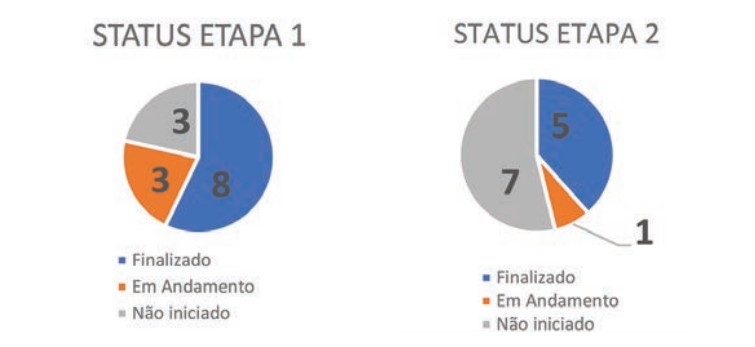
Next, a specific countermeasure was assigned to each identified cause. During this process, it was found that some countermeasures could be grouped: implementing one of them would also impact the others. Thus, a total of 14 countermeasures were listed and organized into two stages according to the Effort vs. Impact Matrix: quick wins (quick wins) and medium-term solutions. The second stage (medium term) was made conditional on the completion of the first (quick wins).
Immediately afterward, delivery schedules were set based on team availability, and owners were assigned to each planned action. This ensured a structured and efficient approach to implementing the countermeasures.
Current progress and paths to continuous improvement
From the countermeasures listed and classified, an implementation plan was drawn up. The overall status of the planned actions is shown in Figure 1.
A project indicator dashboard was developed to allow results to be monitored (Figure 2). It presents information on the monthly loss percentage, the percentage of optimized products (those that underwent preventive actions to avoid expiration) and a comparison with the set loss target, all compared with the average inventory balance value for the month.
Valuing inventory optimization was a strategy adopted by the team to demonstrate the impact of the actions taken so far and how their absence would result in an increase in the loss percentage (Figure 3), which would double the average loss compared with 2023. As the project continues, with the implementation of the remaining actions, the percentage of expired products is expected to stabilize within the established target and the prevention actions to remain active, mitigating risks.
Other low-effort, high-impact actions were prioritized, such as deepening 5S (senses of utilization, organization, standardization, cleanliness and discipline); presenting indicators to the operational team; creating an inventory movement report with expiration control, allowing a double check in the processes of withdrawing or sending items about to expire; daily management using a checklist of priority routine activities; and, finally, changing the labeling process for items about to expire.
Countermeasures were also structured for the high-impact, high-effort actions listed in the Effort vs. Impact Matrix. Only one has been completed: the elimination of three steps in the process mapped in the Makigami, which made the work more agile. Three others are under way, with delivery scheduled for 2024: improving the integration between GTPlan (software for planning) and Tasy (software for hospital management), which aims to optimize inventory operations and allow better analysis of consumption, distinguishing consumption from transfer; improving the forecasting report for high-cost medicines linked to oncology protocols and integrated with GTPlan, which changes the statistical method for purchase forecasting; and the “lot inventory” project, which seeks to give the Tasy system visibility for monitoring product expiration dates, eliminating the need to go to the physical storage location to check expiration dates. These advances reflect the complexity and difficulty of implementing these actions, which often require sponsorship, whether financial or in terms of influence, to be prioritized.
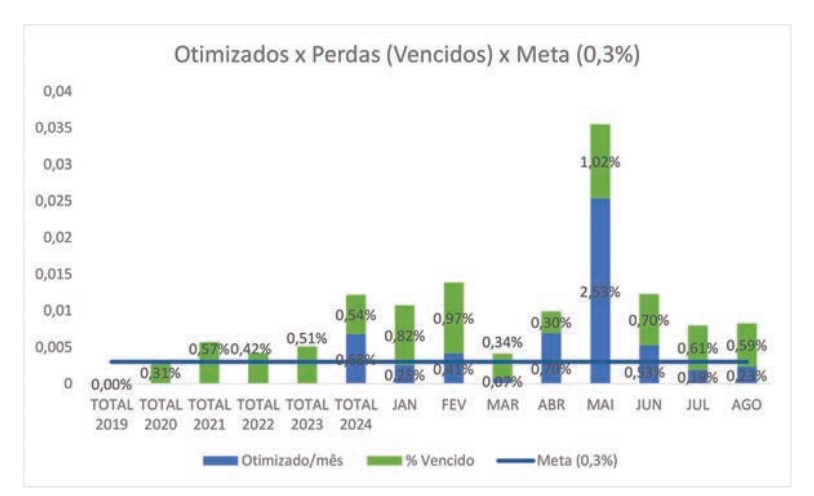
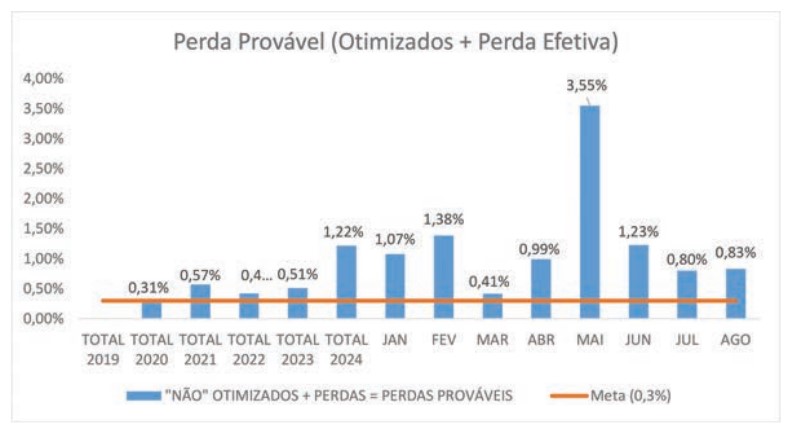
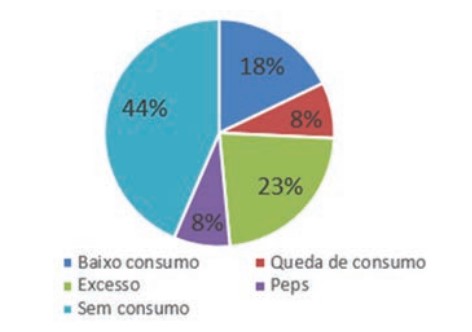
Although the target result for the expired percentage has not yet been reached, the shared vision of continuous improvement and the practice of Daily Management have contributed significantly to greater engagement and understanding of the reality of the operation. The analyses previously carried out were reviewed under PDCA logic, and the main reasons for expiration were again identified and reclassified. This has made it possible to explore actions that were previously considered low impact and high effort, but which can now be prioritized. Among these actions is the proposal to establish suggestions for new standards for the committees (CFT and CPM) based on expiration history, adjusting them to regional needs, according to the classification in Figure 4.
Lessons learned and obstacles overcome
During the stages of building the project, it was observed that, at first, the opinions of team members were not sufficiently valued. Lean practice, which emphasizes the importance of going to the Gemba and listening to people with respect, brought a significant change. Respecting and involving employees in building solutions not only made many processes move forward more effectively, but also encouraged some to seek further improvement. There are currently four groups working on the “Focused Improvement” project, each with initiatives relevant to their functions and aligned with the institution's strategic objectives.
Lean practice is, above all, an ongoing journey that aims not only at optimizing processes (efficiency), but also at engaging people in continuous improvement until the established objectives are achieved (effectiveness) – often revised for the better. By involving all employees in the improvement process, Lean promotes a collaborative and dynamic environment where effectiveness becomes a natural consequence. The Lean journey is marked by the constant pursuit of better practices and results, where each small improvement contributes to achieving the organization's larger objectives.
However, the path was not easy. The Pareto Principle was essential for directing efforts with surgical precision, attacking areas with the potential for major impact. Team engagement did not happen overnight: it took periodic meetings and constant vigilance to ensure that commitments were kept. Daily Management required the same precision and discipline in the routine and, even with action plans that were not always successful and some technical or behavioral barriers, the culture of quality and respect helped overcome obstacles. Although some actions went beyond the planned deadline, progress continues to be made.
Some of the logistics challenges faced
were:
• The need to change the storage location to serve a specific lot for the
optimization of items about to expire, which often resulted in incorrect records and
duplicate inventories;
• The difficulty of locating items efficiently due to the
information system's restriction of allowing only one location per
item, which hampered handling by 40 pharmacy and storeroom assistants;
• A
FIFO label, which indicated that expiration was near, in practice caused rework, since it had to be checked
again the following month, even after the label had been applied up to 90 days before
expiration.
These challenges were addressed with new proposals from the team, resulting in the elimination of three steps from the process previously mapped with Makigami. The team matured and leadership established rigorous monitoring processes to ensure compliance with the new process, including the removal of supplies about to expire from the peripheral inventory by the first half of the month and the double check with the movement report of supplies about to expire. The location of items became accurate and the labels now indicate only the items that expire within the current month, eliminating rework.
In short, the team “bought into the idea” of continuous improvement and overcame its initial insecurity, bringing maturity to the process, improved management and greater engagement. The main lessons learned were: organize the data; go to the Gemba (the actual place) to observe how the work is done; listen more than you speak; prioritize what brings results; break complex problems down into manageable parts; and share the results with the team, whether positive or negative. It was essential to set aside time for reflection (hansei), making it possible to highlight what needed to be corrected and to celebrate achievements with the team.
Efficiency, collaboration and impact
When reflecting on the Lean journey in the logistics operation of Hospital Sírio-Libanês in Brasília, it becomes clear that operational efficiency and the quality of health care must be intrinsically linked for effective management. The idea that “the institution's financial health has nothing to do with me” or that “the logistics team's actions do not directly impact the patient” no longer holds. Every part of the hospital, whether in direct care or in administration, is an essential link in a large living organism. Integration and multidisciplinarity are fundamental, as is the Lean approach to facing contemporary challenges.
Whether in private or public health organizations, there is no longer room for operational inefficiency. Problems related to losses from the expiration of medicines, disposable materials and OPME (Orthoses, Prostheses and Special Materials) require forceful action to be solved. Becoming aware of the problem and its causes helps break down behavioral barriers and involve the entire organization in a common goal of reducing waste. This not only improves efficiency and sustainability, but also strengthens the organization's competitiveness, promoting better working conditions, more jobs and respect for the community.
In addition, psychological safety in the hospital environment is an essential pillar for the success of any management transformation. Creating an environment where everyone feels safe to express their opinions and contribute to continuous improvement is vital for a sustainable improvement journey. Clarity of purpose and social connection are fundamental to building trust and engagement. The transformative potential of management, when combined with Lean practices, goes beyond operational efficiency — it encompasses human and strategic aspects of leadership, which are fundamental to driving genuine and sustainable change.
In practice, Lean thinking goes beyond tools and techniques; it is a philosophy that promotes a profound cultural transformation. At first, the understanding of Lean may seem centered only on methods and processes, but it soon reveals itself as an approach that respects and values people, engaging them in the constant pursuit of improvement. Solving problems becomes not only a goal, but a shared mission that transforms the way the team deals with challenges.
“At first, the understanding of Lean may seem centered only on methods and processes, but it soon reveals itself as an approach that respects and values people, engaging them in the constant pursuit of improvement.”
In short, it is clear that the Lean journey at Hospital Sírio-Libanês is not just about optimizing processes; it is about engaging people, building a culture of respect and collaboration, and achieving lasting results that benefit both the institution and the community. Transformation is an ongoing path, and the practice of Lean thinking has provided the approaches and mindset needed to travel this path successfully.
References
• SMALLEY, Art. Four Types of Problems: from reactive
containment to innovation. Lean Institute Brasil. São Paulo-SP,
2019.
• FERRO, J. Roberto; GOUVEIA; Robson. Daily Management to execute strategy.
Lean Institute Brasil. São Paulo-SP, 2022.
¹In simple terms, the “Pareto Principle” states that 80% of consequences result from 20% of causes.







