

Tackling COVID-19 with lean healthcare
A team from the Lean Global Network (Global Lean Network) of lean practitioners and coaches shares a set of lean healthcare tips that hospitals can use today to support their battle against Covid-19.
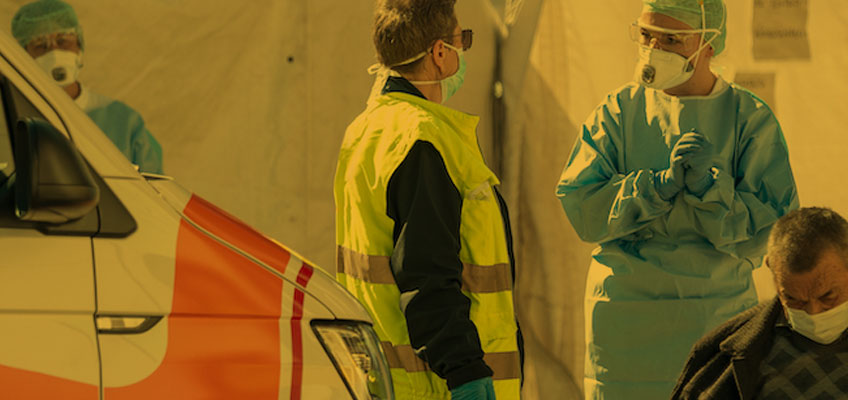
The Covid-19 pandemic is pushing healthcare systems around the world to their limits and, despite the heroic efforts of healthcare professionals, working hard is often not enough. The images coming from the most brutally affected areas tell us that emergency departments are overflowing, hospitals are struggling to treat everyone because of the high number of people the virus sends to the ICU, and exhausted staff are often forced to work without adequate protective equipment.
As the Global Lean Healthcare Initiative, we are supporting healthcare organizations around the world by applying lean thinking and practice to tackle this crisis. Sharing our thinking across four continents, we have identified seven crucial lean practices — each with a set of actionable tips — that can really help a healthcare team deal with this emergency more effectively.
- Design the patient flow.
- Visual management.
- Standardized work to ensure safety, quality and efficiency.
- Engage in short, structured communication cycles.
- Build skills quickly with a people development plan.
- Review priorities to secure capacity.
- Level capacity and protect staff.
1. Design the patient flow
- Understand the demand and the pace of each patient flow.
- Visually map your newly designed flows and processes to better understand and share them.
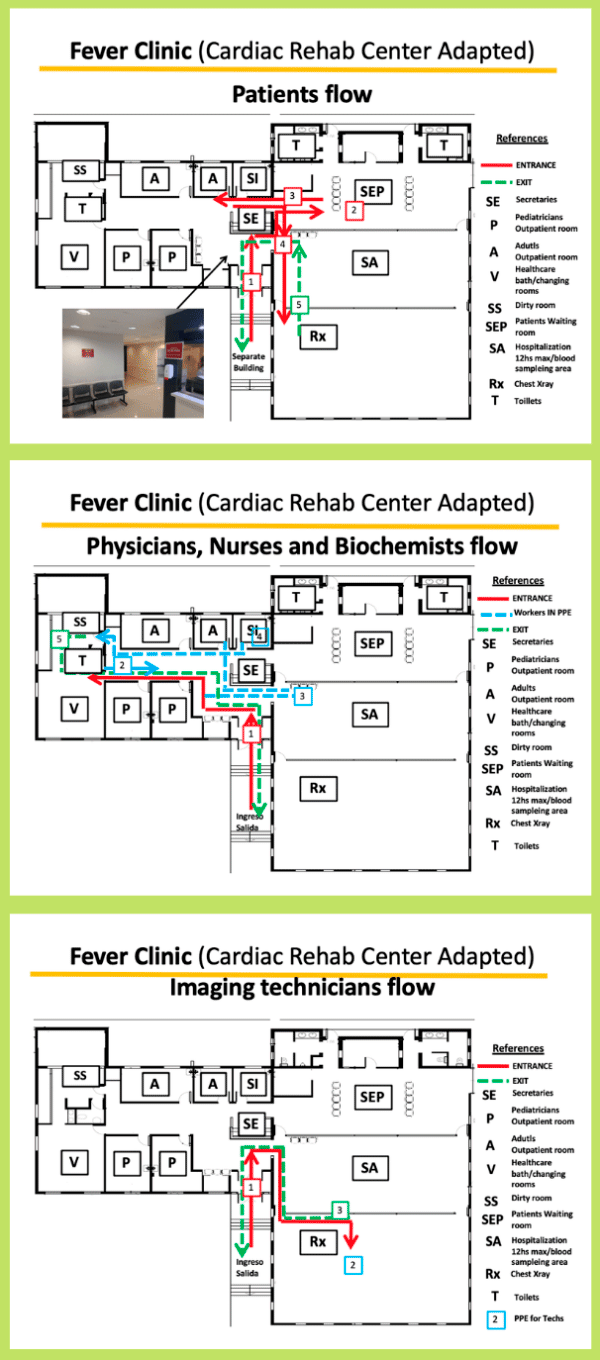
- Physically segregate the flows and ensure that critical patients have access to dedicated resources so that they do not cross paths with other patients. Separate patients with respiratory symptoms from those without them. Minimizing the number of flow groups reduces complexity as we move patients through the system.
- Develop a plan for each flow: for example, Covid-19 patients with mild symptoms and Covid-19 patients with severe symptoms.
- Encourage “pull”, by having downstream care providers actively seek out their next patients in order to route them to the right place as quickly as possible. Pulling patients from the ICU to an available bed will allow the next patient to come in. If possible, keep some downstream capacity for discharge.
- Assign highly qualified professionals to flow intersections and to the areas that make the key decisions (such as triage).
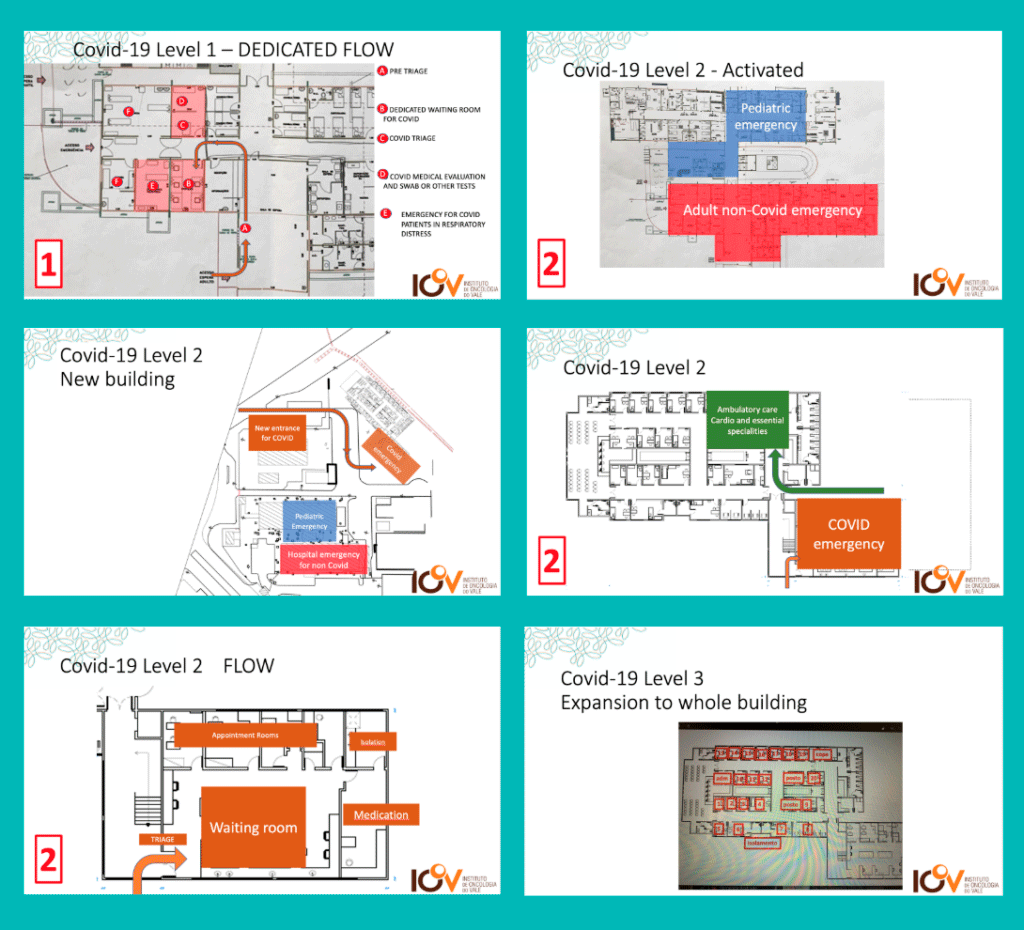
EXAMPLE 1 — ARGENTINA. In a hospital in Córdoba, to separate the flow of coronavirus patients from other patients, we converted the cardiac rehabilitation center into a space dedicated to Covid-19 patients. In this area (which is in a separate building), we mapped the flow of patients, doctors, nurses, technicians, materials and information and made several improvements in order to reduce exposure and the amount of PPE per patient seen. We know that, when the number of infections rises and critical and severe cases start to arrive, we will have to bring Covid-19 patients into the hospital. That is when we will separate and isolate entire areas in three different stages to avoid any risk of spreading the infection further.
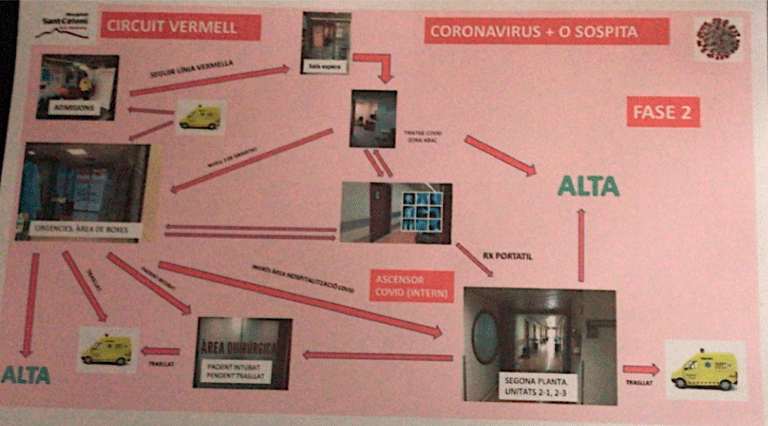
EXAMPLE 2 — SPAIN. This simple chart maps the process followed by Covid-19 patients in a hospital in Catalonia.
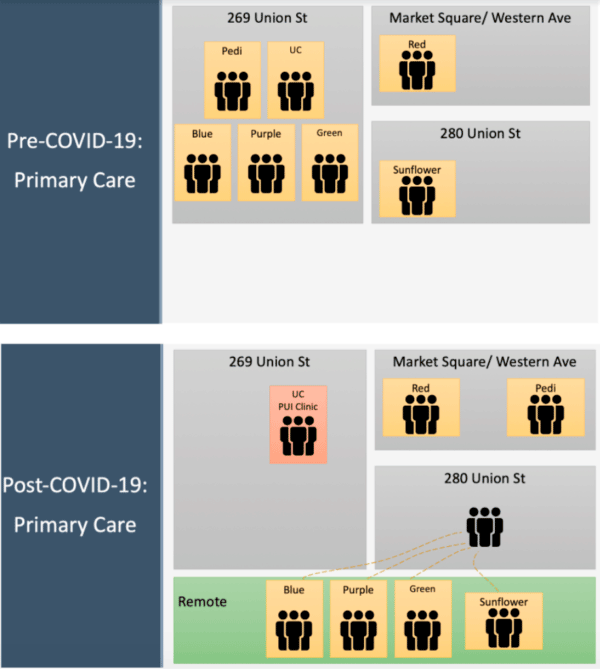
EXAMPLE 3 — USA. A community health center in Massachusetts reorganized its workflows across different sites to reduce the risk of infection for staff and patients.
2. Visual Management
- Share clear, visual work instructions for the critical steps of the process, so that everyone knows what to do and how.
- Place visual elements at each bed to minimize the time needed to obtain the necessary information. The goal is to create visuals that provide the necessary information in seconds, at first glance.
- Use different color codes to identify areas, pathways and classifications and to make it clear that current standards, such as the purpose of an area, can change quickly and that pathways can be extended and reduced overnight. This way, everyone stays up to date with the evolving situation.
- Train professionals quickly using simple visuals.
- Incorporate visual management into your communication.
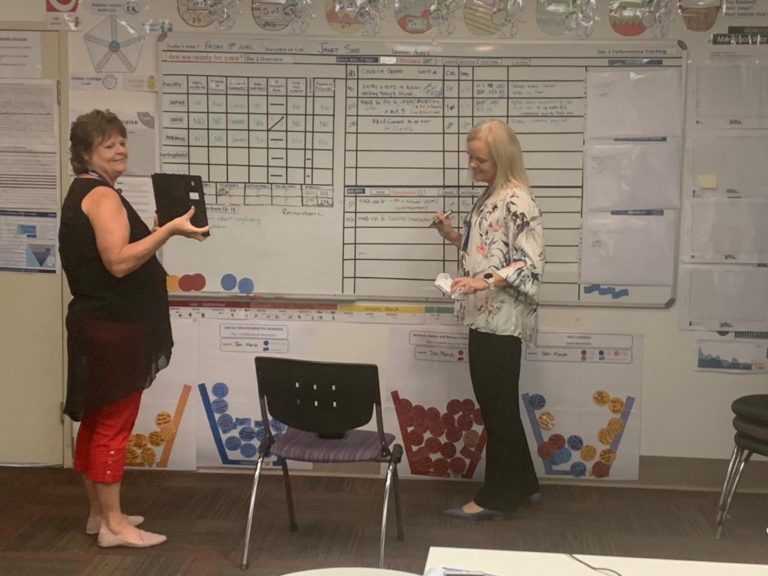
EXAMPLE 1 — AUSTRALIA. The team at an Australian hospital filled its “command center” and the surrounding corridors with whiteboards to increase the transparency of planning. Now people can immediately see what is happening and what the team is doing, which has helped them with connection and dependencies. They combine this with regular huddles — in which they review the key indicators, progress against the master Gantt chart and critical work in progress — and tackle barriers. They visualize the day's work and allocate people to help. Frequently asked questions from staff are also visualized, as is the tracking of supplies. All Covid-19 patient flows are mapped visually. People make real-time changes to the maps as they continue to develop their thinking about how these patients should flow and receive care. Other teams regularly go and see what these people are working on to test their thinking and contribute. Connecting the frontline silos, and leadership planning with the front line, has made the process of getting things done transparently more effective and efficient.
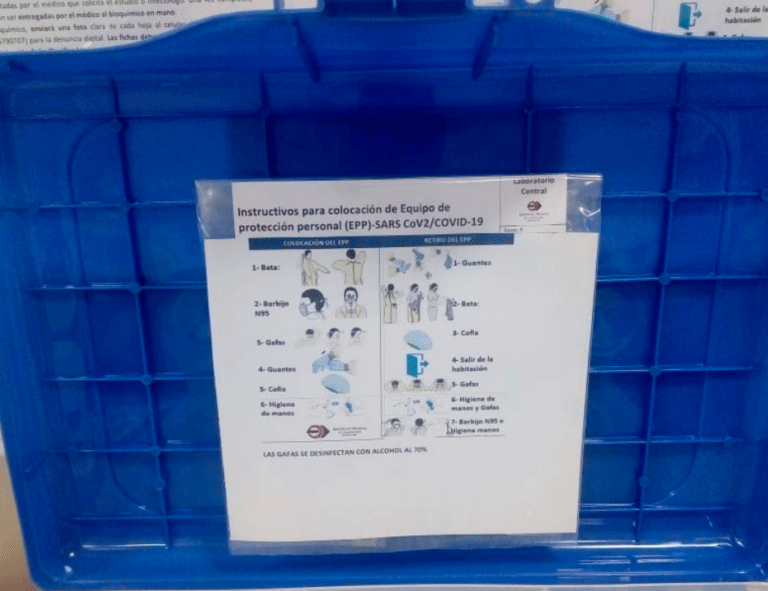
EXAMPLE 2 — ARGENTINA. In an Argentine hospital, visual, easy-to-understand instructions on how to use PPE during Covid-19 testing are placed on the walls and inside the test kits (on the inside of the lid) — to make sure biochemists do not forget any step.
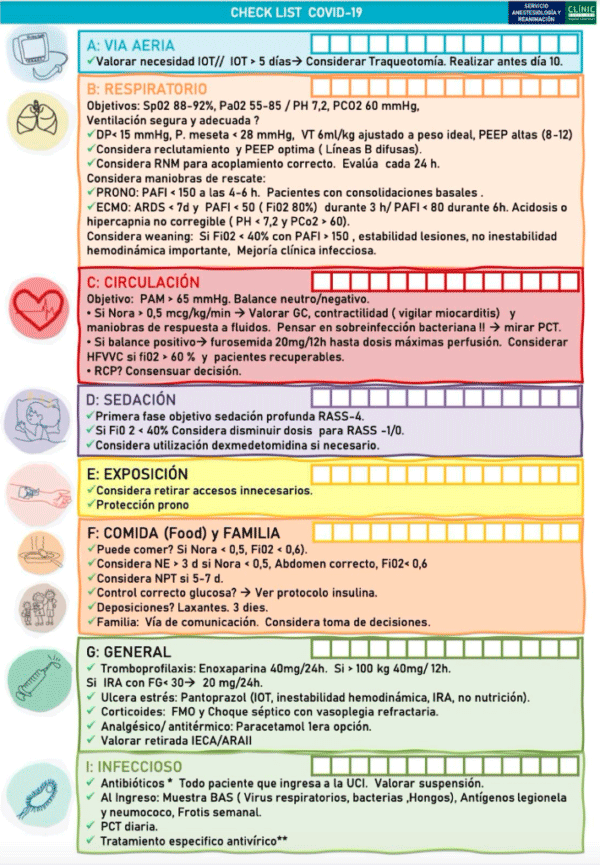
EXAMPLE 3 — SPAIN. Checklists at each bed to ensure that professionals have all the information they need available at the workplace.
3. Standardized work to ensure safety, quality and efficiency
- Develop standardized work and train teams to use these standards, in order to ensure safety and agility in their operations.
- Observe the work and assess adherence to the standards.
- Organize people (both management teams and care teams) into small integrated teams — doctors, nurses, medical assistants, etc. — instead of large groups of professionals, to share vital information more quickly.
- Limit staff movement by organizing their spaces into dedicated areas for different teams.
- Enable leaders to identify priorities and necessary actions using Leader Standard Work. In a crisis, it is a good idea to create a hub (incident command center) for the flow of information, with visual management of the key work streams (for example, PPE resource management; staff tracking — exposed and quarantined, tested positive, shift-swap requests, etc.). Leaders focus on the teams with structured, frequent huddles.
EXAMPLE 1 — AUSTRALIA. Executive leaders at the Australian hospital attend each site meeting daily to show respect and communicate directly with staff.
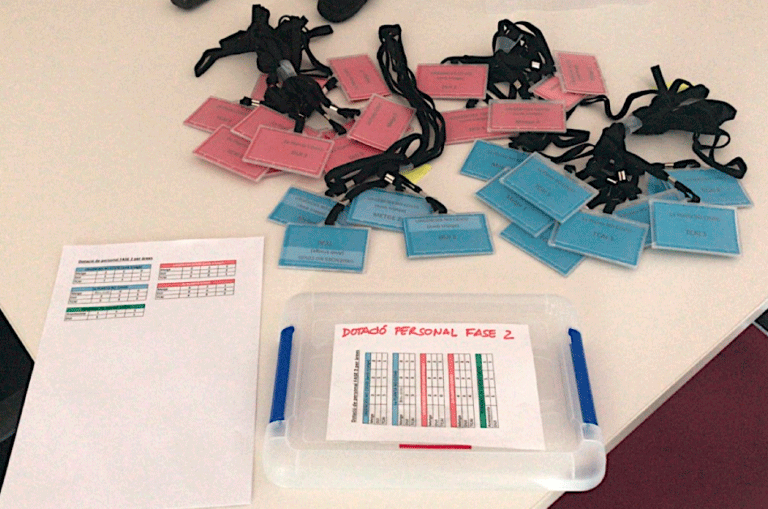
EXAMPLE 2 — SPAIN. These colored tags, used in a Barcelona hospital, indicate the different areas in which healthcare professionals are placed. When a doctor/nurse tests positive for Covid-19 and must go home to self-isolate, they place their tag on a badge. This immediately tells the teams who needs to be replaced (as of March 30, more than 12,000 healthcare workers had been infected with the coronavirus in Spain).
EXAMPLE 3 — USA. A healthcare organization in Massachusetts organized its managers and senior leaders into two parallel teams dedicated to two separate areas of the organization, to reduce the possibility of cross-infection across the larger management team and preserve human capacity. This model was quickly replicated with segmented care teams.
EXAMPLE 4 — ARGENTINA. The Crisis Committee of the Córdoba hospital developed a set of Covid-19 guidelines that can be accessed at any time through a URL code posted throughout the organization or a link that healthcare staff have installed on their phones. These guidelines include definitions, protocols, flowcharts, standard processes, etc. More importantly, they are a “living” document that is constantly updated as new information/evidence becomes available and as the team is called on to face new challenges (particularly important in this situation, because this is a new disease that we need to learn about quickly).
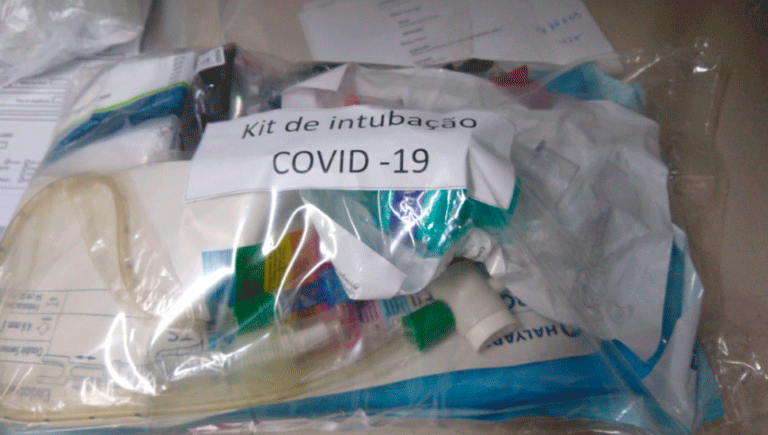
EXAMPLE 5 — BRAZIL. In a hospital near São Paulo, all the material needed to intubate Covid-19 patients is organized in a standard kit ready for use.
4. Engage in short, structured communication cycles.
- Implement a daily management system to structure short periodic meetings for all levels of management as a way of preparing people for the specific situation of a shift or a day. Hold these huddles in each work stream. Huddles can be virtual if teams are segregated.
- Create visual boards to act proactively and preventively by visually anticipating important decisions in the face of difficulties, which change daily.
- Encourage people to communicate problems, difficulties and improvement opportunities at all times.
- Enable better communication by always working as a team.
EXAMPLE 1 — AUSTRALIA. The daily management system used in this hospital has been critical to ensuring that frontline teams engage daily in conversations about their concerns. We increased the focus of frontline huddles to create more structure and collect concerns, feedback and critical information every day. The ward huddle is now split in two: safety huddles at the start of the shift (lasting five minutes) and senior leadership huddles to close the information loop and respond to team members' concerns. This creates time for teams to stop and connect during these stressful working days. Huddles have proven to be an important part of communication and mutual support. The team had to redesign the huddles to keep staff safe and comply with social distancing requirements, using a combination of technology and visual floor markings to help maintain the social aspects of the huddle process.
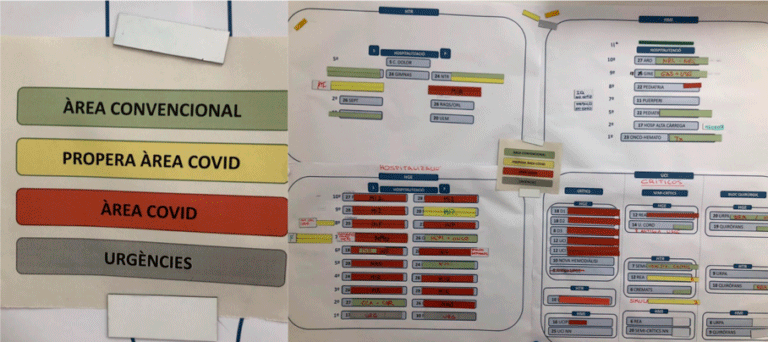
EXAMPLE 2 — SPAIN. The board used in the “command center” of a Catalan hospital, with different colors referring to the different areas that are dealing with the Covid-19 emergency. The board is updated daily/weekly as the situation develops.
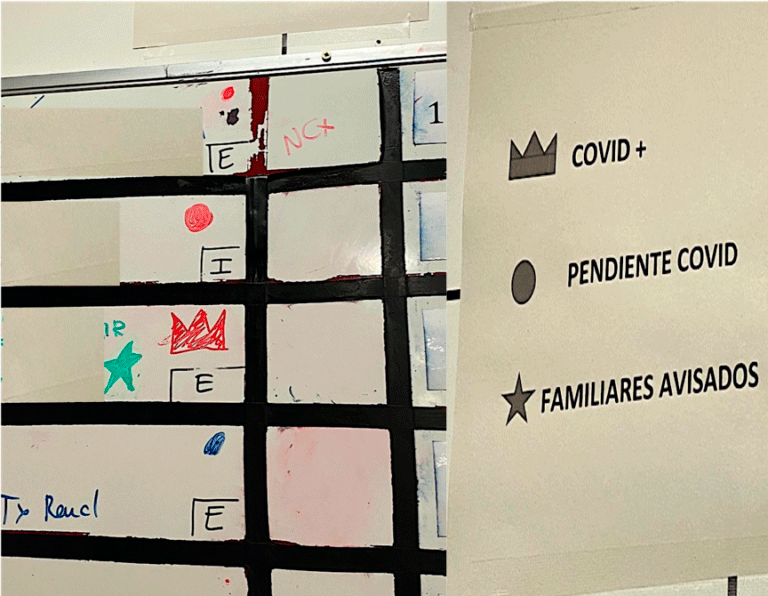
EXAMPLE 3 — SPAIN. These symbols are used to visually identify patients who have tested positive for Covid-19 and those who are awaiting results. The star symbol indicates that the patient's family has been informed.
5. Build skills quickly with a people development plan
- Plan how you onboard and train new team members. As doctors who had left for other jobs or retired return to hospital service, along with other specialist doctors or recent graduates, you will need to provide guidance and knowledge to enable them to be productive as quickly as possible.
- Increase visual standards to train quickly and carry out on-the-spot assessments to check that standards are being met.
- Bring the right knowledge to professionals — no more and no less. Not everyone needs to know everything at once; this avoids information overload and makes clear what people should focus on. At the same time, transparency is key, and everyone should know what is happening in the organization.
- Take time to capture lessons learned every day in a structured way (for example, through huddles). This can save a lot of time tomorrow, as you improve and learn more. Learning is one of the most precious things that happens in chaotic situations.
- Recognize the importance of every small improvement and understand that quick action followed by a quick course correction (as you learn what works best through a rapid PDCA cycle) is the way to achieve success.
EXAMPLE 1 — ARGENTINA. Chinese research on the virus indicated fever and cough as the main symptoms of infection, but there are several Covid-19 cases in the United States and Argentina that showed different symptoms (such as headache, fatigue, diarrhea and less coughing). The virus may express itself in different ways in different places, which is why it is important to gather data. In a hospital in Argentina, for each suspected Covid-19 patient (we have a 24-hour delay in PCR results), the team is using tablets to record the symptoms in each examination room and then upload them to a simple Google Drive document. This information (which symptoms, how long they took to appear, etc.) is updated in real time, and we hope it will be incredibly useful for learning quickly.
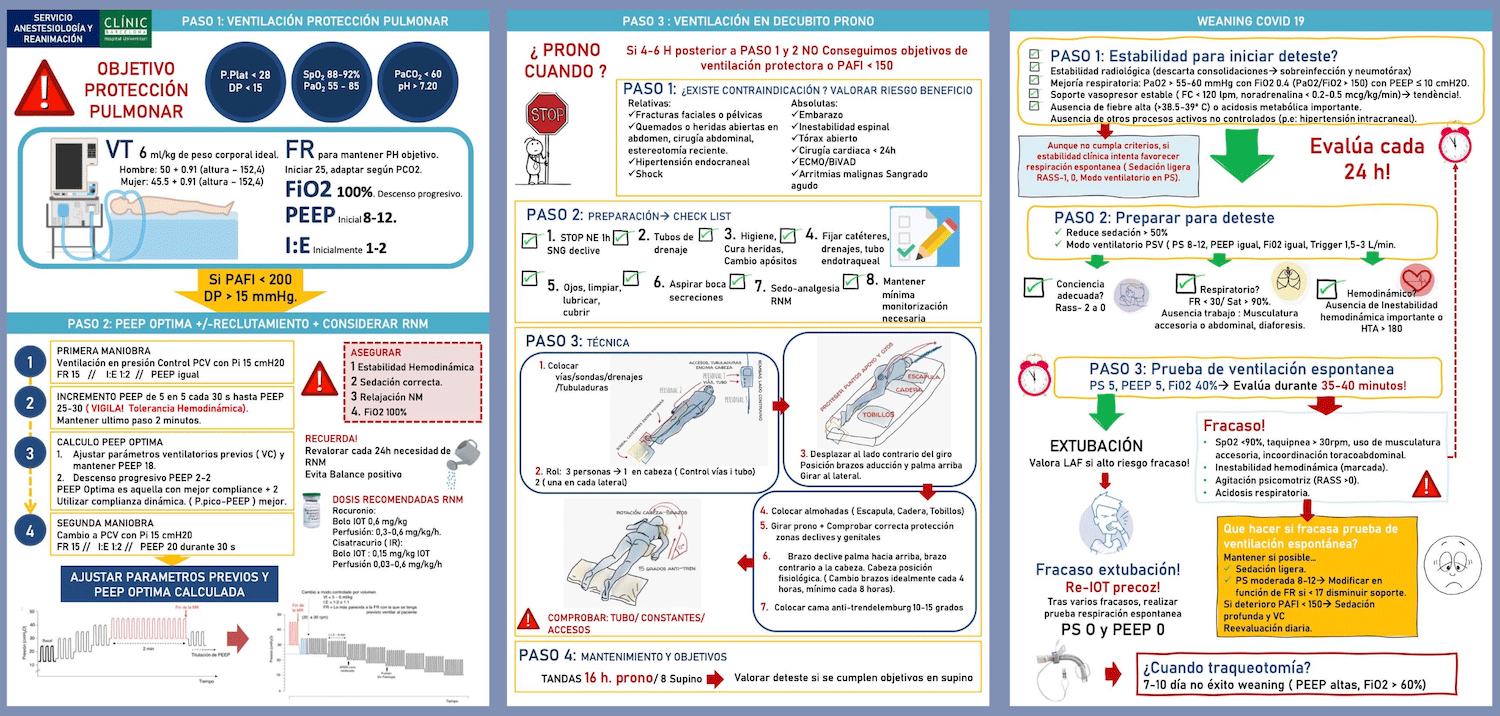
EXAMPLE 2 — SPAIN. Visuals to train the different teams on each of the stages and the main operations for ventilation and when to perform it.
6. Review priorities to secure capacity
- Cancel and reschedule all non-urgent appointments and elective procedures. Where appropriate, some of these patients can be seen via telehealth.
- Keep most patients away from the ER and carry out triage and testing elsewhere.
- Redirect teams from other areas of the hospital to support the most critical flows.
- Put younger professionals in frontline interaction with patients, and older and at-risk professionals in the back office, providing telehealth support to patients.
- Estimate the expected number of non-Covid-19 emergencies using historical data.
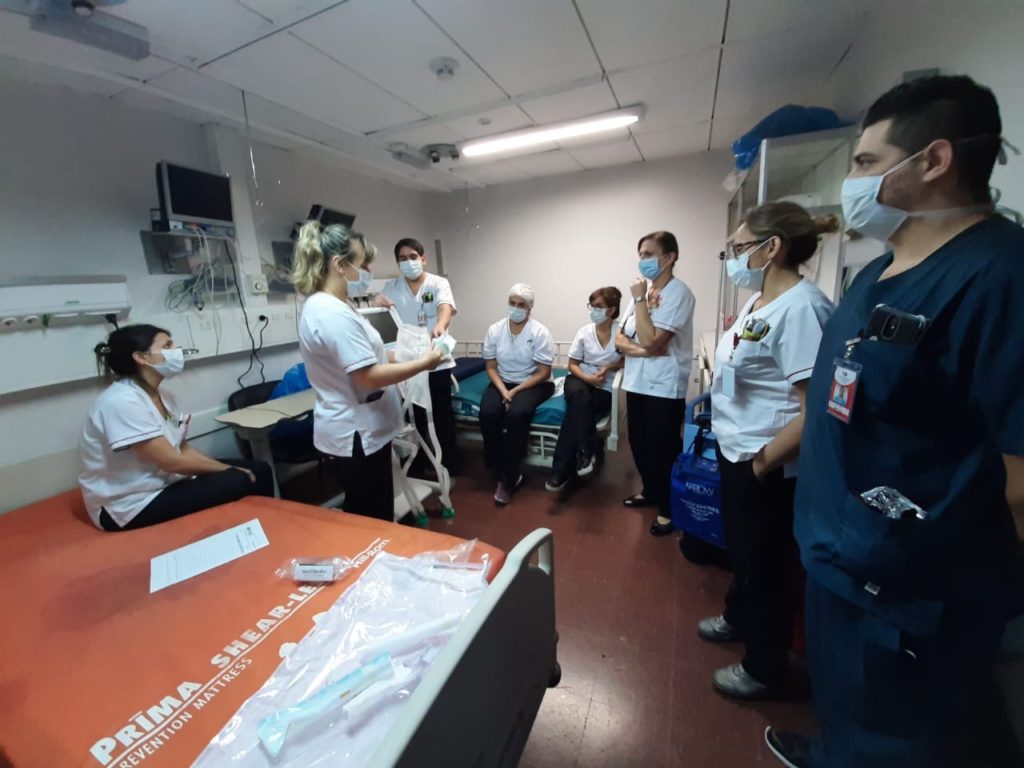
EXAMPLE 1 — USA. In Massachusetts, a 160-bed community hospital was converted into a dedicated Covid-19 hospital — the first in the U.S. to segment the patient population and prevent community spread among patients and staff within a hospital. This also keeps the city's emergency department and hospitals running with the capacity needed for other patients with acute illnesses and a low risk of infection. They carry out triage and testing in a mobile tent in their parking lot. Other countries, such as South Korea and the United Kingdom, have created Drive-Through testing centers.
EXAMPLE 2 — USA. A hospital in Massachusetts partnered with a community outpatient health center to care for its patients with illnesses other than Covid-19, to keep patient flows clear and distinct.
EXAMPLE 3 — ARGENTINA. A hospital in Córdoba — which mainly provides care to cardiovascular patients (more than half of the total), a category at high risk of complications from Covid-19 infection — analyzed its 2019 monthly/seasonal ER demand to understand what to expect in terms of emergencies (strokes, heart attacks, etc.) in the coming weeks. This is helping them prepare for the Covid-19 emergency.
7. Level capacity and protect staff
- Give people time to recover. This is important to avoid burnout syndrome and the errors that tend to result from it. Limit working hours by creating smarter shift plans so that teams are able to “run the whole marathon”.
- Assign tasks to balance staff workload (taking into account age, empathy, energy, mental strength, knowledge…) and try to cross-train staff in more than one area of the organization so that they become multiskilled and can be moved wherever needed, creating flexibility.
- Create a plan to manage the different levels of capacity (for example, when you add new ICU beds for your Covid-19 flow). As your demand increases, gradually make new plans for how machines/equipment/spaces are being used/moved/assigned. Allocating all resources from the start may result in not using them effectively; it can also make potential errors more harmful. On the other hand, a plan with many iterations makes it possible to integrate lessons learned and improve the response.
- Calculate how much material you will need for each flow, process and scenario.
- Do not be afraid to start from scratch — create a space using workplace organization techniques, such as 5S and 3P, to create standards for each flow/process/scenario.
- Make sure material is always available to professionals when they need it. It is important to reduce the time people spend looking for things since, in hospitals, hours are typically spent walking around and searching for materials. Always have someone responsible for replenishing materials and make sure you are making the most of the materials you have.
EXAMPLE 1 — ARGENTINA. For the first time since 1977, doctors at the Córdoba hospital are not working more than 12 hours and nurses no more than 8 hours. As of March 28, frontline staff — people under 60 years of age — were divided into three groups: the first two groups work for five days (one from 8 a.m. to 8 p.m. and the other from 8 p.m. to 8 a.m.); after that, the night shift goes home and quarantines for five days (and they watch to see whether any Covid-19 symptoms appear), and the third group steps in. The morning group moves to nights, and so on. In addition, we have a plan to manage the different levels of Covid-19 patient demand and have decided how the different areas (for example, the ICU) will be converted to Covid-19 patient care in three stages.
EXAMPLE 2 — USA. An ICU nurse in Boston observed how much PPE she and her colleagues needed to use when going in and out of rooms to adjust or respond to infusion pumps. She proposed moving all infusion pumps outside the rooms, near the door, to conserve PPE and make it faster for nurses to do this part of the work; the process was approved and tested. Obviously, the nurse still wore PPE and checked on her patients and the infusion pump site, but in this way they reduced the number of times they needed to enter/leave the rooms (for example, when the pumps beeped).
EXAMPLE 3 — BRAZIL. A hospital in our network created a three-tier plan to prepare for the different stages of the Covid-19 crisis.
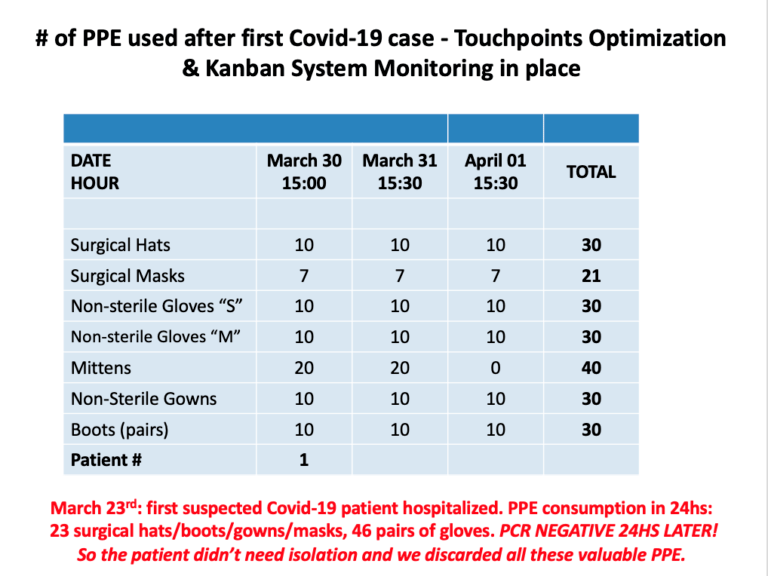
EXAMPLE 4 — ARGENTINA. After its first suspected Covid-19 case – hospitalized on March 23 – tested negative, the Córdoba hospital realized that a lot of PPE had been used (unnecessarily) to isolate the patient from caregivers and decided to review its process to minimize staff exposure and PPE use. They mapped all the touchpoints for the first patient over the 24 hours in which he was waiting for results and combined or eliminated some – going from 23 touchpoints per patient every 24 hours to 7-9 touchpoints with two patients in the inpatient rooms. For its first confirmed Covid-19 case, hospitalized on March 29, the team had 10 touchpoints, with a 57% reduction in PPE use over 24 hours, for three consecutive days. For ICU patients, the original design started with 60 touchpoints per patient every 24 hours and is now expected to be around 20 touchpoints every 24 hours for the seven Covid-19 patients in the ICU. This was achieved by placing highly qualified professionals in the relevant areas and implementing a kanban replenishment system.
LEAN VS. COVID-19
The transformations we facilitate usually take years to complete, but they are achieved by taking immediate action, day after day, as the circumstances around us change. In fact, lean thinking can lead to great results very quickly – which is exactly what healthcare organizations around the world need right now.
We hope this article reaches healthcare professionals around the globe, especially those who have never heard of Lean Thinking, as they prepare for the peak of Covid-19 cases. To lean beginners, we say: some of these suggestions may be very different from your usual ways of working, but we ask you to give them a chance. They may even take a little time to implement (we know how precious time is right now), but we urge you to see this as an investment in your ability to face the emerging challenges arising from Covid-19. We have decades of combined experience transforming healthcare organizations, and we believe these measures can make a major contribution to the fight against this threat.
Right now, our collective goal is to “flatten the curve” – slowing the spread of Covid-19 so that we can level the caseload for hospitals, allow them to save more lives and give them time to acquire the extra supplies and equipment they need. In lean terms, this is clearly a global heijunka problem with severe consequences for our healthcare systems. The PPE problem occurring in many of our countries suggests that this crisis will also force us to rethink the way we produce and handle the logistics of key equipment. We believe Lean Thinking has a lot to contribute to this debate, as the world deals with this emergency and then begins to reimagine life after the pandemic.
This article is also available in English, Spanish and Dutch.







