

Lean purchasing intelligence to boost results


Although often left aside in lean transformations, the purchasing area offers companies an excellent growth opportunity when the focus of lean efforts is also placed on it. In our experience, we have seen how a focus on lean purchasing has already brought many companies significant productivity gains, a greater strategic focus, improvements in the people development process, and cost reductions of up to 15% (which can exceed that percentage depending on the case), among other gains.
Cost reduction ACHIEVED — OPEX from 3 to 15%, CAPEX from 10 to 25% and other gains
The problem is that these gains are often not achieved because, for many years and for many reasons, the purchasing area has always been regarded as a mere back-office area or simply an administrative/bureaucratic appendage. On the other hand, organizations that have devoted themselves to the pursuit of operational excellence in every respect, especially with a strong focus on the lean philosophy / lean thinking, have realized that the purchasing area, within the broader view of the complete (end-to-end) supply chain, plays a fundamental and crucial role. In this sense, it is part of the first link in the value-adding chain, that is, it handles the first inputs into the integrated business management system, such as raw materials, components, supplies, services, etc. Accordingly, many lean companies have realized that they need to treat it with due care and respect, taking on social and environmental responsibility and always seeking sustainable relationships.
Based on these aspects and on all the potential mentioned above, the question on people's minds is “how do you apply lean to purchasing?”. Well, we suggest a model we have called “Purchasing Intelligence in a Lean Organization ”, configured in a mandala style.
The Purchasing Intelligence in a Lean Organization mandala
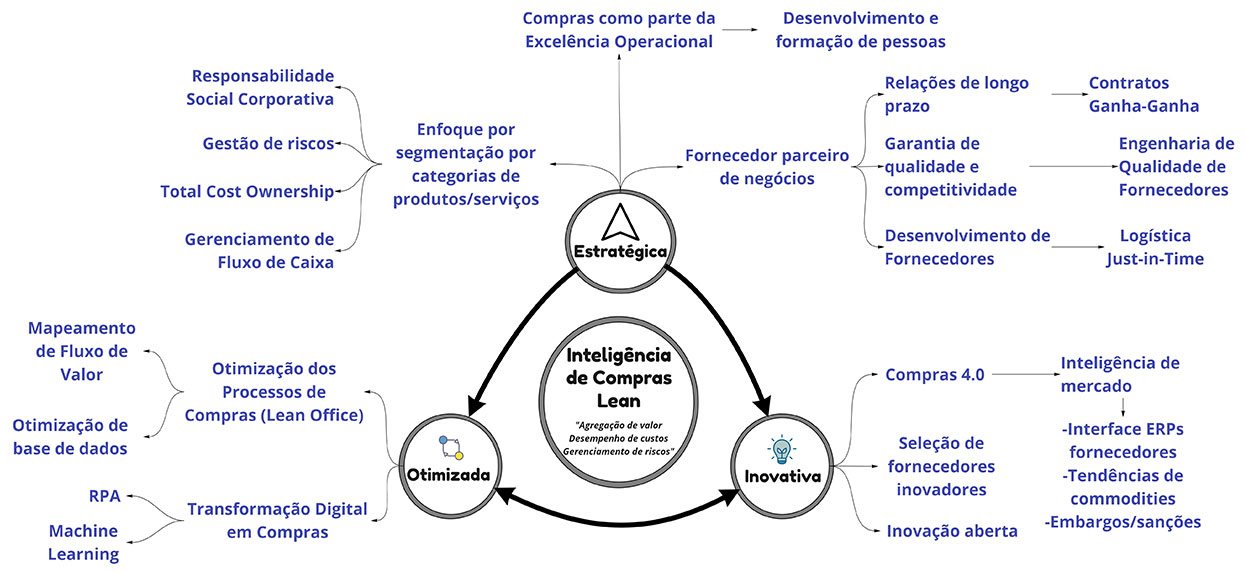
Taking into account the topics mentioned above, we configured a model for applying lean to the purchasing area with the aim of pursuing excellence in a lean company. Within a “mandala”-style approach, this model branches into three dimensions: the strategic axis, the optimized axis and the innovative axis.
Strategic purchasing area
Purchasing as part of operational excellence:
Treating purchasing as part of operational excellence is the main guiding principle of the mandala. In this way, the purchasing function can go beyond mere price reduction. It can add value by driving innovation, cost optimization/reduction and the strengthening of long-term partnerships.
Segmentation approach by product/service categories:
The purpose of this axis is to pursue segmentation by categories of products, services and suppliers. From that point on, it becomes easier to understand how to parameterize these aspects through market analyses and their respective impacts and benefits for the organization.
To do this, it is necessary to seek more sustainable partnerships for both parties involved, with a long-term view, and contracts with reliable rules and positive relationships for both the company and the supplier. The focus we need to pursue must always be on quality at the source for the products and services purchased and on increasing competitiveness for both sides.
In addition, and whenever feasible, the view should be centered on TCO (Total Cost Ownership), and not only on the base price without taking into account all the variables of total cost (energy efficiency, logistics costs at origin and destination, productivity, cost of repair parts, etc.). This makes it possible to create the conditions needed to drive realistic targets and bring more competitiveness to the supplier fronts (this avoids simplistic purchasing, that is, it avoids comparing base price against base price).
The supplier as a business partner:
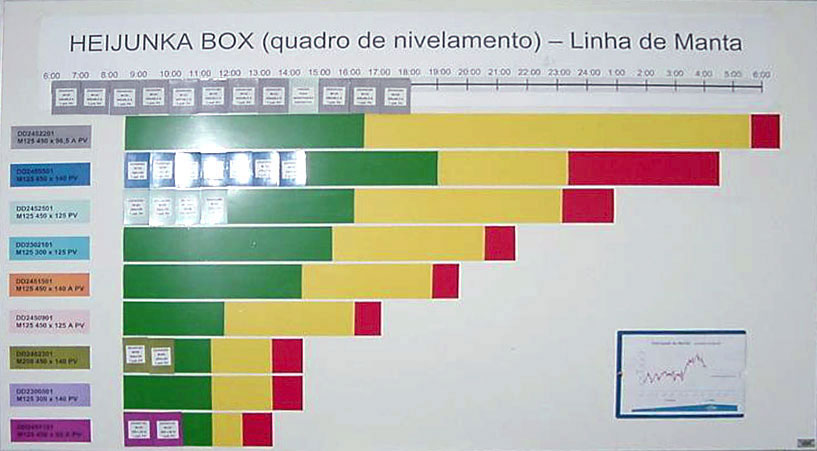
What often becomes evident in the lean transformations we have witnessed is that, when you think about leveling the system as a whole in order to avoid the bullwhip effect in internal production processes, leveling the supply chain is a key factor in pursuing a pull and balanced system across the entire chain (production, logistics, finance, etc.), thereby integrating just-in-time logistics into the purchasing system.
Inventory (after Kanban)
In a company that embraces the lean purchasing process, credibility in the partnership is always sought, with transparency and respectful relationships. However, this must not be confused with a paternalistic process, since negotiating conditions are created through aggressive targets and objectives with a strong focus on eliminating whatever does not add value in terms of cost. At the same time, the partner's profit margin is never attacked, protecting both the supplier and the supply.
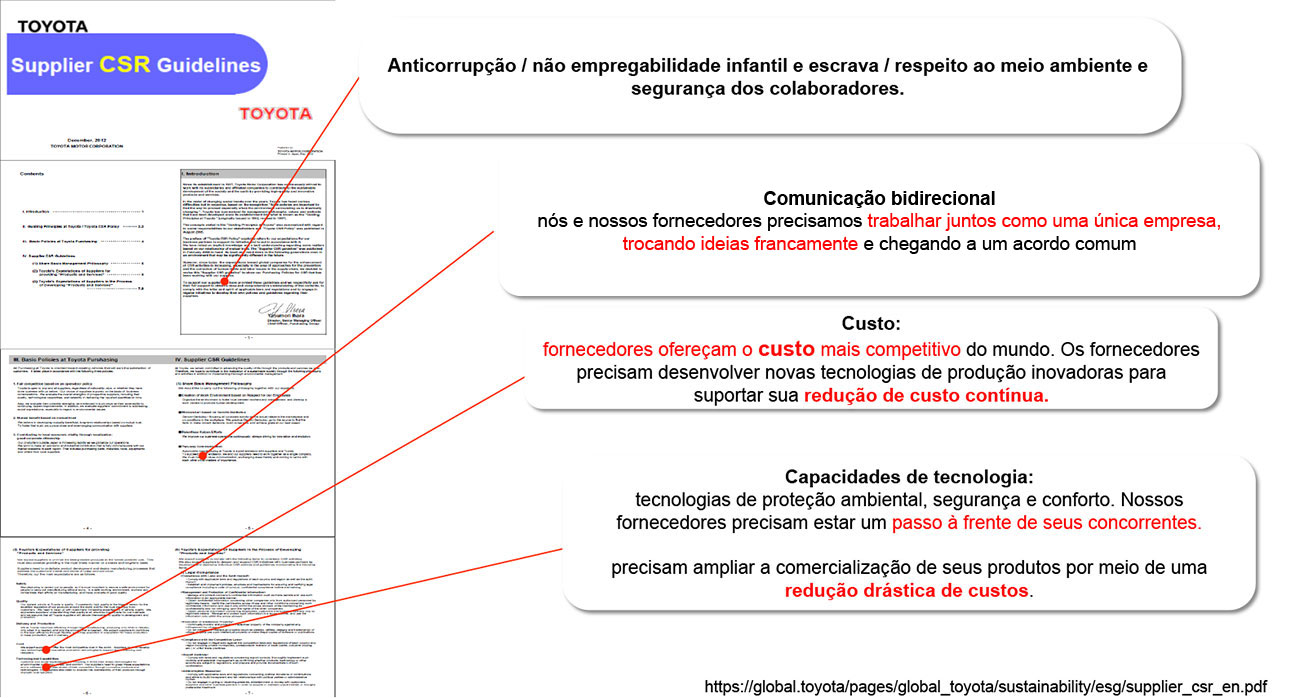
A lean example: Toyota's relationship with its suppliers
Optimized purchasing area
It is very common to see purchasing transformation efforts jump straight from the strategic level to the innovation level. However, it is important, always and before talking about innovation aimed at the outside world, to pursue improvements in the area's internal/support processes, such as mapping the registration flows for purchased products/services through lean office projects (raw materials, supplies, etc.). The aim is to make them leaner and eliminate everything in them that does not add value (for example, records that are obsolete, wrong, generic, contain redundant information, etc.). The main goal here is always to carry out a good strategic purchasing process based on lean data, whether related to processes or to reducing the supplier base. The lean tool of value stream mapping can and should be used whenever you want to look for waste and problems in processes, in order to make them leaner and more value-adding from the customer's point of view. Only after this stage of applying the lean tool can we use technology in the processes; otherwise, waste gets automated, leading to the failure of large projects involving the digital transformation of purchasing.
Innovative purchasing area
Like industry, the purchasing area is going through a period of migration to the virtual world. With its future at stake, we see a strong push toward the evolution we call “Digital Purchasing/Purchasing 4.0”. It is therefore of fundamental importance that, from now on, virtual processes be increasingly pursued, such as market intelligence (which shows the evolution of commodity prices with a direct link to big data and AI in supplier bases, embargoes and sanctions via the data lakes of international organizations and countries, etc.).
Today, more than 50% of the products developed contain technologies originating in supplier bases, which we call open-door innovation. Here, too, a long-term, credible partnership is of fundamental importance for the sustainability of contracts and of ERPs connected between companies, with AI between the interfaces.
Lean as the basis for transformation:
Everything in this article is connected to a good, well-structured people management system, with specific and general training for all levels of the purchasing hierarchy. In this way, it is always possible to add value continuously and dynamically, in view of the technological changes that are taking place / will take place ever more strongly; at the same time, it also becomes possible to maintain the motivation level of the people in the area. Making purchasing part of operational excellence is the fundamental step in transforming / managing the area. Starting from this principle, lean thinking is certainly the watershed for the new management model.
So start this transformation through lean thinking in purchasing as soon as possible, in order to add more value with this disruptive vision.







