

“Siloed” police operations reflect a management failure and contribute to public insecurity
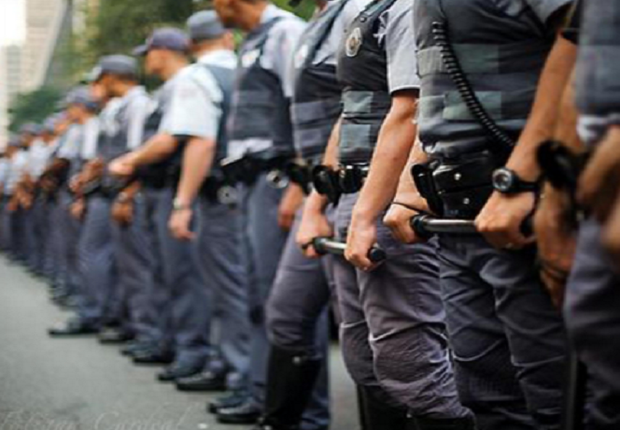
One of Brazil's great problems, felt daily by almost all Brazilians, is the public insecurity we live with, especially in large cities. Not by chance, this has been one of the main banners of the candidates for the presidency and for state governorships.
It is not a problem that is easy to solve, since it is evidently an affliction that is also tied to our country's deep and historical social inequalities, to our lack of quality education for all, to rising unemployment, to poor income distribution, etc.
But it is clear that part of the solution to this problem also requires effective police action. Many of the candidates have been promising more “quantity” of police action: more police on the streets, more weapons, more repression, more laws...
Of course the country needs police officers who are well armed, prepared, trained, equipped, valued... But just as important as the “quantity” is the “quality” of police action. We need to ensure that, every day, we have a more intelligent police force. And this requires not only more technology or more strategy, but also a clear and precise national effort that guarantees real, day-to-day integration of the different police forces operating in the country.
We know that in Brazil there are at least four different police forces: the military police, the civil police, the municipal guard and the federal police (not to mention the army, for example in cases of intervention). It is increasingly common sense that these different police forces need to be better integrated.
In the lean system, there is a series of management tools that seek to avoid one of the greatest “enemies” of any organization: departmentalization. These are the companies that, because they are very large, are divided into dozens, sometimes hundreds, of different departments – many of them doing quite similar work.
And then a dangerous phenomenon occurs: each department tends to do its work independently of the others. They do not share problems and solutions. That is, when they do not withhold information from each other or foster rivalries and negative competition.
Lean management goes against this by placing the total focus of management on the production “flow”, which must always be more important than any isolated department. It is a management view that implements a series of actions, practices, behaviors and “tools” that encourage people to leave their “niches” and interact with their neighbors, in order to find problems, eliminate waste, work together on improvement actions, etc.
For example, in the “value stream” view, in which all actions, regardless of department, are focused on the value creation needed to conceive a product or service. This includes analyzing all the information- and material-processing steps needed for value to be delivered to the customer – regardless of the departments involved. The focus is on the process that creates value, and not on the “division” of the departments that do the work, as seen in the bureaucratic view.
It is this “flow” view that needs to be reinforced in public security. For example, when we think of some of the major “root causes” in this area, such as weapons entering across the borders, the ease with which criminal factions organize themselves in prisons, trafficking routes, the financing of organized crime and others that increasingly demand integrated, highly intelligent and coordinated action, the result of real interaction between different agencies – including internationally. But it is clear that this runs up against the departmentalism of the different security forces.
A value stream view could certainly generate more efficient actions among the security forces. And reduce everyone's insecurity.






