

After the tragic destruction of the National Museum, Brazilian public management keeps “putting out fires”
Anyone who works in companies probably knows a metaphor used to sum up what daily life is like in companies with inefficient management. These are the typical managers who live “putting out fires” in their day-to-day work. They work in organizations whose management culture only truly faces problems when they have already grown too big. We know, by the way, that this is quite common.
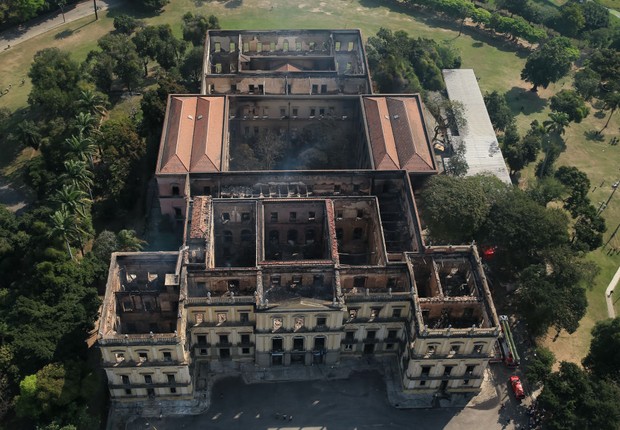
Last week, we saw how destructive this type of management can be for an entire nation and for the world. Everyone watched, stunned, the real and tragic version of this metaphor in the fire that destroyed the National Museum. The fire consumed, forever, a large part of history, art, culture, science and education, not only Brazilian but also worldwide.
The mainstream media, national and foreign, have already detailed the neglect and abandonment the institution had suffered for decades. Successive budget cuts, lack of resources for basic maintenance, visible deterioration of the historic building, lack of renovations or investment, precarious electrical installations, termites destroying artifacts, no fire brigade and no water in the hydrants, among other things.
It is clear that the destruction of the museum is the result of a type of management that unfortunately lives up to this metaphor of “putting out fires.” It is management that disregards the causes of problems. That makes little effort to analyze the root of problems and look for solutions. Management that is slow and bureaucratic in its processes. The National Museum is yet another victim of this inefficient management.
And there are other recent examples: in São Paulo, the Museum of the Portuguese Language was also destroyed by fire; the Ipiranga Museum was closed and is undergoing renovation because it was unable to guarantee the preservation of its collection and safety.
So it is worth asking: what about the other museums and collections across Brazil that are certainly affected by management focused on “putting out fires”? And not just in museology. I am also talking about institutions in education, science, universities, those that fight social inequality, in housing policy, in public security. Where will the next “fire” be?
It also became evident that we have management that places little value on investment in culture. Not only in the public sector, let's be honest, since much of the country only came to know the National Museum after its destruction. A large part of the Brazilian population, including many business leaders, did not even know the importance of its now-destroyed collection.
And this is not only short-sighted management of Brazilian culture, but also of science. As it turned out, the museum was a site of important scientific research. Much of it was lost and will never be resumed, which also reflects neglect of scientific and technological investment in the country.
Public management lacked the vision that the National Museum was an institution with multiple purposes and social functions. To that end, it lacked governance strongly supported by various spheres – culture, education, science, the private sector. The impression left is that they all failed.
With all this, part of the world's memory has turned to ashes. Brazil needs to recover the importance of preserving “memories.” In all honesty, it must be said that many companies also fail to pay due attention to their own history, which is fundamental for consolidating their values.
This inefficient view of management is, ultimately, largely responsible for the lack of awareness, the neglect and the destruction of the National Museum. The flames have already been put out. But until proven otherwise, this “Brazilian-style” management will, unfortunately, keep on “putting out fires.”






