

Start with kanban

Open most lean books and you'll get the feeling that kanban is nothing more than an afterthought – one of the many “tools” we should be moving away from. I plead guilty myself, as I have written exactly that. But we have to admit that there is no lean thinking without kanban.
Lean is a unique management approach because it does not aim to tell people what to think or what to do (that is Taylorism), but how to think about things so that they have their own ideas, insights and initiatives. This is what makes lean so appealing (fun, in fact) and, at the same time, so unsettling for bosses who would rather prove they are in charge (think like me; do as I say) than make things better (how do you see the problem? What would you do?).
But thinking never happens in a vacuum. We think within a context (more than that: within a visual context). Because visual cues go straight to our brain, we are less aware of them than of what we are told. Hearing something is harder to process, since it goes through language, argument, discussion and so on, which means we retain very little of what we hear. Seeing, on the other hand, is believing, literally. If someone shows you something obviously wrong, your brain initially believes it, and only later, with a lot of effort, do you stop believing it.
If you want people to be smart about what they do, you first need to design a smart environment that enables them to think. All work environments are designed – even if sometimes by accident. The work environment creates the questions, although we are rarely aware of it. This fundamental insight is why so many lean techniques focus on defining the work environment itself before tackling the problem itself: andon, kanban, 5S, 4M, etc.
In the 1950s, Toyota's engineers discovered that the secret to quality and productivity was lead time, not unit cost. If you focus on unit cost, you end up producing volumes you can't sell, having to move them, store them, check them again and, eventually, throw them away. If you focus on lead time, you increase capital turnover, avoid mistakes (you can't just discard a defective part and grab the next one if you only have five of them in a box), avoid high costs and become much more productive overall. And the trick to visualizing lead time is kanban.
Every product is made to order. The box of cereal on the supermarket shelf is made in batches, but what the customer actually takes out of the store is a basket of products, which is a made-to-order assembly of purchases in a bag. Imagine you want to make lunch; you can do it completely to order: going to the store, choosing the ingredients, coming back home, preparing the meal and eating it – there is a clear lead time here between the time you leave your house to go to the supermarket and when you are already having lunch.
Or you can open the freezer, find a ready meal, put it in the microwave and eat it. The lead time is much shorter, but you need to have already bought the ready meal and put it in the freezer.
Or you can open the cupboard, find one of the many packets of pasta you have there, admit that you need to stop buying so much pasta if you're not going to eat it, and then cook it.
Yes, you can make everything to order, including thinking up the recipe to suit your taste, but in reality, sooner or later, you will run into two barriers:
- The inventory barrier: some items need to be kept in stock – it would make no sense to buy just one spoonful of olive oil.
- The batch barrier: some items are bought in batches because we don't go to the supermarket every day, and that is where they are kept.
The kanban trick is to stick a stock-replenishment card at every point where you hit the inventory barrier, instead of using batches. When you take a ready meal out of the freezer, you already know you need to buy another one. When you take a beer out of the fridge, you already know you need to put another one in.
Technically, this is called the customer order decoupling point (CODP). It can be used to distinguish between different manufacturing approaches, such as engineer-to-order (ETO), make-to-order (MTO), assemble-to-order (ATO) and make-to-stock (MTS). As illustrated below, the CODP separates the part of the supply chain that responds directly to customer demand from the part that relies on forecasts and speculation.
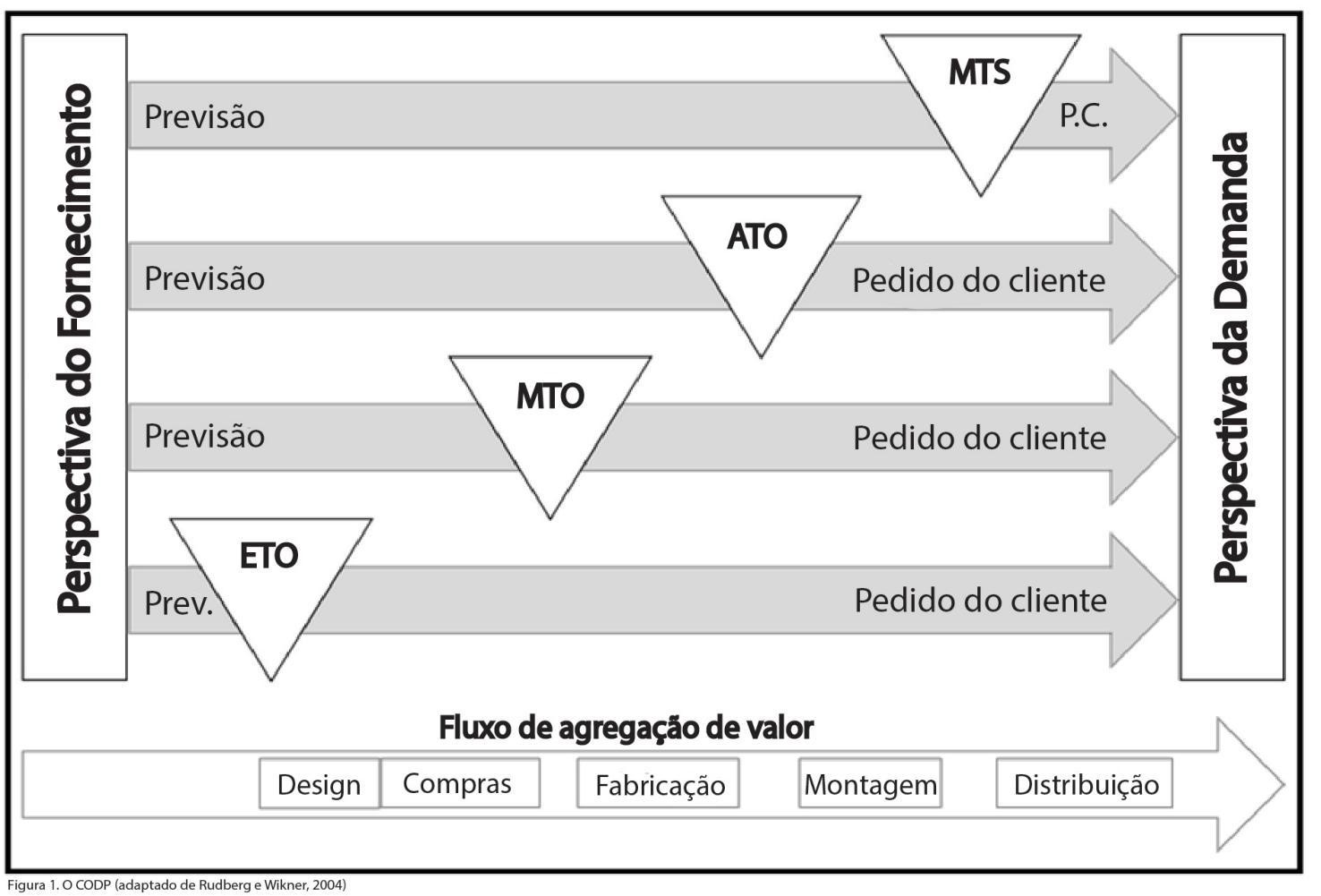
Whatever the activity, you can look at the delivery time, trace the timeline back to the stock point – when you need the ingredients on the shelf – and then, instead of batching your production with a production instruction (I always buy four packets of pasta when I go to the supermarket), use a stock-replenishment kanban (use one, buy one). This kanban will immediately reveal a few things visually:
- Your real consumption pattern: aha! You don't eat that much pasta after all, which is why you keep piling up all those packets. But you often run out of olives.
- All the hiccups in your supply system: the product missing from the supermarket shelf, the checkout line, the expired meal in your freezer, etc.
- A focus on quality: you keep buying lasagna, but you realize you don't like it that much, because every time you decide to eat the chicken you have in the freezer instead of the lasagna. Stop buying lasagna instead of buying it and throwing it away.
Now, all of this shows up very visually – you find all the problems in your lunch value stream. As you solve them one by one, the workflow becomes progressively smoother and more continuous, and the overall cost of lunch goes down as the flavor goes up.
The mantra “sell one, make one” sounds simple enough, but it is a true revolution in how to design a work environment. It changes the way people think about scheduling and carrying out work, because it changes the concrete problems they face and need to solve. “Sell one, make one,” visualized by kanban, is the gateway to lean thinking. You can have the best intentions in the world when you train people and ask them to take responsibility and leadership for developing themselves and others, but without “sell one, make one,” you are simply solving the wrong problems.
Yes, lean is all about kaizen: studying work in order to improve and gain deeper insights into what we do. But kaizen starts with kanban. Without kanban, we don't know what to improve, because we cannot visualize waiting time and lost time – time is the only resource we will never be able to increase. Start with kanban.







