

How to get better results in a supply chain using lean
I recently worked with a company in the car import business. They contacted Lean Institute Brasil because, despite going through a good period of sales growth, this was forcing the shareholders to make large capital contributions to stock up inventory and meet growing customer demand. This seemed to be a different project, since most of the time we start applying lean in response to a crisis. There was no crisis there; on the contrary, the company was doing very well and was highly profitable.
Thinking about the four types of problems that Art Smalley defines in his book, we understood that we would not be dealing with type 1 problems (those that seek to quickly contain the immediate symptoms with rapid responses) or type 2 problems (those that seek to solve an existing problem in a structured way, through in-depth analysis and the search for root causes), but rather with type 3 problems (those that continuously improve and go beyond an already stable process, eliminating possible waste and overburden) and type 4 problems (those that seek innovative solutions, identifying new problems and opportunities).
So we would be dealing with a created problem. The company no longer wanted to rely on shareholder contributions; it wanted a self-sustaining process, in which its own internal resources would be sufficient to purchase vehicles for inventory and, consequently, able to meet the new demand.
In this promising and challenging scenario, how can we ensure sales growth for a company of this kind and, at the same time, reduce the spending on inventory arising from this new demand? Our experience has taught us that using lean concepts can be the key to solving problems of this kind, as long as we follow a few fundamental steps.
1st Tip: Map your supply chain
The project with the vehicle import company began with the creation of a cross-functional team, following the recommendations of the book “Building a Lean Fulfillment Stream”, with members from the Procurement, Logistics, Planning, Sales and Human Resources areas. This team met to draw the macro value stream of the supply chain, from its origin, the manufacturer, all the way to delivery to the dealership's customer. To do so, the managers selected a product family, which comprised 400 different models manufactured in four different countries at plants of the same automaker.
When drawing the macro value stream map, the complexity of the supply chain as a whole became evident. One of the first points that caught our attention was the fact that the company paid the manufacturer 25 days before the vehicle was manufactured, which meant spending resources in advance. We also identified that the documentation flow for imports was different for each country of origin, which could delay receipt and customs clearance of the product at the country's port.
The team also identified an excessive quantity of products in the DC yard, 4,000 units – which represented seven months of inventory –, plus another 1,000 at the dealerships and 2,000 in transit, totaling 7,000 items, the equivalent of US$70,000. This number impressed everyone on the team, because they had never looked at inventory this way, considering as inventory only what was in the company's yard.
Another point that became clear when drawing the map was that the person responsible for purchasing the products did not receive the demand from the sales managers, who were at the end of the supply chain, in direct contact with customers. This disconnect was reflected in the inventory of products that were not selling.
When collecting the payment data to draw the map, the finance manager also realized that payment terms were very long, reaching 90 days in some cases, which showed that the dealership used this factor to finance the business; in other words, it used the company's money to finance sales instead of using bank financing.

Figure 1: The vehicle importer's supply chain
To understand how your supply chain works and to be able to see each step of the process and the process as a whole, you need to map it and make it visible to everyone involved who, at some point, is part of that process. It is important that everyone take part in building this macro map in a collaborative and collective way. This will make everyone feel part of the process and see the value of their activities for the success of the entire process in the end.
2nd Tip: Reduce complexity
The team was also surprised to find that the number of SKUs was very high, around 400, while sales were 600 cars per month. As a result, the team took a deeper look at these models and discovered that some of them were identical, the only difference being the wheel polish. Similar products whose only difference was the roof color underwent a change in the painting process. Previously, the automaker charged 600 dollars to paint it, but the team discovered it could do this in-house, spending only 300 dollars.
From there, it was necessary to carry out a deeper analysis of each model, including in terms of margin and sales. In doing so, they discovered that some products had negative margins, and others had very low sales; in some cases, only one unit of a model was sold every two months.
The team also went to the dealerships to ask the salespeople, they went to the Gemba to hear from those who live it day to day, what they thought about the number of SKUs of the product in question. The answer was unanimous: there were so many SKUs that sometimes they were lost in front of the customer with the number of models available.
After some analysis, the managers reduced the number of SKUs for purchase from 400 to 110. This decision was not easy. Some people believed that sales would drop with this measure, but in the end the team decided to move forward. The main initiative was to identify the items that had similarities within each model and unify them, in addition to performing some customization activities within the company, such as the roof-painting example given earlier.
Reducing complexity allows you to simplify and gain greater agility in internal processes, which consequently also brings greater agility in customer service.
3rd Tip: Rethink your financial flow
One of the measures taken to improve the importer's financial flow was to review the payment terms with the supplier. Before the improvement, payment was made 20 days in advance of the date the vehicle left the factory; today the vehicle is paid for only when it actually leaves the supplier. And this made it possible to reduce the company's cash flow needs.
Another initiative was to talk with the customers, the dealership owners, about the possibility of changing the payment terms, which used to be up to 30 days after vehicle delivery, to cash payment, since end customers or finance companies paid the dealerships in cash. There was an expectation that this initiative would cause discomfort with the dealerships, but that is not what happened – of all of them, only one did not accept the change.
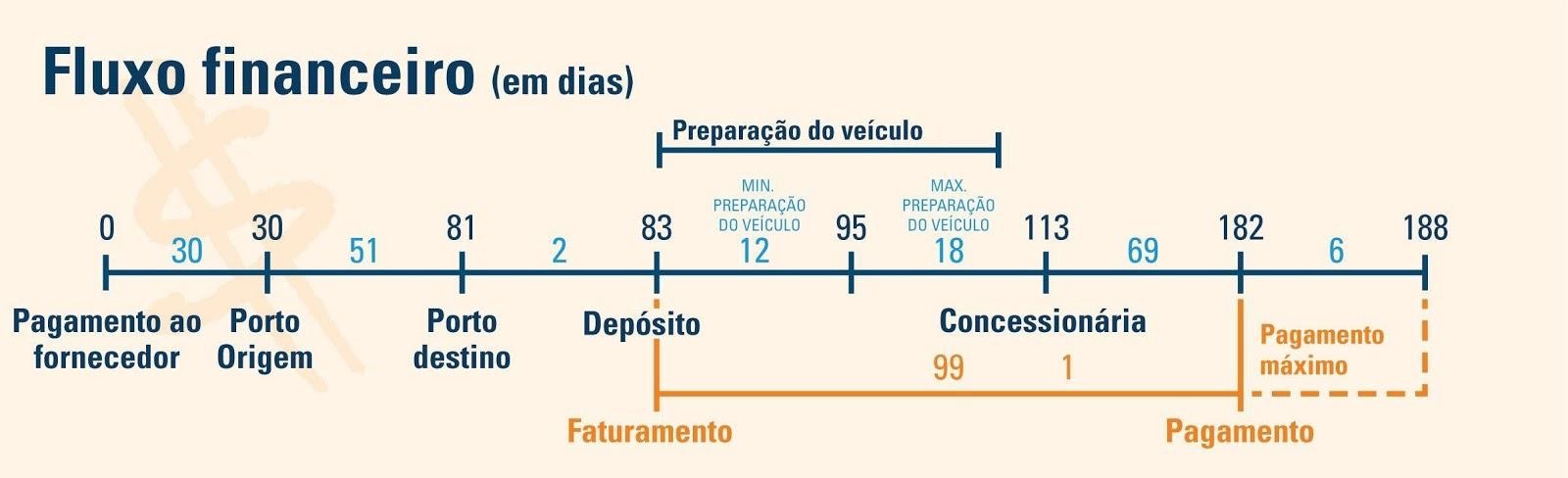
Figure 2: Financial flow from payment to the supplier to receipt from the dealership
In our eagerness to improve the process, we often fail to realize that the way we pay our suppliers and get paid by our customers can greatly affect the final result. In addition, the need for more financial resources for the business to operate directly affects the company's EBITDA.
4th Tip: Implement a pull system
Aiming to reduce inventory in the supply chain, the company decided to implement a pull system between the DC and the dealerships. Calculations were made to size the supermarkets, cycle stock, buffer stock and safety stock.
Cycle stock was calculated according to replenishment and consumption. For dealerships located close to the DC, we considered one week of inventory, which meets average demand; for buffer stock, we considered 2 days of inventory, which covers a possible demand peak; and for safety stock, another 2 days of inventory, which protects us in case of any delay in delivery from the DC.
In this case, we implemented an electronic kanban to make day-to-day management easier. The system that already existed in the company was used with a small adaptation.
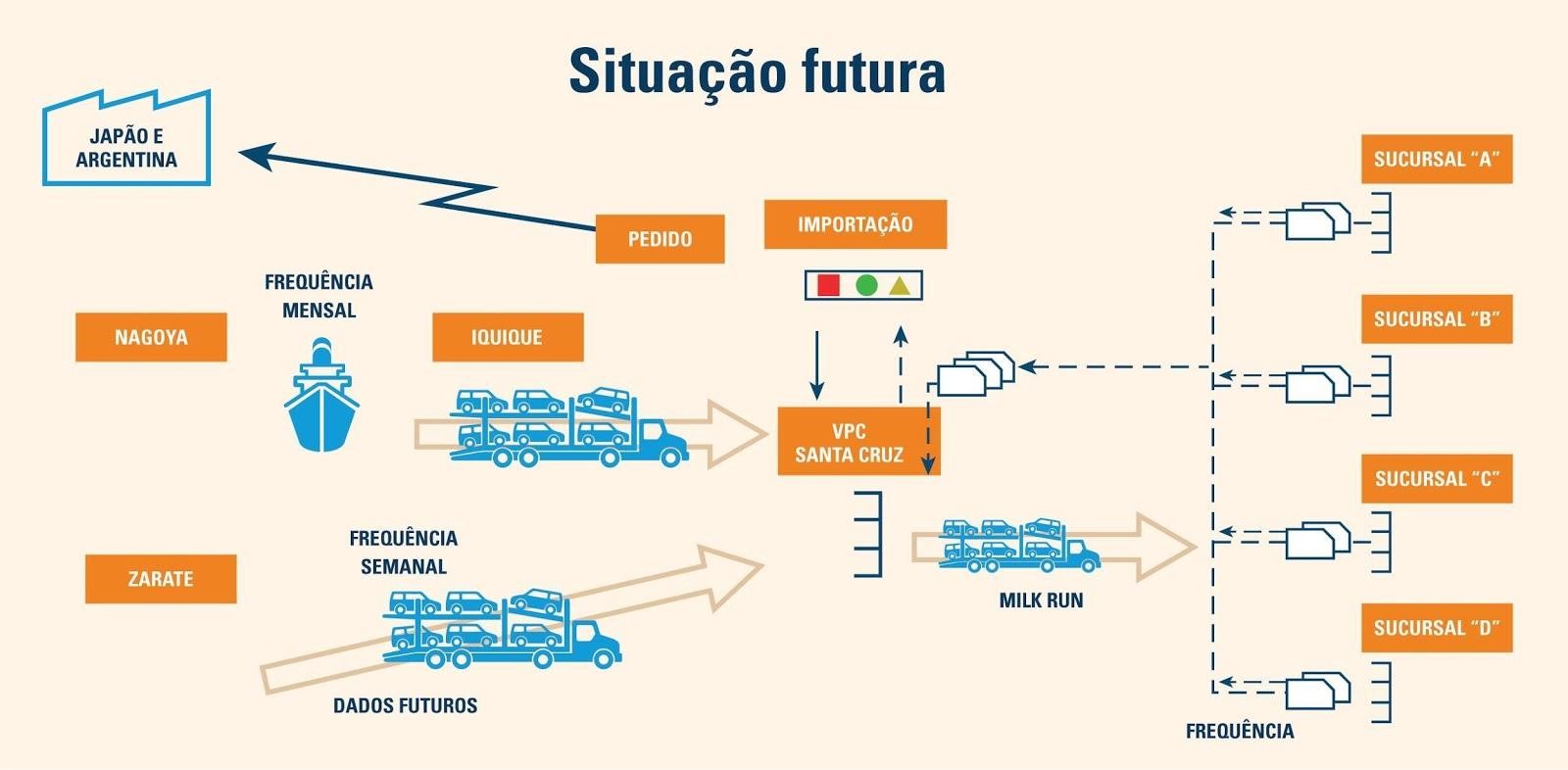
Figure 3: Pull system
In the case of the inventory at the DC, about 4,000 vehicles, the team created a planning routine together with the Sales and Purchasing areas, through an S&OP process that made it possible to increase planning effectiveness. We also established a maximum and minimum quantity for each SKU, so that demand is met and, at the same time, excess inventory at the DC is avoided.
To launch this strategy, the company had to adopt a special sales policy for the products that were in excess, so that inventory could be brought into line, since orders are placed 90 days in advance. The result of this initiative took at least 3 months to be felt in inventory. Another indirect benefit achieved was the reduction in rent for the storage area, which reached four million dollars per year.
Implementing a pull system can be a fundamental piece in achieving significant inventory reduction results while increasing the customer service level, which breaks the paradigm that the larger the inventory, the better the customer service level.
5th Tip: Do kaizen continuously
The team carried out kaizen activities in order to make the import process more agile. Initially, they created a Daily Management (DM) routine to monitor the progress of the documentation process every day, which, as a consequence, allowed problems to be dealt with more quickly. They also implemented a help chain, in which the person responsible for the documents can call on management immediately after identifying a specific problem that they were unable to solve.
The sales area also began its own improvement process in its connection with the customer, identifying that customer documents often arrived incomplete for the DC to prepare the vehicle. So they mapped the flow and discovered that the existing checklist was not being filled in, and they also discovered that some fields were unnecessary. With the support of the sales team, the implementation team revised the checklist and created an electronic one, which allows the documentation to be sent without having to wait for the document to arrive by motorcycle courier.
A work routine was also established between the DC and the Sales area. Previously, a product was ordered even if it was not a priority, and the DC prepared the vehicle, which sat exposed to the weather for up to 15 days, accumulating dirt and requiring another wash. Now, with daily management, only the cars that will be delivered the next day are prepared, eliminating an area at the DC that was full of vehicles waiting days to be delivered to customers.
Continuous improvement is the central motto of lean. Although we seek perfection every day, we will never get there, because our objectives will always be changing. And that is something extremely positive. That is why kaizen is so necessary in any and every type of business or sector, especially in the supply chain, which deals with a series of strategies that can be thought out and rethought, always seeking the best way to serve the customer in the most agile and efficient way possible.
Final considerations
The results of the work at the vehicle importer we discussed in this article were not long in coming. In the very next months, the administrative processes were already showing improved agility. However, the most impactful results concerned inventory reduction, with cuts of more than 40 million dollars across the chain. As a result, the company achieved significant cash flow savings, enabling new investments in pursuit of growth.
Another benefit reached the end customer, who began receiving the product more quickly, since the documentation process was improved and simplified. In addition, the sales process was also simplified, since the number of SKUs was reduced, and salespeople could devote more time to the customer instead of searching for the right model among a range of 400 SKUs. All of this contributed to generating more sales.
In prosperous times, we tend to forget about problems, focusing all our attention on the successes achieved. However, the secret of true continued success is never to stop looking for ways to improve. Sales success results in an increase in inventory, which, in turn, will require greater investment to maintain. With the help of lean, it is possible to ensure that these consequences are managed and that growth is sustainable.
First image credit: Pixabay







