

Keep calm and manage with stability: Akio Toyoda on crises
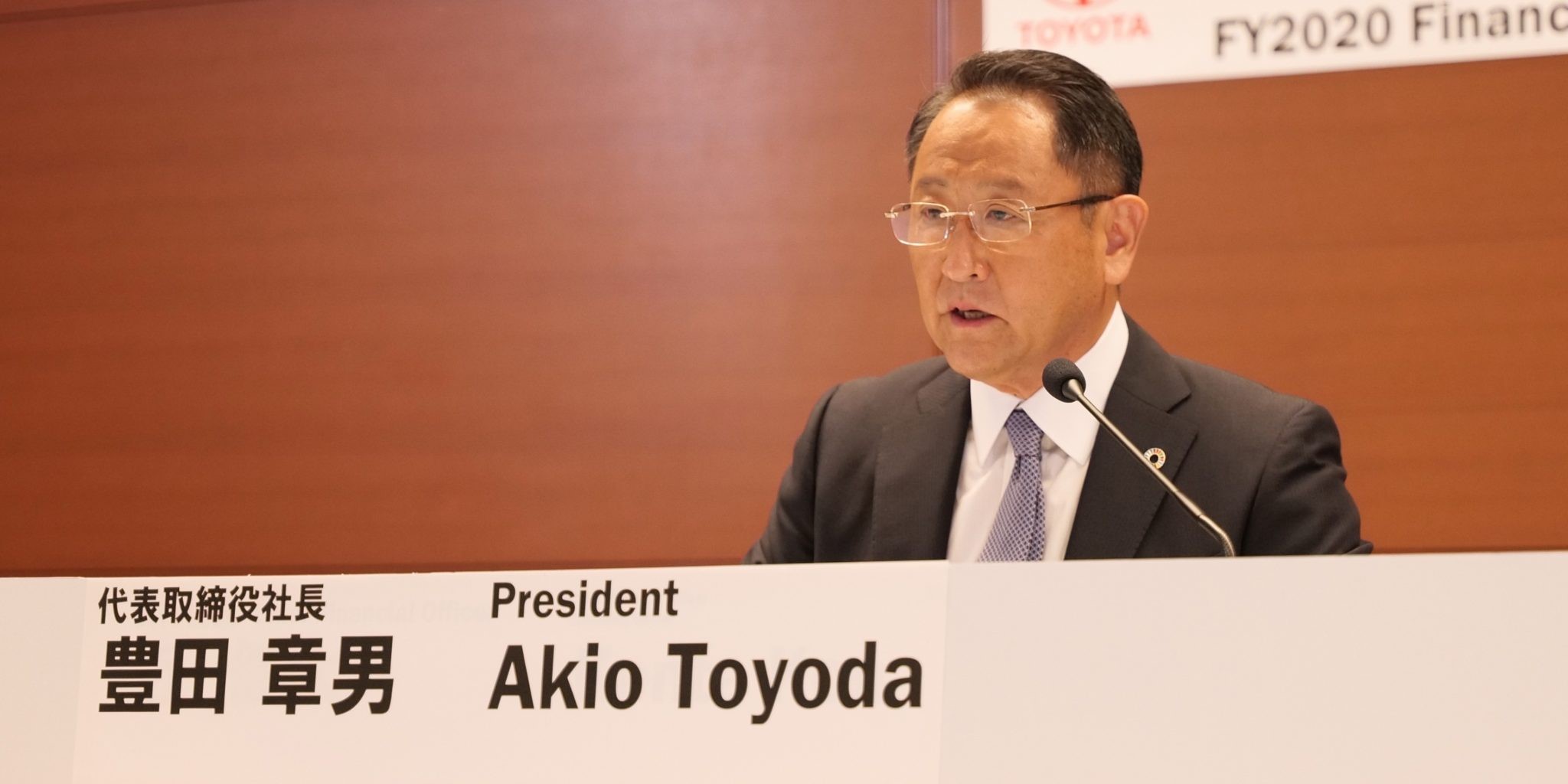
When we read the article Lockdown Leads Toyota Chief to Question Core Tenet for Carmaker (published in English by Bloomberg on May 13), we were surprised and even a little concerned. Questioning “ingrained practices” is a good thing, but it can easily lead to misinterpretation — and that was certainly the case here. The core tenet in question was genchi genbutsu, one of the five fundamental principles of the Toyota Way (Toyota Way). So we read Akio Toyoda's words and it didn't take us long to realize that he was talking about something much deeper than what had been reported in the articles we had seen. In fact, the way Toyota's president answered the questions of journalists and market analysts reflected the core principles of the Toyota Way and of lean thinking.
TPS is often misunderstood. For example, just in time often takes the blame for supply chain breakdowns, but the fact is that the long, slow-to-react supply chains we have around the world today are the opposite of JIT. Similarly, we repeatedly see consultant-led cost-cutting initiatives being called “lean programs.” There seems to be an urge to throw out the old principles, methods or people and bring in the new. That is why we decided to share our interpretation.
We were not surprised by Akio Toyoda's challenge to rethink practices, but by the passion and candor he showed in public, bringing classic Toyota thinking to the fore in the midst of the current pandemic.
The occasion was the May 12 press conference in Tokyo, where Toyota was presenting its financial results for the year ending March 31, 2020. These annual presentations are extremely tedious affairs (a fact John can attest to from painful experience). This year's presentations were quite interesting — and revealed worse year-on-year financial performance. The formal presentation was followed by a question session in which journalists asked some interesting questions, to which Akio gave some remarkably honest and thoughtful answers.
Revisiting genchi genbutsu and the gemba
Genchi genbutsu means “the actual place,” “the actual thing.” The idea of going to the gemba is common in lean language, but the deeper meaning is to study firsthand what is happening in order to fully understand the situation, why things are the way they are, and the causes of any problems or needs for continuous improvement or innovation. For example, if a defect is created on a machine, go to the machine, study its condition and investigate the actual part that failed. Toyota people and lean practitioners everywhere certainly have a strong tendency to be physically present, as in the Ohno circle, but the process of how you get the facts and understand the situation is secondary. The principle is to confirm what is really happening. It was never meant that the company's CEO should literally go to every gemba every time something goes wrong or to confirm the results of every improvement attempt. The same can be said about the five whys. The point is not to literally ask why five times; what matters is pursuing an understanding of causality and, when it comes to understanding causality, using the simplest means possible, starting with the five whys. When you need more than simply asking why a few times, that is the time to reach for more sophisticated analytical tools in your toolbox (SPC or six sigma, for example).
As is happening to all of us with Covid-19, Akio Toyoda has been forced to communicate and “go see” much more through virtual means, leading to personal learning that he shared during the question session. Traditionally, in Japan, face-to-face communication is considered respectful, and we all know that, practically speaking, it provides better access to non-verbal cues. But Akio shared that he had discovered some benefits of virtual meetings: by staying in Toyota City, “I have reduced my travel time by 80%, the number of people I meet with by 85%, the time spent in meetings by 30% and the documents prepared for meetings by 50%.”
These comments are hardly surprising: Akio Toyoda has been taking Toyota into the new CASE era — in which cars are Connected, Autonomous, Shared and Electric — and making more robust use of digital tools. But he went even further, acknowledging that there is still indispensable value in going to the actual place — a core principle of all work at Toyota. When asked what he wanted to protect in these times of once-in-a-century transformation in the mobility industry, where radical change is under way, he replied:
“We have a ‘genba,’ or front line, where the work gets done. This genba is real, and what we have been able to cultivate in our genba over these many years is something that no digital transformation or teleworking system, no matter how advanced, will be able to replace in the real world. It is in the real world that people have work to do, doing the work that only people can do, and it is where Toyota people, who are capable of doing kaizen, or improvements, are trained. With this ability to improve, I would like to make Toyota a company in which everyone can have high expectations for the future.”
But the question remains — when can we use virtual means, and when is it still necessary and worth the effort to literally go to the gemba? Here, Akio was cautious, indicating that he wanted to make the culture more open to other approaches for understanding current conditions and to clarify what genchi genbutsu means under these new conditions by asking why. He said:
“For Toyota's philosophy of ‘genchi genbutsu,’ going to the actual place and looking at the actual goods, I believe we have to define it clearly once again. Until now, we have placed importance on, above all, going to the actual place, going to the ‘genchi,’ and this was done routinely. Even when looking at products, we always had to look at the actual product and place it in front of our own eyes. Nobody questioned this philosophy until now. But in this last month, we have been looking at products through images on monitors. I believe that, at certain stages, it is fine to see the product on a monitor, but there will always be times when you have to see the actual product. Some things can only be felt when you are at the ‘genba.’ So, for when you need to feel the actual products, the actual people, you must do that at the actual place. I believe we should not simply do ‘genchi genbutsu’ everywhere, but we need to clarify under what conditions it is really necessary to go and see.”
Far from denying the value of genchi genbutsu, Akio was affirming its value even in today's conditions, while questioning the means by which it is most effectively carried out. Such questioning represents classic Toyota thinking about innovation — start with the need.
Long-term thinking, long-term investment
The financial data presented revealed a forecast 80% reduction in profits. Many companies are experiencing similar declines, with many going into crisis mode, firing the guilty parties, making mass layoffs and not making planned investments. Akio and his team presented this information dispassionately — facts are facts. Considering the pandemic, it is understandable that profits are reduced, but there is a deeper reason why this is not such a big crisis in Toyota's situation. It has to do with the way the company views money. The basic idea is: save for a rainy day and don't depend on large loans from other institutions that may try to control decisions.
At the end of 2019, Toyota had more than 50 billion dollars in cash or equivalents, the highest figure in its history. The company had made record profits for the automotive industry as a whole of nearly or over 20 billion dollars a year for five consecutive years. Cumulatively, since Jeff published “The Toyota Way,” Toyota has had earnings of approximately 180 billion dollars, more than GM, Ford, Volkswagen and Honda combined. It has suffered annual financial losses only twice in its entire 80-year history. A “bad year” in terms of earnings — say, only 5 billion dollars — does minimal damage to its financial health. It is a situation to be taken seriously and faced honestly, but there is no reason to panic, inflicting unnecessary waves of turbulence across the entire company.
Second, long-term thinking has always shaped Toyota's purpose, which begins with a commitment to contribute positively to society and to benefit customers, employees and partner companies. Doing all this requires developing the capability to create enough value at a low enough cost to generate enough return to be profitable, but profit is not the purpose. One journalist observed that, despite lower profits, the research and development budget had not been cut, to which Akio and his team responded:
“We are now transforming Toyota into a new Toyota. We have begun planting the seeds that we will harvest with the new Toyota. For these kinds of new projects, we will keep our foot on the accelerator.”
Toyota's chief risk officer, Koji Kobayashi, added:
“We cannot stop our investments for the future. That is one of the things you always have to keep doing, and it has to be backed by adequate funding. In the Great Recession, we had three trillion Japanese yen on hand. Today, we have eight trillion yen on hand. That is still less than we would like; Apple, for example, has 20 trillion yen. All companies face ups and downs, of course, but spending to invest in the future will be necessary to fund continued growth and, at the same time, to ensure that we keep contributing to society. You mentioned the Woven City project and the investment in research and development; the commitment to these kinds of investment will never change. However, I keep an eye on spending. If I see any spending that is waste, I cut it.”
Stay calm and reflect during a crisis, don't panic — manage with stability
When asked how his learning from previous crises is helping him deal with the Covid-19 crisis, Akio was introspective:
“The first thing I have learned, and which I am prioritizing among my lessons, is not to panic. I am managing the company with efficiency and stability. In managing the company over these last ten years, no year has been peaceful. Every year, year after year, we have witnessed and experienced a great and drastic change on the scale of a once-in-a-century event. So I believe that the calmer I stay, the calmer things will be inside the company.”
There will always be a “next crisis” — we just don't know what it will be or when it will appear. It is in recognizing this that Akio emphasizes the importance of managing with stability, without panicking, even when new approaches are needed and innovation is more in demand than ever. This connection between the yin and yang of stability and innovation is a vital source of Toyota's enduring strength.
Akio went on, sharing his feeling that he was not well accepted when he became president — “almost no one inside or outside the company seemed very happy about the fact that I had become president.” But over ten years leading the way through these crises, he was accepted. He recalled becoming president in the midst of the Great Recession, when Toyota was experiencing an annual financial loss for the first time in 50 years. Then came the recall crisis, the earthquake in Japan, the Fukushima nuclear plant disaster and the worst flood in Thailand's history (which disrupted not only vehicle production in Thailand but also the supply of many parts and materials to Japan). In the face of each of these threats, Toyota was still profitable. Instead of expressing dismay at the initial skepticism when he was named president, Akio showed gratitude to the individuals who gave him a chance and helped bring the company back to a good position:
“Especially now, when I meet these employees, I feel I am getting an opportunity to say ‘thank you’ to them. I think the company is quite stable now, without panic. We are fighting and we can make investments for the future. We can keep investing in advanced research and development. We have good internal communication that allows us to say thank you to one another within the company. So showing appreciation to one another within the company means that people are working not only for themselves, but mainly for others. That must not change in any way.”
When asked about the company's current priorities, Akio connected the Covid-19 crisis with the once-in-a-century transformation of the automotive industry, invoking the core values the company has long upheld:
“As for the immediate crisis, the priorities are the same ones we have always had at Toyota: safety first, quality second, volume third and profits fourth. As times change, these priorities may need to be revisited. But in the midst of this crisis, our traditional prioritization remains very important. And, based on these priorities, we will try to develop Toyota people, and that is very important.”
When asked directly what Toyota's biggest challenge is today, Akio closed the session by returning to his desire to simply say “thank you” more often:
“Last year, I said that the threat to Toyota was thinking that Toyota was fine. As for this new threat (Covid-19), I would say it is… well, perhaps more fearing the threat; speaking for myself, I am staying very calm. I see many people in the company giving their best. That gives me many welcome opportunities to say thank you to the people around me. [...] When the opportunities to say thank you begin to disappear and when I start complaining to myself more than I do now, I will begin to see more threats. So, including the way I work, I want to build stronger relationships within the company and strengthen relationships with our suppliers and our dealers. I also want to keep building the relationships we have with our communities, so that I can say thank you to all these friends and partners. [...] So, rather than fearing the threat, I want to reinforce the positive expectations I have.”
So, recognizing that giving thanks inspires humility in the one who thanks and motivation in the one who is thanked, as the top priority in navigating the Covid-19 crisis Akio cites “the frequency of saying thank you”! How many executive dashboards do you think could show that as an indicator of the company's function and health?
Our reflections
In Akio's comments, it is easy to see evidence of the thinking, principles and practices that have guided Toyota through decades of success: practice genchi genbutsu with flexibility; don't panic, stay calm, manage with stability (we could make a T-shirt — “keep calm and manage with stability”) and keep investing for the long term; be grateful, be humble, show your appreciation — keep developing and relying on people.
It is unusual for comments from a financial results reporting session in Tokyo to be so interesting to people beyond analysts and investors. It is extraordinary to hear such a thoughtful exchange, full of candor, revealing a leader speaking with confidence while at the same time exposing human vulnerability.
It will indeed be interesting to watch the interpretations of Akio's comments as they continue to spread around the world. It will also be instructive to see how they have an impact inside Toyota. Lean thinkers have always looked to Toyota as a reference model. No company can be Toyota — simply trying to incorporate Toyota's technical methods out of context continues to hinder attempts at organizational transformation in every sector. But the lessons learned from studying the company still apply today. For us, Akio Toyoda's comments reaffirmed the remarkable nature of the company, leaving us confident that Toyota will continue to serve as an inspiration, even as the world keeps changing in unpredictable ways.
Note: The photo was taken from the Toyota newsroom and was approved for editorial use.







