

The awakening
Roberto Priolo: What are your reflections on how lean organizations have reacted to the historic events that took place last year?
Josh Howell: An interesting trend I have seen is a move away from viewing lean thinking as mere process improvement toward asking more fundamental questions about purpose. This transition may have preceded the pandemic for some (I think it is fair to assume, for example, that digital organizations have a few years' head start when it comes to adapting to changes in customer needs), but there is no doubt that Covid-19 suddenly brought this transition into focus for most of us.
Last year, customer needs changed dramatically, forcing organizations to rethink their entire value proposition. Let's take restaurants as an example. With work now more focused on delivery and takeout, they need to reassess their purpose and find better ways to provide value to customers at a time when eating at home has become the norm.
As difficult as this transition is, I think it is also very exciting. Lean thinking has often been given a bad reputation because people see it as a maniacal focus on process at the expense of purpose. I don't blame them. We are all guilty of this to some extent, and that is why it is critical that the change currently taking place stays with us after the pandemic.
RP: How can lean help in a practical way with this shift toward purpose?
JH: One way that immediately comes to mind is the common idea of “customer first”. After all, value defined by the customer is the first principle of lean. As hard as it would be to find anyone – lean thinker or not – who disagrees with this idea, lean thinking provides several ways to turn it into reality.
Takt time, for example, takes somewhat ambiguous concepts, such as the “voice of the customer”, and translates them into something very practical and concrete, such as the pace of an operation, thus giving a clear objective to process improvement work. Concepts and practices such as value stream thinking or even lean product and process development (LPPD) also seem to challenge us to think more deeply about what our customers need and how we are going to meet those needs, about our work and about how to define our value proposition in a useful way.
The mindset of experimentation that comes with PDCA is itself of great help when it comes to understanding what customers want. It is perfectly acceptable not to know everything our customers need at a given moment. Lean, through PDCA, gives us a way to experiment and iterate to deepen our understanding of what customers value, closing our knowledge gaps along the way.
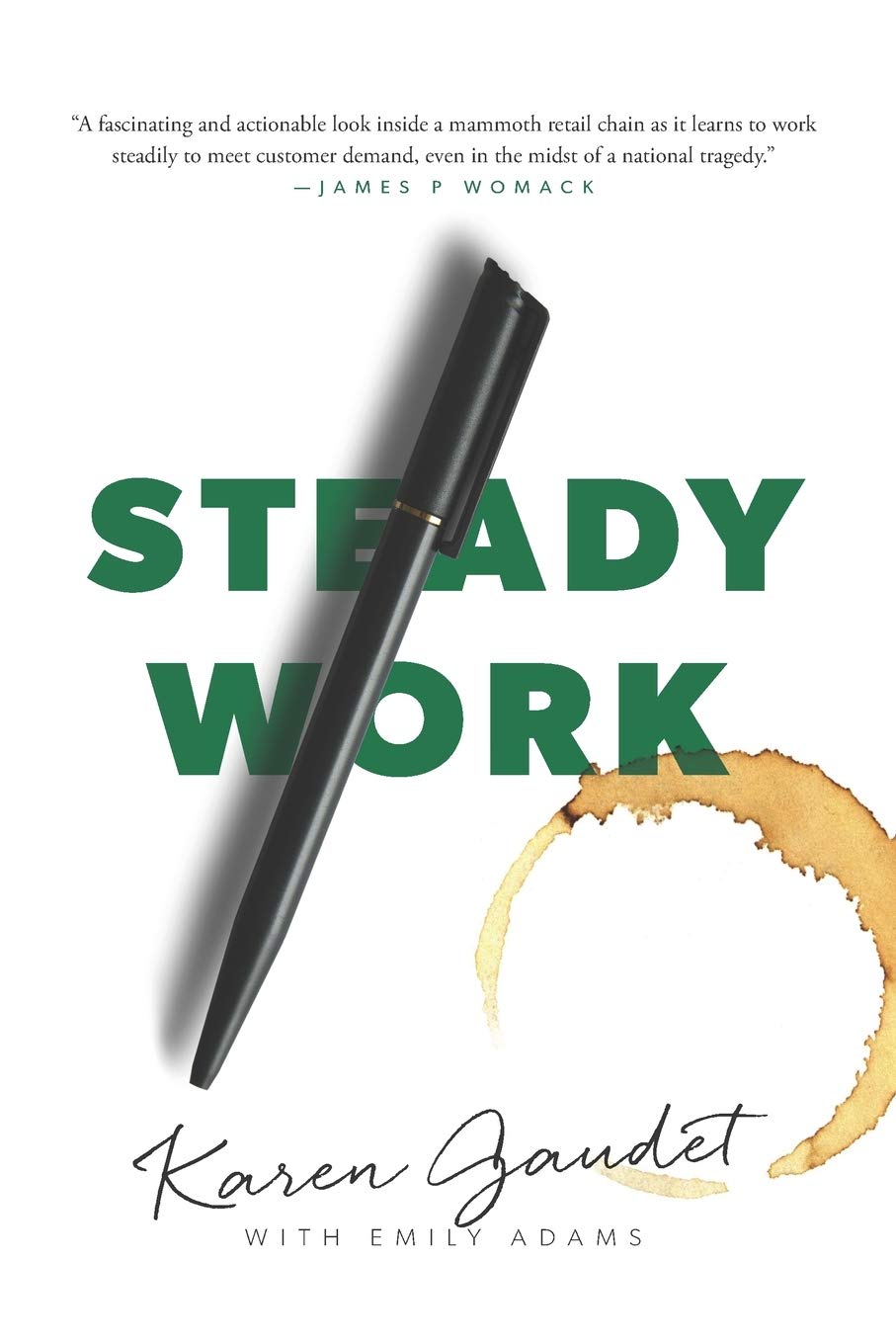
Another opportunity to better define our value proposition appears when we think about the customer-focused work of frontline employees in terms of “fixed and flexible”. In her book “Steady Work”, Karen Gaudet talks about “repeatable routines” at Starbucks, which I remember well from my years working at the company. The creation of the routines stemmed from the recognition that the barista's work involves both preparing drinks and interacting with the customer. Having a friendly conversation with a customer is extremely beneficial, but often challenging – especially when the person needs to worry about doing their job well. Standardizing the fixed elements of the work, such as preparing a coffee, to make them so easy that they can almost be performed without thinking, will ensure that the employee has the energy and mental capacity to concentrate on the flexible and creative elements. To me it is clear that this applies to any context: let's stabilize and standardize repetitive work so that we can concentrate on what really creates value, spending our capacity and energy, which are limited, on this more important and more meaningful work.
RP: Do you think there is a way for the lean community to contribute more to solving social problems?
JH: I think there are a few ways in which lean thinking can generate social benefits. First, there is still a lot that can be done by improving the jobs people have, eliminating waste and ensuring that work elevates individuals and helps them reach their full potential. We need to continually reinforce that it is not just about value for stakeholders and that it is fundamental to create good, stable jobs with good work, so that people can contribute positively to society outside of work. Companies can help their employees be less exhausted after a day of work by reducing waste in activities and, in turn, helping them save some energy for their families and friends. In addition, by developing their employees, companies can help fill society with more effective problem solvers. After all, society is not short of problems that need to be solved.
The other way in which lean can help solve systemic problems is by facilitating conversations with other communities that are also trying to solve these problems. For example, I recently had the opportunity to talk with Valeria Sinclair-Chapman, the director of research on diversity and inclusion at Purdue University. Her partner, Christopher Chapman, recently wrote an article about how lean thinking can contribute to solving a problem as nasty as systemic racism. She is frustrated with the approach many in her field are taking, which she considers overly dependent on training – this is also present in the lean world –, and interested in understanding how lean can contribute to this important discussion about how to transform systems. She sees the lean movement as an evolutionary movement that has learned over time how to bring about systemic change. In fact, great conversations happen when lean thinkers exchange ideas with people who are trying to bring about positive change in areas that are extremely problematic. We can learn a lot from one another and, together, we can try to create systemic change.
RP: If we do the things you just described, do you think we might even be able to deal with the question of relevance that lean seems to be struggling with?
Lean is a way to improve operations and value continuously
Lean is a way to improve operations and value continuously
JH: Yes, absolutely. This is a great way to demonstrate the relevance of lean, because it will make permanent the shift I mentioned earlier, from mere process improvement to running businesses with a purpose. We have to make sure lean thinking is recognized as a way to improve operations and redefine value continuously. This may attract more people from outside our community than simply talking about cost reduction, efficiency or process improvement (which is not to say those are not important things).
RP: What is the biggest lesson you learned last year?
JH: On a broader level, much of what we have talked about in this interview reflects my internal dialogue over the past year. The same shift I see happening in the community is something I am recognizing in myself and in our team at the Lean Enterprise Institute. We are increasingly engaged in conversations about “value improvement”. To continue being useful, we need to constantly seek new ways to engage our community.
I think the pandemic has made us less complacent and forced us to ask very difficult questions about what we are doing and why we do it. Some people were already on this journey of discovery, but for many of us there was a small awakening to the importance of developing that “purpose muscle”. It is very important that we do not go back to our state of dormancy when things eventually return to normal. That way, we will be able to raise our contribution and relevance as a community and broaden our focus by looking at things we may not have been paying enough attention to – be it the purpose of a business or an innovative way to solve a social problem. Now that we have been reminded of the importance of focusing on what really matters, we must never forget that developing capabilities and improving processes is an enabler, and not an end in itself.







