

Meeting deadlines with lean planning and control: The Alphaville Case
In land subdivision construction projects, schedule and budget requirements are always a major challenge, even more so when combined with the final quality of the product and compliance with safety items in the execution processes. In this case, you will see how lean planning and control can ensure on-time delivery while meeting all the predetermined requirements for a land subdivision project in Ceará.
1. Challenge
Have you ever imagined yourself facing a major challenge in which you had to complete 57% of the project's physical schedule in 34% of the remaining time (6 months) within the planned budget? Now imagine that, in addition to this great challenge, you also had to deal with a problem of heavy rainfall not foreseen in your initial plan.
This was the scenario of the Alpha 3 Ceará project (Eusébio-CE), which had 581 residential lots in an area of 552,621.01 m2, carried out by Alphaville Urbanismo — a company with more than 40 years of experience, operating in almost every state in Brazil and considered the market leader in the land subdivision sector.
In this context, Alphaville decided to invest in something that could help solve this challenge. Thus came the pilot project applying lean thinking to the Alpha 3 project.
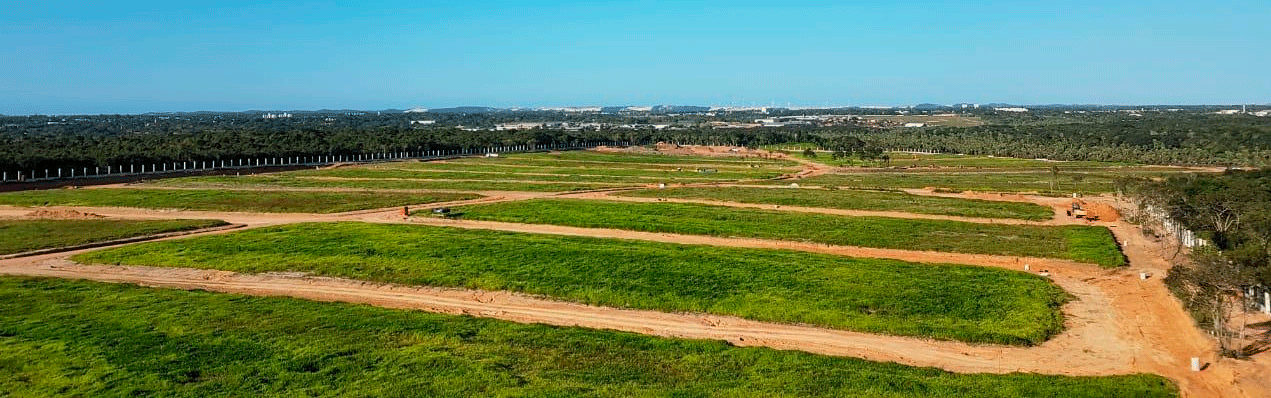
Alpha 3 project in July 2019
2. Training and Continuous Flow in Macro Planning1
Training was the first step in starting the project, involving contractors, managers of four projects, coordinators, superintendents and the board of directors, as well as employees from support areas such as planning, design and quality. A two-day training session was held with basic lean concepts and practical simulations in order to qualify the team for the lean project.
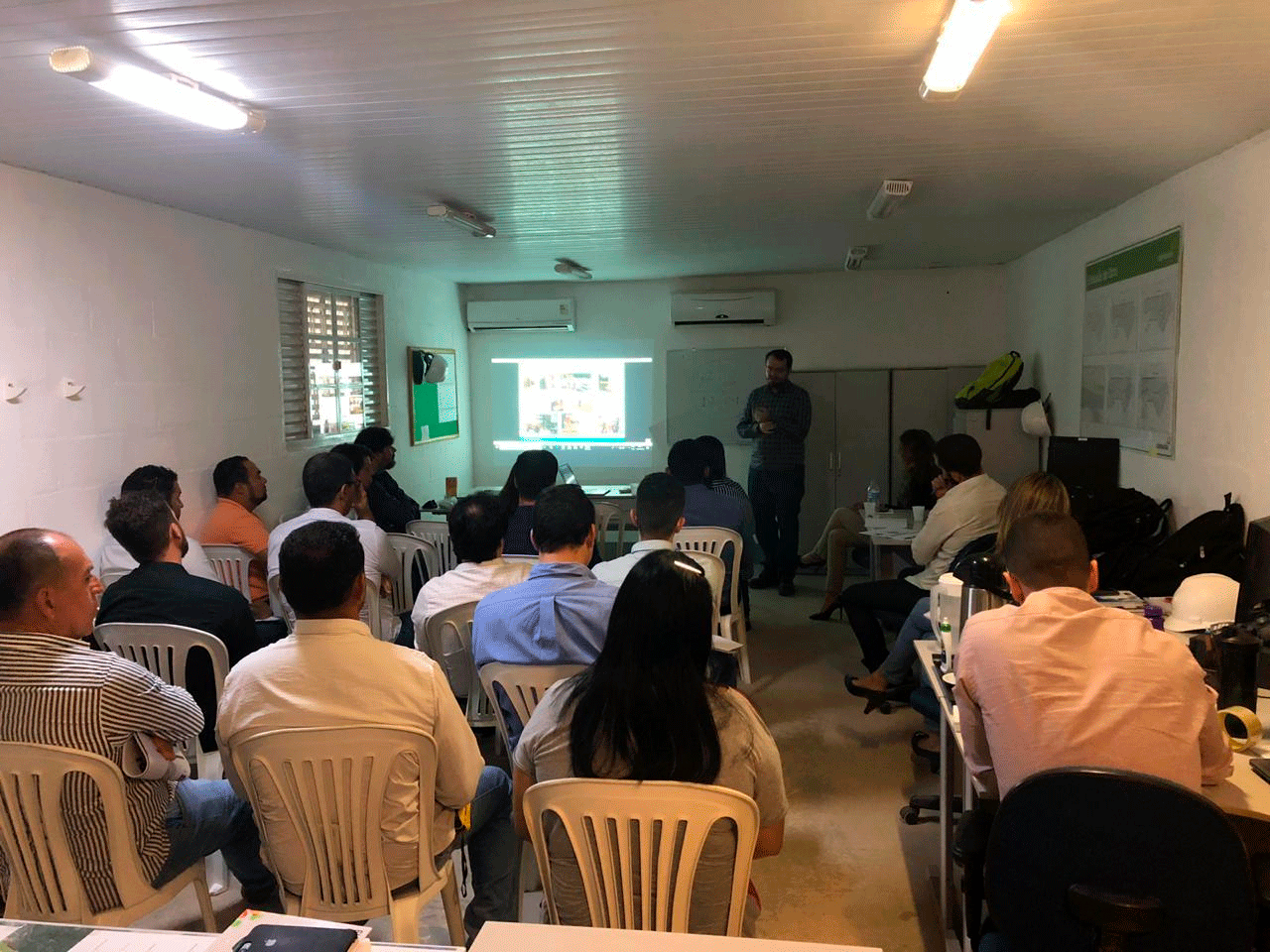
Training with the Alphaville team
An analysis of the project schedule revealed a macro planning concept based on a Gantt chart with no focus on the continuous flow of activities. This reflected some of what was seen in the field, with a large amount of drainage done while other subsequent services had not yet started. In addition, services advanced as some work fronts were released at various locations scattered throughout the site, which sometimes caused breaks in flow and a lack of completion.
Based on this reflection, a macro plan was drawn up based on lean concepts using the following framework.
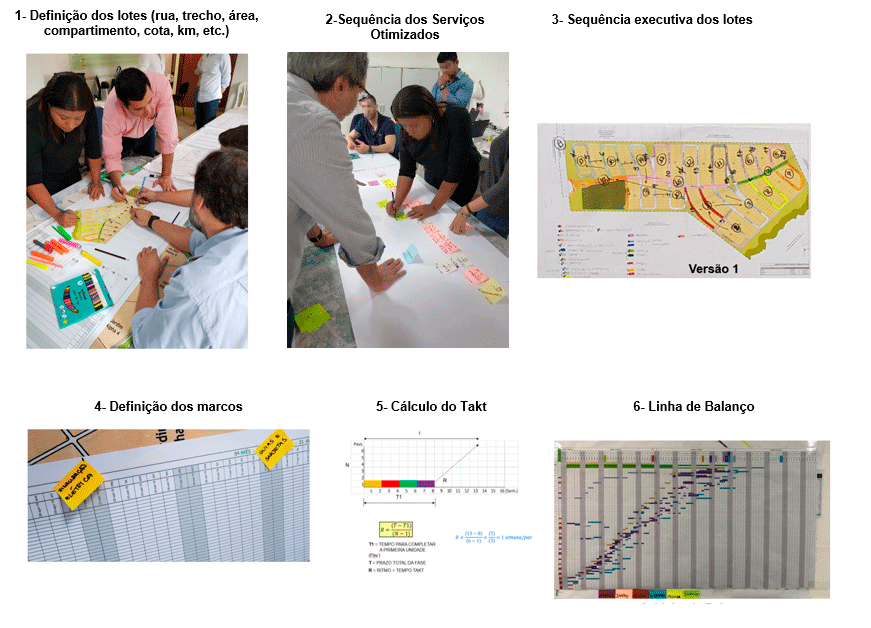
Macro planning framework adopted by Alphaville
The main concepts applied in macro planning with the help of the line of balance technique2 were:
- Dividing the attack on the project into smaller lots (sectors).
- Continuous flow between lots.
- Definition of sequencing.
- Change in the construction process (the poles would need to be installed before the curbs because of the approval time for the local power utility's inspection).
- Detailing and balancing of the crews.
- Visual management to support planning and control.
At this stage, the team realized that this new definition would help both the project management and the contractors better understand the plan of attack and the sizing of the crews.
3. Problem solving through management routines (constraints3, weekly planning and daily management)
a) Constraints
The project had a routine of a weekly meeting with the contractors to control deadlines. Problems were solved during the day, but preparation for starting services was not systematized, and so the routine of identifying and removing constraints was adopted. The project team set up a visual board using color-coded Post-its (contractors) on a schedule.
Checking and removing constraints, as well as planning for the next stages, were incorporated into the routine.
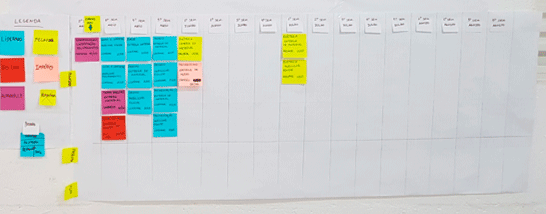
Visual management of constraints
b) Weekly planning
The weekly routine was improved with the introduction of visual management and the detailing of the daily service deliveries by contractor and of the locations where they would take place. At this stage, identifying problems and taking action to solve them quickly was essential.
Initially, the established routine consisted of a weekly meeting, held every Friday afternoon, to identify recurring problems from the previous week and develop countermeasures. At this meeting, the constraints were also reviewed to check whether there was any impediment to starting or completing any service.
c) Daily management
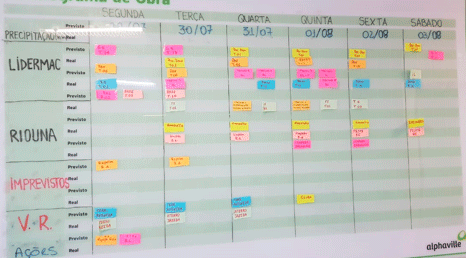
Weekly planning
Solving daily problems on the project was not systematized, and controls were weekly and monthly, so that scheduling for the next day was done in the field without being based on a broader view.
Daily management was then implemented, which is a daily routine focused on problem solving. Daily management began in the engineering office, taking place every day at 6 p.m. with the participation of the project manager, the field engineer and the project supervisor. Problems were recorded and discussed; actions for the next day were also decided.
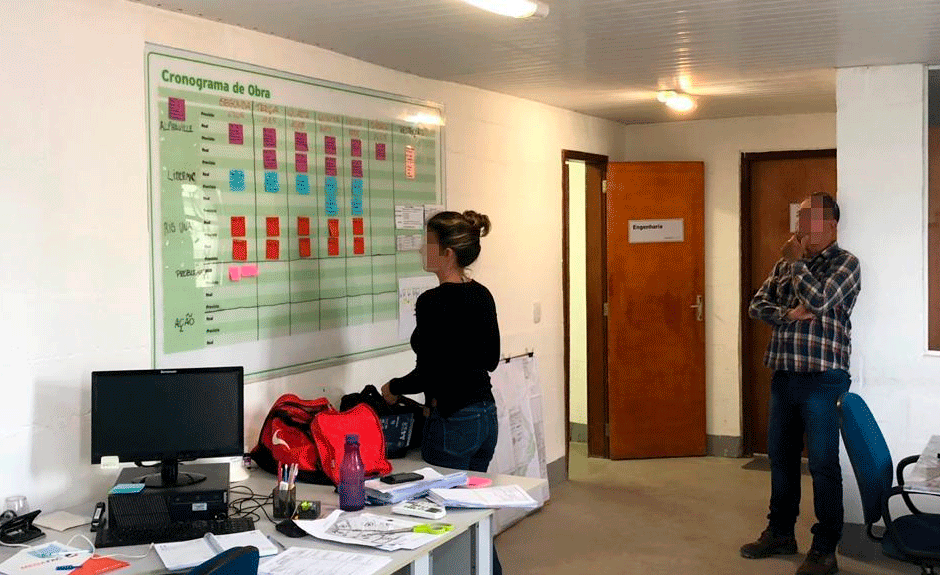
Daily management in engineering
After the benefit of establishing a daily meeting in engineering was confirmed, daily management was expanded to the field, specifically to services for which Alphaville had execution responsibility (for example, the earthmoving service).
During this service, every day at seven o'clock a 15-minute meeting was held with the production crew, in which problems from the previous day were discussed and the work fronts were aligned to start the day's activities.
Field employees began to help solve problems and offer some suggestions at the meetings, in addition to knowing where all the work fronts would be operating that day.
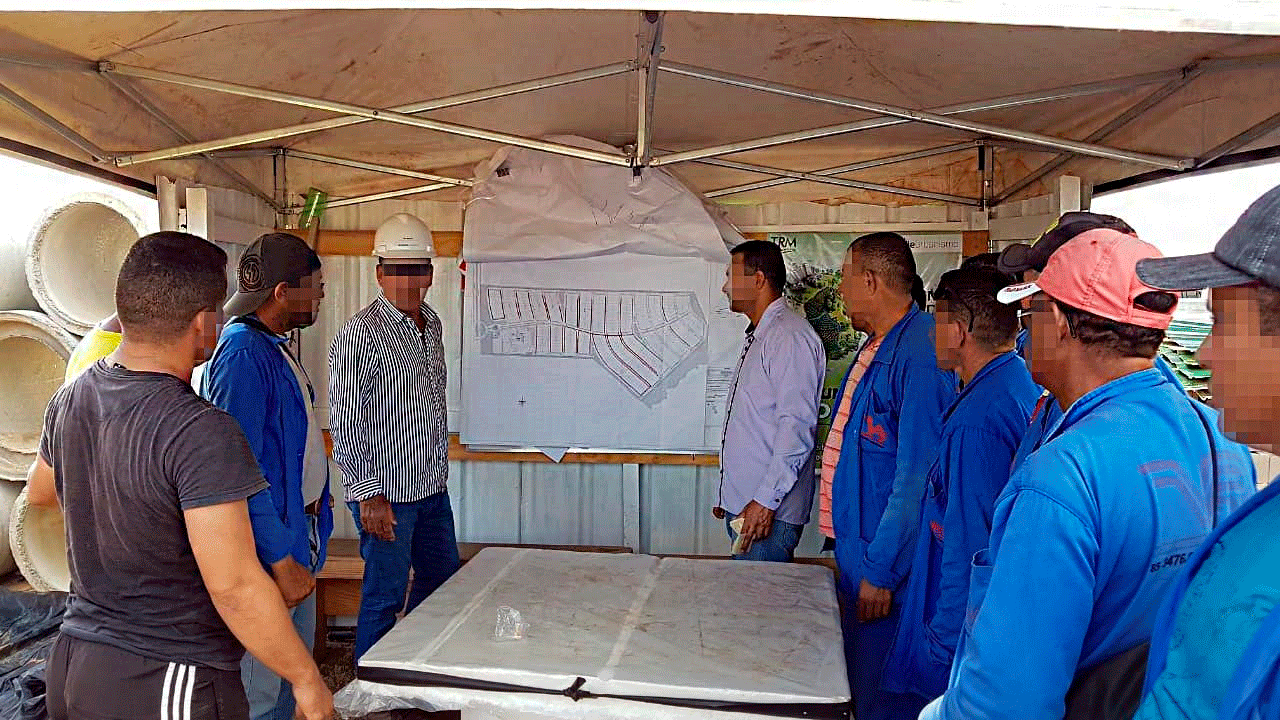
Daily management with the earthmoving front
4. Stabilizing production and implementing improvements in the field
Before the lean implementation, problems in the field were solved by firefighting. The team was able to identify some problems and take some one-off actions, but without a more detailed analysis, some of these problems kept coming back. That is exactly what was happening with the curb construction service, which was struggling to reach the planned target (of 50 m³/day). Therefore, a current-state VSM (Value Stream Map4) was drawn up for this service based on a visit to the gemba (in this case, the field) with the planning team, engineering and the project supervisor.
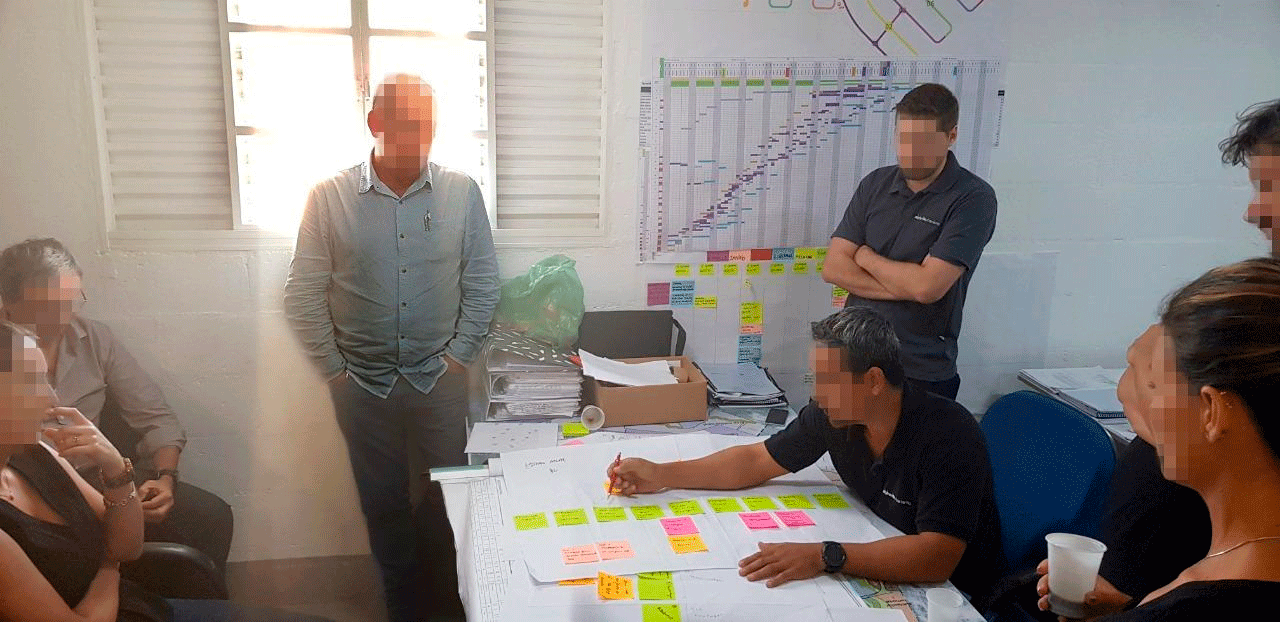
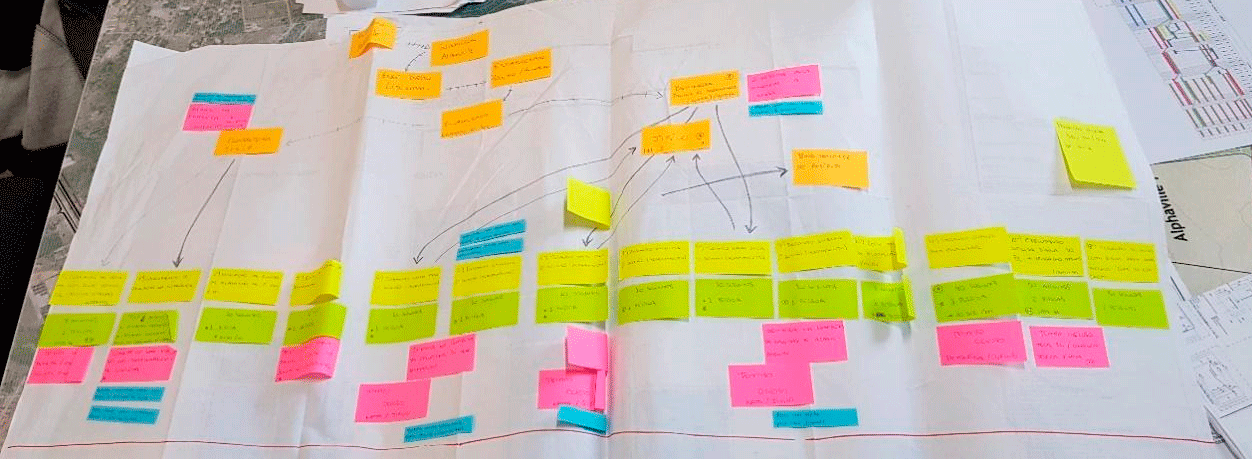
Presentation of the current-state VSM of the curb service and discussion of possible actions
The team discussed the mapping carried out, identified some problems and their causes and proposed some actions:
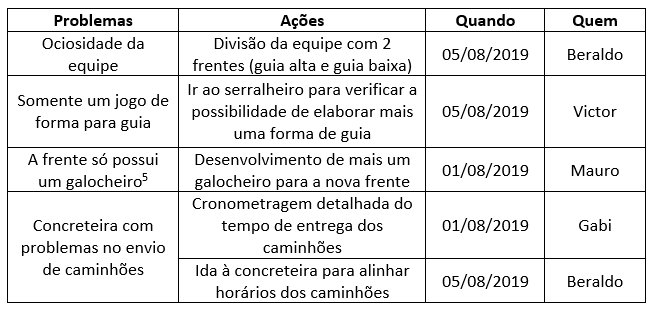
The team implemented the actions within 10 days, and productivity rose 25% as a result of the actions that were effectively implemented: the team managed to develop two more curb finishers and was split up, with one crew responsible for building high curbs (four workers) and another for low curbs (eight workers).
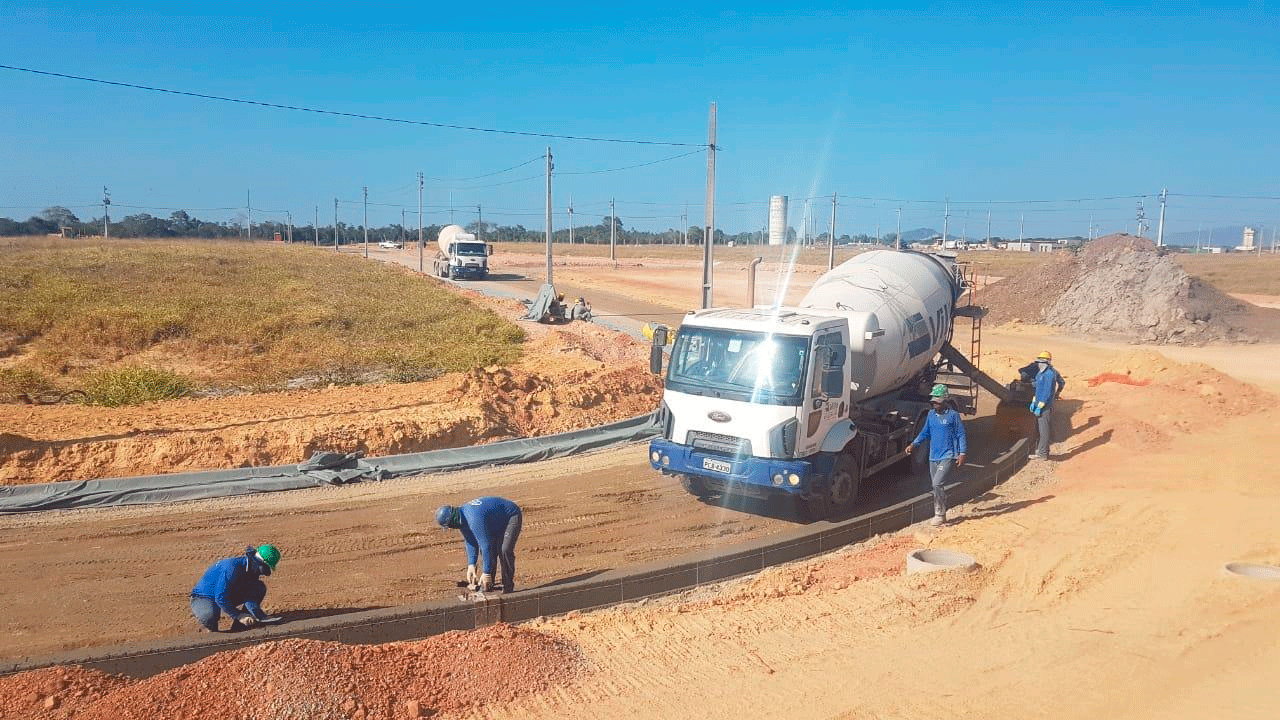
New reduced crew (high curb formwork)
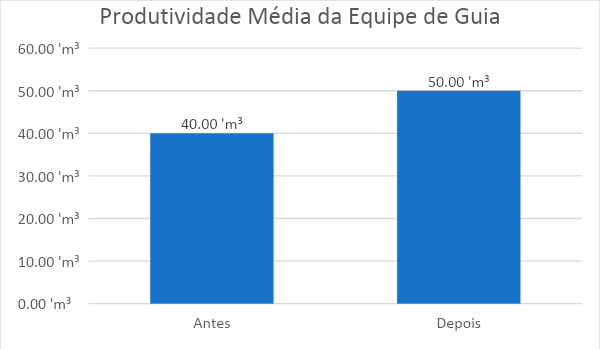
Productivity comparison before and after the VSM actions
5. Overall results and reflections
At the end of the project, the Alpha 3 Ceará team highlighted the importance of the visual management provided by macro planning and the management routines. These practices made it easier for everyone to visualize and understand.
An important reflection was that lean helped bring faster solutions in some services, such as curbs, landscaping and drains.
Below are some data on the results achieved on this project:
- Project completed on schedule.
- Savings of 5% relative to the budget.
- Highest monthly physical-financial progress in the company's history for a development of this size.
- Establishment of win-win partnerships with some contractors.
As learning points, the team reflected that the contractor's participation is fundamental and that there could have been more involvement in the process. Another point of reflection was the need for the Alphaville team to get closer to the improvements at the gemba.
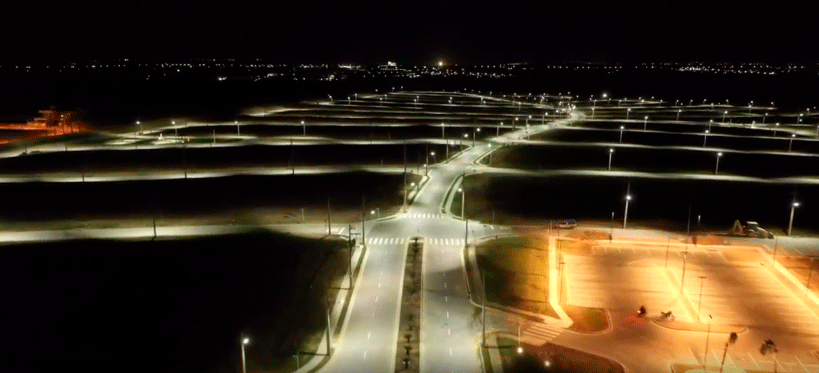
Alpha 3 project — delivered in December 2019
Some other projects are already implementing isolated tools and have already reported benefits. Below are some of the tools they are using:
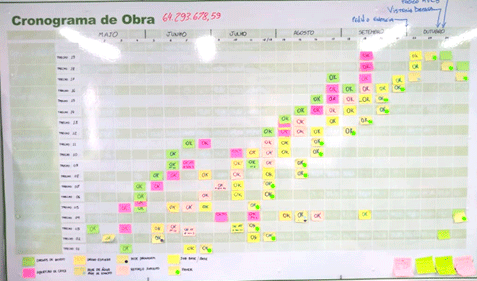
Line of balance - Rio Branco project
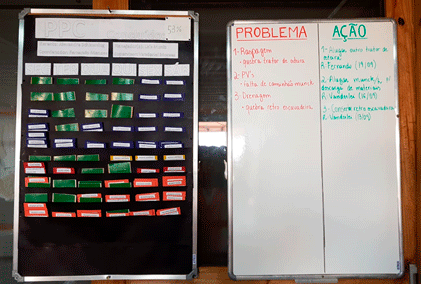
Management routine – Uberlândia project
Lean planning and control can be a major differentiator for any company in the construction sector in optimizing time and costs. The developer Alphaville Urbanismo was able to benefit from these concepts on its Alpha 3 project. It now intends to take a new step: expand lean to all its projects in a structured way and develop its own method in pursuit of excellence.
Ensuring deadlines with lean - The Alphaville case
Mariana Anicio (construction coordinator), Guilherme Beraldo (construction manager) and Mauro Bersi (construction supervisor) of Alphaville talk about the importance of lean in civil construction for macro planning, visual management, productivity improvement, structuring routines and problem solving.
Footnotes
1 Macro planning defines the main targets of the project schedule and has a horizon covering the entire project period, from the start of the first activity to the end of the last.
2 The line of balance is a planning tool used when there are repetitive construction units; it is easy to visualize and makes it possible to quickly identify the flow and pace of work.
3 An item or requirement that will prevent an activity from starting, progressing or finishing as planned.
4 A simple diagram of all the steps involved in the material and information flows.
5 A worker who finishes the curbs with cement slurry.







