

Lean logistics helps Mary Kay improve and expand its business
A lean transformation is not something that happens overnight; in fact, as the lean community always emphasizes, it is a process that never ends. Amid so many possibilities, tools and approaches, it is common for companies to lose their way if they do not have focus and support during their journey. To make sure it would stay on the right path, the cosmetics manufacturer Mary Kay advanced on its journey little by little, in stages, starting with a pilot and continuously expanding its efforts.
Mary Kay, which has been in Brazil for more than 20 years, distributes its beauty products through a direct sales force made up of independent consultants and directors spread throughout Brazil. Its founder, Mary Kay Ash, created the company with the mission of empowering women to achieve their dreams and transform their lives and the lives of their customers.
To handle all its daily deliveries, the company today has three distribution centers: one in Recife, one in Minas Gerais and one in São Paulo. It was at the São Paulo distribution center, located in the city of Barueri, that they began the lean journey in Brazil.
The problem: sales expansion and slow deliveries don't mix
In 2014, the company was experiencing very strong sales growth in Brazil, and, with this growth, some bottlenecks began to appear, among them one related to the receiving process in the materials handling area at the SP distribution center. It was necessary to reduce vehicle receiving times to free up the docks for shipping orders, since the space was contested by receiving and shipping activities. Slower receiving could stall the company's entire logistics operation and, consequently, impact the sales force.
At the time, the receiving time for a load could reach several hours, between the vehicle's arrival at the gate, its direction to the dock, unloading, checking, fiscal receiving, quality inspection and product storage, which limited the distribution center's product receiving capacity; another limiting factor was that the receiving docks were shared with product shipping on some occasions of peak demand.
That was when the Vice President of Operations, Henrique Fonseca, a professional who had already been through lean transformations at other companies, decided to apply lean concepts to receiving logistics. To accelerate learning and take action quickly, he sought an external sensei to support him in training and preparing the team to begin the lean transformation.
The work began with the formation of a cross-functional team and the preparation of a plan to develop the team through on-the-job training. At that point, the challenging goal of a 50% reduction in receiving time was also set.
Stage 1: a pilot project bringing immediate results
The first training took place in logistics and was on value stream mapping. From it, the team identified the waste that occurred during the receiving process and realized that there was no flow in the process, which caused waiting and increased storage time.
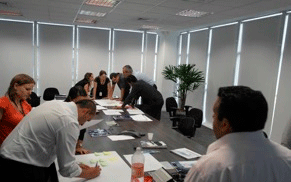
Figure 1: Photo of the mapping training
During the training, the team went to the gemba to better understand how the process happened and, from there, drew the future state with the lean concepts of continuous flow, standardized work and visual management of indicators.
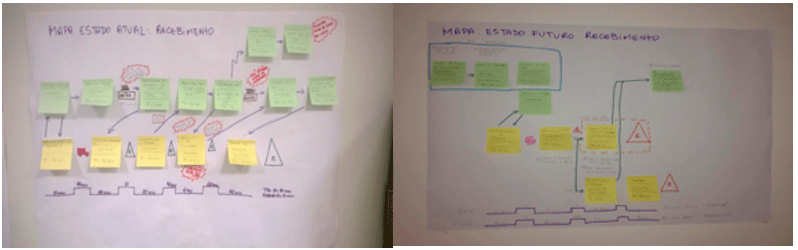
Figure 2: Photo of the current and future state maps
The main actions identified were:
- Creation of a schedule with compliance control.
- Implementation of continuous flow between logistics and QC (quality area).
- Flow-based storage with QC.
- Start of the implementation of quality assurance with suppliers.
The results were not long in coming: in just over 3 months, the receiving process time fell 30%. The actions moved on to applying daily visual management, standardized work in receiving and OPLs (one-point lessons) for operator training.
Today's results are already impressive: year after year the team has been applying continuous improvement concepts and, currently, it carries out all receiving activities in 80% less time compared with the original state, before lean.
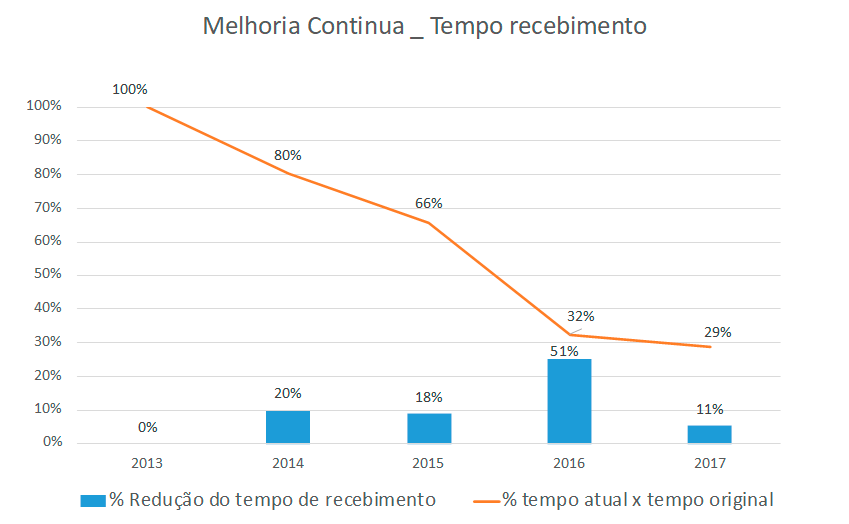
Figure 3: Chart with receiving results
Stage 2: expansion to other areas
After these results in the pilot project, improvement initiatives spread to other areas, among them the customer service area, which faced a problem of increasing call volume from consultants due to sales growth. After some expansions of the area and improvements in service, it was observed that the FCR 24h indicator (first call resolution within 24h), which measures the ability to resolve cases within 24 hours, had stalled at 87%, meaning that in 13% of contacts, the problem or situation took more than one day to be fully resolved, requiring it to be handled by a second level of customer service agents.
A process flow mapping training was then held, during which the customer service area was challenged to apply lean knowledge to solve this problem. It was decided to map the service flow for the cases that were escalated to the second-level agent. They realized that service time was very high because there was a lot of waiting, creating queues by problem type and communication failures with other areas, since these were usually problems that involved other internal areas, such as the finance or sales departments, or external suppliers, such as carriers.
When a customer called and requested information that depended on another area, this first-level customer service agent would generally open a case in the CRM (customer relationship management software) and wait for the second-level agent to step in and route it to another area or carrier, communicating through the CRM's queues and contact groups. All this generated waiting times. The second-level agents were located in another physical space, which also made communication difficult.
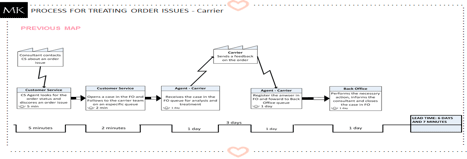
Figure 4: Map of the administrative service flow (before)
The team then decided to change the process, the physical layout and also the way the agents worked. For a smaller group of 4 to 6 first-level agents, one second-level agent was assigned to support the agent at the moment of the call with the customer. The second-level agent began working inside the cell where the first-level agents were, and they were empowered to call the areas and/or carriers directly at the time of the contact in order to help the first-level agent resolve the case on the spot, without needing to put the case in a queue of cases in the CRM.
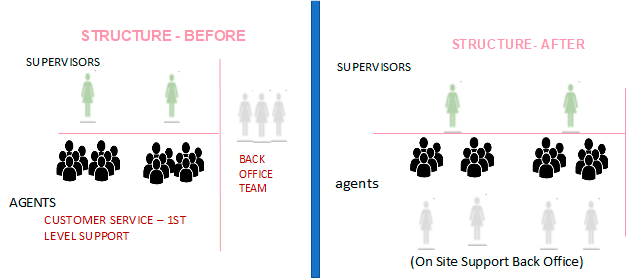
Figure 5: Structure before and after
With this initiative, the FCR (first call resolution) indicator rose from 86% to 98%, as shown in the following chart with the results:
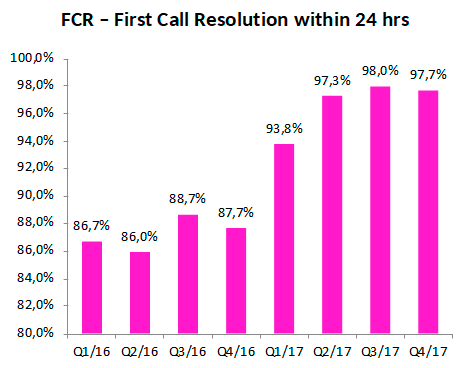
Figure 6: Chart with the results
As these lean initiatives evolved, the picking and storage logistics operation began implementing 5S with the objective of eliminating wasted time in searching for and picking products, in addition to creating a clean and organized environment. An assessment tool was implemented, the radar chart, which shows which areas need greater attention and effort, making it possible to radically change the company's operating environment, along with the implementation of the gemba walk, which are routine audits to assess the application of the 5S culture in the audited environments.
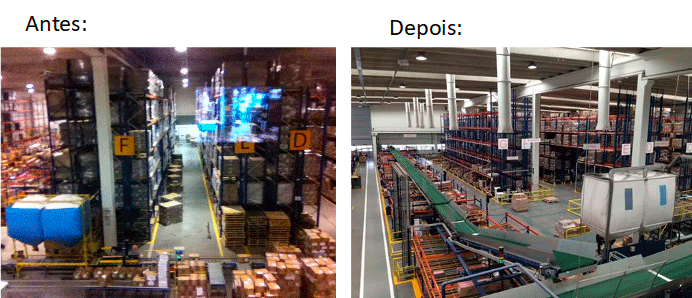
Figure 7: Photo of 5S at the DC
Still in operations, there was a problem that greatly bothered managers: the stoppages of the picking line, or order picking line, which is a piece of equipment almost 200 meters long with dozens of picking stations. They were not major stoppages, but, at the end of the day, they significantly affected performance and, consequently, delivery. After observing the operation during one of their visits to the gemba, they realized that the picker interrupted his or her work to call the replenisher to restock the shelves with products. In addition, they saw that the picker often had to leave his or her station to call the person responsible for the operation.
Faced with this situation, the team created the help chain, one of the concepts learned during the training sessions, in which the operator uses a call system (see figure below), like the one some restaurants use under the table to call the waiter. With this initiative, the response time to the operator on this line fell from 4:45 minutes to 1:09 minutes, a reduction of more than 75% in response time.
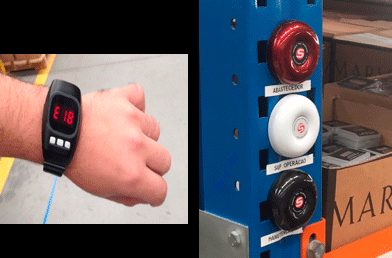
Figure 8: Photo with the help chain call system
Stage 3: building DM
As the lean journey advanced in operations, the need arose to create a system that would sustain the changes so that performance would not regress. That was when the concept of daily management (DM) was introduced in receiving: the indicators to be monitored were listed, and a quick daily meeting routine was created to evaluate the previous day's indicators and identify the actions to be taken.
This dynamic created an improvement cycle with daily frequency, which enabled the team to react quickly to any deviation, something that did not happen before, since they used only monthly indicators and, consequently, monthly actions.
This initiative spread quickly; the customer service area, which had already made improvements, quickly joined the process, which enabled a significant improvement in the indicators and in the relationship with other departments. The manufacturing area, which controls production at third parties, also joined the process, which made it possible to improve communication with logistics, enabling the optimization of freight between the company and its suppliers.
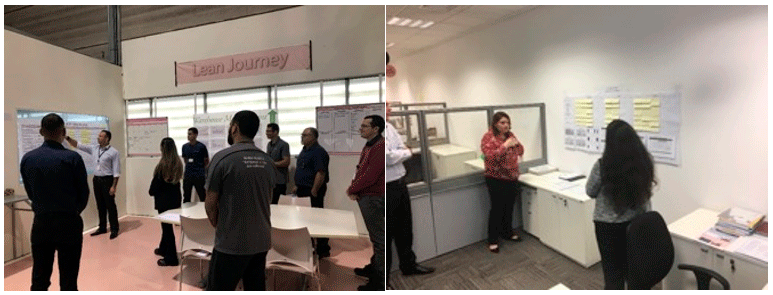
Figure 10: Photo of DM meetings in logistics and manufacturing
With the evolution of DM in the areas, the opportunity arose to carry out a company DM, that is, a DM that covered the interrelated issues between areas and that represented the business more broadly. Recently this practice was incorporated as a way of sharing, identifying and quickly resolving problems between areas that could be impacting the business. The DM dynamic attracted the attention of the participants, who, before adopting this process, had tried other meeting formats for this purpose, but without success. DM did away with meeting minutes, which were replaced by an indicator board and action plan. Even the format itself of holding DM standing up, in a quick and objective way, challenged the participants, who recognized that the new format was much more effective than the previous traditional meetings.
Stage 4: advancing the connection with suppliers
The team received training on the pull system (kanban). As the training sessions were carried out on-the-job, they sized the pull system during the process, identifying the cycle, buffer and safety stocks of cardboard boxes.
Next, they sized the kanban board and involved the supplier so that it would adapt to this new pull system, in which it should send the product only when signaled by logistics through the kanban board. This did not work very well, because the supplier did not adapt to this new reality, and it was necessary to look for other alternatives. The new system was then developed with another supplier, which adopted kanban. With this, the implementation of the pull system enabled a 40% reduction in box inventory at the DC.
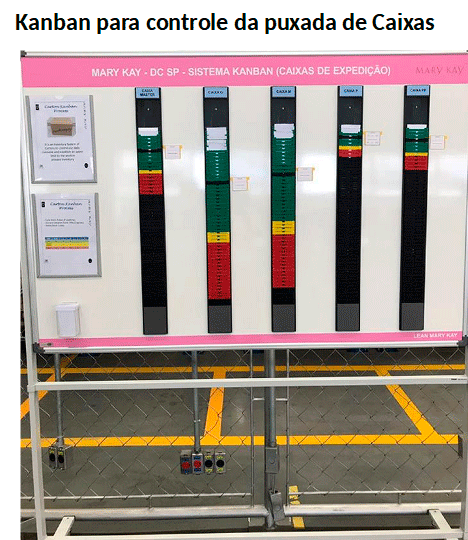
Figure 11: Photo with kanban board
After this initial experience with the supplier, the Vice President of Operations launched a challenge to the entire planning and manufacturing team (manufacturing being carried out by the external supplier): reduce finished product inventories. The team was a little alarmed, since the total lead time of the products was 7 months, and they did not really know where to start. At that point, an inventory reduction project was carried out without affecting service, and the team began by mapping the entire supply chain process, from planning, the raw material supplier, the distributor, the third-party product manufacturer and delivery to the DC.
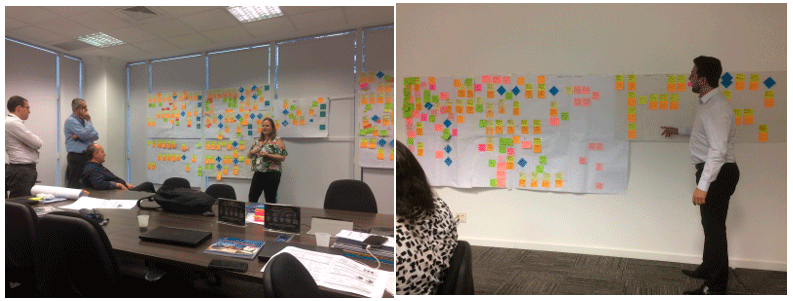
Figure 12: Photo of the planning and manufacturing value stream maps
The team was also trained in the A3 process so that it could manage the project systematically. As a result of this training, an A3 was created to implement a pilot pull system for two of the company's products: a cream and a perfume.
The main actions of this A3 were:
- Improvement in the communication process with the product manufacturer.
- Review of the raw material distributor's role in the process, so that it would have minimum inventory at its DC.
- Review of the supplier's manufacturing process to reduce lead time.
- Improvement in the planning process, creating more agility.
- Sizing of the pull system for the selected products.
- Creation of a system for reviewing the calculations.
The implementation of these actions took place throughout 2018, which enabled a significant reduction in lead time from an average of 7 months to only 2 for the selected items, bringing about a significant reduction in inventories.
Throughout the process there were several lessons, among them the need to improve communication between the companies, rethink the roles of the members of the chain, create agility in the process of responding to demand changes and bring supplier planning and demand planning closer together.
Today a lean training process for suppliers has also been established, conducted by the team of internal multipliers, which is making it possible to expand the pull system to other suppliers in the production chain.
Stage 5: going beyond the logistics operation
With all these results achieved during the lean journey in operations, the president asked the entire board whether it was not time to expand the application of this concept to all the other administrative areas. So the VP, Henrique Fonseca, once again consulted an external sensei to understand how to begin. On arriving, he asked the sensei: “Where do we start?” The sensei turned calmly and replied: “What problem do you want to solve?” This left him intrigued; after all, he was looking for an answer and received a question.
When he met with the other executives, he passed on the question and began a process of reflection to determine where to start the transformation in the office. After some discussions, they identified an important problem that involved the entire organization: “the month-end close – the process that required the order placement system to be closed for up to 18 hours”. This process involved the sales, finance, human resources, marketing, recognition, logistics, customer service and IT areas.
Once again a cross-functional team was formed, with people from all the areas involved, and they began by mapping the entire administrative process. In doing so, they discovered incredible things: there was extreme complexity, a lot of bureaucracy, disconnection between areas, a lot of manual processing, waiting and rework, among other things.
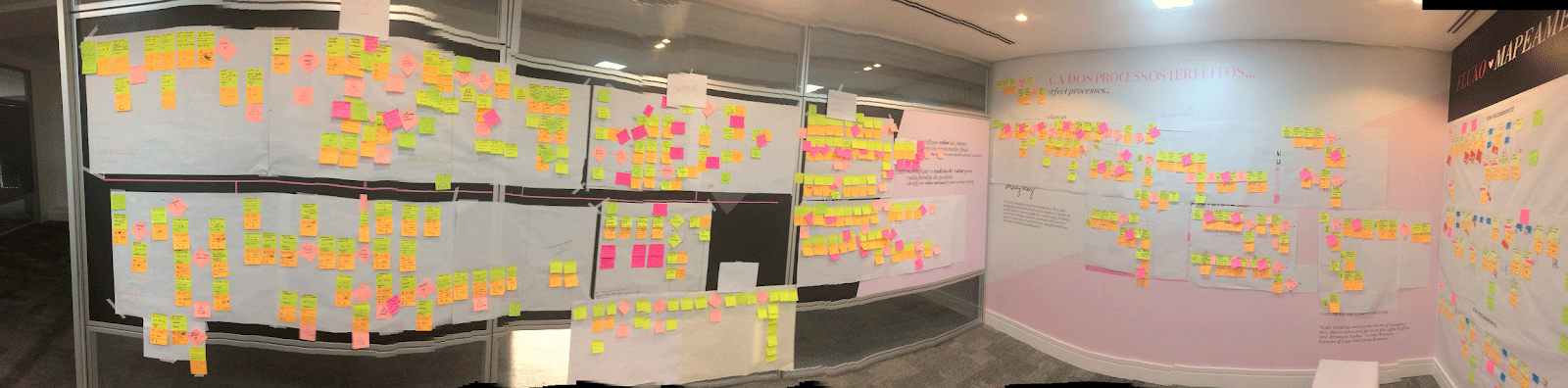
Figure 15: Photo of the closing flow map
The team then developed several A3s to transform the closing process and nicknamed the process “turnaround lean”, which brought about an incredible change in people's mindset and in the results.
Among the main actions were:
- Integration between work teams from different areas.
- Improvement in the consultant recognition process (from three days to just one to notify consultants of their results).
- Automation of some manual processes.
- Identification and resolution of problems with the credit verification system.
- Carrying out activities in parallel to speed up the closing.
- Creation of agile decision-making processes.
The results of this process were:
- A 6-hour reduction in the downtime of the order entry system.
- A reduction of 140 overtime hours that occurred monthly because of this process.
- A reduction of more than 90% in fraud analysis time.
- A 70% reduction in the time needed to calculate sales results and recognize the consultants who won the month's contests.
- A reduction in system errors in the setup of the following month's promotions.
Conclusion and lessons learned
After these five stages, Mary Kay has already achieved many positive results, as we have seen in the article. Just as important as these results, however, were the lessons the company learned during the journey. Among them, the following stand out:
- Seek the full support of senior management for the lean transformation to succeed. Without support from the top, the transformation tends to fail.
- Provide constant employee training so that the change takes root in the company, with employees more aware of the processes.
- Focus on employee empowerment. They are the ones who will carry out the transformation, and they need to be empowered to be able to carry out this task.
- Consider starting with a pilot. Mary Kay's pilot showed everyone positive results, bringing them on board with the transformation.
- Appreciate the importance of external support and validation from a sensei. Having a sensei involved helped Mary Kay not stray from the path.
- Look for ways to communicate the results. Everyone needs to know what is happening so they can engage.
- Before expanding to other participants in the chain, prove the concept and show it working. People need to see it in practice before they buy in.
- For the transformation to be sustainable, create a system for sustaining the lean culture in the organization.
Want a more agile, lean and effective operation? Discover our lean consulting in supply chain and logistics and transform your business's operational performance.
Quote from Mary Kay Ash

“It is important to remember that, even though changes involve uncertainty, they also bring opportunities. Each of us needs to engage in a program of self-improvement, continually seeking more knowledge and new methods. We must be open to new ideas and never be satisfied with an already established situation.”







