

SOLVING A LOGISTICS PROBLEM
Transporting 8 pickup trucks from Argentina to Brazil on a “stork” car-carrier truck seems easy. However, considering that Argentine roads impose restrictions on vehicle height, it becomes a complex problem. This article presents the solutions to this problem.
1 - The problem: how to transport pickups by road to eliminate waste
In 2003 Toyota faced a difficulty in designing its system for transporting finished products from Argentina to Brazil. The problem was that the Hilux pickups produced at the Zarate plant arrived in Brazil by sea, and the viability of this depended on shipping a minimum of 500 vehicles. This problem was caused by the height restriction that Argentine roads impose on vehicles (figure 1), which prevented the ideal batch of 8 Hilux pickups from being transported by “stork” car-carrier truck.

Figure 1 – Height restriction on Argentine roads
In addition to the large batches transported by sea, the company had to live with a great deal of overall waste throughout this operation. For example, shipping from the port of Zarate in Argentina to the port of Greater Vitória in the State of Espírito Santo takes about 4 days, distributed among loading and unloading the 500 pickups onto the ship (18 hours), transporting the pickups to the customs area (2 hours), and customs clearance of 500 Hilux (4 days). In all, about 212 hours are consumed without any kind of value-generating activity, only waiting and transport, because the height of a “stork” car-carrier truck loaded with 08 Hilux exceeds the height allowed on Argentine roads.
Would it be possible to reduce the height of a “stork” car-carrier truck in order to transport 08 pickups from Argentina to Brazil?
2 - The solution
Toyota turned to its logistics support partner, the company Autoport of the Águia Branca Group, with the task of resolving the mismatch between the height of the “stork” car-carrier truck and the maximum height allowed on Argentine roads. However, it is easy to understand that Brazilian carriers, accustomed to local legislation that allows vehicles up to 4 m 96 cm high, did not know the solution to this impasse and realized they would have to look for alternatives.
First, Autoport’s technicians realized that the conventional “tractor unit” for hauling the “stork”, the Mercedes Benz 1938 model, could not meet the height restriction, and the only solution was to convert the 1728 model, generally used for cargo transfers and fast deliveries, into a tractor unit to pull a semi-trailer. To achieve this feat, the chassis of the 1728 had to be shortened to receive the fifth wheel or third axle, as shown in figure 2.
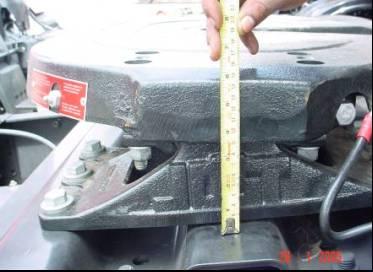
Figure 2 – Reduction of the coupling profile height on the shortened chassis of the 1728 tractor
In addition, Autoport’s technicians, in cooperation with Toyota, also had to make several changes to the new vehicle, three of which stand out (changes to the body design (photo 1), custom-made tires (photo 2), and adjustable air suspension (photo 3)), as shown in figure 3.
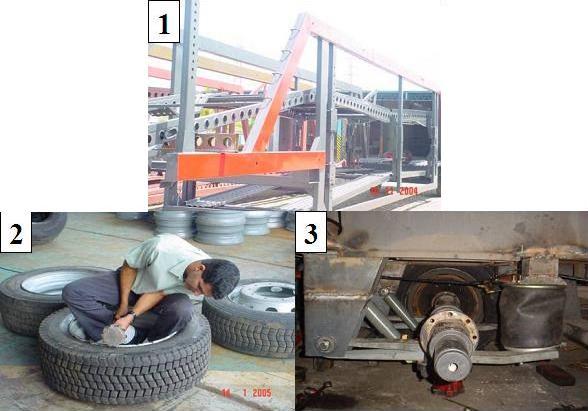
Figure 3 – Other notable changes made to the 1728 model
Figure 3 shows how the body was modified (photo 1), the tires being custom-fitted (photo 2), and how the leaf springs used as conventional suspension were removed and replaced with adjustable automatic suspension (photo 3).
A body with a movable structure was created which, when widened, allows one vehicle to enter and, when closed, allows another vehicle to be loaded on the upper level, as shown in figure 4.
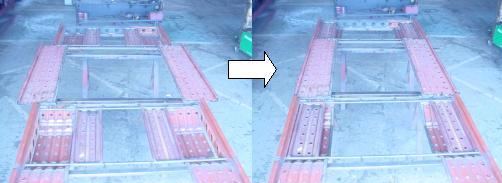
Figure 4 – Body with movable structure
Some features were also created to support the transport services, such as compartments for carrying spare parts from the factory to the dealerships, as shown in figure 5.
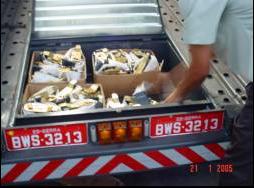
Figure 5 – Creation of compartments for transporting loose parts
At the end of the work, the Autoport team, together with Toyota, had managed to build and test a new “stork” car-carrier truck 4 m 30 cm high (Figure 6).
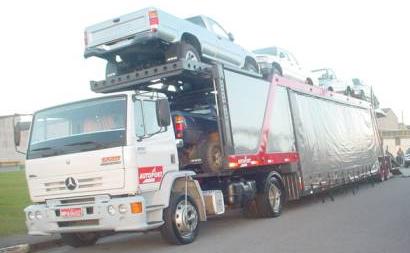
Figure 6 – Final product of the Autoport/Toyota partnership
Now, with batches of 8 Hilux, the Zarate plant in Argentina takes just under 1 hour to load the trucks, according to demand, and after a 3-hour trip the truck arrives at the Uruguaiana customs post, where its cargo goes through customs clearance without having to be unloaded, which takes less than 5 hours.
Once cleared through customs in Uruguaiana, the truck only needs to travel another 4 hours to reach Toyota’s distribution center in the city of Guaíba, then returns to Zarate, completing the entire cycle in about 24 hours, as shown in figure 7.
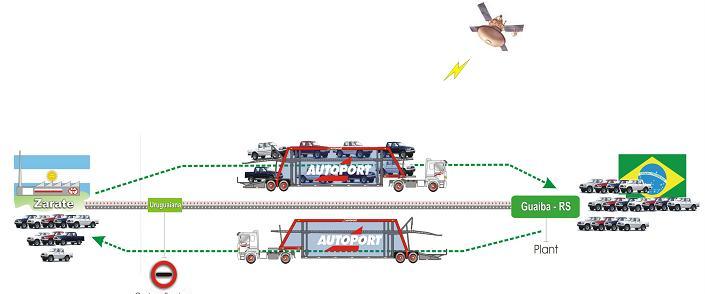
Figure 7 – From Zarate, Argentina, to the Guaíba distribution center, RS
3 - Conclusion
It was found that eliminating various types of waste along the entire logistics network led to the gradual elimination of several costs, such as the need for a storage yard in Argentina to hold vehicles until the minimum load for shipping was reached, the high cost of storing vehicles in the bonded yards of Vitória/ES, and the cost of transporting vehicles from the port to the bonded yards.
For Autoport, the project was very satisfactory, since it secured yet another contract with higher-than-expected profitability, in addition to strengthening a long-term partnership.






