

DM to reduce assembly errors and increase customer satisfaction
The Practical Lean Training Program (PPFL) takes place every six months and aims to develop professionals, combining training with the real implementation of a project and enabling participants not only to acquire the concepts and practices of lean thinking but also to come away with a sharper business vision. Originally made up only of people from manufacturing, the program is now also offered for two new tracks: digital and healthcare. The results that can be seen at the end of each course are impressive, such as those presented in this article about the company Fundição Santana, one of the 16 companies taking part in the second-semester 2019 class.
Fundição Santana has two product lines, one focused on mechanical parts for agricultural machinery and tractors and the other focused on household utensils. The company has been applying the lean philosophy in its operations for a few years; it intensified its practice when the COO began taking part in the PPFL. Last year, they decided to extend their efforts to the quality control area, which was the focus of their project in this class.
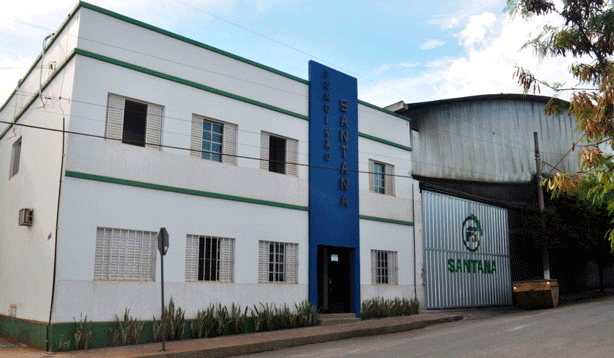
Image 1: Fundição Santana
The main problem this area of the company was facing was the high number of customer complaints due to products arriving with assembly deviations in its household utensils line (pots arriving without the knob or frying pans arriving without the handle, for example). When the project began, the company averaged 122 complaints per month, a high number that was even causing it to lose customers.
The existing system was not working, and the number of products with deviations only seemed to grow. With the project developed using the A3 methodology, they hoped to reduce complaints and increase customer satisfaction, reaching a maximum of 11 defective parts per month in the short term and zero deviations in the long term.
To do this, Santana's quality control team drew on what it had learned in the PPFL to kick off the work. First, the team recognized the importance of being in the gemba and listening to its employees, the people who really know the process, about the problems being faced. To that end, they developed a daily management system.
The daily management system put in place aimed to involve employees in daily meetings, during which it would be possible to trace those responsible and listen to them, understanding why each problem had happened. At this point, it was important to use the five whys tool to get to the true root cause in each circumstance.
Initially, it was possible to observe that several layout and 5S problems were hindering the employees' work. When asked about the deviations, employees would often report the excessive movement they had to make to get from their workstations to the shelves and the great physical effort needed to carry the parts by hand.
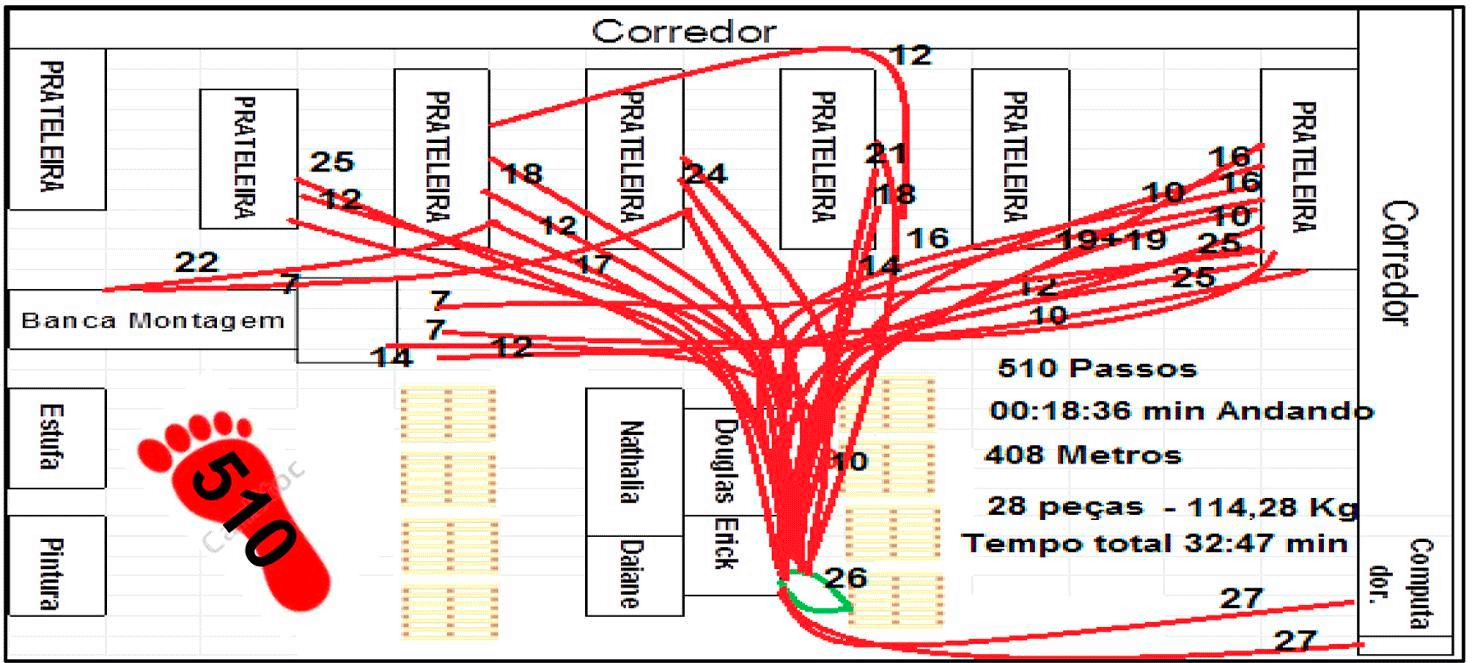
Image 2: Layout of employee movement for packaging assembly.
What is interesting about the daily meetings with employees is that not only did leadership become more aware of the problems their employees faced day to day, but the employees themselves began to think more carefully about their work, reflecting on the obstacles that kept them from achieving better results and revealing possible improvements to be adopted.
After receiving answers such as “I can't do the job correctly every time, because I have to walk a lot to get the products, which are very far away,” the team adopted the “spaghetti diagram” tool and was thus able to propose a new layout, which brought the workstations closer to the shelves. With this simple reorganization, the average number of steps an employee had to take to pack a batch of 28 parts fell from 510 to 210, a reduction of almost 60%.
But the efforts did not stop there. On hearing employees report that the physical effort of carrying parts by hand was excessive, the team decided to buy supermarket carts for them to use. Another simple solution that brought several benefits. At first, some of the more traditional employees were wary and did not want to use the cart to do the work, because they had always done it without one and kept repeating the famous phrase “this is how it has always been done here.” However, as they saw how much easier their colleagues were finding it with the carts, they came on board, and today everyone has adopted the new method.
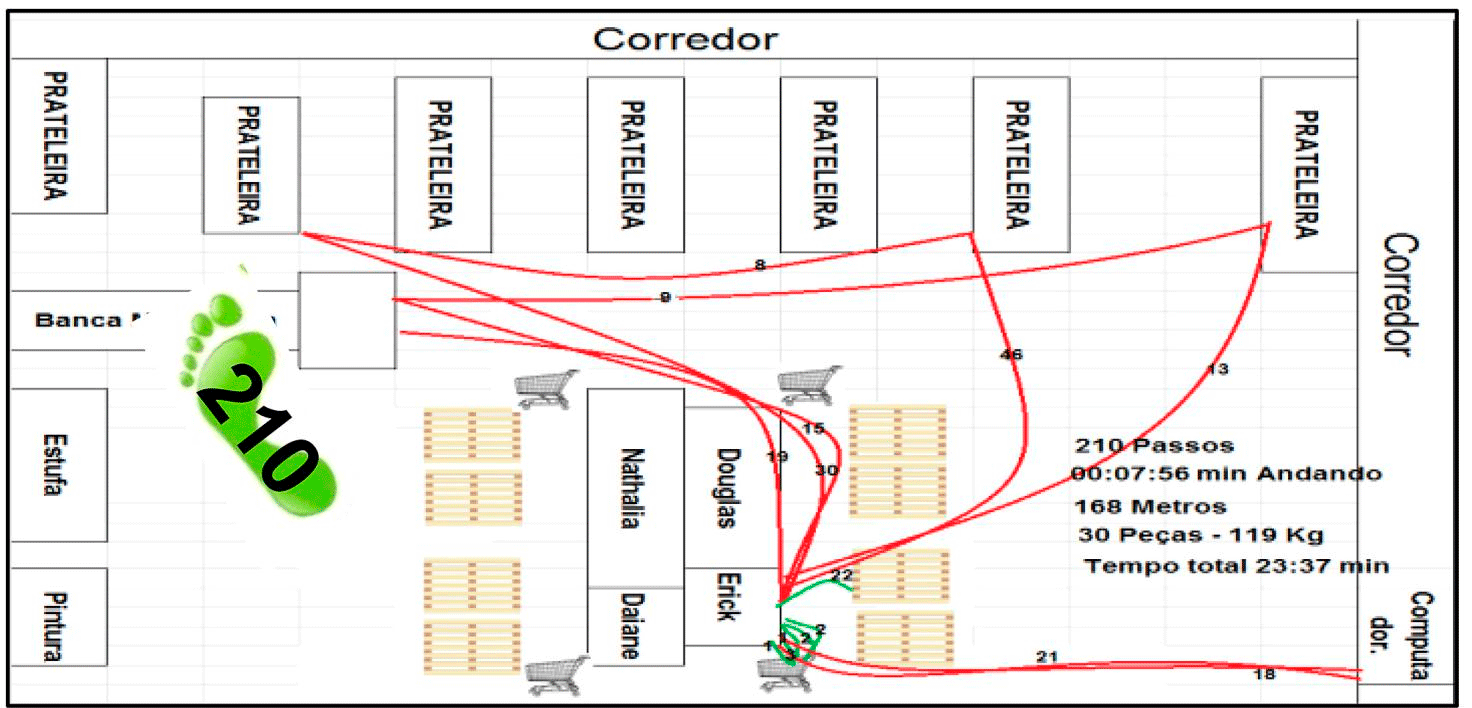
Image 3: Movement layout for packaging assembly after improvements.
Another important change concerned the product packaging. Previously, employees picked up the parts, assembled the product and packed it. Today there is a dedicated assembler who does not need to move a single meter to do the job. More waste from unnecessary movement was eliminated with this simple reorganization of the work.
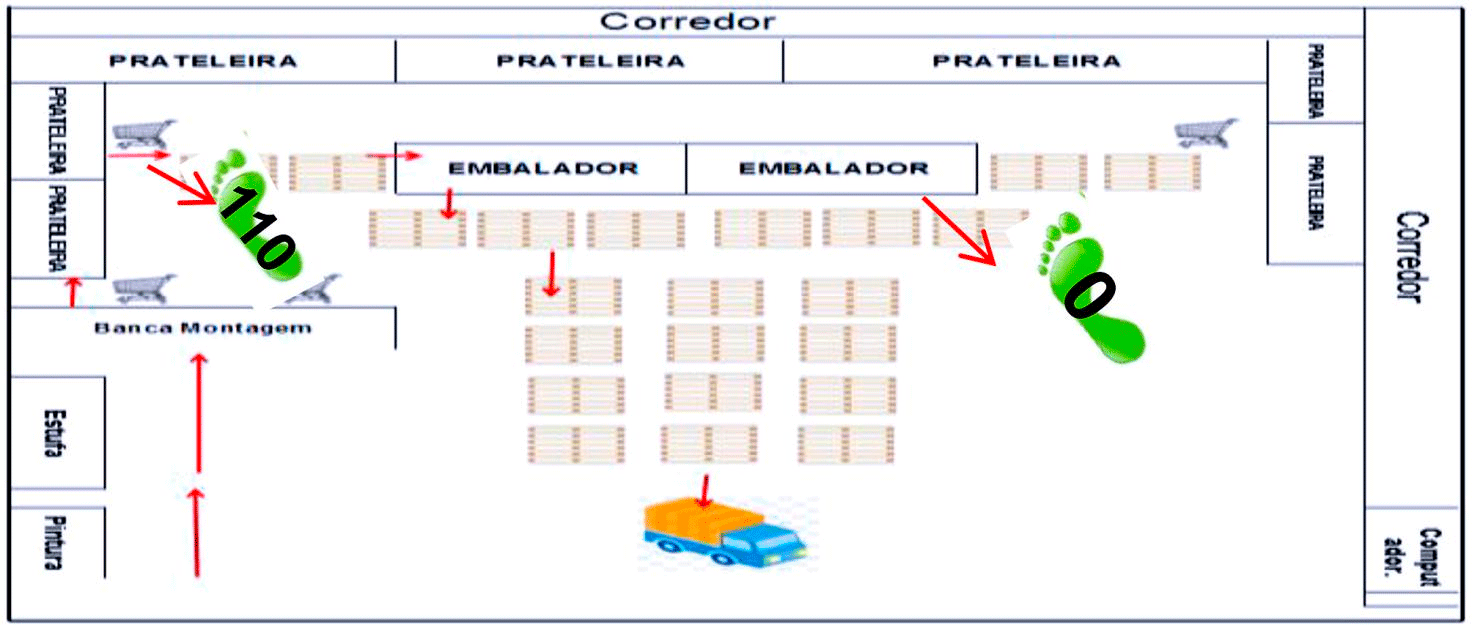
Image 4: Movement layout for packaging assembly after further improvements.
With a lot of effort and always using the five whys, a few more measures were taken to reduce employees' average movement from 210 steps to 110, another significant gain. In addition, employees' best practices began to be recorded and disseminated, using the standardized work tool to ensure that everyone had access to them and that the improvement would be sustained over time.
With all these small changes, the team managed to reduce the total process time from 32 minutes (of which more than 18 were nothing but movement, adding no value to the product) to just 22. This 10-minute reduction, combined with the standardized work implemented, the 5S practices, the reorganization of work and the cultural change brought about by the lean implementation, caused the number of deviations to drop drastically.
In just one month, the number of products with deviations fell from 122 to only 65, a reduction of almost 50%. By the end of the fourth month of implementation, this number had fallen to just 14, very close to the short-term target. However, these 14 deviations were still above the target, so the team decided to dig deeper into each of them to understand what was happening.
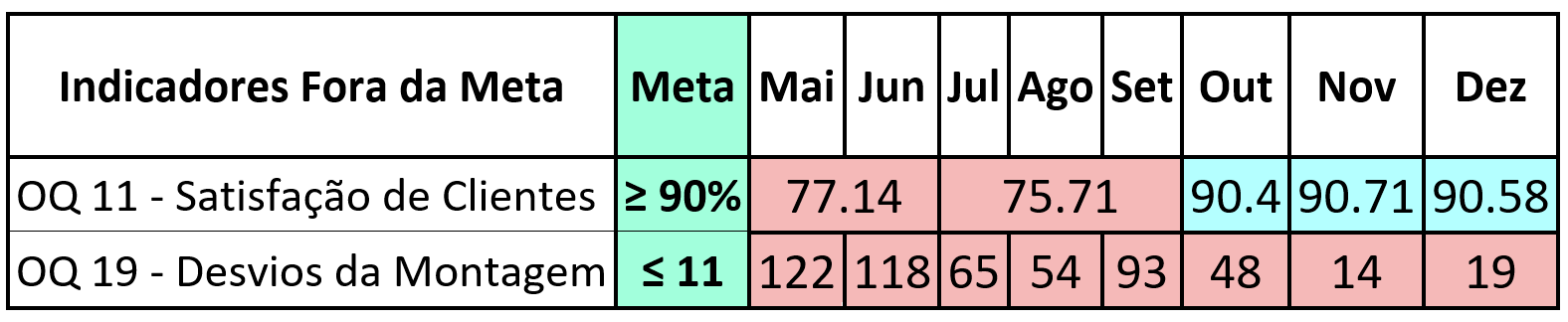
Table 1: Assembly deviation indicators from May to December 2019
Based on customer complaints, which were recorded on a daily management board, the team analyzed the deviations one by one and found their cause. In doing so, it noticed something interesting. None of those deviations had a recurring cause that had happened before. They were completely new problems. They realized that daily management had allowed them to prevent recurrences. Once a problem is found and its causes are eliminated, it does not happen again. This was a relief, because although they knew they still had a lot of work ahead to eliminate the causes of those 14 deviations, once they finished, they would never see those same problems happen again.
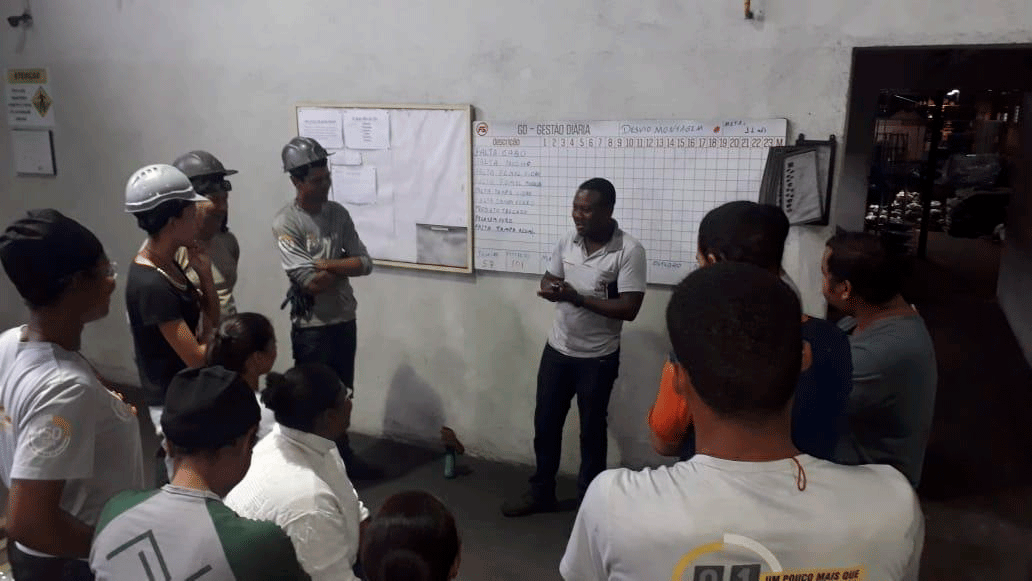
Image 5: Daily management round.
Today Santana is on track to reach its target of no more than 11 deviations per month. Even so, they keep working hard to reach their long-term target of zero deviations. The customer satisfaction survey has hit its target every single month since the third month of implementation. Customers are increasingly satisfied, and so are employees.
Today employees know that their opinion is valued and that leadership is there to help them. However, this cultural change was only possible thanks to the intense participation and support of senior leadership, which allowed these changes to take root in the company. Santana shows that excellent results can be achieved with simple, inexpensive actions, as long as everyone is engaged in the transformation, from the front line to senior leadership.
We thank Iris Cristina Pierini Bonfanti for the technical review and support in developing this article.







