

Squeezing waste out of our process
The dental insurance market, although smaller than the health insurance market, represents a great opportunity in Brazil and for SulAmérica. In October 2019, only 13.2% of the Brazilian population had dental insurance, compared with 24.3% covered by health insurance.
Although this market is heavily regulated here in Brazil, the company saw an attractive investment opportunity and decided to pursue it. Today, SulAmérica provides dental insurance to more than 1.2 million people.
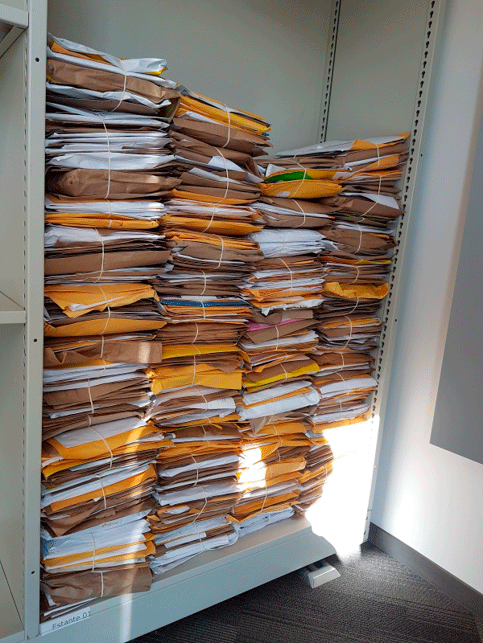
Our department oversees the analysis of claims coming from our dental care providers and pays for the procedures they perform. We receive the claims in two batches per month (we also pay twice a month), with all the treatments and procedures each dentist performed on all patients in the previous billing period. Our team of in-house dentists analyzes the claims and, if everything is in order, authorizes payment.
When we started selling more dental insurance, the number of beneficiaries and procedures grew significantly. However, our team of in-house dentists remained the same. As a result, they became overloaded with work.
They worked on weekends and after hours, just to try to keep up with the ever-growing number of patients. It was a capacity problem we didn't know how to solve, until someone suggested we try lean thinking, which was already being introduced in the business.
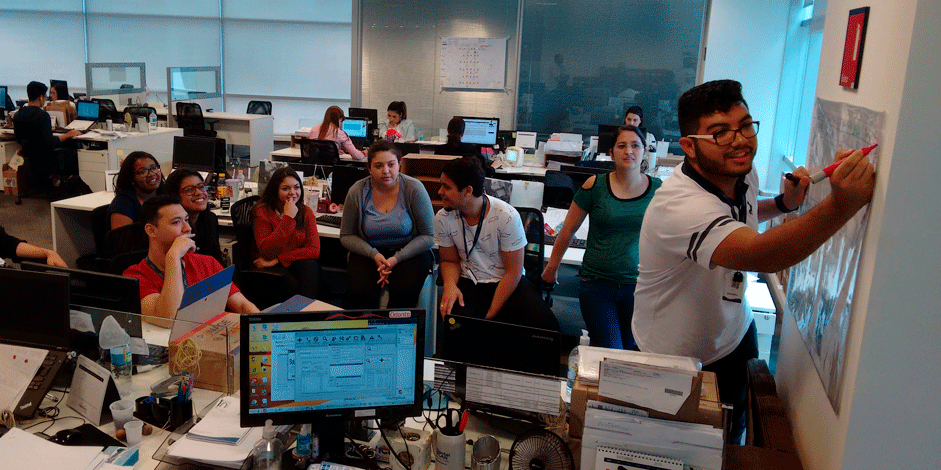
We invited everyone involved in the process (from the regulation team to those responsible for supplier relationships) to a meeting to discuss how lean could apply to this problem. It was clear that, when they heard there would be no IT solution, many of them wanted to leave the room. They didn't believe it would be possible to solve these problems without IT.
The first thing we did was a gemba walk to follow the claims from the moment they are delivered to SulAmérica. What we learned was that, although the batches were not huge, there was a lot of room for improvement. The main problem seemed to be the waiting time and the time lost at different stages of the process. When we received the documents, they would typically sit there for 20 days before we started processing them.
First, the incoming claim documents and the data keyed into the system have to be organized (this happens manually and there are many documents – which often include X-rays and dental reports). This used to take between 10 and 15 days for each batch. Second, it would take between 15 and 20 days for our in-house dentists to review the claims (this involves checking the customer's plan to make sure the procedure is covered, checking clinical consistency, making sure there is no fraud, etc.). Finally, there was a wait of 45 to 60 days for the payment to be processed. Needless to say, it was not a good situation for us.
Our analysis revealed several problems with the process, from rework to a lack of standards, from delays to wasted resources. We discovered that there were many handoffs, for example, and that there were so many claims to be analyzed that the in-house dentists started measuring the amount of work they needed to organize with a ruler (in case you are wondering, they had more than six centimeters of claims per day, on average).
We also learned that information was not always passed on in the most efficient way: for example, whenever they saw a problem with a claim, the in-house dentists would write long e-mails full of technical details that the people responsible for payment really didn't need to know (as a result, they didn't even read them).
Sometimes the root causes of the problems we experienced were surprising. For example, our payments went out twice a month, but not on the 15th and 30th (that is, every two weeks). Instead, they happened on the 10th and the 20th, which resulted in one batch always being bigger than the other. Later, we discovered that organizing payments on the 10th and 20th was actually an exception, negotiated with one customer, which had somehow been applied to all payments. It sounds crazy, but until you stop and see the work, you will miss many of these details.
Another example of an office error? Claims were stamped upon receipt, but on our deadline day we would receive claims by mail after the sorting team had already gone home. This meant that several claims ended up being stamped the following day, automatically becoming part of the next payment batch (a delay of two to three weeks for the provider). This problem could only be discovered by going to the gemba.
We engaged in many experiments to optimize the process and tried many different things. We brought changes to every step of the process. For example, we introduced a “triage” system to better organize the claims. Previously, the team simply passed on the piles of claims; now, it organizes them and coordinates with the in-house dentists to better understand their portfolio and segment and prioritize the work accordingly. Obviously, this made data entry much easier. In addition, we started holding a daily meeting to discuss the amount of work to be done each day and raise any problems we encounter. Also, a spreadsheet was created to calculate targets and deadlines.
Once the information is digitized, we return the claims to the provider (in the case of missing information, for example) or send them to the in-house dentists for review. Before the claims reach that team, we now screen them to identify possible suspicious cases (fraud is very common in our world). The review process itself was transformed, with priority now given to suspicious cases and claims coming from our “critical” providers (the 20% responsible for 80% of our revenue).
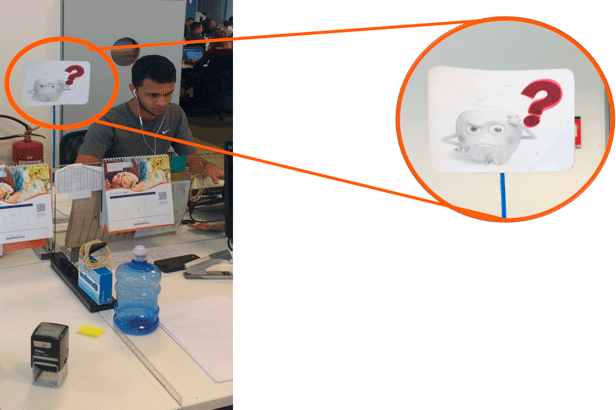
Visual management helps us immensely as we try to make sure every step of the process happens as it should. For example, people can now see immediately when the upstream process is complete – which indicates that they can start their work. One of my favorite visual cues is the drawing of a tooth (see the image below) that we use to signal to the supervisor that someone is having a problem: before we introduced lean thinking, people used to stop work and stand in line to talk to the supervisor, whereas now they can keep working and wait for help to come to them. We call this a “gemba walk”.
When I look back and reflect on this project, the most impressive thing for me is the simplicity of many of the solutions. Lean doesn't have to be complicated! Interestingly, this was the first process to be transformed by one of the members of our lean team. It was the first example of how empowered we have become thanks to lean thinking and the millions of different experiments we have carried out. We always discuss and then try something different the next day.
At the time, the in-house dentists were able to review 5,000 claims per month. They wanted to reach 7,000, but ended up reaching 13,000. Since then, thanks to segmentation, they have gone back to 10,000 after realizing they were performing a large number of unnecessary audits.
Before lean thinking, we had no time to improve processes or develop the team's capabilities, whereas now we have a monthly meeting dedicated to discussing the problems we encounter and making decisions about how to solve them together. The amount of overtime has also dropped. Most importantly, we now have a team fully engaged in continuous improvement.







