

How we improved our tiered daily huddles
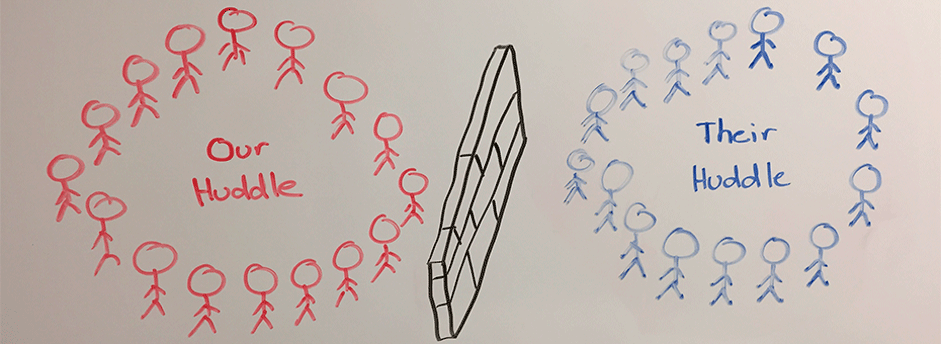
Many teams hold huddles. This is not a new practice. For a long time, the benefits of huddles have been shared and studied. Many teams do them well. Most organizations do not.
Or at least, that is what I have learned from the countless discussions I have had with people about the huddles in their organizations. Huddles are designed for groups of people to come together and discuss something. Some huddles are operational in nature – how are we going to get through today? Some huddles are focused on improvement – how can we improve what we do? Some are simply time set aside for people to get together.
When we implemented tiered daily huddles at Cleveland Clinic, we set out to build on an existing practice by changing a few key components. These changes helped us focus on and deliver what matters most to our organization – being the best place to receive care and the best place to work in healthcare. Specifically, we concentrated on patient safety and quality issues, caregiver safety issues, and providing our patients with access to care. Here is what we found and did:
- Huddles needed to be smaller – in healthcare, it is common for hospitals to hold a hospital-wide 15-minute daily “safety huddle.” While the benefits of this practice are well known, the challenge we saw is that, across an entire hospital, there are far more problems to solve than can be shared in 15 minutes. By creating smaller huddles (typically 5 to 15 people), we created an environment in which individuals are much more likely to openly discuss problems within their team than in a large group with multiple levels of leadership. In addition, these small groups expect every participant to share information daily; this expectation is grounded in responsibility and accountability for each leader.
- Huddles needed to be connected, or “tiered.” We found this to be a critical element, because it created a method for people to systematically share information, escalate problems, and ask for help when needed. The tiers ensure that information flows logically throughout the organization and that problem solving takes place in every team at every level of the organization. The tiers give managers a way to develop team members and to understand problems that previously stayed only with the people closest to the work, who had no clear and consistent place to share them.
- For huddles to be connected effectively and logically, they needed standardization. We created a standard structure – including a standard way to identify and review performance and define metrics, a standard way to investigate different types of problems (not all of them are the same), and a standard way to rank the tiers in different locations. This standardization created shared expectations, enabled rapid spread, and served as the foundation for continuous PDCA.
So, when people ask me whether they need tiered huddles, I answer with a few questions:
- How are problems surfaced by those closest to the work? How often does this happen? How do you know it is happening?
- How do your senior leaders support daily operations? How do they become aware of daily challenges, and how do they respond to support teams in their daily work?
- Does every leader (across the organization) have a good understanding of their daily performance and challenges? Do they know only the data, or the stories behind the data? Is the data real-time and actionable? Or is it pulled from a monthly summary report?
- Most importantly, are these methods consistent, repeatable, and efficient across the organization?
These are some of the most critical factors we found to be important in tiered daily huddles. What about you? What has your experience been?







