

Daily Management at AACD - Improving the patient journey in the ICU
Managing and following up on every task to be carried out by everyone responsible within a team is not a job for the leader alone, even though the leader plays a fundamental role in this activity. It is the job of all the employees in a process that creates value for its customer or, in the case of AACD, for its patient.
AACD is a private non-profit organization that serves people of all ages through Brazil's Unified Health System (SUS), health insurance plans and private treatment, and its purpose is to work on all the necessary fronts so that people with disabilities can reach their full potential, progressing beyond their limitations and contributing to a society that better embraces diversity.
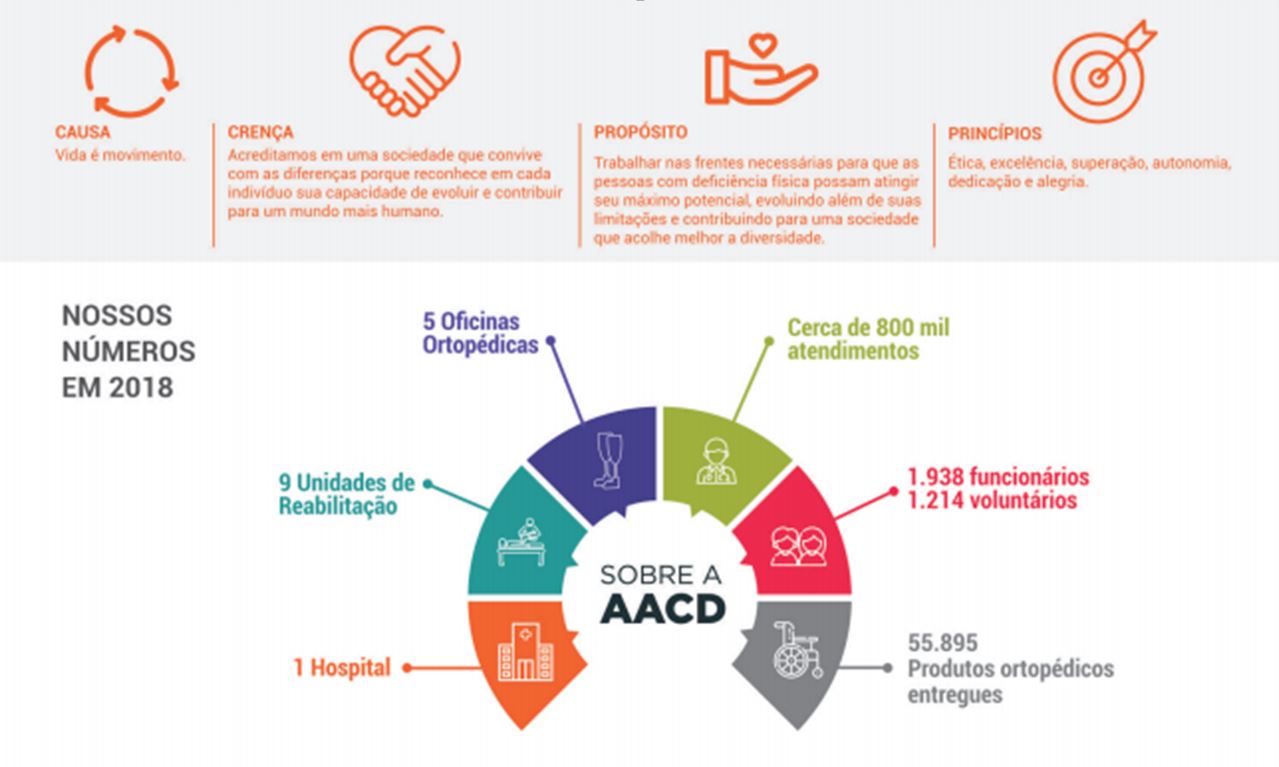
AACD is made up of the Rehabilitation Center with 9 Units, 5 of them in the state of São Paulo, 5 orthopedic workshops and 1 hospital, all with a highly specialized multidisciplinary team.
Always seeking improvements in its treatments and a journey of excellence for its patients, the AACD Orthopedic Hospital, located at the Ibirapuera Unit, has been experimenting with Lean concepts for approximately 8 months in order to improve its processes and management model in various sectors of the organization.
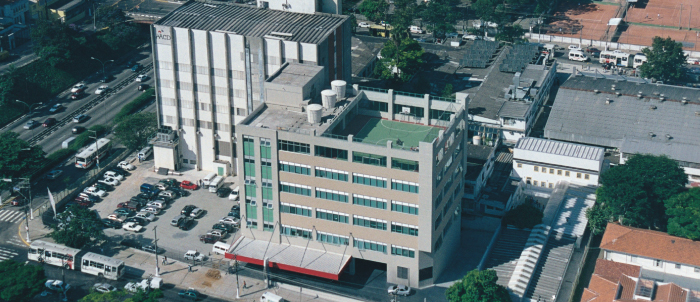
AACD Hospital is an orthopedic center of excellence that performs low-, medium- and high-complexity surgeries and treats patients from all over Brazil.
The surgical center has modern, high-tech equipment and stands out for its expertise in complex procedures, such as scoliosis surgery.
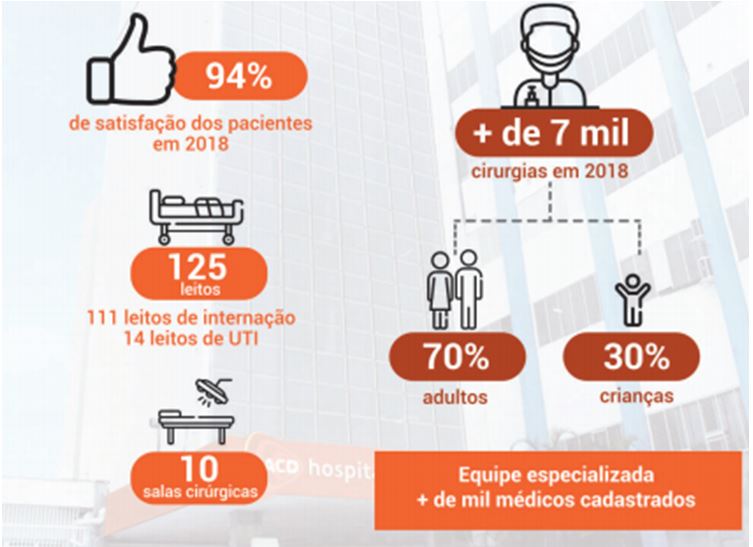
Data on the AACD hospital
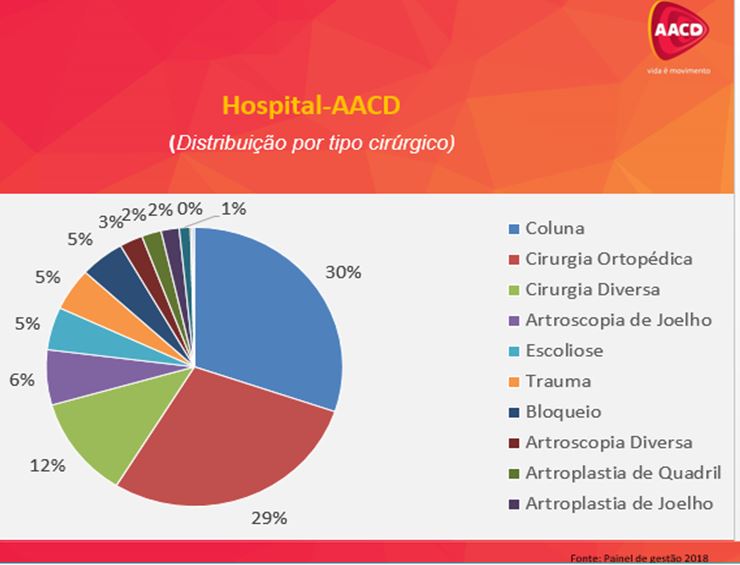
Types of surgery at the AACD hospital
In line with AACD's Continuous Improvement Program, the People Management team chose the implementation of Daily Management (DM) as a strategy for developing teams to improve their performance in problem solving, in real time. To strengthen the project, the Quality team took part in training on the tool and took on the expansion of the project and support for the areas.
They started with the Clinical Engineering area in August 2018, focusing on equipment management and innovation of the technology base. In November 2018 they took the DM concept to the ICU and have already obtained excellent results.
Planning DM
During the Qmentum International certification process, achieved in 2018, the AACD team realized the need to highlight the roles and responsibilities of the multidisciplinary team, developing people and strengthening everyone's autonomy in problem solving.
In addition, AACD realized that there was a challenge ahead: it was necessary to monitor each problem and each task to be carried out by the team in the shortest possible time in order to act quickly and avoid unexpected results at the end of the month.
AACD understood that the ICU was one of the hospital's care areas that would benefit from implementing DM, as a daily tool for discussion and problem solving by the team.
As for ICU demand, 97% corresponds to patients coming from the surgical center who meet the criteria for postoperative care in the Intensive Care Unit.
For all patients to have access to the ICU at the right time, it is important for the unit to carry out adequate bed management to ensure beds are released at the right time, combined with safe and humanized care.
A team made up of physicians, a physical therapist, a speech therapist, a nurse, a nursing technician, a pharmacist, a nutritionist and an administrative assistant, with strong support from the ICU coordinators, mapped the unit's discharge flow because of the recurring delays in discharges discussed in DM.
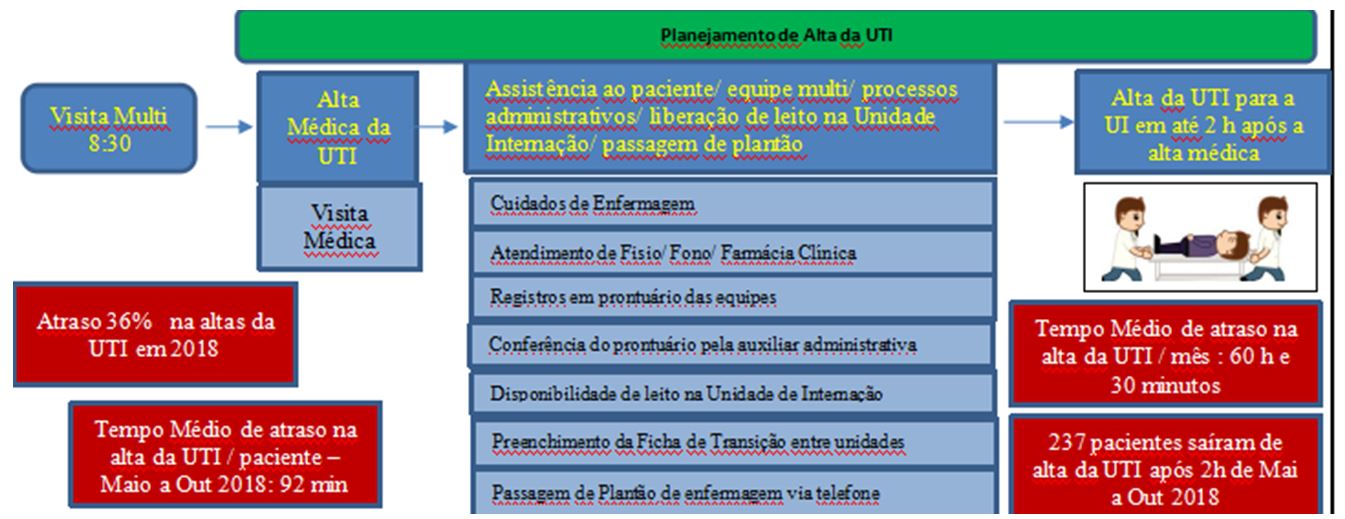
ICU current-state map
With an average length of stay in the Intensive Care Unit of just 1.7 days and an average occupancy rate of 85%, coordinated care with synergy between the teams was essential to achieve the target of discharge within 2 hours of the physician's discharge order.
Delays in discharges from the ICU to the Inpatient Units can create bottlenecks and negative impacts on the experience of patients, family members and above all of our internal customer: the Surgical Center. Between May and October 2018, the AACD ICU had a discharge delay rate of 36%, causing delays in admissions from the surgical center and, in some circumstances, the cancellation of elective surgeries for lack of a bed in the unit.
From there, under the leadership of the ICU medical coordinators, with the engagement of the team and the support of Quality, they began developing two tools that would help them: the A3, which they would use to analyze the real problem and its causes and propose countermeasures, and the DM board for daily follow-up on meeting the targets.
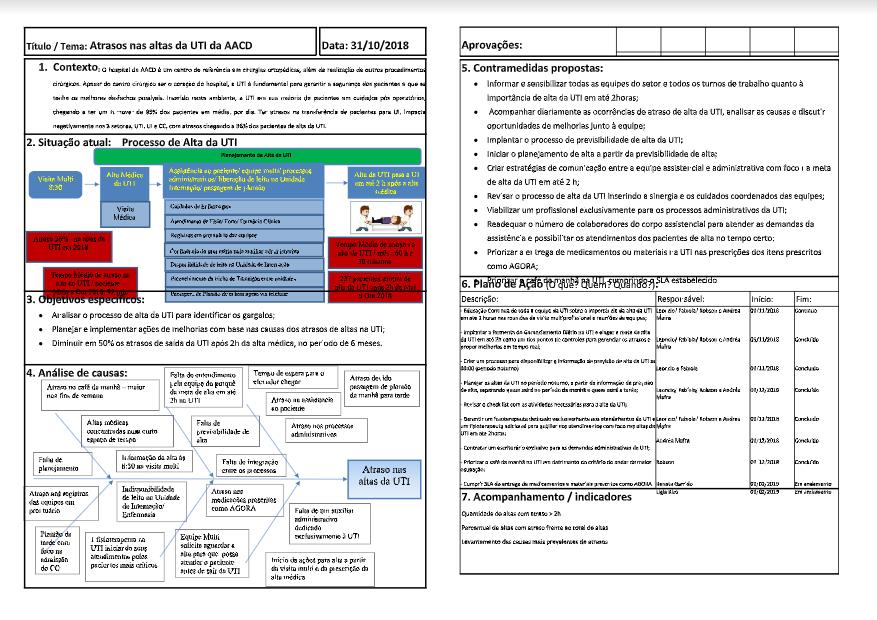
ICU A3
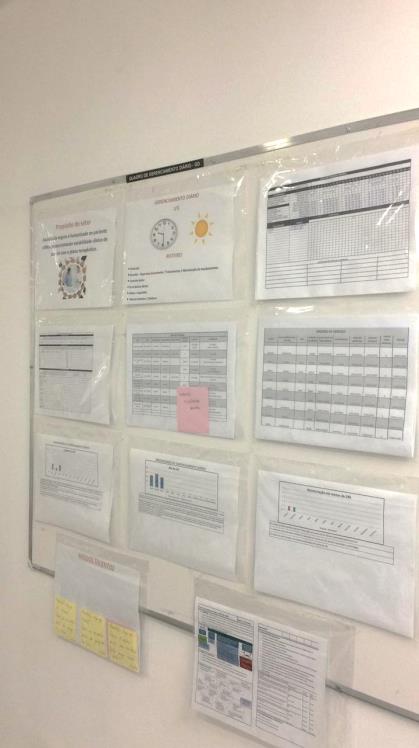
ICU DM board.
Carrying out DM
Every day, punctually at 9:30, the ICU's multidisciplinary team meets in front of the DM board for a moment of reflection and discussion, the heart of daily management. Focusing on the unit's True North, which is to provide safe and humanized care to critically ill patients, providing clinical stability in accordance with the therapeutic plan defined for the patient, the team seeks to understand how needs will be met in line with the targets set for the area.
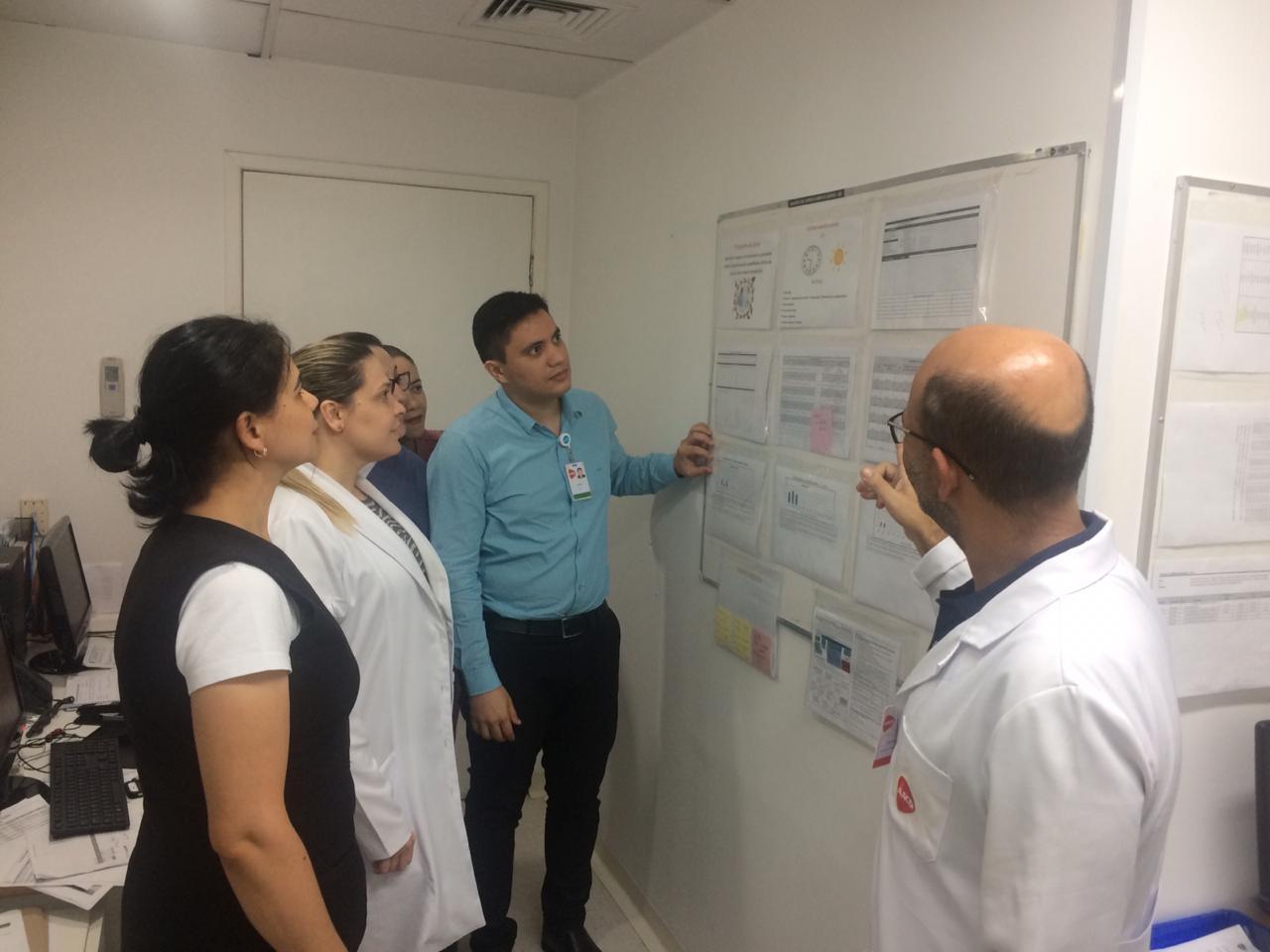
Team holding the daily meeting in front of the DM board.
In the daily meetings, the team also analyzes the occurrence of adverse events and readmissions within 24 hours, and monitors the unit's equipment management. The team has the opportunity to express its concerns and give suggestions, which are recorded in the Brainstorming field, and there is a moment for announcements and for sharing compliments.
The meeting includes the participation of an administrative assistant who has the important role of looking after punctuality and also everyone's involvement. Even when the leader cannot be present, DM takes place every day, without exception.
Initially, the care team was very worried about pausing their activities and about this time affecting the execution of planned tasks. For the staff it was a great novelty, but over time and with the results achieved, this behavior changed, and the team now gets ready to be available at the planned time.
Results achieved
DM has become an important communication channel in the ICU, with a visual management board, with autonomy for team members and as an effective tool for anticipating and solving problems.
In 6 months of DM implementation, the ICU reduced the delay in the discharge-within-2-hours indicator from 36% to 8%. The average delay time, which used to be 92 min, dropped to 50 minutes. There was a 53% reduction in delay time.
These figures had a positive impact on the unit's bed management, a reduction in the waste of labor specialized in intensive care, a greater connection among staff in achieving the targets and a reduction in the surgical center's wait for ICU beds.
And the journey continues...
From now on, AACD's work is expected to continue at full steam. The next challenge is monitoring the environment's refrigeration processes, which are fundamental to the quality and safety of patients and staff.
The Quality department will continue to support the areas both in implementing DM and in the progression of the DMs already under way.
“We eagerly await the results of this latest AACD project. While we wait to learn the effects of this effort, we are left with some tips that AACD gives us: Understand daily management well, visit institutions that already practice it, explain the proposal to the area managers and implement it only with the support of leadership, because all of this needs to make sense to the leader. In addition, make the results tangible and publicize them as a way of recognizing and valuing the team's efforts and perhaps even inspiring other sectors. If we do this, we will have the potential to replicate or even surpass the results we had the pleasure of learning about in this article”.
Editing and review: Tamiris Masetto Manzano.







