Our editor sits down with lean farmer Ben Hartman
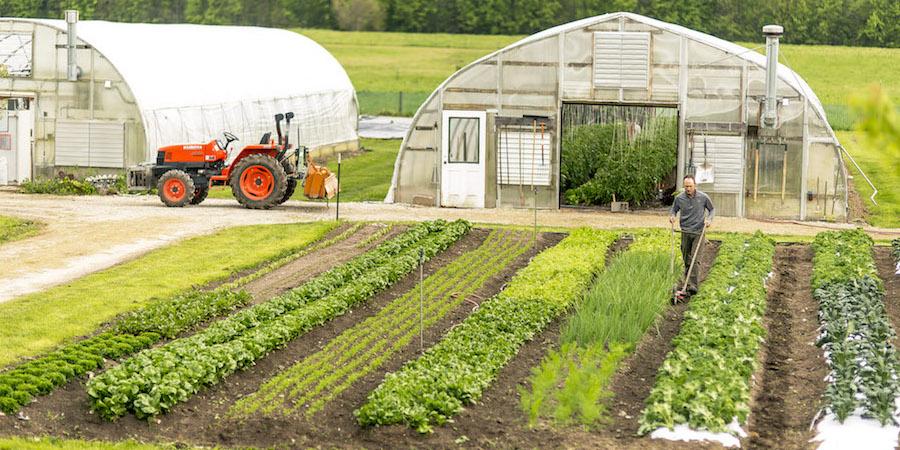
Roberto Priolo: The story of how you learned about lean is a fantastic example of yokoten, or cross-pollination. Can you tell us a little about it?
Ben Hartman: The communities in the area where I come from - northern Indiana - were founded by Mennonite and Amish peoples in the eighteenth century. As Mennonites, we have a genetic predisposition not to waste anything. When I was introduced to lean ideas, I immediately saw many facets of Mennonite culture in them. In fact, I realized we had been applying lean ideas on our farm for a long time without really knowing it. However, about six years ago, a longtime CSA customer of ours, Steve Brenneman, (CSA customers pay us at the beginning of the growing season to supply produce) told me about this thing called “lean” that he was using in his company. He offered to introduce us to some of the key concepts. My wife and I talked about it and at first we were reluctant - because people love to tell farmers what to do, but also because, historically, industrial methods have not been successful when applied to agriculture (in fact, it was industrial agriculture that largely contributed to problems such as climate change and food health issues). We also thought there was too much variability in our processes for a single system to work. Steve gave a few reasons to try it - mainly, he said we needed capacity and that lean could give us that by improving the process (and without investing more money in the business). Eliminating waste to increase capacity... that's what convinced me.
RP: With the promise of increased capacity comes the opportunity to grow exponentially. Was there ever the temptation to turn into a big farmer selling your produce to customers thousands of kilometers away?
BH: Lean certainly brought us economic benefits, but what we really wanted to do was stay home and raise our kids on a farm. I want to be a small farmer and I love the work that comes with it. We need to get local, healthy food into our community, and lean is a fantastic tool for that.
Small farmers suffer - in the US, we have a US$ 5 billion farm subsidy package that benefits large multimillionaire farmers -, but lean is that fifth gear on your tractor that you didn't know you had and that can increase your competitiveness. It is the only way to run a small farm business and make a career out of it.
RP: Tell me more about the broader agricultural context, please.
BH: Let me use corn as an example, because I grew up on a corn farm, although the same is largely true for all commodity crops. In just one generation, we grew our production from about 125 million tons of corn a year to about 380 million. We have become very good at mass production and we need to do something with that excess: that's why we end up pushing corn onto customers in the form of syrup, plastics, diapers, etc. It is also making us sick: look at the relationship between corn overproduction and the rise of diabetes (the health epidemic of our time) on a chart, and the two lines go together. The system works for the 1% who are producing the food, but not for the rest of us.
It is important to set ethical boundaries when it comes to agriculture. We have important questions to ask about our food system: what kind of food do we want the poor people in our communities to have access to? What kind of planet do we want to live on? Lean can help answer those questions.
RP: What I love about this story is that it not only shows micro-farmers around the world a way to make a good living from one acre of land, but it also offers a way to solve some of the most pressing systemic problems the world is facing.
BH: One of the most powerful things about lean ideas is that they are universal. The seven types of waste that Taiichi Ohno identified are universal concepts: you will find each of them on every farm in the world. I'm not surprised: many of Toyota's early workers were actually farmers!
RP: What does “harvesting the product as ready as possible” mean in practice?
BH: Let's say you are harvesting broccoli. On a traditional farm schedule, you start harvesting at 3 or 4 in the morning. You harvest tens of thousands of heads of broccoli, put them in a cooler and then spend a few days calling your customers trying to push the product. That process is classic batch and queue. What we are doing is taking orders daily and harvesting daily the amounts we need without even having a storage cooler (we live very close to all our customers). We try to harvest, clean and pack while the item is in the worker's hands. So we harvest a head of broccoli and clean and pack it on the spot (we take supplies with us into the field). Instead of “touching the food” eight to ten times before it reaches the customer, we only touch it three or four times.
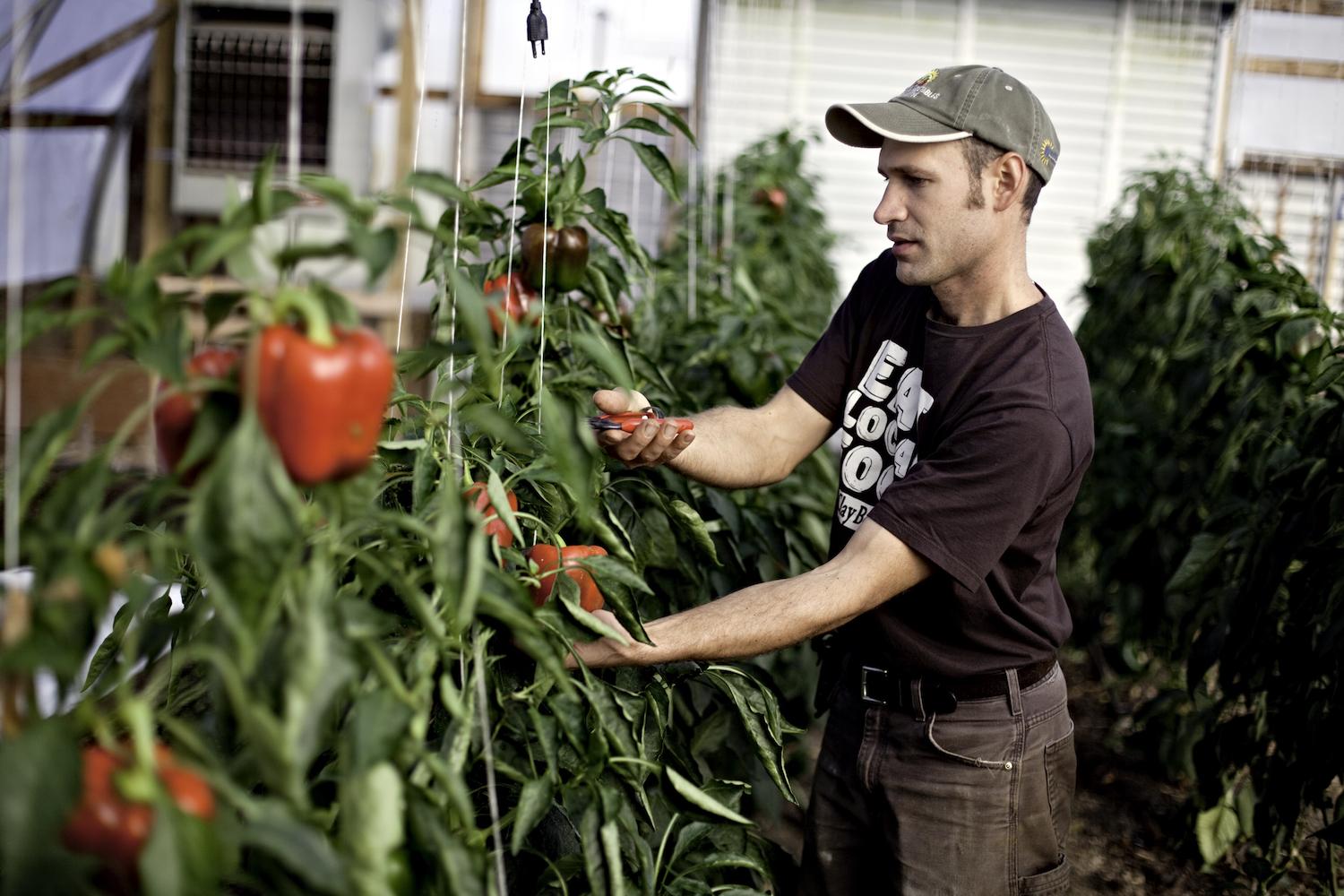
RP: You have been on the journey for six or seven years. What was the turning point in your transformation?
BH: One of the key moments for us was around the time Steve showed up. We used to hold regular Pizza and Weed parties on the farm: college students would show up, pull the weeds on our farm and then we would buy them pizza (my wife rightly thought the name would attract them). One day, about half an hour before the college students arrived, a strong gust of wind blew our greenhouse onto the roof of the barn. The students had to help us dismantle the whole thing (needless to say, this was pure waste). After that, Steve introduced us to the idea of the 5 whys. Why did we need a greenhouse in the first place? We realized that the root cause of the problem was that we were trying to grow our business too quickly. I grew up with the idea that a farm has to grow every year to "sustain itself", but it became clear that this growth mindset was not working for us.
RP: Another thing I find really interesting about your story is how simple your approach is - you use a few tools and a few principles, and the benefits they have brought you have been incredible. Why is that?
BH: My brother is a research librarian and I asked him to go back in history as far as he could to find out how the Japanese grew their food. He found a scroll from about a thousand years ago that detailed a very simple food production system. It made me realize that throughout human history we have grown food and fed the world using just a few tools - baskets, hoes, knives - and a few inputs - such as manure or compost. Japanese no-waste thinking was incredibly extreme (they would reuse everything, including chopsticks and the dirt they could scrape off the floors of their homes), and they found a way to turn muda into something that could support food production. It is very simple and very inspiring. So I developed a system that allows us to produce a lot of food using just a few simple tools and processes. It turns out it is fun and much more profitable.
RP: Lean tools are simple, and your experience on the farm really shows that. What was your approach to using them?
BH: People of the World War II generation never threw anything away. And that worked for their generation - it got them through the Great Depression. But times have changed, and the task of our generation - whether on a farm or in any other business - is to edit relentlessly. Our generation has access to a lot of stuff and we need to carefully choose the few things we really need in life. We had some serious editing to do, and it made sense that the first thing to tackle was 5S. We went around the farm, talked about every item we had (and we had a lot of items) and asked a simple question: “Did you add value for the customer this season?”. If we had to scratch our heads and think, it was time to throw that item out. It turns out we only need a few tools. Today, we can move most of our farm tools in the back of a truck.
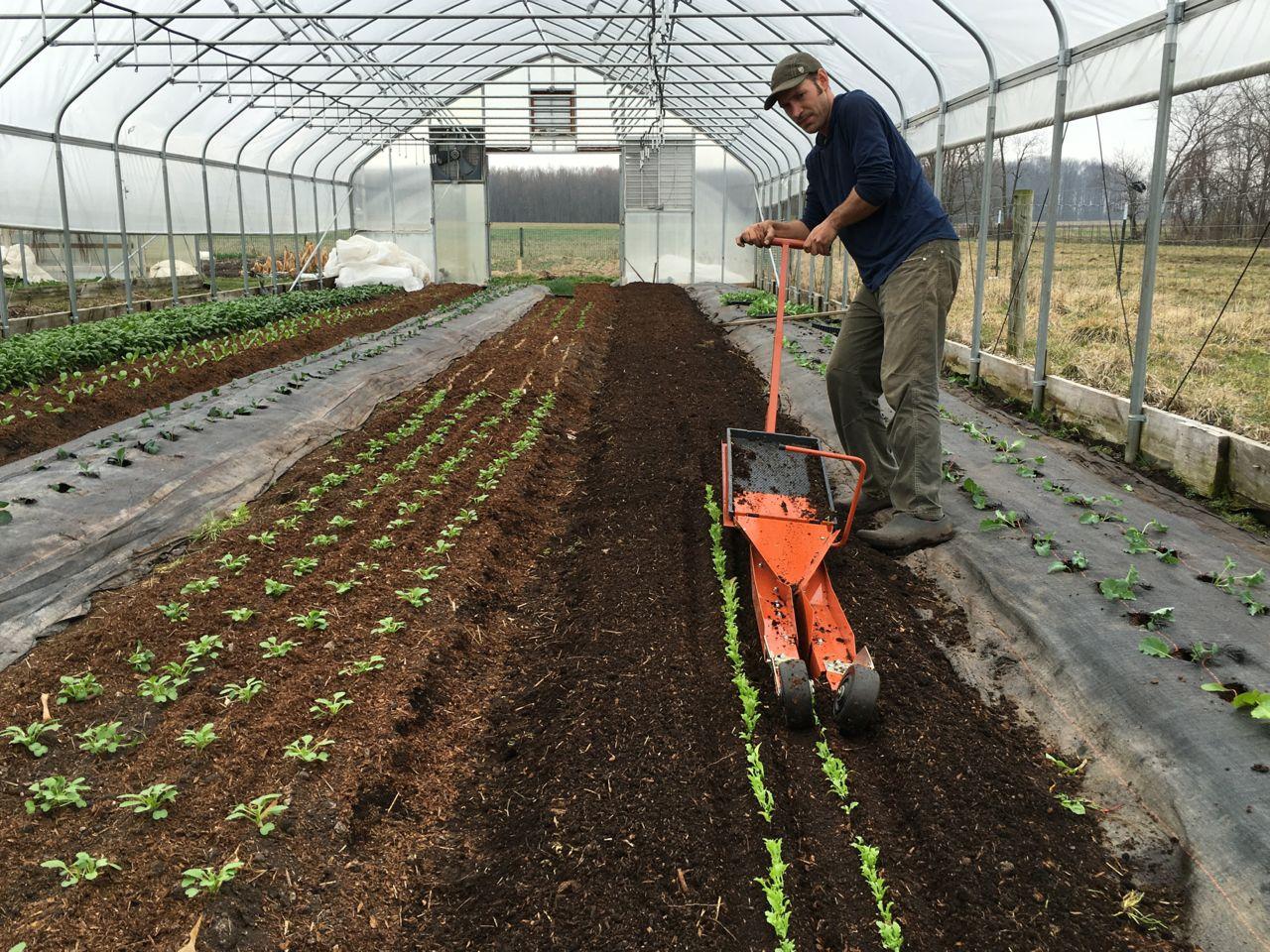
RP: Your efforts to understand customer value have been incredible. Can you show us how you did that?
BH: Getting to know our customers and starting to deliver them the products they wanted was the second step, after 5S. We asked every customer three very simple questions: What do you want? When do you want it? How much of it do you want? I knew this would give us an advantage over potential competition, and it is a way of respecting customers. To reach our entire customer base, we usually need one or two days each winter. The more precisely we can answer these questions - and deliver on the answers - the more profitable we will be as a business. It is not complicated, but few companies start with the customer!
It is important to remember that listening to customers is an ongoing process. We constantly go to our customers to find out whether their needs have changed. We are very specific with the questions we ask, because we want our customers to be excited about the food we deliver to them every week. We need to have a clear understanding of what they need. Once you have that, you can start improving your processes to deliver that value.
To learn more about Ben's farm, check out episode 5 of the WLEI podcast (in English), recorded during the Lean Transformation Summit in Nashville.

Jim Womack interviews Ben, Joel Daly of Veada Industries, and Steve Brenneman, CEO and owner of Aluminum Trailer.