

Using lean as a way to transform your business model
Roberto Priolo: Can you start by introducing Gerab National Enterprises and explaining the context in which the company decided to adopt lean thinking?
In 2013, a sharp drop in prices caused many projects in our region to be put on standby
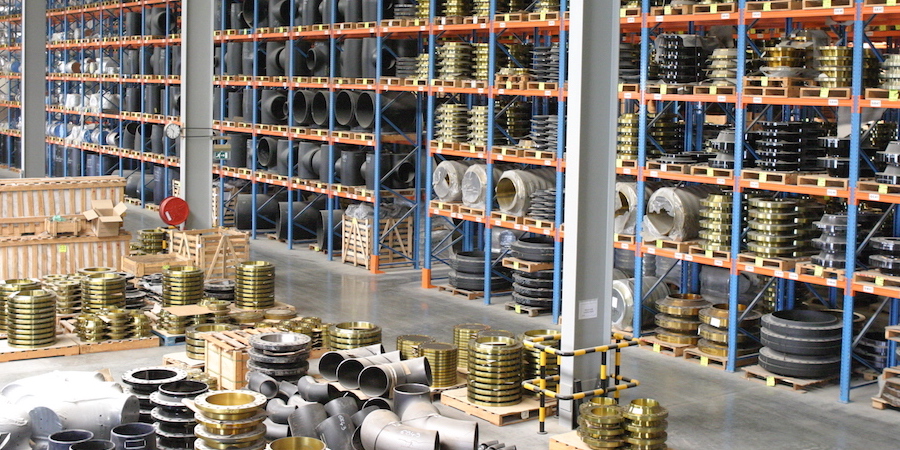
Ronald Uchil: Gerab National Enterprises (GNE) is a stockist and supplier of seamless and welded pipes and connecting components, headquartered in Dubai, United Arab Emirates.
At the beginning of 2014, we made the strategic decision to become a lean organization
Our sector depends heavily on the oil and gas industry, which has gone through drastic changes in recent years: with the opening up of the UAE economy, many companies from outside the Middle East managed to enter our market over the past decade - something that used to be very difficult. We experienced a drop in global iron prices in 2013 and a sharp drop in oil and gas prices in recent years - which caused many projects in our region to be put on standby. It was at the beginning of 2014 that we made the strategic decision to become a lean and more efficient organization, reviewing our business model and our cost structure and finding innovative ways to improve our internal processes, utilize our resources and improve our current capacity.
RP: How did the journey unfold?
RU: We started with the idea of improving the efficiency of our processes and properly documenting our internal policies and procedures. We also identified functions that were not part of our core business and separated them out as independent businesses: both our IT department and our operations department were set up as independent entities. The former began serving the IT needs of a significant number of new external customers (in addition to GNE's needs), while the latter became a third-party logistics company that manages GNE's operations as well as those of a number of other external customers.
In order to reduce the waste we were generating through excessive transportation and waiting, we brought our UAE offices together in one central location at our headquarters.
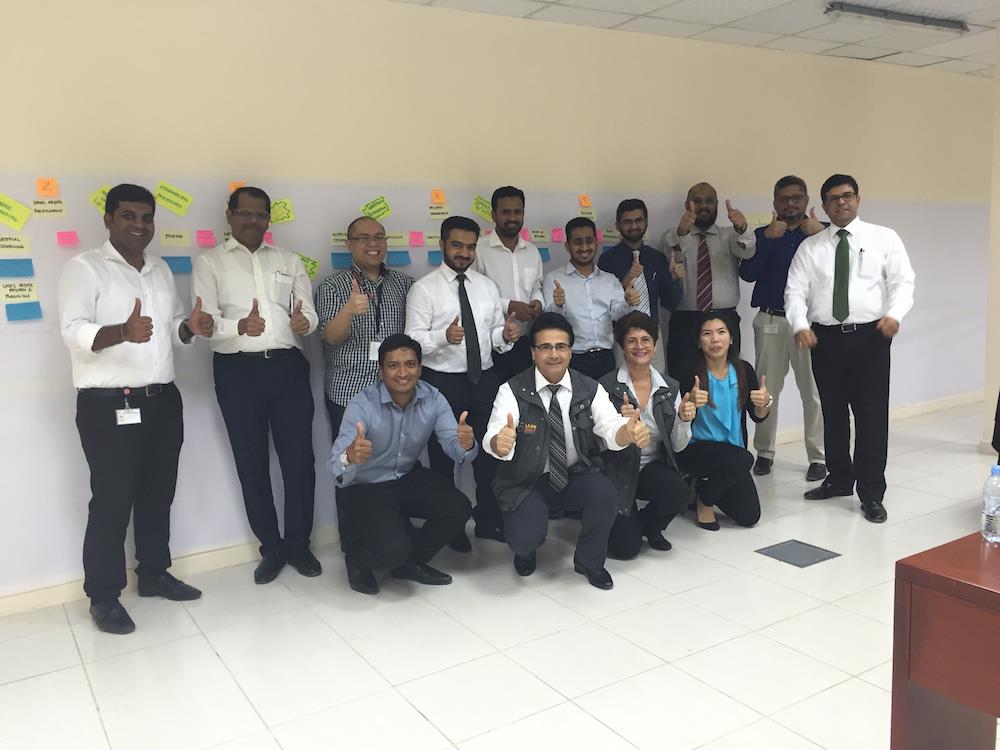
Our first step toward becoming a leaner organization was to implement 5S in our operations department, which made our processes significantly smoother. We soon realized that if we wanted to progress with our lean implementation across Gerab, we would need trained people who could teach their colleagues lean principles and techniques. This resulted in the launch of the GNE Lean Academy, which we did in partnership with the Lean Gulf Institute.
We identified 25 team members who went through a “Lean 101” training program (training on the basic principles of lean, because we wanted our people to understand why lean thinking is so important for GNE). Of those 25 people, we selected a team of 12 who went on to be trained in value stream mapping (VSM). They were then able to map the entire value stream of one of our business units, to really identify the current state of the work. It was at this point that our understanding of the concepts of value-adding and non-value-adding really began to grow. VSM is helping us think about how we can offer services that add value for our end customer.
Our plan for 2017 is to help lean ideas spread throughout the organization
Our plan for 2017 is to continue our initial work, train people on how to mentor their colleagues and help lean ideas spread throughout the organization.
RP: How has value stream mapping helped you in the context of supply chain management?
RU: There is no doubt that our VSM exercises gave us visibility into what creates value for the customer and what does not, both within our internal processes and within our suppliers' work. It taught us how the different parts of the organization (and of the supply chain) impact one another.
The long lead times of products coming from our suppliers are one of our biggest challenges, and we remain deeply focused on it. We have to find ways to collaborate and work with suppliers to reduce lead times, implementing standardized ways of processing orders.
RP: What are the biggest difficulties you are encountering in your lean implementation?
RU: We were fortunate to have the support of our group managing director, Mr. Abdullah Sharafi, which made implementing the project much easier. At the same time, embarking on a lean journey draws on a lot of organizational capacity (in terms of allocating resource time), which means that having consistent support from a lean team is a challenge. There simply isn't enough time! That said, we have still managed to do a lot in very little time.
Another difficult part of our journey was, of course, getting people to embrace what we were trying to do. We spent a lot of time explaining to them that lean would not be a threat to their jobs, but simply a way to improve the organization's efficiency.
RP: What does lean mean to you?
I see lean as a way to radically transform an organization
RU: I have seen lean implemented very effectively in both the manufacturing industry and the service industry, and I know the great results this methodology can bring. Today I see lean as a way to radically transform an organization by streamlining its processes and developing its people to make excellent products or provide excellent services.
RP: Where will this lean transformation take Gerab?
RU: Thanks to its focus on business transformation, GNE will be drastically transformed. We want to become a global leader in, our industry and adopt project management across the company; we see lean as one of the tools we can leverage to provide services that add value for our customers. Our transformation is also driven by the use of the latest technologies, which allow us to automate, map the value stream and gather knowledge. Thanks to our IT initiatives, we will be able to have greater visibility into our operations in order to control and coordinate work between our departments and ensure professional project management and, therefore, deliver value to our customers.
Lean is expanding into the Middle East, where the LGN has a new affiliate - the Lean Gulf Institute
For more information, contact Deborah Salimi at [email protected]







