

Lean in higher education: improving Macquarie University
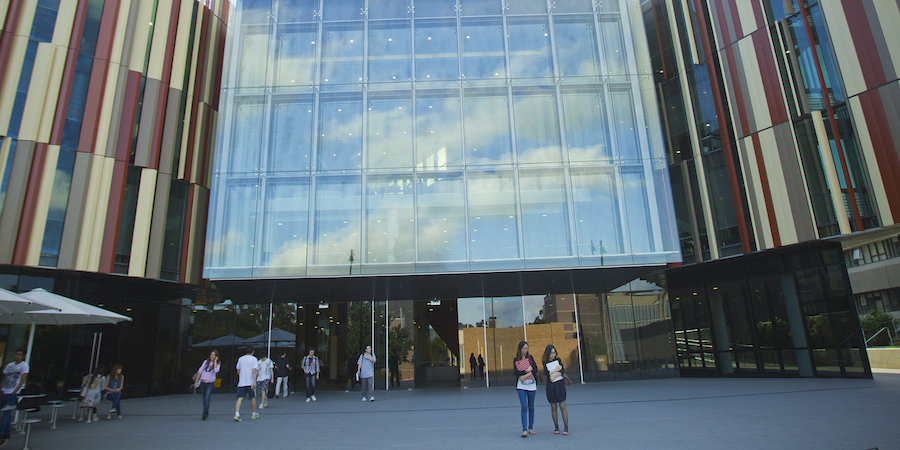
CASE STUDY - An Australian university has been applying lean to streamline and improve its processes, discovering along the way how much a change in methodology can affect the organization's culture.
Shortly after being appointed at Macquarie University in 2013, the Vice-Chancellor and President, Professor S. Bruce Downton, carried out a university-wide consultative process to establish a strategic plan. Discussion groups, surveys, and town hall meetings were conducted to gather staff input.
A significant amount of the feedback from these forums identified that the university's business processes were outdated, time-consuming, and frustrating. Staff felt that business processes limited them not only in their day-to-day work but also in the priorities of their faculties. There was a strong feeling across the university that aspects of the support services needed to be improved in order to achieve the strategic goals. Transforming processes was seen as an important way to improve these services.
Once the plan was released, the Vice-Chancellor charged the COO and the Deputy Vice-Chancellor (Students and Registrar) with overseeing this key priority. They formed a reference group to investigate the methodologies in use.
We wanted to create a model that would build trust, transparency, and accountability. We also wanted to give our people, those who carry out our processes, the authority and responsibility to change their own work practices.
We examined a number of business process improvement methodologies but, in the end, decided to turn to lean thinking because of its learning-by-doing philosophy.
Once we had decided which methodology to use, the Business Process Improvement Initiative was created with a staff complement of one: me. I believed my first task was to communicate, communicate, communicate. I needed to get the message across to the university community that lean is designed to empower staff - they are the experts in the work - and drive change. This was a big task, since introducing change in a university requires sign-offs, consultations, committee approvals, and supervisors' agreement. A long process.
Introducing lean and staying true to the philosophy would be a significant cultural change for Macquarie. Not only did we need to gain the support of the management team to allow staff to make changes without their approval, but we also needed to teach staff that they were empowered to make and implement changes and that their supervisors would support them in this effort. This was a big change.
I developed a six-month communication plan to ensure that management and staff understood the path we would be taking, their roles in the University's transformation, and the basic thinking behind lean.
I organized meetings with the University's executives - anyone in a position of authority who would agree to meet with me, from the executive deans to the associate deans, directors, and managers - to explain lean, their roles, and what contribution we expected. I was adamant in telling management that, once they agreed, people would make changes. To make success possible, I knew we had to be clear - and that we needed management support and backing - from the start.
We also offered a university-wide session, presented by the Vice-Chancellor and the Deputy Vice-Chancellor (Students and Registrar), to explain the methodology and answer any questions. More than 150 people attended.
LEADERSHIP AND RIEs
The communication paid off, creating interest in the lean methodology among staff - and a strong intention to take part in the transformation processes. Suddenly, anyone could recommend an improvement for the university that would directly affect the students' experience and the work of Macquarie staff. With each of these initiatives, we contacted the process owner and brought together a team of people to define the problem. A Rapid Improvement Event (RIE) followed, attended by people from across the organization.
To avoid groupthink and secure management support, we asked senior managers to identify delegates to implement changes on their behalf. However, we had them take part in the RIEs in person, to ask questions, make suggestions, and answer questions. They open every RIE we facilitate, thanking participants for dedicating their time to improving a university-wide process and emphasizing that they have management's support to implement the change. This shows our people that things have changed at Macquarie and that they now have permission (in fact, they are encouraged) to drive change autonomously. There are no excuses for not streamlining processes!
An example of one of our first RIEs was improving the staff recruitment process: we discovered that one of the main problems new staff members had was that they did not receive an e-mail account until their first day of work at Macquarie. This caused delays in access to a computer, systems, and calendars and negatively affected the new employee's overall productivity for at least a week. There had always been some reluctance to give someone an e-mail address before their start date (even though no one knew why), until - once the lean improvement began - the group invited the COO to join the RIE and asked him whether he knew of any risk the university would run by providing an e-mail address in advance. He said no and agreed with the project team, stating that it should implement the change as soon as possible.
That alone was a strong catalyst for the acceptance of lean at Macquarie, because the staff recruitment project team and the other teams realized they were truly empowered to implement change.
We also introduced an escalation process to ensure that any obstacles in trying to implement a new process were flagged and brought to attention (we also had the support of the Reference Group, the COO, the Deputy Vice-Chancellor (Students and Registrar), and senior management). Interestingly, however, I never needed to escalate: knowing that they had an escalation process to rely on and the support of senior management was enough for the project group to feel empowered to remove the problem on their own.
Throughout the implementation of the new process, the project group communicates with everyone involved through presentations, fortnightly updates, and the development of electronic information sources, such as Wikis. Although it is the project group's responsibility to ensure that the new process is implemented, by including the university community in its communication, responsibility for implementation is shared with all stakeholders.
I believe one of the keys to the success of lean at Macquarie is the support we give to process owners, helping their suggested changes succeed. We work with them to ensure they meet their deadlines and implement the new process on time, and we also agree on a post-implementation review date so that we can report on the success of the new process and identify new improvement opportunities. We do this by collecting data, conducting surveys and focus groups, and consolidating this information into a report for the senior executive meeting, all on behalf of the process owner. We see our work as acting behind the scenes for our process owners; the success belongs to them, and our job is to make sure they get there. By sending the report to senior executives under the signature of the business process owners, we ensure that they are accountable for the outcome and for any future improvements.
DEVELOPING PEOPLE AND LOOKING TO THE FUTURE
We have been working with lean for two and a half years, facilitating its spread across the university through our small (only three people) but very busy lean team. We send staff to sections of the university as trained facilitators and consider them part of our team. Through an informal agreement, they are invited to our meetings and are expected to contribute to the team's work. In addition, we ask them to help us facilitate Macquarie's RIEs and maintain their skill level.
We have also developed a training program that we offer through the Professional Human Resources development program for Macquarie University staff. So far, we have had more than 1,000 people (staff and students) take part in business process improvements for the university. We are also in the process of training staff to help them use basic skills in their daily work. In addition, we are strategically sending facilitators to different faculties and departments to ensure expertise across different business units, and not just centrally.
Lean has exceeded our expectations. Although the main goal of this initiative was to improve business processes, we have discovered that an additional - and exciting - benefit is institutional collaboration and cultural change.
Although not quantifiable, this benefit is validated by the multitude of positive comments made by participants involved in our lean projects. They have told us, for example, that for the first time they realize change is possible, that they are impressed by how lean has helped teams deconstruct their work and create processes that work, and that they see great benefits from greater collaboration with their colleagues.
We like to think that lean is taking root in the university culture, as we continue our work to ensure that we do things our way.
Meet lean in higher education (Lean HE)
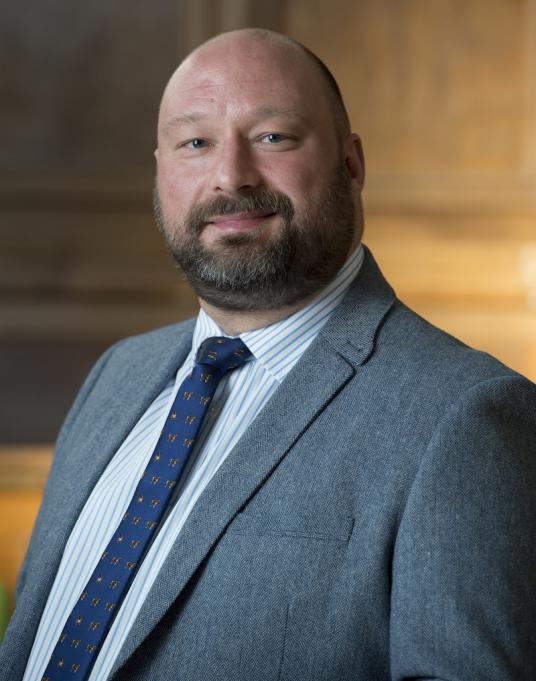
By Steve Yorkstone, chair of the Lean HE global steering group
Universities are crucial to answering the challenging questions our society faces - scientific developments are usually driven by university students and researchers. However, they are burdened with administrative processes. Opportunities for improvement abound and, just as current teaching methods and research processes are changing radically to suit the future, there are attempts to transform the way universities operate.
In fact, there is a growing number of passionate and enthusiastic voices advocating lean as a way to continuously improve universities for the benefit of all. The work and expansion of Lean HE are a testament to this.
Lean HE is a fast-growing international community of practice for staff within universities who are applying lean. It brings together professionals to share their knowledge and learn techniques to continuously improve their work. In the four years since its founding, Lean HE has launched a series of international conferences, an online network, and local events around the world.
In 2006, a few UK universities began experimenting with lean. To share their learning, Cardiff University organized a one-day event in 2008, and the University of St. Andrews, in Scotland, followed in 2010. Before long, many universities were holding conferences every year, and the audience of UK practitioners began to collaborate and consider how far lean could be applied to higher education organizations.
By 2013, these events were already attracting a handful of administrators and academics who had applied lean in higher education and believed that the content of the conferences could be improved to add much more value to higher education. Between one casual meeting and the next, this group realized that if they wanted to unlock this value, they would have to do it themselves. That is how Lean HE began.
We are organized simply, committed to always remembering our purpose: to support the transformative power of universities through their students and research (while recognizing that many lean applications within the university context focus on reducing administrative burdens).
Lean HE takes a hands-on approach: show up, bring something to share, come prepared to learn, and share hosting responsibilities. We like to think differently about organizing and to eliminate budgets and formal membership lists, which add no value but increase the administrative burden.
Our group quickly discovered a worldwide community of lean practitioners in higher education to share with and, in its first year, its organizing body had representation in different parts of the world, from the Netherlands to Canada.
Last year, Lean HE launched continental divisions in the Americas, Europe, and Australasia, with each division supporting a program of activities specific to the region. Our LinkedIn group has almost 2,000 members, and our most recent international conference in Stirling, Scotland, attracted 150 delegates from places as diverse as Finland, Poland, Norway, the United Kingdom, North America, Australia, and the Middle East.
We know, however, that real success is measured by results: the delegates who attended the conferences have, in turn, formed local networks in the UK, Northern Europe, Eastern Europe, and the Baltic States, which have resulted in countless improvements at many universities.
Macquarie University will host the next Lean HE international conference, "Implementing, Measuring and Sustaining Change," from November 1 to 3, 2017, in Sydney, Australia. If you or someone you know is working to implement change within a university, we would love to see you there.






