

Boosting sales the lean way
Many companies aspire to be the best among those in their field; they rarely achieve their goal. Others, a few enlightened ones, do not seek to be the best in their respective fields, but simply better than they were yesterday, every day; this select group tends to dominate the market.
In 2012, in light of a major leadership change, ASSA ABLOY underwent an important change in mindset that would deliver far better results in terms of sales: the new president brought with him a rich knowledge of the lean mindset. The executive's goal was not to settle down and maintain leadership in the field, but to improve continuously on a daily basis. However, it is not the adoption of the thinking itself that sets the company's story apart, but the place where it was applied: the commercial area.

ASSA ABLOY
A world leader in door opening solutions, the company is the result of a merger of two others, one Swedish (ASSA) and the other Finnish (ABLOY), which took place in 1994. With the goal of meeting security and safety needs, the ASSA ABLOY group invests in technology, with locks as its main product, but not its only one.
Although lean thinking is increasingly widespread around the world, many still resist the idea of applying it in sectors other than manufacturing. Others accept it, but fail to understand how to do it. Many get lost in incorrect notions, such as the idea that the gemba is merely the shop floor, failing to find it elsewhere. ASSA ABLOY provides us with a learning opportunity on applying lean thinking in the sales area.
Starting the journey
At the time the new president took office, in 2012, ASSA ABLOY, although it already dominated the market in terms of quality, was very dependent on the São Paulo market, with its regional representatives delivering little in terms of sales. It was then that the company took the first step in its lean journey: fostering strategy deployment.
Deploying the strategy means defining the company's true north (where it wants to go), establishing actions, deadlines and responsibilities to reach it, and using precise macro and micro indicators to track progress. Through this process, the aim is to align the company's functions and activities with its strategic objectives. This can be a treacherous stage that sometimes prevents the journey from moving forward, but a simple tool can serve as a guide at this point: A3 thinking.
“Failing to plan is planning to fail”
The famous phrase by American author Alan Lakein that gives this subheading its title sums up the way ASSA ABLOY manages its strategy today. Planning the deployment requires organization and structure. The company holds meetings from the highest levels (board of directors, presidency) down to the lowest level (in the case of the commercial area, the sales force); the idea of these meetings is to use PDCA at all levels of the organization in order to get the most out of A3 planning. Meetings at ASSA ABLOY are divided as follows:
• Plan meetings: held on an annual basis (usually in October), they analyze what has happened to date and what is expected to happen by the end of the year, and the following year's plan is drawn up. Based on historical data, all regional sales managers identify opportunities and carry out the planning broken down by product family and by company. Along with the sales plan, each manager defines a personal action plan in order to achieve the goal. These plans are also important to ensure adequate feedback to managers, which drives growth.
• Strategic-operational planning meetings: held on a quarterly basis, they involve the presidency and the leadership team with the purpose of evaluating the A3 reports, analyzing the results and making decisions to keep the company on, or steer it to, the most appropriate path; these meetings bring together all areas and promote a cross-functional conversation, which ensures that everyone understands the bigger picture.
• Action plan follow-up meetings: held every two months, they serve to guide managers on the actions to be taken in order to ensure that the plan works. They are customized meetings according to each regional situation.
• KPI meetings: held on a monthly basis, the main goal of these meetings is to monitor the previously established indicators in order to track the progress of the plan and take specific measures, if necessary.
• Sales forecast meetings: held on a weekly basis, these meetings are exclusively for the commercial area, with the purpose of monitoring and adjusting sales forecasts. Although they do not take part in the meetings, other areas are also affected by them, such as production, since the sales forecast will dictate the required pace of production; therefore, it is of vital importance that the other areas are aware of the decisions made in them.
• Performance follow-up meetings: held on a daily basis, they track performance in real time through the board with the sales KPIs.
• Pricing and product meetings: meetings exclusive to the Marketing and Commercial areas, they are vital to ensure that the prices and strategies defined for the products are in line with their market value and to analyze the performance of each product family, then defining the appropriate measures to be taken.
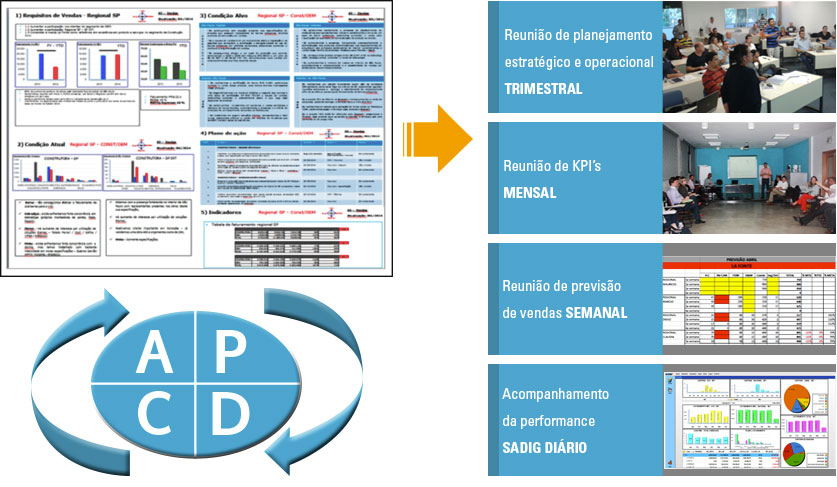
ASSA ABLOY stresses the importance of planning for the success of any company and of all areas. It is important to keep it simple and to follow it up regularly to ensure its integrity. Planning is an endless process that leads to the main goal of lean thinking: continuous improvement.
Improving continuously
Before starting the continuous improvement process in the company, it is important to keep in mind which areas you want to improve. ASSA ABLOY's commercial department has two pillars that support its success: innovation and market share; these two objectives are the essence of continuous improvement at the company.
In order to support these pillars, costs need to be managed efficiently, which will allow the financing of the actions needed to achieve good results. At the base of this structure are the lean tools. In the commercial area, some stand out when it comes to creating value for the customer:
• Daily Management: through visual management, the company works on blocked orders, solving problems and enabling faster customer service; multifunctional teams deploy the indicators in the A3 reports, ensuring higher quality.
• Seamless flow: based on lean office, working on transactional processes, ASSA ABLOY focuses, with this tool, on eliminating activities that do not add value for the customer. In the sales area, the company's goals are to improve the level of customer service, optimize information and eliminate manual activities, reducing the number of errors.
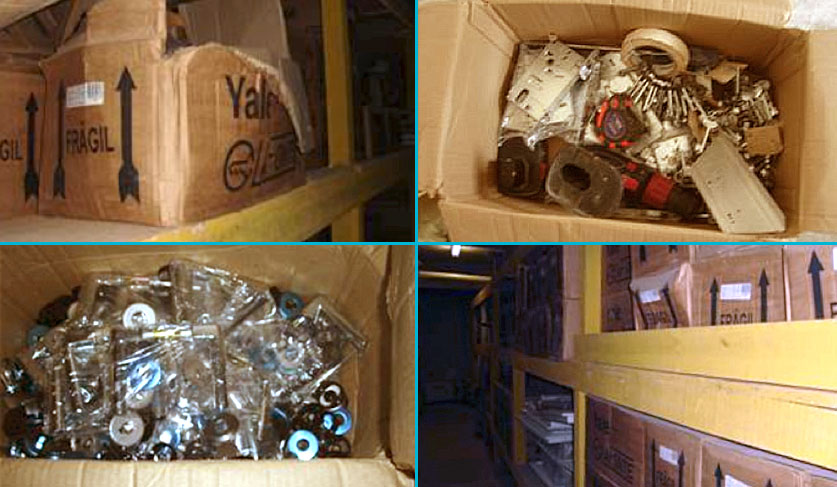
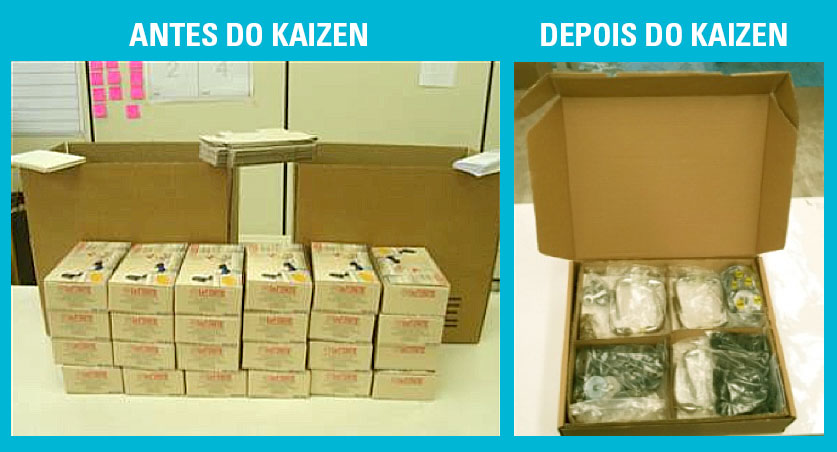
• Kaizen: in ASSA ABLOY's sales area, a value stream mapping of an order was carried out, from the quotation to scheduling at the factory, which allowed it to see opportunities for improvement and reduce the department's lead time by 41%. Another form of kaizen at ASSA ABLOY took place with suppliers; working together, implementing kanban at its suppliers, ASSA ABLOY managed to reduce the lead time to the customer by a further 15%. A feature of the company that was born from a kaizen was the “kit obra fácil” (easy job-site kit); by visiting customers and surveying their needs, ASSA ABLOY transformed its orders, which used to be individual, into a kit, simplifying use for customers.
Kit Obra Fácil

Results achieved and lessons learned
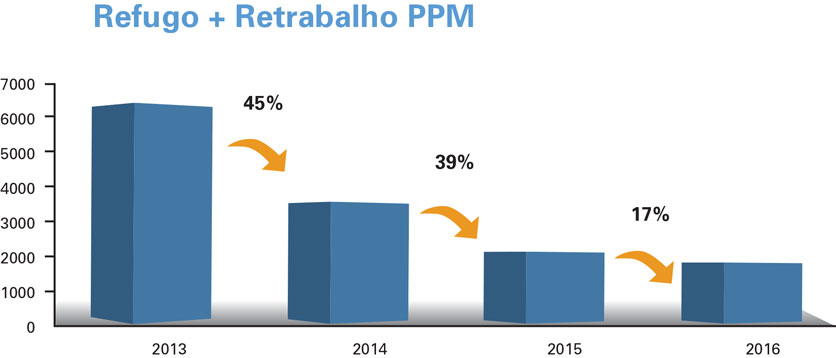
The application of lean thinking in the sales area showed great promise at ASSA ABLOY, and the company hopes this will serve as an incentive to other companies. Below are some of the company's comparative results (between 2013 – at the beginning of the application of lean thinking) and 2015:
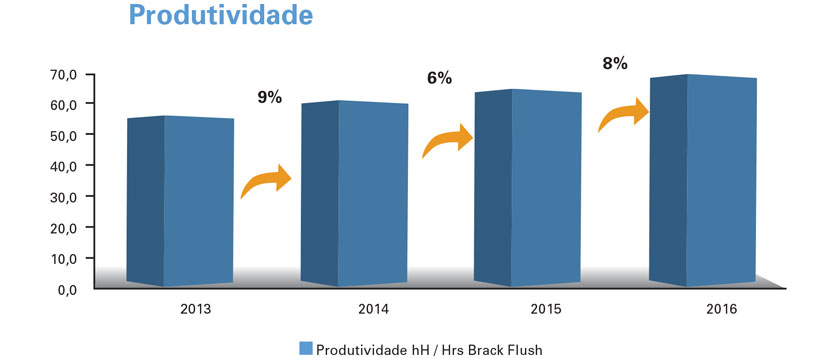
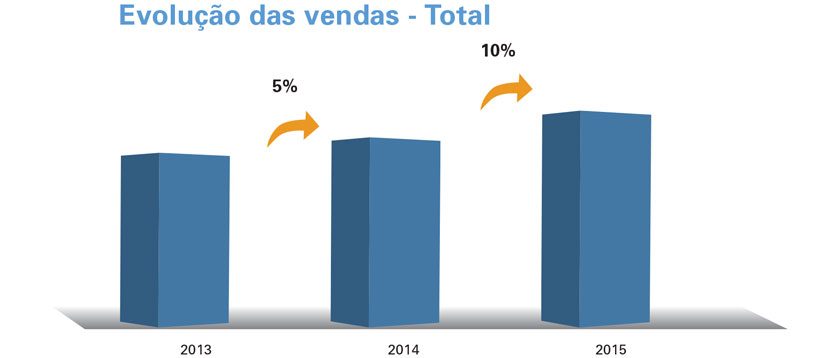
Perhaps more important than the results achieved are the lessons the company learned. There are always difficulties in implementing a new mindset, but these difficulties soon become lessons that will help in the next steps of the journey. Some (valuable) lessons from ASSA ABLOY:
• A3 reports must be simple: at the beginning, the company included numerous slides in its reports, and they were difficult to understand; the essence of A3 thinking is simplicity (the idea is that everything needed for planning fits on a single A3-size sheet of paper).
• You must understand the cause of each problem: it is human nature to jump to solutions, and ASSA ABLOY was no different at the beginning. It was a hard lesson, but the company learned to analyze causes before suggesting “solutions.” After all, as many lean thinkers say, “a problem well understood is a problem half solved.”
• You must follow up on the plan: ASSA ABLOY learned that follow-up is not meant to disrupt the work routine by adding an extra task, but to simplify it. We are always too “busy” to follow up on the plan, but if we did, we would no longer be so busy.
• Information is necessary: the company suffered at the beginning of its journey from a lack of information in its systems. Initially, it was organized only in Excel spreadsheets, and the organization was inefficient. Today the company has learned the importance of having accurate, well-organized information to ensure efficient management.
• Gemba is not synonymous with the shop floor: ASSA ABLOY learned that the gemba is any place where value is created for the customer and is therefore not restricted to shop floors, but present in every department of the organization. Ask yourself: “where do we create value for the customer in this department?” and you will find the gemba of your area.
Next challenges
As always in lean, the work is never done, and ASSA ABLOY has a distinguishing factor, which is the fact that it is constantly acquiring new companies. The company now needs to understand the portfolios of the new companies it acquired in 2015, define true norths for each of them, engage them in lean thinking, integrate them into the group and extend A3 thinking to the new teams. ASSA ABLOY will basically have to start from scratch with its new companies, but the knowledge it has acquired endures, and it will make the process much easier and faster.
Change is hard; having difficulties with change is common, but the lessons learned from our mistakes persist and transform our environment into a place where continuous improvement can blossom and grow.







