A systematic view of lean principles: reflections after 16 years of lean thinking and learning
In 1990, “The Machine That Changed the World”, packed with quantitative evidence, showed the automotive community that a Japanese automaker, Toyota, was ahead in manufacturing, design and supply chain by pioneering lean production techniques refined over the previous 40 years. The huge gap between lean production and mass production was striking.
“Lean Thinking”, the follow-up book in 1996, outlined some of the means companies were using to reach leaner stages. The other books on lean since then tell similar stories for different industries and cultures. Numerous conferences, seminars, organizational training programs and other additional resources document and detail the progress or the methods involved in the lean transformation. In addition, e-business, outsourcing, automation and other management trends and fads will continue to attract the attention of those who may be addicted to reflections, which sometimes end up being a distraction from progress toward the ideal future state, as leaders mistakenly try to fit their problems to a specific solution.
In the 16 years since the launch of “The Machine That Changed the World” and the 10 years since the follow-up in “Lean Thinking”, how much has our thinking changed and how much have we learned? Two things that are much clearer are Toyota's dominance in the automotive industry and that Toyota uses a systematic approach to improving the enterprise. This systems thinking focuses on the value-creating processes from raw material to finished product, from order to shipment, from concept to launch, etc., rather than only on departments and functions. In addition, there is extensive development of people, not just of products. Perhaps one way to ask about learning and thinking is to look at the progress that has been made in certain subsystems that make up a product's extended life cycle in a lean enterprise, since, as advances are made at the highest level, the whole enterprise takes stock. Figure 1 shows these different subsystems that will be discussed.
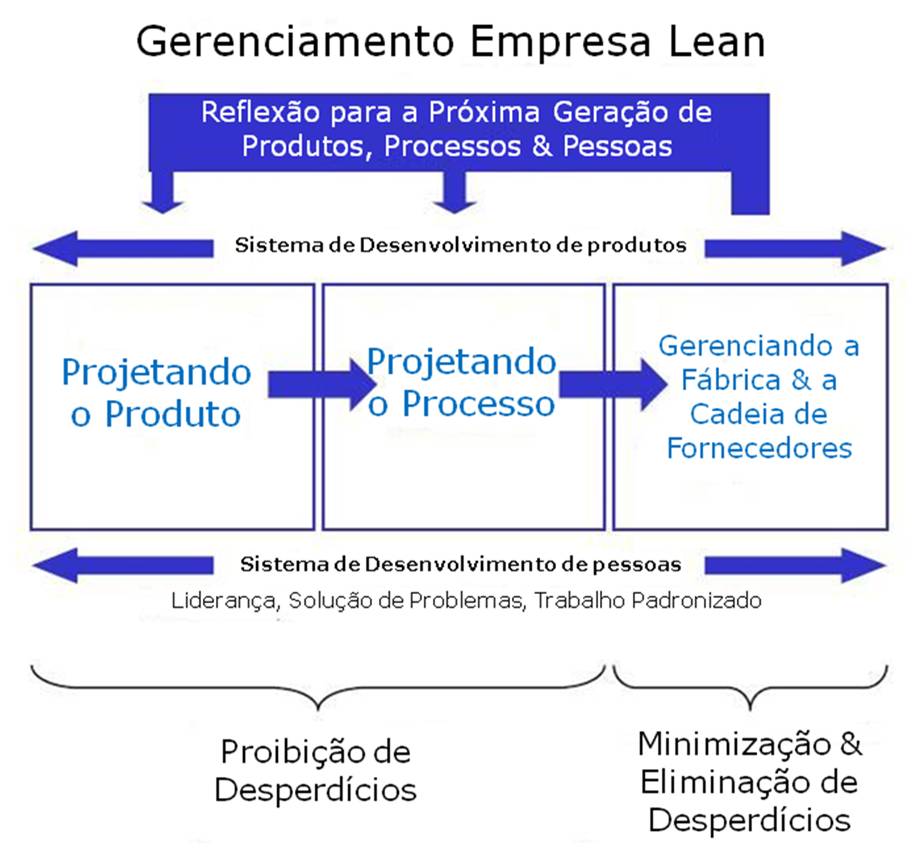
Figure 1 – Life Cycle Model of a Lean Enterprise
Subsystems of a lean enterprise for discussion:
I. Plant & Supply Chain Management.
II. Designing the process.
III. Designing the product.
IV. Product development.
V. People development.
VI. Lean Enterprise Management & Leadership.
I. Plant & Supply Chain Management Subsystem
Starting where most resources have been focused over the past 10 years, let us look at the first subsystem, “Plant and supply chain management”, and how thinking has evolved. Lean thinking outlines an action plan for implementing it. The first six steps are below:
1. Find a change agent.
2. Find a sensei.
3. Seize or create a crisis.
4. Map your value streams.
5. Pick something to get started.
6. Replicate.
Unfortunately, many people skip step 4 and go straight from step 3 to step 5, and then replicate inappropriate visions while falling into spirals of point kaizen that are not linked to the implementation plan or strategy. These kaizen events help teach plants how to mobilize resources quickly to make improvements in their areas. Many plants invest a significant amount of time and money in lean promotion offices, kaizen teams, certification programs, outside help, blitz events, among others. Good intentions do not always mean good results if we have not changed our thinking or our understanding of value and how it flows to the customer.
The method that has been bringing good results today in production redesign is a method based on the value stream action plan and oriented toward action. The workbook “Learning to See” (“Aprendendo a Enxergar” in Portuguese) by Mike Rother and John Shook, published in 1999, broke paradigms by providing a standard approach for visualizing how both material and information flow through a series of consecutive processes (supporting step 4 above), as well as creating a method for developing a work plan to guide the transition from the current state to the desired future state. In essence, each model value stream is a learning laboratory, both conceptual, introducing the appropriate tools, and experimental, using them in real implementations. Engaging and motivating people to improve operational performance by focusing on work plans serves leadership in improving quality, delivery, cost, among others. The main goal is to teach people, in a practical way, how to identify and solve problems with a systems view.
With a minimum of available resources, this has helped plants focus and align their efforts on transforming their operations little by little, or slicing the value stream, eliminating waste, unevenness and overburden. This value stream approach is summarized here:
• Scoping meeting (3-4 weeks before the mapping workshop).
• Current state mapping.
• Ideal state mapping.
• Future state mapping.
• Work planning (normally 3-6 months).
• Plan execution.
This six-step approach is not so simple to do at first. Understanding the appropriate level of mapping detail, grasping lean concepts and designing a leaner flow are not easy to do or map with little or no improvement experience, or without the right cross-functional team. In addition, leadership behavior must change to support this approach. This is the part where it is most convenient to work initially guided by a person experienced in implementations, who will help guide and teach people, leadership and system development (supporting steps 1 and 2 above).
Opportunity: Performance improvement through process redesign.
Means: Method based on the value stream and oriented toward improvement actions
Benefits: Shorter lead times, balanced flows, customer focus, kaizen leaders, systems thinkers.
II. Designing the Process – the pre-production subsystem
While almost all improvement enthusiasm and effort has been focused on manufacturing at the shop-floor level, much less effort has been directed at preventing process waste in the first place. Looking again at the product life cycle in Figure 2, we have three critical control points for a product's costs (this is a modified version of a slide by Glenn Uminger of Toyota at the Lean Conference at the University of Michigan, May 6, 2003):
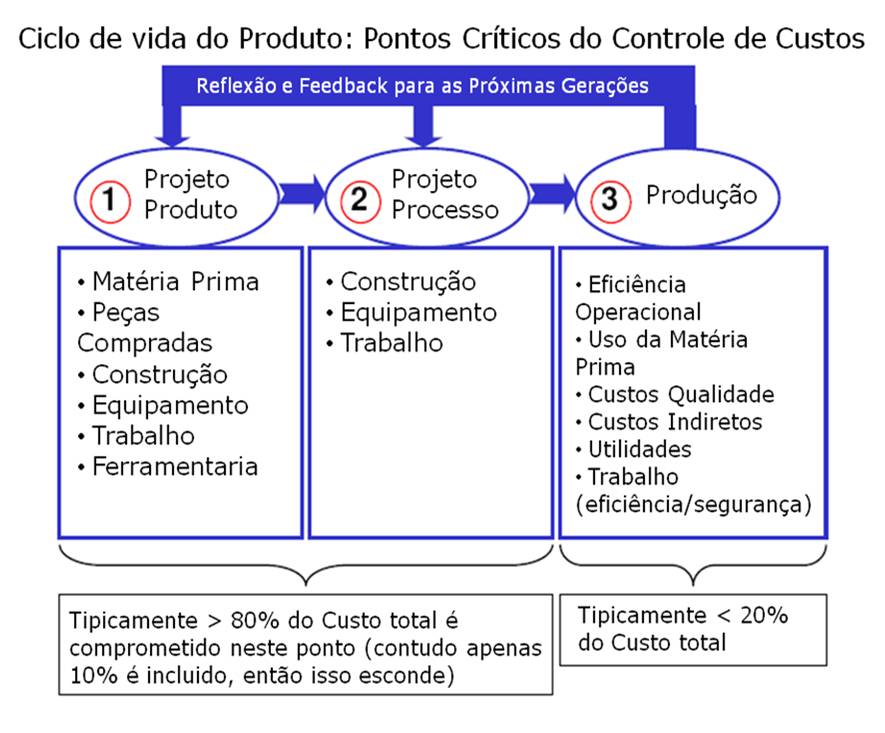
Figure 2 – Product life cycle costs
The key point here is that although most improvement efforts have been spent on production, this is generally the area of least impact, since typically more than 80% of the cost is committed before it even goes into production. Yet only 20% of the cost may be added before that point, so this fact can easily remain hidden. Most process redesign in existing operations is the waste of correcting the poor initial design of the system.
It is important to start by operating improvement systems in production because tangible benefits can be seen quickly for learning, besides it being the last point of contact with the customer. Companies need to feed these implementation experiences back into the launch of new programs and their subsequent product and process design, or else a good opportunity will be lost to teach upstream partners how to improve the business and support the true end customer.
Moving upstream to the first life-cycle point after production and looking at the process design point, there are some similar ways of improving lean process design. One of the best known is 3P (production preparation process), which can be used for new programs and also when a new product design is ready but the process has not yet been defined, sometimes known as process preparation (2P). It is a big leap to go from a method with no preparation process to 3P, and an evolution to 3P normally occurs with the company initially developing the appropriate approach at the 2P level before moving upstream.
More and more, companies are understanding the need to have better lines and cells in the process design phase, and are using a 2P-style approach before capital is spent or steel is cut. Other related approaches are being used, but the key is to have an easy-to-use framework and process following what Toyota likes to call “common-sense engineering”. Advanced companies have even developed approaches to production system design that improve on 3P and 2P and better fit their business needs.
One example of this customization is combining the value stream tool with the 3P framework to create an Operating System Design (OSD) method. As shown by Womack & Jones in “Lean Thinking”, the authors specified five principles for combating waste (as well as unevenness and overburden) in operations:
• Specify value.
• Identify the value stream.
• Continuous flow.
• Pull.
• Perfection.
From an OSD perspective, these are the same principles to follow when we are designing and engineering production systems. Value is defined by the true customer. Next, identify the entire value stream for the product. Make all value-creating processes flow continuously by connecting these various steps. Let the real customer pull the product from you as needed, instead of pushing the product onto a stranger. Finally, perfection occurs as supply chain partners work transparently to follow the principles throughout the entire product life cycle to minimize the flow of waste. (Womack & Jones, 1996)
Using Operating System Design, the actual design needs to occur at two levels – concept & configuration. First, you need to understand the product, customer expectations, process characteristics, customer demand, supply chain partners and some other critical variables to arrive at an appropriate concept, such as a location plan, expected cycle time, line layout vision, plant value stream design, and material & information flow strategy. This is the Scoping and Design part of OSD, as shown in Figure 3.
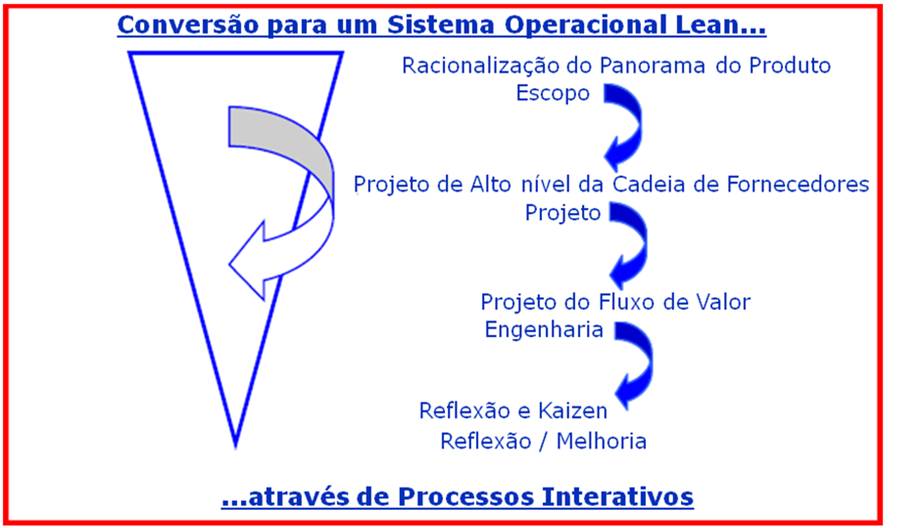
Figure 3 – Approach to Operating System Design (OSD)
Once a high-level concept is understood, configuration then proceeds: selection, workstation development, layout, material handling, part presentation, lean equipment development, support systems / people, etc. Often, engineers and teams will dive into a configuration stage for a defined cell design without first properly understanding the concept, which is very risky and generates a lot of waste, and can result in a low level of product or process performance, as well as poor operational execution. In addition, the actual process selection should seek to right-size any technology, as well as minimize energy consumption, environmental impacts and the use of spare parts, targeting the total life cost of the capital. This is the Engineering and Reflection / Improvement part of OSD.
As with the previous subsystem, it is best to start working guided by both an experienced value stream designer and an experienced process designer, who will be able to mentor the next generation of designers for a cascading effect.
Opportunity: Designing Lean Processes.
Means: Production Preparation Process (3P, 2P), Operating System Design (OSD) Approach.
Benefits: Flexible lines /capacity, balanced continuous flow, appropriate level of manual work / automation, capable people.
III. Designing the Product Subsystem
In this subsystem today, product design must not only meet and exceed customer expectations, but the product must also take into account that there are no infinite natural resources available in the world to sustain growing global demand and development.
As a first part of meeting and exceeding customer expectations in product design, an approach used by Toyota was named “set-based concurrent engineering” – SBCE - by an academic group at the University of Michigan in 1995 (Ward et al, 1995). A broad range of alternatives is considered, and a process is followed in which these choices are progressively narrowed until a best solution is found. SBCE differs from traditional design in “silos” because it considers the design perspectives proposed by different functions and converges on an acceptable range of alternatives before selecting the best one. Figure 4 below illustrates this approach using a Venn diagram. By front-loading the initial design phase, the overlaps are identified at an acceptable level, minimizing changes in future designs and in downstream engineering, as well as eliminating a good share of waste in the early stages of product design (Morgan & Liker, 2006).
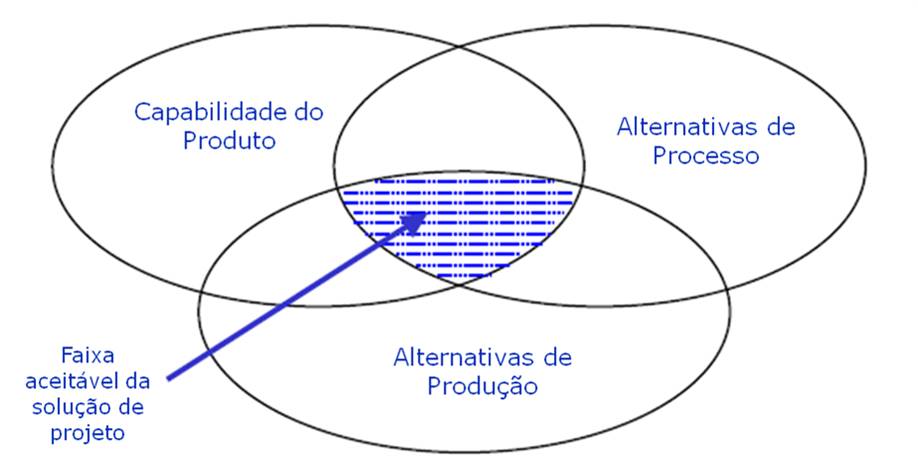
Figure 4 – Set-based considerations of the different views (Morgan & Liker, 2006)
On the subject of conserving resources with the design of future products, it is important to understand the current condition of supply, demand and replenishment. The most recent 2006 report by the nature conservation group World Wide Fund (WWF) stated that at current rates of consumption, humans will need two planets' worth of natural resources each year from 2050 on. Waste streams are growing faster than nature can return them to use. Many countries are living well beyond their means, and each will have to change its lifestyles to reverse this trend. Product design will need to focus on many things to help reverse this trend - minimizing product use, reuse and recycling, common standardized materials and packaging, elimination of components, and others. In addition, product design needs to support the effective and efficient return and recycling of this material once it is no longer useful.
Opportunity: Lean Product Design.
Means: Set-based concurrent engineering (SBCE), design standards, engineering checklists, various tools (QFD, Kano, etc).
Benefits: Winning design solution, minimal impact on the environment.
IV. Product Development System
To have all the previously mentioned subsystems working together successfully, a robust, lean product development system is indispensable. In “The Machine That Changed the World”, Womack, Jones and Ross presented in chapter 5 of the book a very broad view of how product development works at Toyota.
Until recently, few studies were available on the details and actual methods applied by Toyota in its product development system, which is by far the best in the entire industry despite having the lowest ratio of R&D to sales (Morgan & Liker, 2006). Although the performance “gap” within the production subsystem is ever smaller among competitors, that is not the case in product development subsystems, since few companies have ventured to do so at this upstream stage.
Today many companies have a product development management model based on stages with “gates”. This is typically a high-level structure with many details about the results expected from the various functional areas, and generally managed by a central corporate group. However, it focuses only on the ends, and the different teams are left lost trying to find the “means” to achieve the results. Without a clear process to guide the activity and the work, waste prevails during the development cycle and many deals and negotiations are made to move the product through the stages, departments and “gates”.
In early 2006, a new book called “The Toyota Product Development System” by James Morgan and Jeff Liker was published, showing the complete way in which Toyota does its product development. Readers learn about the specific methods Toyota engineers use, such as the chief engineer, the “obeya room”, set-based concurrent engineering, development loaded at the start (“front-loaded development”), rigorous standardization, and more. In addition, the philosophy behind each method and technique is explained (Morgan & Liker, 2006).
One of the most notable findings of the book is that many of the tools applied in production management are also used in product development management (e.g., standards, waste/variation reduction, leveling, value stream mapping). The concepts are the same, but the way they are used will vary. With the publication of “The Product Development System”, we now have a complete enterprise reference framework and books to complement the conceptual learning part in developing a lean organization.
Moreover, as Figure 2 showed, supplier selection happens in the early stages of the product life cycle. So it is necessary to have a partner supplier, with strong process development and management, as part of the product development system.
Opportunity: Lean Product Development System.
Means: standardized engineering tasks, use of the chief engineer, “obeya room”, pre-selection of the partner supplier.
Benefits: Flawless launch process, shorter cycles from concept to launch, high-quality product and high service levels, model mix flexibility.
V. People Development System
As in the previous discussions of product development, people development is an underlying system that occurs in each subsystem and across the whole enterprise. With the successful expansion of lean manufacturing systems around the world, many preconceptions claiming that lean would only work in certain cultures or types of industries have proven incorrect. In addition, many companies or competitors that failed trying to implement Toyota's style of development or other kinds of systems in their own operations have seen their people leave and succeed in implementing these same systems somewhere else (some even at an expanding Toyota).
In Toyota's case, more than one veteran refers to TPS not as the Toyota Production System, but rather as the “Thinking Production System”.Above all, value streams, cell designs, product launches, suppliers, among others, do not improve by themselves – they are the direct result of capable people (internally and externally) identifying and solving problems and challenges continuously.
Recently, an article appeared in the Journal of the Society for Organizational Learning (SOL) discussing the “Thinking Production System” and people development (Balle et al, 2006). The authors introduced four elements that TPS encompasses but that are often misunderstood:
• Focus on performance.
• Awareness of problems.
• Solving problems the right way.
• Developing people through problem solving.
According to the article, the first objective of TPS is to improve performance – it is not simply to implement a tool such as kanban, quick setup, etc. (sometimes referred to as the pursuit of perfection). The focus on performance is to improve quality, service and cost without compromising fundamental values. The second item is awareness of problems, and understanding how far from perfection the current state is. The third is solving problems the right way, using experiments, real observation of the facts, and asking “why” multiple times to find the solution. The last element is teaching by managers to develop a “kaizen mind” through problem solving and improvement activities using repeated plan-do-check-act (PDCA) cycles.
The goal is to develop individuals capable of identifying problems and solving them appropriately, as well as feeding back the learning from these problem-solving cycles. Short periods of small-batch problem solving (e.g., daily, hourly, within the “pitch”) begin to take the place of large-batch problem solving that may be done with a kaizen event held monthly.
People are the heart of each of the subsystems already discussed. There are some simple points of people development that apply to each subsystem – understanding the range of skills needed, partnership between the human resources area and the functional areas, investing in strong “mentoring”, not allowing high turnover, teaching technical skills not available in courses, and practicing reflection on the whole process periodically.
An increasingly important area discussed for people development lies in the curriculum of university undergraduate programs. Many of the concepts in leadership skills that Toyota refers to as common sense are neither taught nor presented within the basic subjects of engineering or business schools, despite their proven success. Proper teaching of these skills will continue to be a large area of opportunity for colleges, as companies will increasingly require a knowledge base to develop more systems thinkers. The Lean Education Academic Network (LEAN), located at Ohio State University and made up of educators and leaders from all over the United States, is an organization recently created to support this topic. (www.teachinglean.org).
Opportunity: People Development System.
Means: Management and development of people through problem solving and improvement activities using the PDCA cycle.
Benefits: Kaizen leaders, learning and skill development, constant focus on closing the gap between the current state and the ideal state.
VI. Management and Leadership in the Lean Enterprise
The last system to discuss is management and leadership in the lean enterprise. Generally, there is an interest in finding the single path or format for implementing lean in an organization. Unfortunately, there is no magic pill, and it cannot be treated as a project that can be completed quickly and easily. It is a process of evolution that continues without end. In addition, it is not something you can implement and set aside, because it will revert to the initial state or even worse.
Waste is present in all companies, and often takes up more than 99% of the time a product or service needs to spend in the value stream, whether that workflow is in production, product design or another stream. Thus, value-added time is generally less than 1% of the product's total cycle time. Management has to change the way it thinks about the subject, how it organizes, and how it measures this work.
A book that portrays this subject of work is “Profit Beyond Measure” (Johnson and Broms, 2000). The authors present the traditional mechanistic approach of management by results (MBR), which perpetuates part of the waste because it sets predefined accounting targets. People may achieve short-term objectives, but they may also ruin the company in the process. Instead, companies need to shift to the management by means (MBM) approach, which focuses on the living-system principles of self-organization, interdependence and diversity. It is the interaction between people and processes that determines the strength of the enterprise, since it is a dynamic system, as well as its capacity to think and improve.
The authors conclude that quantitative indicators should be used to describe the state or condition of a natural system, but not to control and regulate it. Since it is a system that is being measured, any attempt to divide it for evaluation will compromise the underlying connections that hold the system together, if people are forced to meet targets that will sub-optimize the system. Instead, focus on organizing work and interactions into a smooth continuous flow. Take care of the means and the results will appear. Toyota does not use any external financial controls to evaluate or motivate its operations in the US. The book also provides a good historical view of modern management accounting and how it has affected the behaviors and decisions of today's management.
From the perspective of W. Edwards Deming and the writings of the book, it is management's function to understand the business as a system of work. Good managers focus on the system of work, not on hitting targets. Unfortunately, most managers do not have the opportunity to learn or to “go and see” what the real work is like because of the focus on 90-day cycles of quantitative indicators and cost control of results. As the tail is wagging the dog, the company begins chasing its tail in a spiral of wasteful actions and pursues cost-cutting measures that destroy the company's culture (DNA) and the desire to improve. Without knowledge of the real work of the business, it is impossible to improve a numerical objective, or even to avoid designing waste into future programs.
An effective management process for a company is strategy deployment, which links improvement practices to the company's business strategy on an annual basis with a monthly cadence of review. Very often, companies will try to improve, but the method may be “top-down”. Other approaches may be strongly top-down without the involvement of other levels. Strategy deployment is an appropriate process to help clarify the scope and pace of improvement, as well as the expected targets, to help balance and connect activities across the spectrum of the enterprise.
As noted in the product development subsystem, now is the critical time to change our thinking and actions toward the environment. Leadership and management need to remain committed to achieving the ideal state of a sustainable operating system. Endless growth is not sustainable in nature or in business over the long term. The challenges ahead will mean thinking about how to minimize all waste, both tangible and intangible, as well as conserving resources across a product's life cycle to allow future generations an ample supply of these resources.
Focusing on increasing the percentage of value-adding time and decreasing waste will increase profits and also sustain itself by developing a capable workforce that is truly improving the business system every day. This seldom-remembered skill of organizing work effectively and efficiently, along with systems thinking, is applicable no matter what the company produces or builds. As these skills cascade through an organization, the results of improvement and learning are amplified.
Opportunity: Lean Enterprise Management System.
Means: Management by means,“go see”, strategy deployment, lean location logic.
Benefits: Capable leaders, knowledgeable managers, organizational learning, conserved resources, minimal waste, talent development, higher profits.
... thinking about Perfection
As the enterprise matures and begins to transform the business system, the lines between customer, suppliers and manufacturers begin to disappear. Part of the sustainable operating system is seamlessly connecting consumption with supply, as discussed by Womack & Jones in the book Lean Solutions, released in 2005. They presented five principles for lean consumption, with the possible solutions listed in parentheses (Womack & Jones, 2005).
• Solve our problems completely – customer, supplier, manufacturer (implement intelligent feedback)
• Don't waste my time (eliminate queues and waiting time)
• Provide exactly what I need (implement lean logistics)
• Exactly where I want it (offer a range of low-cost formats)
• Exactly when I want it (turn customers into partners)
One of the first questions to ask customers, suppliers and manufacturers from a broad perspective is – how do we eliminate the need for a product or service in the first place? This is a difficult subject, since it could potentially eliminate many operational value streams, many of which are profitable for the business in the short term. Much more importantly, however, it would bring everyone even closer together in the demand chain, as well as being the best option for all partners in the long term (conserving resources, minimizing capital spending, etc.). It would reduce the excess of items and vast inventories of finished products and services around the globe that are currently unable to deliver adequate service levels at reasonable costs. People would shift problem-solving efforts to another opportunity, instead of repeatedly refining an unnecessary activity or item. In addition, it would drastically reduce suppliers pushing overly abundant products or services onto their customers, which is not the best solution.
An interesting point to expand on from the five principles above is that of offering a range of low-cost formats. In recent years there has been an intense focus on global sourcing and low-cost sourcing, with the logic that direct labor costs are a big problem for a product's competitiveness (interestingly, these costs are generally only a small part of the total cost, with “overheads” being the larger part). Many companies are following each other's lead, like turtles heading to the sea, and putting all their eggs in one basket, and that basket is multiple time zones away, which often makes communication difficult. Without thinking about which processes, components or volumes should be relocated, lead times become bloated and the service level begins to regress. For solving problems effectively and for developing people, this supply chain becomes very difficult to manage, and even more difficult to improve. The best solution is to understand the thinking behind how to locate supply chain partners.
To fully understand customers and solve their problems, and to be able to link up with all the principles of lean consumption, it is necessary to have a logical method of lean location as part of developing a supply chain in an era of lean consumption, as suggested by Womack and Jones. When the pieces of the value stream are in the right place, problem solving is easy (and therefore fast and cheap). The challenge is to find the correct location for each partner in the business line, without restricting the ability to keep improving quality, shortening lead times and reducing costs in a dynamic environment, which is what happens when you have a huge number of capable people finding new opportunities to improve the whole system every day.
Conclusion
The fifteen years that have passed have introduced us to many facets of lean production and to a level above, the lean enterprise. The challenges from here on include becoming systems thinkers and rapid problem solvers in managing and strengthening the enterprise system to support the customer even further in balance with nature, focusing on achieving the ideal-state vision for product and service streams, continuing to improve costs, quality and service levels to world-class excellence, and developing the next generation of leaders and talent who will take the enterprise to a higher level within industry and society. Perfection will occur when the customer's consumption or needs are met by the producers or manufacturers of products and services.
Epilogue: Action Plan Guide for a Lean Enterprise
The following points are some of the important steps that companies will take initially as they try to transform any part of their enterprise subsystem in the first of many years. Although they are written in a linear sequence, the steps are not necessarily sequential, and may be redirected and iterative. “Lean Thinking”, “The Toyota Way” by Jeffrey K.Liker, and countless other books on lean implementation have action plans similar to this one.
• Select a small number of candidate model areas (no more than 4).
. Start by focusing on selecting small areas to transform that have strong leadership; make following the method mandatory – there is no discussion of where the area should go, only of how to get there
. Make senior management aware of what is about to happen; later on, the focus on their area will come as awareness is understood.
. Use this pilot group of areas to create an improvement method for the company through reflection and feedback.
• Select a model line within each area to show that lean works in the business and to create an example to “go see”.
. Choose a key model line from start to finish, or value stream, in the chosen area, and implement TPS or lean concepts as fully as possible, appropriately and in the best sequence.
. Eliminate the “lean doesn't work in our business” syndrome.
• Use value stream mapping to develop a future state and an action plan.
. Analyze material, information and process flows guided by an experienced facilitator with implementation experience.
. Understand the “gaps” between the current, ideal and future states; this is the important vision for improvement.
. Begin changing leadership behavior and cost-control methods, and teach the fundamental concepts with implementations.
• Develop a clear work plan with the goal of reaching the future state quickly.
. Use focused kaizen events or a similar workshop to improve information flow within 3 to 6 months.
. Use a model line as a learning laboratory and to develop people.
. Use outside experts where necessary.
• Change the system first, then begin changing the culture.
. Operations are a system, not a machine, and improvements in operations must come first, followed quickly by the development of internal leaders.
. In addition, with many failures of “flavors of the month” and training programs, it may be necessary to show tangible improvements early on.
• Focus initial efforts on implementation.
. Any training effort must be done together with implementation, otherwise the training part is wasted and eventually erodes the culture.
. Later, find the appropriate balance between conceptual learning and “learning by doing”.
• Spread implementation results quickly.
. Use standard report formats such as the A3 and post them on the intranet or by e-mail.
. Share and showcase successful implementation cases, lessons learned and reflections.
• Begin restructuring the business line or area into true value streams.
. Select people with leadership and business skills and a deep understanding of the product and the door-to-door processes the customer will expect.
. Note: this does not mean completely eliminating or minimizing all functions or departments.
• Change the financial measurement system so that it supports improvement and value stream or business line costing.
• Build on the company's heritage to develop a specific operating system methodology, using other successful companies as learning guides.
. Do not simply copy a method from another company or industry.
• Select and develop leaders with a clear succession plan.
. Senior management needs to drive the change and understand the real work.
. Change agents are valuable resources to have in key areas (typically middle or senior level) to help cascade the necessary learning and skills, as well as to make the vision a reality.
• Use a central team of outside experts to teach and make improvements quickly at first.
. Steal the learning lines of experienced guides; one person cannot do everything, so work with a network of individuals who share the same fundamentals
. Coordinate outside resources through the internal change agents to ensure the maximum return on the investment in people.
. Quickly develop internal leaders and guides to cascade the implementation method through hands-on implementations.
Bibliographic References
Womack, James P., Daniel T. Jones, and Daniel Roos. A Máquina que Mudou o Mundo [The Machine That Changed the World]. Editora Campus, 1992.
Womack, James P. and Daniel T. Jones, A Mentalidade Enxuta [Lean Thinking]. Editora Campus, 1997.
Rother, Michael and John Shook, Aprendendo a Enxergar: Mapeamento do Fluxo de Valor para adicionar valor e eliminar os desperdícios [Learning to See]. São Paulo-SP, Lean Institute Brasil, 1999.
Uminger, Glenn, Lean: A company perspective, Proceedings of the Ninth Annual Lean Manufacturing Conference of the University of Michigan, Ypsilanti, MI, May 6, 2003.
Ward, Allen C., Durward K. Sobek, John J. Christiano and Jeffrey K. Liker, Toyota, Concurrent Engineering, and Set-Based Design, In Liker,et al., eds. Engineered in Japan, New York: Oxford Press, pp. 192-216, 1995.
2006 Living Planet Report, World Wide Fund of Nature (WWF International), Gland, Switzerland, October 2006.
Morgan, James M. and Jeffrey K. Liker, The Toyota Production Development System: Integrating People, Process, and Tecnology, New York: Productive Press, 2006.
Balle, Michael, Godefroy Beaufallet, Art Smalley, Durward K. Sobek, The Thinking Production System, Reflections: The Soul Jornal, Society of Organizational Learning, Cambridge, MA, Volume 7, pp.1-12,2006.
Johnson, H. Thomas and Anders Broms, Profits Beyond Measure: Extraordinary Results through Attention to Work and People, New York: The Free Press, 2000.
Liker, Jeffrey K, O Modelo Toyota [The Toyota Way], Editora Bookman, 2006.
Womack, James P. and Daniel T. Jones, Soluções Enxutas [Lean Solutions], Rio de Janeiro, Editora Elsevier Campus, 2007.
*Note:
Matt Zayko is an instructor at the Lean Enterprise Institute (LEI).