

Lean in agribusiness: the transformation of the roasted and ground coffee industry at Grupo 2 Irmãos
The lean philosophy is no longer restricted to manufacturing companies. Many sectors and areas have been seeking to improve their processes through problem-solving analysis, value stream mapping, continuous flow, standardized work, visual management and many other lean management tools.
Agribusiness is one of the most recent to begin this journey. Although the initial efforts have focused on the industrial side of agribusiness, the potential gains and opportunities have yet to be explored and captured.
Although this sector began using this management model only recently, many improvements and positive results have been achieved in the pioneering companies. In the article “Agribusiness: fertile soil for lean thinking,” by Bruno Battaglia, we can find more information about these lean transformations in the most diverse sectors of agribusiness, such as dairy, fruits and vegetables, ornamental plants and livestock. And not only in large organizations with high capital and technology intensity.
This article will present the initial steps of the lean transformation of “Grupo 2 Irmãos,” a roasted and ground coffee company located in Santo Antonio da Platina, in the north of the state of Paraná.
ABOUT GRUPO 2 IRMÃOS
The company was founded in 1997 as a modest coffee trading business in Carlópolis, in the state of Paraná. At the time, the company had only four employees, responsible for receiving and storing coffee, and operated basically in the Londrina and Santos markets. Today, 18 years after its founding and proud of its history, “Grupo 2 Irmãos” has more than 100 direct employees, an industrial facility of approximately 5,500 square meters, three distribution centers, in Curitiba, Itu and Assis, and a coffee receiving unit in Carlópolis, Paraná.
With the production of roasted and ground coffee as its business, “Grupo 2 Irmãos” also operates in the segment of receiving coffee in the husk, processing, blending and selling in the domestic market (large industries) and to companies that export green coffee beans.
The company's current revenue is around 80 million reais a year. Between 2010 and 2013, the company's volumes jumped from approximately 180 tons per month to 400 tons per month of roasted and ground coffee.
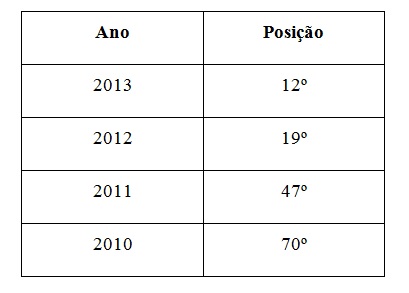
In October 2014, in the roasted and ground coffee segment, “Grupo 2 Irmãos”,” represented by one of its companies, Florão Alimentos, ranked 13th in the ranking of ABIC (Brazilian Coffee Industry Association). See the list of ABIC's 100 largest coffee companies by clicking here.
THE PRODUCTION PROCESS
Following to the letter a saying by Roosevelt, “Do what you can, with what you have, where you are,” the company does not have large, modern equipment. The roasters and grinders, for example, are old.
Over the last 3 years, all of the company's employees have been trained in the philosophy of lean production (lean manufacturing). This work has been arduous, because the company does not yet have a team with undergraduate, graduate or specialized degrees in the field – although this has also improved a great deal, since the company now has a scholarship program, which has already contributed greatly to enabling the company and its employees to take longer strides.
Let's look below at how the improvements are going in the company's various areas.
1. Improvements in production
We can cite the intensive and continuous use of visual management as the main driver of the significant increase in production quality. And although this interesting lean tool has resulted, for example, in production almost tripling, it was not necessary to build new sheds to increase physical space.
2. Productivity gains
One of the company's most important goals is to reach production of 700 tons per month without building a single additional square meter.
To that end, short problem-analysis meetings are held inside the factory itself, with the participation of the supervisors and all the line staff. With the root causes of the problems presented in mind, people suggest solutions. Suggestions that are successfully implemented earn awards distributed at the end of each year.
3. Quality improvements
Visual management also made it possible to reduce a process loss that used to be 4% to less than 0.5%, solely through equipment adjustments in vacuum packaging.
Large companies have an entire structure in which the coffee package travels for approximately 8 minutes on large conveyors, consuming electricity and physical space before entering the boxing area for vacuum verification, and this does not exist at the company, not least because this structure is expensive. What there is, is good equipment, even if not among the most modern, and the team's commitment to identifying the problem on the line and having the autonomy to stop it whenever necessary.
Another important goal of the company is to bring this process loss very close to 0% and to start boxing in continuous flow and, therefore, directly, without waiting and without traveling.
4. Marketing and sales
On the other hand, despite all this, the company cannot place its product at the same price level as the large producers with well-known brands. Even with the assurance that the product is as good as the major existing brands, you don't play around with or compete against the marketing power of those brands.
However, the price offered is fair, and that is how the company has been winning the market. With a good product, a fair price and on-time deliveries. Today, it is possible to deliver a product to any of the company's DCs within 24 hours of the order. And when it gets there, everything is also very fast. There is no record, so far, of problems in this regard.
5. Complaints and customer service
The company does not have a specific Customer Service (SAC) structure. All employees are responsible for handling customer complaints. The channels are e-mails (which are received by staff with a copy to the board so they can follow the processes) and simple forms distributed to the entire front-line team. The service is very simple and fast. The customer complaints board is displayed in the factory, with photos and consumers' accounts. When a new complaint is placed on the board, the team meets for 15 minutes at shift changes to discuss what happened, present improvement suggestions, etc.
When appropriate, first the product is exchanged by the representative closest to the consumer's location and, afterwards, the Quality Supervisor himself follows up with simple questions, such as: “did you receive the new product and did you like it?” or “what are the reasons for the possible problems in our process?”. We have received many compliments from consumers for the simple, direct and objective way we handle complaints. According to the company's owner, a large part of our improvement is centered on the way we handle complaints.
6. Work in the commercial area
Over the last 2 years, the company has held its sales convention. The commercial area is not large and, perhaps in the eyes of many, such an investment would not yet be justified. The commercial area consists of just over 25 employees and 40 sales representatives. Even so, the company chose to hold its convention in a way somewhat different from conventional ones. The company has sought to hold experiential training, putting the team through constant exercises on the difficulties encountered day to day. We are starting work with A3 in the commercial area, still very rough, but we hope to have good results in the future. The customer always has a problem, and we must have the ability to find it, study the reasons and solve it. The moment a company manages to solve a customer's problem, it has just won a loyal customer.
7. Work in the administrative area
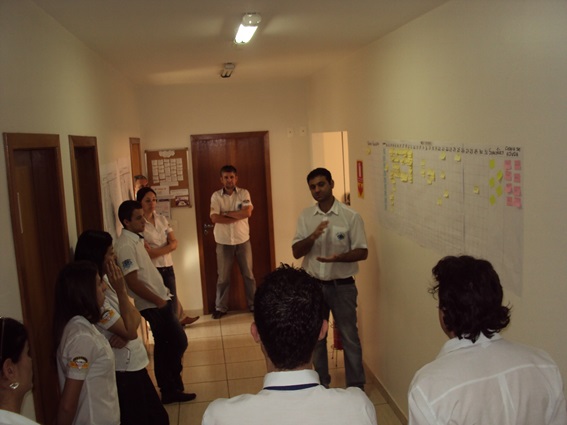
For some years now, there has been a routine management board in the administrative area. These are basically activities related to the monthly accounting close. In the beginning, this close had a large number of errors, and the process was very slow. Instead of looking for solutions, the areas kept trading accusations. With the board, the activities were visually displayed, the problems were laid bare, and the team's commitment became the key element in the search for solutions. The administrative area's A3 is still in its infancy.
NEXT STEPS
As for next steps, the company plans to continue expanding production volumes. To that end, it is known that, in addition to continuing its lean transformation journey, the company will need to make a staged investment over the next 5 years, for example, to acquire a state-of-the-art roaster along with modern grinders.
CONCLUSION
The company is fully aware that new investments in equipment are indeed necessary and will bring gains in the final yields of the processes. However, it continues to believe that the acquisition of new equipment will only be justified after full use of the previous one. Because if, every time productivity needs to increase, the equipment is replaced, which is the easiest thing to do, two things happen: a) the return on the previous investment does not come; b) the employee stops thinking about improving. It is indeed possible to grow without high investments, in times of crisis or not.
And what makes this possible? The company understands that the main factor responsible for excellent results is people's performance. They are the ones who make the difference between an organization with modern equipment and another with efficient but somewhat technologically outdated equipment. The company has been investing in people, training leaders, operators and assistants in this direction.
It is “doing what you can with what you have.”
In short, there is nothing very special being done at “Grupo 2 Irmãos.” It simply seeks to produce without waste and with respect for the consumer. The result is a mere consequence.







