

Lean in agribusiness - the next green revolution?
Since the 1960s, agricultural production has been undergoing major transformations. With the intensification of mechanization in the field, the use of industrial agricultural inputs and the advent of biotechnology in the genetic improvement of plant and animal species, a new horizon definitively opened up for the production of food and other primary-sector products.
Now, along with the first initiatives applying lean thinking in agribusiness, extremely promising results are beginning to emerge, indicating that this management philosophy also has a lot to contribute to field operations, and may be an important piece to complement the great advances the sector has achieved so far, taking it to a new level in quality, productivity, costs and efficiency in general.
The March 2014 Lean Post, published by the Lean Enterprise Institute in the USA, is one of the examples that address precisely this issue. Titled “Using Lean to Take Agriculture to the Next Level in Denmark”, Susanne Pejstrup highlights, among other points, the positive effect of introducing basic lean thinking concepts to the farmers she has been working with. “Working with lean principles and tools motivates people to be better and creates a new level of engagement,” she said.
By defining value from the customer's point of view, for example, these farmers began to see countless wastes that previously went unnoticed. Other wastes, according to Susanne, even when they were easily recognized, were seen and addressed in the wrong way:
“Waste is easy to see when there is mold in the silage or corn seeds sprouting in a field after harvest. When that happens, the farmer usually thinks his workers are doing a bad job and just asks them to do a better job. As if it were that easy.”
With lean problem analysis and problem-solving techniques, the farmers stopped living with chronic, recurring problems and began studying them with a structured method to find their root causes, instead of always treating the symptoms with palliative and containment actions, as they used to do.
In lean thinking, problems and wastes are no longer “taboos”, nor are they tied to measures taken without prior investigation of the cause. Instead, an environment is created where employees feel comfortable exposing their difficulties and problems, and where leadership is able to recognize them as opportunities for improvement and learning for the company as a whole.
Tools and concepts such as these, applied to the work routine on farms and rural properties, even those that already perform at a high level, are bringing significant benefits in the use of various resources such as machines, materials and also people's work, significantly and progressively improving value streams.
Another international case of lean applied in agribusiness, and perhaps one of the best documented we know of so far - is that of the Russian giant Kuban Agroholding, one of the largest companies in the sector in the country, and among the 5 most efficient, presented at the Lean Summit in Turkey in December 2013.
The group comprises 30 companies from various agribusiness segments, ranging from agriculture and livestock to grain silage, sugar refineries and even a service center for repairing and overhauling agricultural machinery and equipment. In total, it has 86,000 hectares under cultivation and employs more than 5,000 people.
Between 2003 and 2012, the company accumulated impressive results:
- revenue grew 17.4 times
- net profit grew 3.6 times (from 2007 to 2012)
- productivity increased 18 times
According to the company itself, a fundamental part of what sets it apart lies in its development strategy, which aims at adding value and achieving high efficiency in the processes and operations it carries out, supported and guided by lean thinking.
As with many companies, the “turning point” for this company came about because of market needs and context, such as:
- The need to increase productivity through an efficient management system.
- The need to raise quality standards to meet customers' growing levels of requirements. The pursuit of competitive advantage by reducing costs and waste and producing with higher profit margins.
In addition to these, other external factors encouraged the company to undertake a change, such as the strict WTO quality requirements it had to meet in order to export, instability in the commodities market and the reduction of government subsidies for agricultural production.
From then on, the main objectives of the company's management became:
- Producing in line with market needs. What is needed? When? In what quantity?
- With the lowest possible production cost, through good production planning, prevention of machine stoppages, elimination of redundant activities and through a good improvement system in general.
- Producing and delivering quality, not using raw materials and resources to make rejects and other waste.
This large project was largely sustained through the adoption of simple but very powerful practices and measures, such as well-organized and standardized environments and processes, as well as the frequent use of visual elements for managing information and controlling value streams, making them more stable, comfortable, productive and safe.
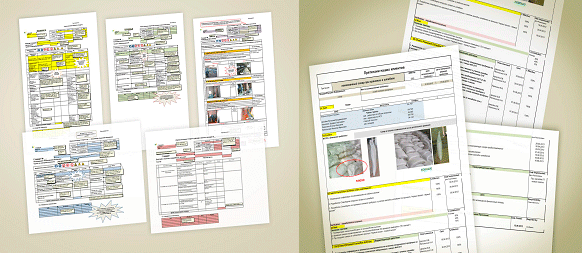
Image 1. Standardized work documents with visual aids to make them easier for employees to use.
Another key point for the project's success was encouraging managers' presence at the gemba, in order to enhance understanding and analysis of the situation and of the problems where they actually occur, and where value is created for the customer.
Following this principle, managers and project leaders actively participated in mapping the various value streams of the pilot project (which comprised 12 areas in total, covering almost all of the company's business fronts), observing and collecting information “on site” about the work of milkers, metalworkers, tractor drivers and other farm employees, with the intention of identifying production steps and processes that represented waste such as losses, underutilization, safety risks, unnecessary steps, etc.
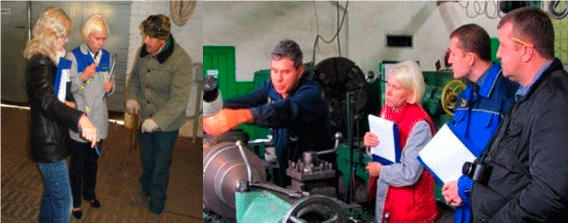
Image 2 . Managers and project leaders gathering information and improvement opportunities.
As in many companies, this “trip to the gemba” with a lean perspective awakened the need for change, and today the company makes consolidated use of many lean thinking tools and principles in its business.
About the company's management system, the president of the Lean Institute of Turkey, Yalcin Ipbuken, stated during a visit: “The results of implementing the production system at Kuban Agro can be seen immediately - everything is organized in a rational and well-thought-out way.”
The company's experience has even been shared with other countries and organizations, becoming a source of learning and inspiration for other projects. For Svetlana Sotova, Deputy General Director for Economics and Finance at AK Bars – also a Russian agribusiness holding company - the management system she saw at the company made her reflect: “their approach completely changed the stereotypes I had before.”
Among other benefits the projects are bringing to the company, around 4.5 million reais (RUR 70 million) are expected as the financial result of the projects currently under way.
Cases like these are the beginning of a movement that has very fertile ground in which to spread. While in agronomic and technological terms the sector is already very well equipped, there are tremendous difficulties and challenges in managing operations and in a systemic view of value streams in agribusiness. As a result, wastes and opportunities are still countless, but as has already been proven in many other sectors, lean thinking seems to be the most effective way to turn them into capacity gains, cost reductions and better performance.
Lean consulting for agribusiness helps you eliminate waste, reduce costs and improve every stage of farm management, from the field to the market. Achieve greater efficiency and competitiveness in your business. Learn more now!







