

The Supply Chain in healthcare: a practical case of applying lean in a public hospital
If we research what the “Supply Chain” means, we find in theory that it can be understood as a system for organizing processes, resources, people, activities and information that sustain efforts to transport cargo and products. Put simply, it is all the operations a product goes through until delivery to the end customer.
Therefore, we could describe the Supply Chain in healthcare as consisting of the process that ensures the patient, in this case the end customer, will receive his or her medication or the necessary materials, such as orthoses and prostheses for surgery or the gauze needed for a dressing, at the right time and without error.
This chain, with the lean ideal materialized, would follow a value stream fully coordinated and synchronized with demand. However, unforeseen events happen, waste is identified, and the lack of financial resources produces, every day, a chain that requires constant interventions and wears out the people involved.
Waste consists of activities that consume resources but add no value for the customer (they are usually disguised as useful work, consuming the resources of the company, of people and of society without delivering or meeting real needs).
In March 1962, a health center to treat cancer patients was founded in the city of Barretos, in the interior of the state of São Paulo. Because of the high patient demand and because the small hospital could not accommodate all the growth, Dr. Paulo Prata, its creator and founder, received a donated plot of land on the outskirts of the city and proposed building a new hospital that could meet the growing needs.
The hospital has been growing considerably with the help of the community, artists, the private sector and government funding. New areas of the hospital are being built to treat cancer patients free of charge.
The institution, now Hospital de Amor, pursues excellence in medical and hospital care through humanizing actions, constant technical and professional development, and scientific dissemination of teaching and research, which allows it to absorb the growing demand and thereby strengthen Brazil's Unified Health System – SUS.
Building on the excellence already present in its operations, delivering high-level treatment to its patients with love and great dedication, Hospital de Amor sought to lay the foundations for a sustainable lean transformation that would make it possible to reach unprecedented levels of performance, quickly translating into consistent competitive advantages in the medium and long term.
The first step in implementing this lean transformation involved developing Hoshin Kanri, which we will not cover in this article, but which is the lean way of defining strategy and promoting alignment among purposes, processes, projects and people through an integrated effort. Led by senior management and with the involvement of key people in the institution, the True North, the drivers, the constraints, the strategic, tactical and operational indicators and, finally, the projects to be developed in this improvement cycle were defined.
One of the initiatives prioritized in the Hoshin was the Supply Chain, which had already been the focus of several improvement attempts, but without an outcome, that is, a result, that lasted over the long term.
A cross-functional project team was formed, led by the pharmacy coordinator of Hospital de Amor. The first challenge was to understand the main opportunity in the Supply Chain; there seemed to be so many problems that they would never be able to settle on a priority, but in a lean transformation it is important to limit the scope of action in each cycle. Having a clear, achievable objective, with an understanding of where the value stream begins and ends, ensures that the team can work in an engaged and motivated way, instead of trying to solve everything and in the end being unable to tackle anything in depth.
After a few meetings and discussions, they decided that the reallocation of materials and medicines between branches, commonly called “mat and med” in healthcare, should be the first problem to be addressed. Hospital de Amor consists of 5 branches: Antenor, Santa Casa, São Judas, Infantil and Nossa Senhora. The Antenor branch is the largest and is mainly responsible for reallocating (lending) the items.
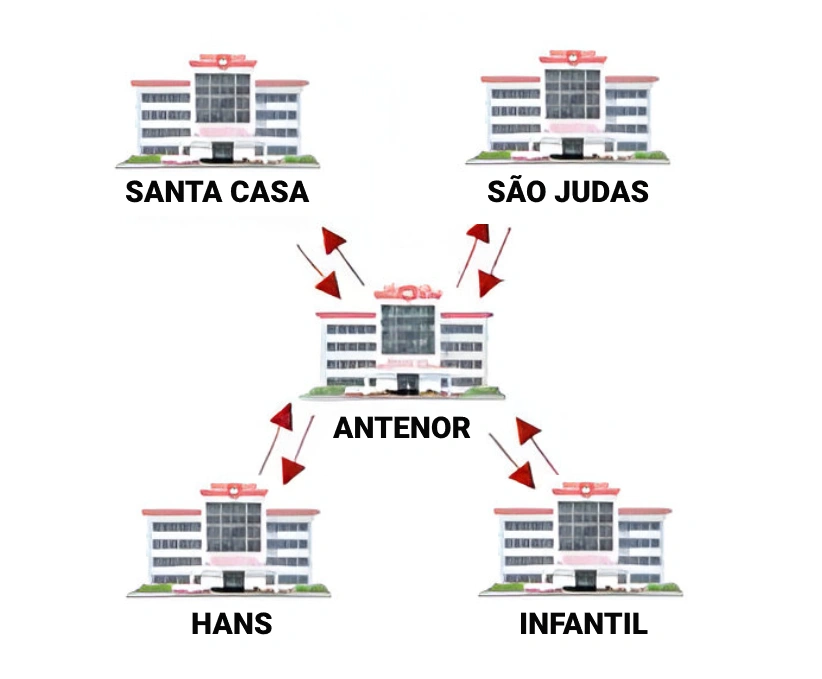
The team considered the reallocation itself to be waste because, besides having been part of the institution's routine for many years, it was only necessary when each unit's Supply Chain did not work as it should, generating urgent needs and costs for transportation, the time of those involved, emergency purchases and even the loss of medicines and materials due to excessive handling.
However, beyond all these impacts, the most critical was what they call a disruption in customer service, that is, patients who went without their prescribed medication at the right time due to shortages.
Reallocation is the transfer of material and medicine supplies from the Antenor Duarte branch to other branches or vice versa. When the team went to the Gemba (the place where things happen), what stood out was the excessive rework in these operations, unsafe transport conditions, often using the institution's ambulances, and delivery delays that, once again, affected patients' medication times.
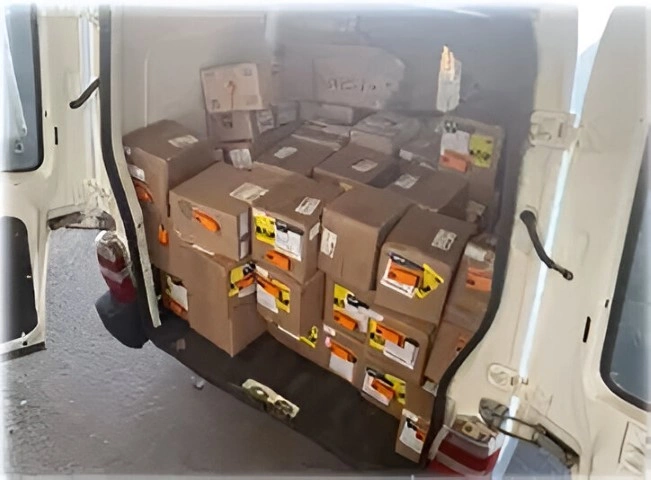
When analyzing the data, they found that 35% of the unit's items were reallocated (whether outgoing or incoming), and this generated 6.2% of purchase orders for urgent replenishment, which meant unplanned purchases that usually had a higher cost.
To continue the analysis, the team created an ABC curve of the reallocated items, a methodology that allows information to be classified according to its degree of importance. To do so, it uses the 80/20 rule, a theory that holds that 80% of effects arise from only 20% of causes.
Once they identified the items with the highest incidence of reallocation, they began investigating the main reasons why these items were missing from the right place. They concluded that the main reasons the items needed to be reallocated were increased consumption, which consequently was not reflected in the planning and purchasing process, incorrect balances and short expiration dates.
They also discovered that the highest reallocation rate occurred in the central pharmacy and in the Intensive Care Unit pharmacy, which are the locations with the highest number of patient encounters and the lowest inventory accuracy.
Once the main causes had been identified, the team began working on potential countermeasures that could be implemented to improve this process.
There were several solution co-creation meetings among everyone involved, always thinking about what was best for the institution and about guaranteeing patient access. Many ideas emerged from this process and were prioritized using the effort-impact tool: the solutions with the greatest impact and the least implementation effort were prioritized, and the others were recorded in the “idea bank” to be applied in a new improvement cycle.
Among the actions taken were those aimed at increasing inventory accuracy and training the pharmacy and storeroom teams to reinforce the supply consumption process, as well as the importance of recording transactions at the moment of delivery.
Quick guides were developed and placed at strategic points, available in the areas where the activities were carried out, to guide people at the time of the activity.
A “checklist” for inventory counting was also implemented; it contains questions that must be answered before, during and after the activity. These actions were important to make the teams aware of the impact and of performing the activity correctly.
And the most important thing, in the team's view, was building a lean management system supported by leadership, containing the fundamental elements to ensure the work routine, team communication and problem identification. This daily monitoring made the team's work easier and helped achieve the expected results.
In the daily meetings that were established, the people involved were encouraged to share how their experience with the new process routine was going and the lessons learned, and to understand that pointing out improvement opportunities, or problems, should not be seen as something bad; on the contrary, the team came to understand that problems found need to be brought to the meetings so that they can be known and worked on. This continually improves the process and develops people's ability to solve them.
After the prioritized countermeasures were implemented, the emergency purchase rate, which had been 6.2%, fell to 1%, a significant improvement of almost 85% in this indicator, which accounts for the consumption of the hospital's financial resources that could be invested in other needs.
The inventory accuracy indicator at the points of highest use reached approximately 94%.
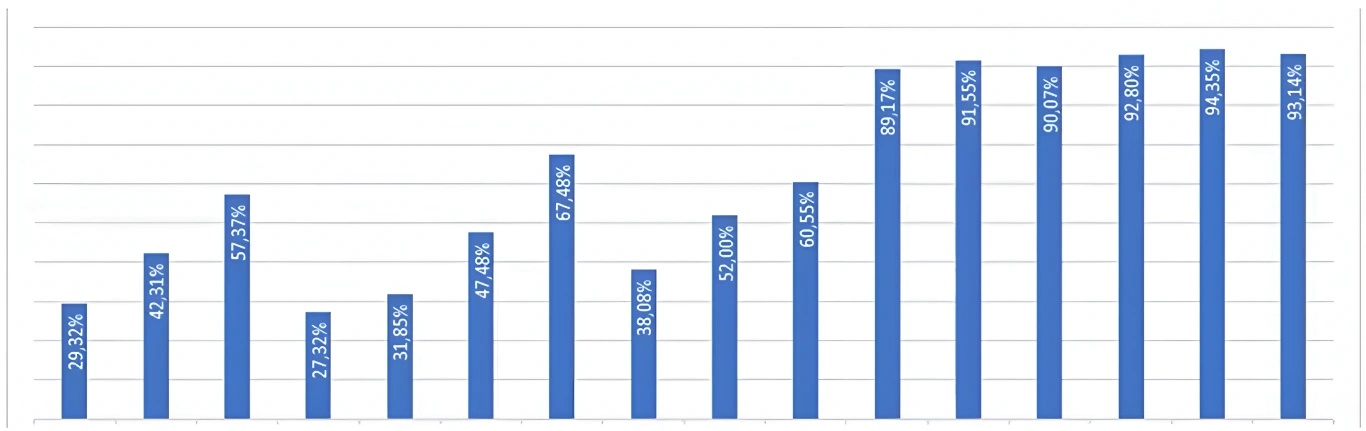
As a result, the main outcome of this lean improvement cycle in the Supply Chain was a 20% reduction in the reallocation indicator.
However, the opportunities do not stop here; there is much work to be done, with the aim of maximizing value creation by connecting the Supply Chain in continuous flow.







