

Using lean to discharge patients before noon
Context
In the context of the 2008 economic crisis, struggling to meet the high demand for knee replacement surgeries and a long waiting list, our Unit took the opportunity to review its processes and introduce a new protocol, known as Fast Track (first used in Denmark in 2002).
In this “Day 0” pre-hospitalization model, patients enter the ward on the same day the procedure is scheduled (they may come from outpatient care, for planned surgeries, or from the Emergency department). The goal is to optimize the process and reduce the average length of stay, which notoriously has a great impact on cost, while maintaining quality and patient satisfaction.
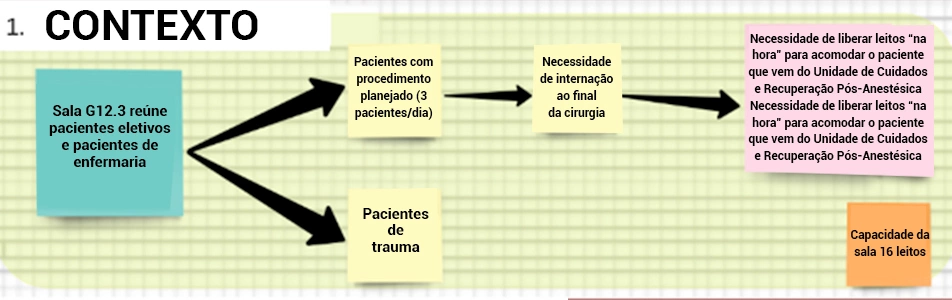
We recently discovered that the protocol was no longer bringing us the benefits we expected – which is not surprising, given that, in the meantime, our processes had changed significantly and we had even gone through a pandemic. We were struggling to receive post-operative patients in our ward before noon, because the beds were always occupied.
This led us to start a lean project called “Discharge before noon,” originally in the third quarter of 2019. The Covid-19 pandemic forced us to postpone it several times, and we only started in earnest in February of this year. We did not start completely from scratch: a similar project had been developed in another area of our hospital, the Pulmonology Service. Despite the differences between the two departments (we work with surgeons instead of physicians), that experience gave us a solid methodological foundation to build on.
As a pilot, we ran an experiment in room G123, which is characterized by limited capacity (16 beds) and normally houses patients with planned knee replacement surgeries (among others, depending on availability).
Getting started
Before the project began, we collected data on length of stay, discharge time and the main reasons for late discharge. Through this analysis, we found that in February 2020, about 20% of patients were discharged before noon, a percentage that fell to 17.9% in September 2021 and to 9.1% the following month. With most patients being discharged between 11 a.m. and 4 p.m., this prevented “Day 0” patients just out of surgery from being brought to our ward, leading to the cancellation of planned surgeries.
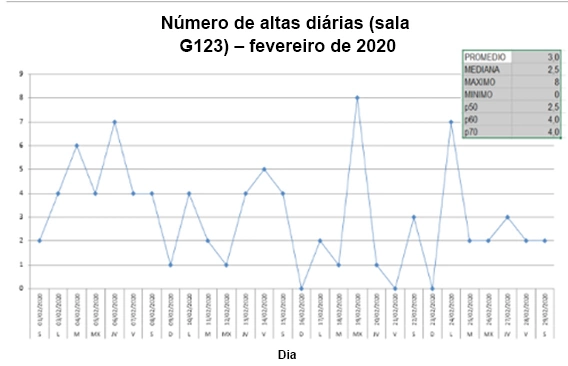
Armed with data, our first step was to organize meetings with a cross-functional team to create a value stream map that would help us identify the main problem points in the process.
These were the main problems found:
- The physician requests discharges and writes prescriptions in batches, with no specific time for the scheduled consultation.
- Therapeutic education, which is fundamental for recovery, is done just before discharge, usually after noon.
- We need to find the physician responsible for the patient so that he or she can sign the discharge, and only then can we request an ambulance to take the patient home (so it always arrived after noon).
- To book an ambulance, the administrative staff member needs information from a nurse and/or physiotherapist.
- Nurses cannot prepare the discharge documents until a physician authorizes them. This meant that the work did not flow because the initial step of the process delayed the next step.
- Nursing assistants need to perform full skin decontamination, a time-consuming process during the morning shift, which causes the nurses' workload to be concentrated on the day of discharge itself.
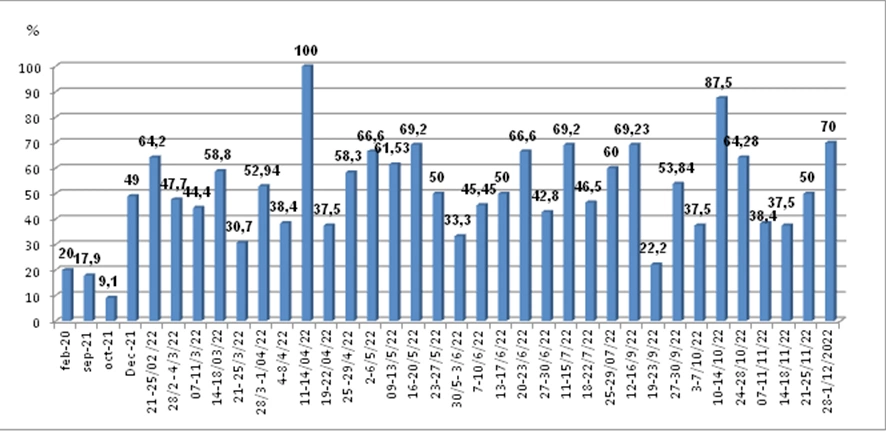
Our goal with this lean project was to have at least 50% of our patients discharged before noon, starting in November 2021. The target was set based on the number of daily discharges in our unit and the need for free beds for patients coming from surgery or the emergency room.
How we did it
It all began with observing the current process at the gemba. We studied the tasks of each person who contributes to the process and measured the time they need to complete them as they attend to each patient. With this data, we were able to create a precedence diagram showing all the possible paths for handling a patient.
On average, nurses need 30 minutes to prepare the discharge documentation and explain to each patient which therapy they need to follow during their recovery. Skin cleansing and decontamination takes nursing assistants an average of 20 minutes, while physicians take 15 minutes to prepare the necessary documentation and the requests to outpatient care providers. In turn, physiotherapists take 18 minutes to guide the patient through the therapeutic exercises he or she will need to do at home. We saw an opportunity here to save time by organizing group sessions to educate patients in the workshop room, but it was not always available.
With 76% of the tasks to be completed on the day of discharge, it seemed impossible to discharge before noon. So we decided to see which actions could be carried out on the day before discharge. They relate to the observations about the problem we shared above and include:
- Filling in requests for outpatient consultations, signing off rehabilitation, post-operative tests and X-rays, and preparing prescriptions in the operating room after the procedure.
- Performing the follow-up blood draw at 11 p.m., during the night shift, rather than at 7 a.m. the next day, in order to have the results during our morning rounds on the day of discharge.
- Having the administrative staff contact the X-Ray coordinator 24 hours after the operation to arrange a time, together with physiotherapists and/or nurses, to perform the necessary X-Ray exams.
- Requesting the tests for patients who regularly take anticoagulants during our rounds.
- Booking ambulances one day before discharge for the patients who need them, so that they can leave before 11 a.m. This requires the nurse or physiotherapist to communicate effectively with the administrative staff member, so that he or she can arrange a wheelchair or stretcher.
With these changes, we now have to complete only 40% of the tasks on the day of discharge (well below the previous 76%), which led to better results in discharge times.
To support our new way of working, we developed a series of tools. First, we introduced a checklist for each professional category (nurses, administrative staff, nursing assistants, physiotherapists, physicians and social workers), guiding them on the tasks that need to be performed during the patient's stay. This is particularly useful when it comes to onboarding people who are new to the ward, which traditionally has high turnover. Of course, the checklist is accompanied by word of mouth: we try to get new people to internalize our way of working as quickly as possible.
We also introduced two visual boards, one offering an overview of the discharges expected for the day and the other on the status of our beds. The discharge board provides information on the process with regard to the day before discharge and the day of discharge, for each of our 16 beds. It informs everyone involved in the discharge process, letting the physician, nurses and administrative staff know which patients will be discharged, so that all the necessary arrangements are made and the documentation is prepared. In turn, the bed board uses a simple color system to show the nursing assistant, the cleaning staff and the administrative staff visually and immediately which beds are dirty (red), clean (yellow) or ready for a new patient (green). Providing this data to people keeps us from wasting time looking for the right people to confirm whether a bed is available when we receive a call from Surgery saying that a patient is ready to come up. Work flows better these days, and everything happens without the need to say a single word!
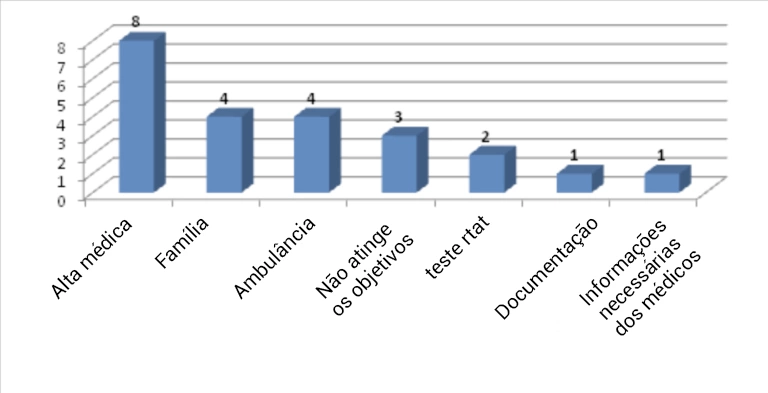
Since the beginning of the project, we have collected data every week. We record the evolution and the discharge times (using a Pareto chart). We also highlight the reasons why a patient could not be discharged before noon and outline the actions we propose to solve the problem. Little by little, we are tackling the problems we highlight on the board, and the effect can be felt throughout the process.
Recently, for example, we mentioned to the physicians the problem of not having the pre-discharge documentation ready in time. They talked about it and decided to always provide a pager to the physician or resident on duty. This helps the nursing team, because they know that whatever problem they encounter between 9 a.m. and noon, a physician will be nearby to speed things up.
The board also increases engagement, because nobody likes to see a red result on it, and people now understand how that red affects everyone's daily work. We are gradually “spreading the word” about what we are doing with lean, engaging more closely with people from other wards we work with. It is great to see that, as soon as we tell them what we are trying to do, they are usually very happy to take part.
To keep everyone informed about the discharge trend even when they cannot attend the meeting, we make a point of e-mailing the data to the whole team. We are also holding weekly follow-up meetings (every Monday), in which the whole team discusses results and countermeasures. The chart below shows the most common problems that keep us from reaching our goal.
Results
Although we do not always reach our 50% target, we often do. We may never reach 100% (patient safety comes first and is always more important than our internal process), but it is a good goal to aim for. We are certainly on the right track to gradually level out the trend and achieve stability and consistency in discharge times. This is possible because the whole team is engaged and wants it to work. We were pleasantly surprised by the level of involvement of the surgeons: naturally, they spend more time in the operating room than in our ward, so it is great to see how much they are getting involved in a nursing-led project. They understood that the whole process stops if they do not provide the pre-discharge documents, and changed their behavior accordingly.
Looking ahead, our main goal is to avoid losing momentum. With frequent staff turnover (we receive new residents in the unit every month, for example), this has happened occasionally, but we are confident that by involving more and more people and consolidating this way of working as our standard, we will not have the same problem.
We have learned a lot from this lean experiment. In particular, we recognized the enormous importance of observation for taking the first steps and truly understanding the situation we are in. We also believe it has been fundamental to work with a cross-functional team, spanning the whole process, and to standardize tasks so that everyone works the same way and it becomes easier and faster to teach new people.
The reason lean is working for us is that it has defined and even celebrated the contribution of each team member – from the cleaning staff to the surgeons – to the overall success of the area. Discharging patients before noon is a common problem in most public hospitals, and we hope that our experience can inspire others to solve it using lean.
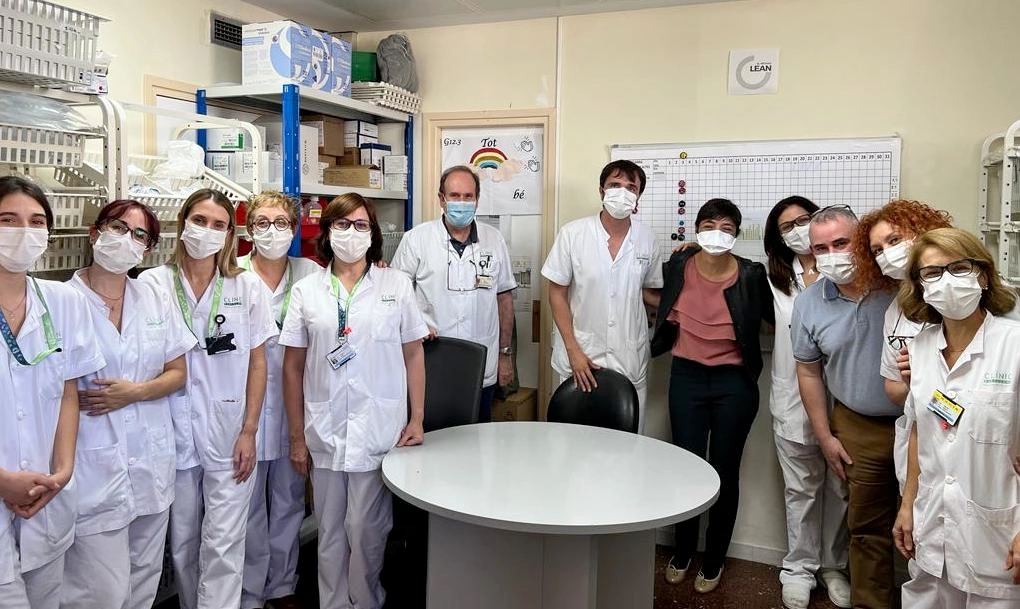
The whole team is working hard on this project and took part in creating this article. Thank you all: Gracia Ginés, Rosa Marina, Agnes Nicolau, Anna Voltes, Montserrat Monfort, Raquel López, Aroa Herrero, Ana Alicarte, Jorge Fernández, Laura Heredia, Josep Maria Segur, Juan Carlos Martinez Pastor, Marta Sabater, Montse Nuevo, Montse Linares, Carol Gascueña, Irene Alonso, Andrea Vigueras and Pilar Camacho.







