Lean in insurance: how to ensure an effective and safe transfer of patients between care settings

When a patient moves from one health care setting to another, it is vital to ensure safety and continuity of care throughout the transition. Transitional care is the focus of our department, coordinating all the actions needed to ensure the smooth transfer of a patient from a hospital to their home or to a post-acute care facility. We monitor high-complexity hospitalizations, ensuring the right care at the right time and identifying the patients who can benefit from either home care (provided by a multidisciplinary team and, depending on the complexity of the case, carried out exclusively or partially at the patient's place of residence) or post-acute care (in facilities where less complex patients can undergo rehabilitation or receive palliative care, for example).
Although the insurer has no obligation to provide home care, SulAmérica considers this asset strategically important to ensure continuity of patient care and the long-term success of the business. A few years ago, we saw an opportunity to improve these processes by introducing lean thinking – which already permeates many of SulAmérica's activities.
Our improvement efforts began in early 2020. Until then, hospitalization management and home care were completely separate processes, with no coordination between them. With the help of SulAmérica's lean team (two of us, Mônica and Luciana, being part of it), we laid out our current state, mapping the process end to end from hospitalization to discharge home. To do this, we went on several walks through the gemba within our area and at suppliers, trying to identify problem points in the process.
At that time, the team began to understand the importance of the recently introduced daily management system. This lean practice was fundamental in helping people understand the work and inform the decisions they need to make day after day. Thanks to daily management, people better understood the role of our area and realized why their work is so important.
Then came the pandemic. We made the transition to remote work, as the profile of our patients began to change. We quickly found ourselves having to care for a large number of Covid-19 patients, whereas before the pandemic much of what we did was elective procedures followed by rehabilitation at home. More and more patients ask to be treated at home, for fear of catching the virus in the hospital. In those first weeks and months, we faced a steep learning curve.
In 2020, we built our first A3, focused on home careservices, and introduced standardized work in operations. That was when the team's mindset began to change: people started thinking in terms of productivity and patient satisfaction and seeing problems as opportunities for improvement.
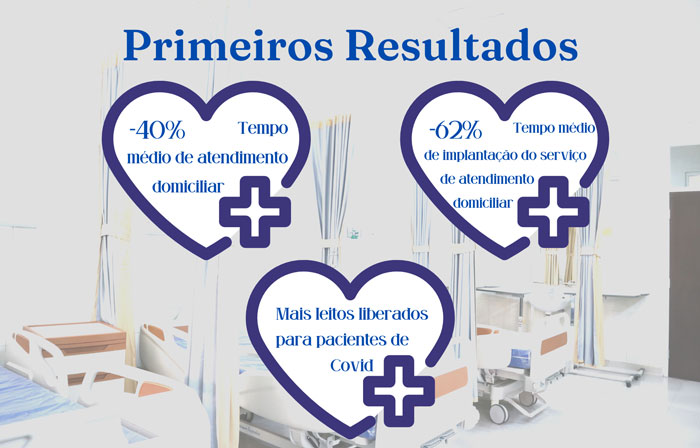
We did not have to wait long to see the first results: by the end of the year, the average time to serve patients needing home care had been reduced by 40%, and the average time to set up the home care service had fallen by 62%. This work proved important not only for SulAmérica, but for society as a whole: for every person taken out of a hospital, a bed was freed up for a Covid patient.
2021 was an important year in our lean transformation. With a growing number of home care requests and a process that was still disjointed, the team stopped to reflect on possible ways to make the most of the limited resources for providing home care and to better organize the work in the transitional care service.
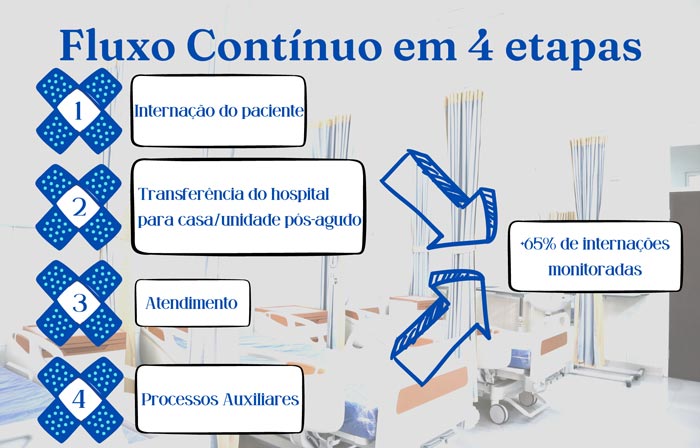
Without being prompted by management, the team got together and opened a new A3 to integrate the two areas (hospitalization management and home care) and to delve into the process to truly understand how to optimize it. They brought together people from across the process and, together, investigated and began to think about what an ideal condition would look like. The result of their work was the creation of a continuous flow organized in four stages: patient hospitalization, transfer from the hospital to home/post-acute facility, care, and auxiliary processes (such as complaints, lawsuits, etc.). Unifying and improving the process (looking at the patient journey as a whole) was the team's biggest undertaking in 2021. One of the results of this was a 65% increase in the number of monitored hospitalizations.
The need to improve productivity empowered people to develop their capabilities with the goal of upskilling the team. Whereas before lean each person had their own area of expertise, with the new system people were encouraged to learn all aspects of the work, and in a short time, the team made great progress in developing its skill set (an invaluable tool for making this happen was our skills matrix).
As our team learned new skills, it was able to introduce new home care services, including enteral nutrition (which we now provide directly, instead of relying on third parties as we did before) and stroke rehabilitation. We also began offering palliative care at home: keeping an eye not only on the patient's physical condition but also on their emotional and psychological well-being, the team redesigned the home care process to give patients the possibility of choosing to spend the last moments of their lives in a familiar and comfortable environment. Not surprisingly, the team is very proud of the work done in palliative care, which earned it the award for best improvement project in the “Customer Focus” category in the internal competition that SulAmérica holds every two years. Patients and their families seem to greatly appreciate the new service as well, having given it an NPS of 95%.
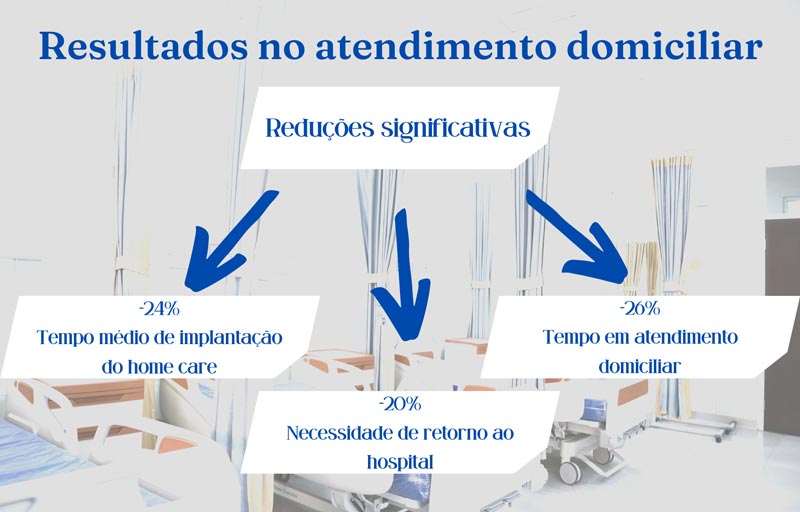
This year, we developed our lean work and a new and better model for handling active home care or post-acute care patients. This time, we turned to the home care providers (who are, in essence, our representatives in our customers' homes), changing the compensation model to encourage better-quality care. We also automated provider selection, so that we can identify the one who can serve the customer in the shortest time – thus reducing the length of hospitalization. Thanks to these changes, we reduced the average time to set up home careby 24%. In the first half of the year, the new system for serving patients and providers also made it possible to reduce by 26% the time people spend in home care. In addition, more and more patients are completing their home care without needing to return to the hospital to finish treatment (here, the reduction was 20%).
The change also reached our administrative department, where we improved the billing process. Before lean, authorization was issued for the first month, and any change in the care plan forced us to reopen and change the authorization, which caused a lot of waste in the form of rework. After another A3, we decided to issue only one authorization to start care, and all changes to the plans are evaluated and approved retroactively after the first month of care.
Reflecting on our lean journey so far, we can say that we are very proud of the work of this team, which managed to leverage lean to transform itself in a time of great uncertainty. What we have learned is that the process belongs to the people and that it is they who must reimagine it. What ends up engaging and empowering them is the ability to take part in transforming and improving the work. Once they understood the importance of their work and began to internalize lean principles and practices, they became ambassadors of the methodology and began to “spread the good word” among their colleagues.
For the lean team, the experience of the transitional care department was eye-opening. It showed us that we do not always need to be prescriptive, with defined schedules and action plans. Lean often grows organically, and people discover new opportunities for improvement by experimenting with things and then choosing the best tool to deal with the situation.