

5 Guiding Principles for Transforming Healthcare
Lean
in Healthcare
The term “lean” was first introduced in 1988 by John Krafcik1, at the time a graduate student at MIT working with Jim Womack and Dan Jones on the International Motor Vehicle Program research2, which eventually led to the publication of the book “The Machine That Changed the World”3. As more organizations and industries were exposed to the potential of lean thinking, it became clearer that its teachings did not apply only to manufacturing. As we entered the new millennium, lean arrived in healthcare, improving patient flows, reducing length of stay and improving the quality of care. Today, there are successful examples of lean application in healthcare all over the globe, with more hospitals joining these efforts every year. A recent survey by UC Berkeley involved more than a thousand hospitals, two thirds of which were engaged in lean implementation (and similar approaches, such as lean six sigma or process improvement), with many reported performance achievements, such as employee engagement, greater service capacity in the emergency department or reduced spending. A comparative analysis of quality measures (before/after lean) also found a reduction in the unplanned 30-day readmission rate; in the mortality rate for surgical patients with critical conditions (Z score); and in spending, with a consequent increase in operating margins4.
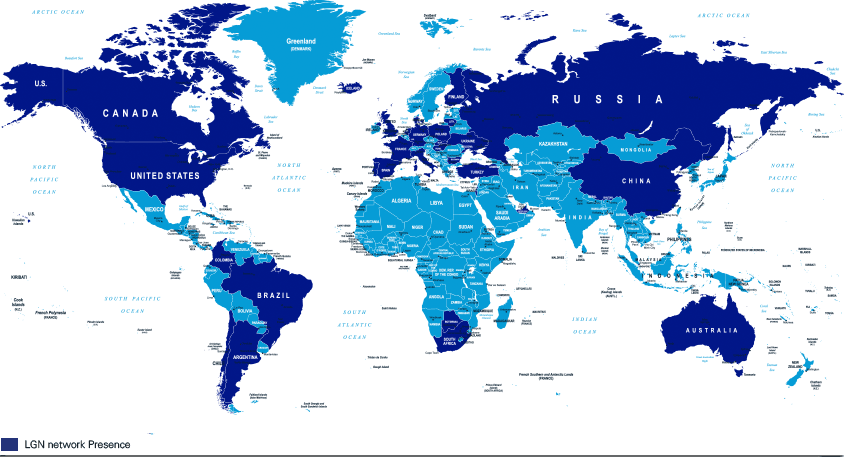
The Lean Global Network (LGN) supports dozens of lean transformations in healthcare. Five of the authors were directly involved in some of the early lean transformations in healthcare in their respective countries, either as internal change agents — at Beth Israel Deaconess Medical Center (USA), Flinders Medical Centre (Australia) and Instituto de Oncologia do Vale (Brazil) — or acting as external supporters to pioneering organizations — at Instituto Lean Management (Spain) and Lean Institute Brasil (Brazil).
DESIGNING
OUR INITIATIVE
Often, a healthcare organization can take a decade to develop and sustain the capabilities needed for a lean transformation. These capabilities are basically associated with problem-solving skills at different levels of the organization and the ability to reshape management systems and leadership behavior.
We believe that “ten years” is too long, especially if we consider the urgent problems the industry faces today: patient harm, an aging population, tight budgets and an increase in chronic diseases. And if we consider that only a small fraction of the world's hospitals are practicing lean and many are only beginning their journeys, the work ahead seems even more challenging.
In September 2015, the LGN appointed a lean healthcare working group (LHI — Lean Healthcare Initiative) to gather and analyze data and build on the findings to identify critical “guiding principles” that a healthcare organization should consider in order to reduce the time it needs to develop the necessary capabilities and sustain the lean transformation. The working group represents five LGN institutes: USA, Brazil, Spain, Russia and Australia.
THE FIVE GUIDING
PRINCIPLES
1. DON'T WAIT FOR THE CEO
2. WHAT IS YOUR NEXT STEP? AND WHY?
3. OWN THE PROBLEM
4. THE RIGHT KNOWLEDGE TO THE RIGHT PEOPLE AT THE RIGHT TIME
5. CROSS-POLLINATION
The exploratory sample includes eight organizations: [1] Beth Israel Deaconess Medical Center (USA), [2] Lynn Community Health Center (USA) and [3] Stanford Children’s Health (USA), [4] Hospital São Camilo (Brazil) and [5] Instituto de Oncologia do Vale (Brazil), [6] Consorci Sanitari del Garraf (Spain), [7] Bud’ Zdorov (Russia) and [8] Flinders Medical Centre (Australia). The organizations range from large teaching hospitals in the United States to small practices in a developing country. There is a mix of private practices and public organizations in Europe and Australia.
The LTF was introduced in 2015 by the Lean Enterprise Institute (LEI) as a heuristic framework for lean transformation. It is a situational approach to change, connecting the key dimensions of transforming and sustaining — the pillars of the “LTF house”. The elements are associated with a set of specific action-oriented questions.
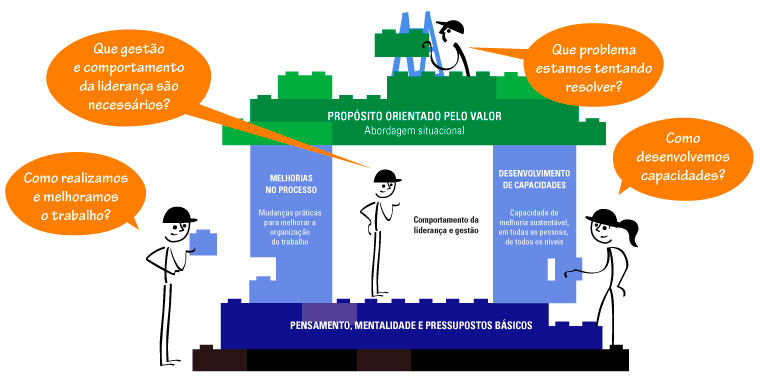
The study method employed an in-depth analysis of each lean initiative over time (each at a different point and characterized by different initial conditions), based on the five dimensions of the Lean Transformation Framework — LTF5.
Lean Transformation Framework Questions7
1. What is the purpose of the change — what is the true north and the value we are delivering, or simply: what problem are we trying to solve?
2. How are we improving the actual work?
3. How are we building capability?
4. What leadership behaviors and management systems are needed to support this new way of working?
5. What basic thinking, mindset or assumptions make up the current culture and are driving this transformation?
THE STUDY WAS ORGANIZED IN FIVE STAGES:
1) Understand the history and current conditions of relevant lean initiatives in different countries by going on gemba6 studies together in hospitals in the United States, Spain and Brazil.2) Gather facts and data from eight healthcare organizations (from five different countries, all practicing lean for at least three years), exploring the questions for each of the five dimensions of the LTF.
3) Structure our findings and design a framework from the multiple cases, comparing them and specifying the main forces for success (and for failure).
4) Identify critical transformational characteristics directly associated with the development of lean capabilities at the different levels of the organizations.
5) Summarize our current knowledge in five “guiding principles” that a healthcare organization should consider in order to reduce the time needed to develop a sustainable lean capability.
“The questions of the LEAN TRANSFORMATION FRAMEWORK are fractal — meaning that the same questions apply both at the macro enterprise level and at the level of individual responsibility as you go progressively deeper into each dimension. But while the transformation model that has emerged from years of experience is situational, the nature of the questions represents a clear point of view: if an organization cannot answer all the questions, with a sense of how each one relates to the others, the transformation will struggle to maintain its momentum”.7
TABLE: CHARACTERISTICS OF THE ORGANIZATIONS
IN THE STUDY
| Organization |
|---|
| Beth Israel Deaconess Medical Center |
| Country: USA Activity: Teaching Hospital Size: 673 beds 8,000 + employees Lean Experience: 14 years |
| Organization |
| Lynn Community Health Center |
| Country: USA Activity: Community Health Center Size: 40,000 patients seen per year 650 employees Lean Experience: 4 years |
| Organization |
| Stanford Children’s Health |
| Country: USA Activity: General Hospital Size: 361 beds 3,200 + employees Lean Experience: 8 years |
| Organization |
| Hospital São Camilo |
| Country: Brazil Activity: General Hospital Size: 760 beds (3 units) 5,000 + employees Lean Experience: 6 years |
| Organization |
| Instituto de Oncologia do Vale |
| Country: Brazil Activity: Outpatient Cancer Center Size: 30,000 patients seen per year 220 + employees Lean Experience: 8 years |
| Organization |
| Consorci Sanitari del Garraf |
| Country: Spain Activity: General Hospital Size: 433 beds 2,500+ employees Lean Experience: 8 years |
| Organization |
| MedHolding |
| Country: Russia Activity: General Hospital Size: 100,000 patients seen per year 1,700+ employees Lean Experience: 3 years |
| Organization |
| Flinders Medical Centre |
| Country: Australia Activity: Teaching Hospital Size: 593 beds 5,000+ employees Lean Experience: 14 years |
| Organization | Country | Activity | Size | Lean Experience |
|---|---|---|---|---|
| Beth Israel Deaconess Medical Center | USA | Teaching Hospital | 673 beds 8,000 + employees | 14 years |
| Lynn Community Health Center | USA | Community Health Center | 40,000 patients seen per year 650 employees | 4 years |
| Stanford Children’s Health | USA | General Hospital | 361 beds 3,200 + employees | 8 years |
| Hospital São Camilo | Brazil | General Hospital | 760 beds (3 units) 5,000 + employees | 6 years |
| Instituto de Oncologia do Vale | Brazil | Outpatient Cancer Center | 30,000 patients seen per year 220 + employees | 8 years |
| Consorci Sanitari del Garraf | Spain | General Hospital | 433 beds 2,500+ employees | 8 years |
| MedHolding | Russia | General Hospital | 100,000 patients seen per year 1,700+ employees | 3 years |
| Flinders Medical Centre | Australia | Teaching Hospital | 593 beds 5,000+ employees | 14 years |
THE FINDINGS SO FAR
The purpose of the LHI is to transform healthcare through lean thinking and practice. The long time a healthcare organization needs to develop sustainable lean capabilities is not acceptable.
The “guiding principles” are an attempt to organize and communicate our thoughts and learnings as we study, compare and analyze lean journeys. The intent is to shed light on important characteristics that healthcare organizations and lean practitioners should consider as they try to transform their work realities using lean thinking and practice. Here is what we consider the essence of what we have learned collectively, presented as the five “guiding principles” you can start using today to achieve a faster and more sustainable lean turnaround.
DON'T WAIT
FOR THE CEO
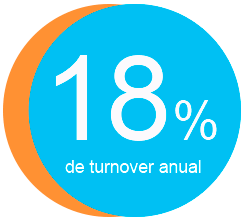
Data from the American College of Healthcare Executives show that the annual turnover level recorded in 2017 is among the highest calculated in the last two decades, around 18%8. By comparison, CEO turnover in healthcare is six times higher than in the insurance industry and twice as high as in retail9. So we cannot depend on the CEO to lead a transformation every time. We observed CEO turnover in more than half of the eight cases studied, which could be a disruptive factor for lean efforts.
CEOs have responsibilities for the entire organization. It can be difficult to get the CEO's attention. What we noticed when studying the eight initiatives mentioned above is that, while having an engaged CEO is extremely beneficial in the medium and long term, starting a transformation is something that can be done without the direct involvement of the organization's most senior leader10. In fact, a transformation can be initiated at different levels of an organization (in a department or in a nursing team) and begin with the simplest of experiments11. In our experience, involving key physicians or other clinical leaders at the beginning is a key strategy, because they have multiple roles and understand the work, have strong influence over teams and leaders, understand the scientific process and are a stable workforce. It is also crucial to ensure that area managers have a leadership role in the lean transformation, since the necessary changes will greatly influence their work and that of their teams12. This approach can help mitigate the challenge of CEO turnover and of distraction.
In a large public hospital in Barcelona, the initial push for lean came from the enthusiastic area managers of the emergency department (the head physician and the head nurse). After training and coaching, they worked with the teams to carry out several pilot projects. A few months later, the entire department was running successfully under the lean system. Only at that point did the CEO realize what the department had achieved. He then encouraged other parts of the hospital to follow suit.
Reflecting on our studies, we agree that it is preferable to have a supportive CEO; however, a neutral CEO can also work if physicians and other leaders are visibly engaged. What will not work is a CEO who seems negative or who actively disrupts progress. If the CEO is kept informed about progress and results, he or she will probably become more supportive as long-standing problems are tackled and value streams are improved. As the benefits of lean become clearer and the first results appear, most CEOs tend to gradually become more involved. But there is no need to wait for them to start the efforts. You can start a transformation if your CEO is indifferent, supportive but not involved, engaged or even leading the efforts, but it will be very difficult if he or she is negative about it.
It is not uncommon in an organization that is starting its lean efforts for the CEO to delegate the work to a lean manager/leader. In more than one example, we found this to be the case — a supportive CEO who was not personally leading the transformation work. These chief architects cannot wait for the CEO to lead the transformation, but find ways to bring about change without his or her direct participation.
Someone must lead the lean transformation. And that is the person who takes on a great deal of responsibility for advancing, spreading and deepening the transformation and who thinks about what the next step should be. We call this role the Chief Architect (CA)13. At the beginning, when there is limited internal capability, the CA role can be filled by an external coach who will work to develop an internal CA, who in turn will be able to guide the transformation from there. The CA can be a key leader from within the organization — it may have been his or her idea to try a lean approach — or can emerge from within the organization during the transformation.
In an ideal world, we would not need a formal CA, but at the beginning of the transformation the organization needs knowledge and experience. This makes the CA a person a newly started transformation cannot do without. The effectiveness of an external coach depends entirely on what happens after he or she leaves: an outsider will not achieve much unless he or she challenges people to break down barriers, create solutions to problems autonomously and actively suggest improvements.
WHAT IS YOUR NEXT STEP?
AND WHY?
Whether you are trying to identify your first step or simply understand what the next step should be, you should always seek to focus on an urgent need14.
When starting a transformation, you need to understand what is important to your CEO, your board and the organization as a whole. Which problems seem most urgent? Which safety concerns should the organization focus on? What do patients care about? Once you have created a focal point for the improvement effort, everyone can row in the same direction. Examples that work generate interest. With meaningful experiments, people will follow15. “I like that improvement in patient flow in the surgery department. I need to learn how to improve flow in my department… can you help me?”.
If you don't know where to start, we have found that simply focusing on turning chaos into stability can be of great help. Make the patient journey and the work visible and you will see significant improvement.

In a clinic in the United States, the patient journey was characterized by waits at every stage. The frontline team focused on the question “Why do our patients wait?”. They made the patient journey visible in order to understand it. Then they identified and applied possible solutions, informed by what they had observed. After that, very few patients waited more than five minutes. Simply focusing on creating more stability gave the team the confidence they needed to create a better patient experience and increased the number of patients who could be seen.
When we bring about change through lean, we create new knowledge. A very important lesson we have learned over the years is that you cannot leave lean “running on its own” and expect it to sustain itself. The reason is that every situation is different, every department goes through different problems, and every person perceives these problems in a different way. You can be inspired by an external solution, but you cannot simply drop it into a different context in which it is not relevant. Another negative effect of such behavior is that it deprives people of the ability to understand and learn together. People need to feel emotionally connected to the transformation: they need to co-create experiments and share learnings, instead of simply applying something someone else developed.
As we take our first or next step, we have learned the importance of balance between the social and technical elements of lean. It doesn't matter whether you start by trying to change the culture in your organization (social) or by focusing on a specific project (technical), as long as your actions are connected to real problems.
OWN THE PROBLEM
Earlier, we talked about emotions, stating that if people feel emotionally connected to the problem, they will take ownership of it. Therefore, creating ownership is essential to the transformation. When you lead people to take ownership of problems, you achieve not only organizational change but also personal transformations16.
In a lean organization, once problems have been identified, the experiments begin in earnest. That is when we need to transition responsibility to a frontline leader (it can be anyone: a nurse, a receptionist or a physician). Respect for people, one of the two pillars of the Toyota Way17, means giving independence to the people on the improvement team. Let them take responsibility for identifying and solving problems, and let them feel safe enough to ask for help when needed.

In the same Barcelona hospital, the lean initiative in the emergency department began to show good results. At the same time, a consultant-led project in the surgical department failed to involve frontline employees. Six months later, the consultant left, and the few results achieved were not sustained. Soon after, the project quickly died. The senior managers then asked themselves why one project had succeeded and the other had failed, and identified the involvement of frontline employees and coaching as key factors. They realized that the entire hospital should follow the example of the emergency department in its approach to transformation.
One of the American hospitals we mentioned above experienced something similar to the Barcelona hospital. Its Chief Architect realized, with the support of external coaching, that she should gradually step back from involvement while continuing to assist people with structure and guidance, until they became completely independent. This was a revelation for her: she originally thought her role was to take part in every improvement-related activity, but she now understands that developing people is even more important.
As lean practitioners, we can greatly influence the rate of improvement by reflecting on and adjusting our own mindset and our own practices. Sometimes we are the problem behind stalled progress. Instead of demanding that others change, ask yourself “what can I do differently to move things forward?”. Don't underestimate the value of reflection at the individual and team levels. It can also be useful to seek an outside perspective to challenge and broaden your thinking. The right question asked by the right person at the right time can make a big difference18.
In a clinic in Brazil, people believe that “problems are treasures”. The clinic has a safety alert system that flags problems on a daily basis. At first, the lean office delegated problems and did coaching with frontline people. Two hours were set aside every week for problem solving. The more problems people solved, the more knowledge they acquired and the more comfortable they felt with the process. Today, employees are autonomous in their ability to identify, analyze and solve problems at different levels of the organization. The role of the lean office has changed from owning the problem-solving function to mentoring problem solvers.
THE RIGHT KNOWLEDGE
FOR THE RIGHT PERSON AT THE RIGHT TIME
The speed of the transformation depends on our ability to develop the right capabilities quickly and effectively. But how do we do that? By providing the right information to the right people at the right time. Healthcare staff are very busy. We must give people the right amount of knowledge they need to solve their problems. Don't overload people by bombarding them with knowledge they have no way of using yet. Instead, wait until they need it. When you learn something and apply it the right way, you remember it.

In another hospital in Brazil, management hired a consulting firm to provide mass training to a large group of professionals, but failed to combine it with a regular coaching process. This not only made the training useless, but also weakened the transformation as a whole. Faced with a large amount of information, reality became too complex for frontline employees and middle management, which ended up scaring people and preventing more significant results.
When developing capabilities, we need a combination of mindset, practice in the gemba and tools. Tools alone will not change the culture. The continuous practice of lean tools and principles builds confidence and competence at the same time, but the new approach to work must be learned on the front line, where the work can be observed extensively and, ultimately, understood.
Structured learning with a coach will help people build the habits and behaviors we need to have in our lean organization. Make sure you are using the right teaching method, which may include traditional classroom training, coaching through questions and, predominantly, learning based on practice in the gemba19.
As discussed earlier, involving physicians early is a key strategy. Build relationships and trust through a deep understanding of their work and their daily frustrations, and then partner with them to improve the situation. The same principles apply to senior leaders, but with them there is more to do. Unlike physicians, many senior leaders are far removed from frontline work. In our experience, we have found that training leaders in the basics of lean and learning to see reduces this distance and builds empathy and trust toward the front line. Along with this, learning and practicing A3 thinking will reduce the tendency to provide solutions to problems they do not understand.
In several hospitals we observed in Australia and the United States, improvement is now recognized as a core competency — as important as clinical competencies. This has resulted in the development of rotation programs focused specifically on improving patient care and clinical processes. We believe that building this capability in our next generation of physicians is vital.
CROSS-POLLINATION
As lean thinkers, we believe that deep knowledge comes from hands-on experience. However, this is something that cannot be taught; it can only be learned. How can we expose more people to direct experience and use it to accelerate the development of a Chief Architect? The answer is cross-pollination.

In a large Australian hospital, the nursing teams' first improvement efforts focused on building two model lines — one outpatient and one surgical. Over time, nursing leaders recognized the need to spread the good practices identified beyond these areas. The approach adopted consisted of bringing four additional nursing teams to these lines: they could choose their improvements and adapt them to their own environments. In some instances, the next generation of improvements was subsequently adopted back on the lines. Another benefit of this approach was the breaking down of traditional organizational silos.
Cross-pollination has many faces and can happen at different levels. It can happen within an area, between different areas in a hospital, between different hospitals, between organizations from different sectors20, between two lean practitioners, between management teams or even during a conference or webinar. The experiences we share need to be told in a structured way that reflects the learnings and improvements. The A3 is the tool we suggest you use as part of your cross-pollination storytelling .
Within departments, cross-pollination supports conversations between colleagues to update one another, share improvements and learnings, and seek or offer mentoring, experience and time, which can help people solve problems faster. Inviting people to talk and share is also a way to fight resistance to change21.
Across the organization, cross-pollination offers us a platform to learn what is happening and to share inspiring success stories. Seeing others advance puts pressure on teams, encouraging them to meet their project deadlines and keep up progress on their own experiments. This approach leads to the creation of knowledge “joint ventures ” between professionals from different areas who are interested in learning from one another. Someone who works in an emergency department and visits radiology may not fully understand the work and how it connects to her own reality until she learns to see — usually with the help of her colleague — the underlying similarities between the two processes.
In Brazil, the clinic has inspired healthcare organizations and other industries. A large insurance company based in São Paulo sends a new group of people to visit the clinic every month to capture knowledge and see how the lean transformation is being achieved. This happens through gemba walks or through participation in kaizen events. The clinic relies on cross-pollination to develop its own staff: as part of an ongoing partnership, clinic employees regularly visit a lean manufacturing plant located in the same city. Seeing lean tools applied in a completely different environment helps them understand the principles behind them. The clinic's safety alert system mentioned earlier was adopted at the factory.
Cross-pollination also works across different organizations and different industries. We encourage practitioners to meet regularly to share new insights and reflect on progress22. When people leave their workplaces and their comfort zones and draw a parallel with the work others are doing, they understand how universally applicable lean ideas are. In Catalonia, for example, cross-pollination was the main driver behind the development, in just a few years, of a brilliant lean healthcare community of 12-15 hospitals.
We believe this community-based model of cross-pollination is completely replicable: people move around and talk, which means that spreading the word is really easier than you might think. It is essential that good examples and results are well documented for sharing.

SUMMARY
Our study revealed several similarities among the lean transformations taking place in various healthcare organizations around the world. By understanding the history and current conditions of relevant lean initiatives in different countries and drawing parallels between the various cases, we identified fundamental transformational characteristics directly associated with the development of lean capabilities and sustainability at the different levels of the organization. The “guiding principles” are our attempt to summarize and share our current knowledge about the relevant forces of success (and failure) at work during a healthcare organization's lean transformation initiative. These “guiding principles” can help lean practitioners find smarter ways to build sustainable capability. Our goal is to reduce the time and optimize the effort needed to transform healthcare through lean practice and thinking.
TIPS FOR
CHIEF ARCHITECTS
DON'T WAIT FOR THE CEO
- Understand clearly where the CEO stands and build a relationship.
- Report progress to the CEO frequently.
- You can't do everything alone — find influencers.
WHAT IS YOUR NEXT STEP? AND WHY?
- Align improvement with what matters to the organization.
- Stability comes first.
- Make the work and the process visible.
- Lead by asking questions.
- Balance your efforts between the social and technical aspects.
OWN THE PROBLEM
- Problems are treasures.
- Make room for problem solving.
- Adapt your mindset to the practices of different contexts — be flexible.
- Build independence in the people on the improvement team so they take responsibility and strengthen their capabilities.
- Reflect, and seek support and a fresh perspective when progress stalls.
THE RIGHT KNOWLEDGE TO THE RIGHT PEOPLE AT THE RIGHT TIME
- Don't build up an inventory of learning — teach only when it is rel
Don't let inefficient processes hold back the growth of your hospital or clinic. Lean healthcare consulting offers structured methods to identify problems, reduce waste and implement improvements that truly make a difference. Visit and see!
Read also: continue your learning journey

LeanMail
What queues reveal about healthcare management
By integrating the stages of care, better organizing resources and removing interruptions that prolong the patient journey, lean management helps reduce waits, relieve team overload and deliver care with more safety, agility and respect
Read article


Lean It Up
How much return is an organization really able to extract from the resources it already has?
Read articleFrom theory to practice: next steps

Lean operations consulting
Diagnosis, planning and implementation with experts working directly in your organization's gemba.
Learn more →
Lean training
In-person and online training for leaders who want to implement continuous improvement in their organizations.
See upcoming dates →

Turn knowledge into results.
At LeanShop you'll find the leading books, e-books and collections on Lean, Lean Thinking, continuous improvement, leadership and operational excellence to take your management to the next level. Explore content that helps professionals and companies create more value with less waste.
Visit LeanShop now →
