

BRQ raises its teams' maturity index by 97% with the help of the Lean Digital Transformation Model
With 29 years in the market, BRQ Digital Solutions has established itself as a leader and one of the largest digital transformation companies in the country. The company structured and implemented its lean-agile governance through the BRQ framework – a system inspired by the Lean Digital Transformation Model (LDTM) – for the development of high-performance teams.
The company's case will be one of the many detailed at the Lean Summit, the largest in-person lean event in the world. The company's CEO, Benjamin Quadros, will be one of the many speakers, contributing to the discussion of topics such as digital transformation.
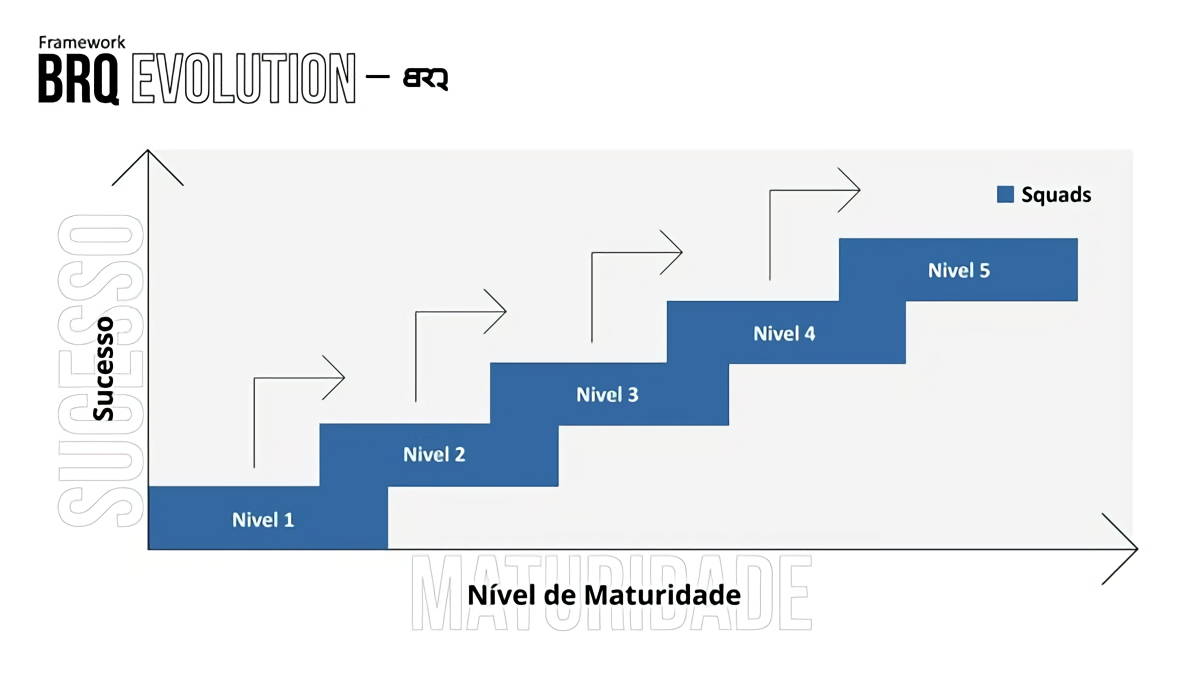
This is yet another example of the successful application of the LDTM, which brought the company significant gains, such as a 97% increase in the teams' maturity index in just three months. Another result worth highlighting is the improvement in employee satisfaction, as the benefits of having a clear and well-defined purpose were perceived by the teams.
The journey: a new agile and lean proposal
In 2019, the BRQ team adopted agile by developing the concept of Managed Squads with the help of an agilist. The initial model was more focused on converting the teams, without considering the impact of engineering and without using lean in its primary efforts. For a year, this practice ran with some adaptations, but always operating on exclusively agile foundations.
The following year, BRQ began an effort to apply changes to its working method with the aim of bringing in a pillar more dedicated to lean, without setting aside agility and engineering (lean-agile). The first stage consisted of building a diagnostic process to obtain a map of the current situation. An assessment via Google Forms was carried out with the teams, but duplicate answers and other problems affected the efficiency of the process. Moreover, applying this assessment alone would not guarantee any progress.
The next step was to focus on mentoring to optimize its own framework, creating agreements with the governance competence centers that would sustain the lean-agile pillars with the teams. From then on, follow-up of the effective action plans was set up, running the PDCA cycle (Plan, Do, Check, Act) to evolve and continuously improve its maturity.
In a second assessment, the model still had problems: as the questions were not clear, few changes followed. Consequently, there were delays in organizing, collecting and disclosing results.
Faced with this challenge and seeking to strengthen its partnership with Lean Institute Brasil, BRQ invited the institute to support the consolidation of lean-agile governance at the company. To that end, they had the mission of developing high-performance teams through a culture that would promote fast and effective problem solving, in addition to continuous delivery of value to their customers.
Thus, in June 2021, with the support of LIB, BRQ began developing its newest work framework based on the lean model known as the Lean Digital Transformation Model (LDTM), adapting it to its reality. In this way, it sought to ensure better-structured pillars, with a special focus on strengthening the engineering pillar, making internal practices and evolution customer-centered.
What is the LDTM?
A new model in action
The development of the BRQ framework consisted of three pillars:
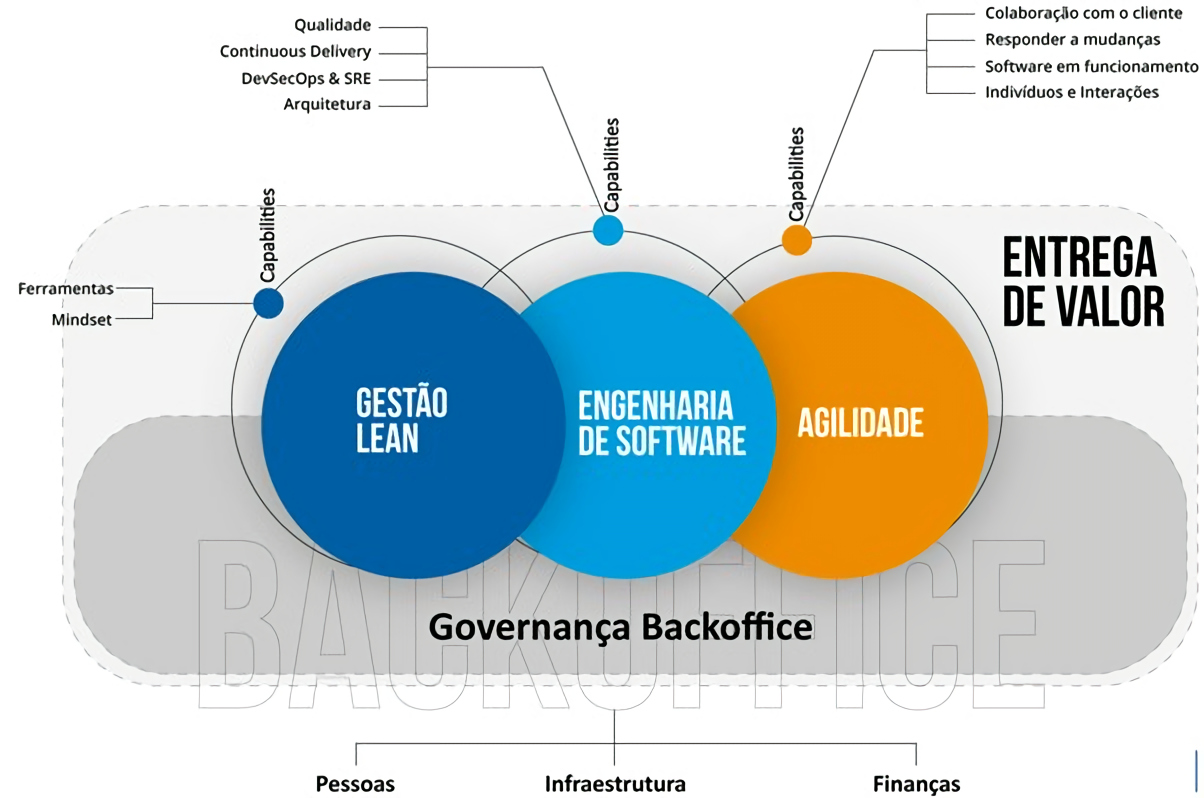
So that the new framework could be incorporated into BRQ's daily activities, the teams began to focus on four essential aspects of the transformation: cultural, organizational, technical and business.
During this cultural transformation of the company, employees had the opportunity to learn about some essential lean concepts, such as kata (continuous improvement culture), kaizen (problem-solving method), lean leadership and lean digital. On the organizational side, the focus was on value stream mapping, the A3 process, scrum and kanban. As for the technical side, topics such as software engineering and technical leadership were addressed. Finally, they also dealt with lean innovation and lean-agile strategic planning (OKRs and hoshin kanri).
After testing different approaches, they concluded that the most efficient is the gamification of the maturity evolution process supported by the framework.
According to Cristiano Burg, BRQ's CTO responsible for the Framework and Engineering, “The framework is a powerful tool for the teams' evolution. In practice, it works as a PDCA guide, in which the teams find a path to evolve continuously. It also supports the professional development of our Feras, since they can use the practices as a reference for which topics they can seek knowledge in and grow”.
BRQ after implementing the LDTM
Before implementing its system, BRQ was already working to connect the agile and lean cultures. However, this new way of working enabled the company to accelerate the teams' evolution. Employees were able to see more quickly the gaps that were hindering the progress of projects and act quickly to eliminate problems and waste.
More agile and more lean, the new framework ensured greater integration between BRQ's and the customer's teams, raising the quality and productivity of deliveries and, most importantly, generating real value for the end user. Talking about problems and solving them quickly, the essence of lean, was fundamental to the teams' better performance.
Today, with the framework fully disseminated throughout the organization, all of its customers can experience the benefits of the new model.
With the LTDM applied, BRQ carries out three types of follow-up:
- Follow-up of evolution through improvement cycles (every three or six months), applying the same diagnosis/assessment to compare the previous state with the current state.
- Follow-up of the implementation of action plans through daily/weekly management, with the support of leaders, coordinators, agile coaches etc. as those responsible for updating this information in a virtual obeya .
- Follow-up of performance/business indicators (previously established) that show the impact of adopting the new practices on the customer and on BRQ's business.
BRQ's case is yet another example of the successful application of the LDTM to focus on internal processes and better serve customers.
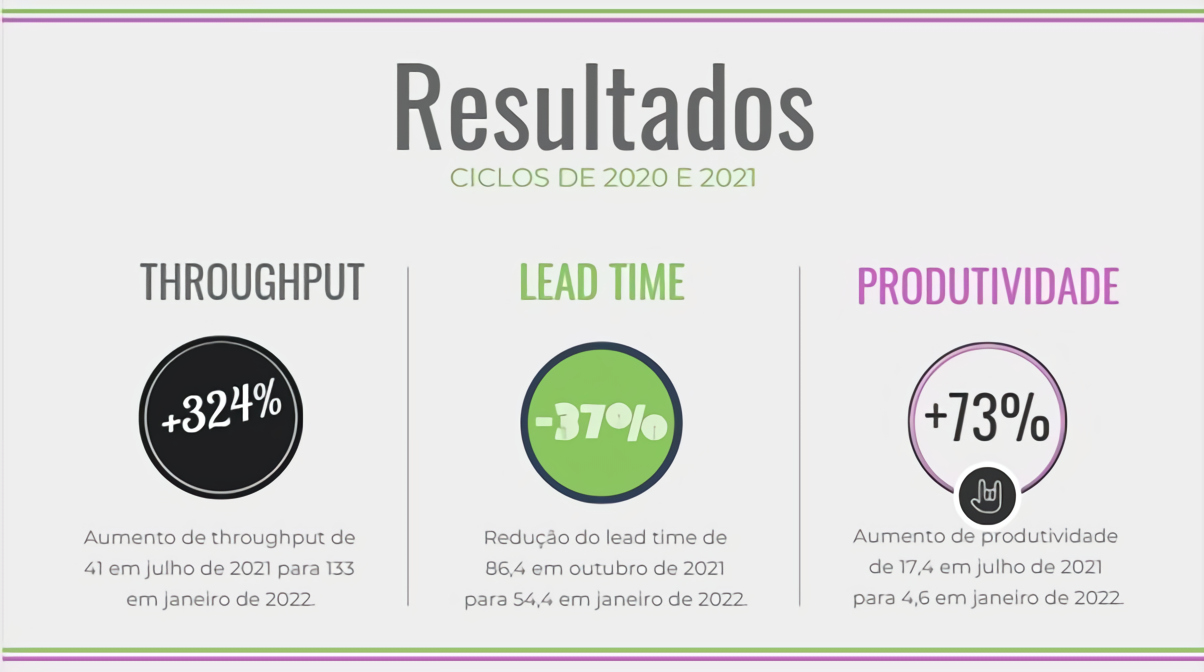
“For our customers, we see that it is a way of jointly materializing the steps to deliver more and more value. We have excellent examples in-house of how the combination of the maturity model, professional development and customer participation has generated extremely significant results in the squads' performance indicators”, says Cristiano Burg.
According to Benjamin Quadros, CEO of BRQ, “All BRQ teams had their own way of working, but without a clear direction for evolving in good practices. The framework aligned the direction so that the teams strive to reach a high-maturity model, evolving the way we deliver value to our customers and the way BRQ seeks to consolidate its position in the market”.
Benjamin adds: “With a single model permeating the entire company, we are able to track our problems better, identify supporting metrics and effectively begin to carry out an enormous internal change that is starting to be reflected in customer feedback, which even shows a desire to use or be inspired by our maturity model”.
For BRQ's future, we are certain of two very important things:
- By developing a continuous improvement mindset based on delivering value to the customer and to the company's business, progressive success will be a consequence;
- The framework will keep evolving as market demands and needs require, which makes this resource an evolving work model aimed at sustainability in the organization.
The LDTM may be the driver you are looking for in your company
The potential gains the LDTM brings to a company are large and can be measured. In previous experiences we have had, we have seen companies record an increase of 10.48 PP (percentage points) in their NPS within the first half-year of application, 14% growth to win the GPTW Regional and IT Sector awards, and a steady increase in the Organizational Climate Survey.
Results may vary, but what is constant in the LDTM applications we have witnessed (with the adaptations needed for each particular context) is the improvement of important business indicators and the creation of a more efficient culture through the new model. The LDTM has potential in the lean-agile and technology field that more and more companies are getting to know; if we also want to share in the successes we are increasingly witnessing, we need to embrace it. How about starting your transformation journey today? Get in touch with our specialists!







