

Agribusiness: fertile ground for lean thinking
Lean thinking has begun to capture the attention and interest of the countryside and of farms. After spilling over from the automotive sector, reaching all manufacturing sectors, and spreading through the service sector, it is now reaching a new frontier: agribusiness.
This article is based on international experience and literature, presenting some of the pioneering initiatives from the United Kingdom, New Zealand, Canada and the United States in applying lean thinking to primary production, in dairy and livestock production chains, as well as fruits, vegetables and ornamental plants. Beyond the cases themselves, we intend to show that the initial skepticism of believing that lean concepts apply only to industrial production activities is being overcome. What we see, on the contrary, is that the lean philosophy brings practically universal principles, which adapt to the specific needs of each case, regardless of the type of process or product to which it is applied.
The lean premise of reducing lead times, or “throughput time,” is an example of this. Through stable and well-connected processes, the lean company manages to make its materials and products flow continuously between production steps, without the need for large inventories along the chain.
This concept, which among other aspects involves “shortening time,” is fundamental for manufacturing, but also for agribusiness, because it allows the reduction of costs and losses associated with inventory and promotes greater agility in the value stream, an essential factor in maintaining the freshness and consumable condition of many of the sector's products, such as fresh, unprocessed foods, for example.
By “agribusiness,” we can understand “the set of activities of production, distribution and marketing of primary-sector products (vegetables, grains, fruits, sugarcane, cotton, wood, meats, etc.), as well as processing and transformation activities that use these products as raw material (industries: food, pharmaceutical, textile, footwear, biofuels, etc.), in addition to the supply chains for machinery, tools and inputs in general that support primary production activities.”
In this vast network of customers and suppliers, we can consider that the waste occurring throughout the value stream is also vast, and therefore the opportunities to apply the concepts and techniques of lean thinking are many; lean thinking has proven to be an efficient way to use resources to do “more with less.” In the United Kingdom, since the 1990s, Tesco, the largest supermarket chain in the United Kingdom, has implemented the lean philosophy in its business, particularly in logistics and in its relationships with suppliers, encouraging the links of agribusiness to change their practices.
Besides the economic benefit of applying lean concepts as a way to reduce costs for producers and consumers, we must remember that agricultural and livestock production is responsible for feeding the global population, whose pace of growth means a direct increase in the demand for nutrients. In this sense, productivity gains associated with reducing losses along this sector's production chains are elements of vital importance, as they can serve the food security of populations. Let us look, then, at some examples of lean thinking applied to agribusiness, with special attention to cases involving primary production:
1. Lean in the dairy chain - United Kingdom and New Zealand
The lean philosophy is being applied in dairy production chains in New Zealand and the United Kingdom, helping farmers, distributors and the processing industry to identify the various forms of waste and inefficiency along their value streams.
In the United Kingdom, the “Food Chain Centre,” in partnership with Cardiff Business School, carried out, at the government's request, a 4-year pilot project to present solutions to the problems and challenges of producing food and agricultural products. For the dairy sector, the study involved eight different companies with the aim of using lean thinking as an instrument of innovation and competitive differentiation. The implementation methodology consists of a model similar to the one used for manufacturing projects, in which value stream mapping is the tool used initially to provide a broad view of the business and highlight systemic problems and opportunities from the perspective of value creation.
As a result of the mapping, it was found, for example, that only about 5% of the lead time is used to carry out activities that add value from the customer's perspective. During 95% of the time, activities consumed resources but were of no interest to the customer, representing waiting, rework and unnecessary movement, among others. Data like these show that, although farmers pay close attention to the agronomic and technological aspects of their business, they rarely examine their processes from a value-creation perspective and, therefore, do not see the waste that lean thinking helps make evident.
Because of this, in all the dairies studied, critical points were found related to transportation inefficiency, complexity in the information flow, inefficient demand management and a lack of controls and indicators, as well as other opportunities in areas such as workstation organization and standardization of activities. Regarding logistics activities, part of the waste took the form of excessive steps of material handling and transshipment, which caused countless interruptions in the flow. In some dairies, for example, trucks and tanks were designed for large volumes with the aim of increasing efficiency by carrying more on each trip. This increase in individual efficiency, however, created the need to consolidate loads until the total capacity of the tanks was reached, causing waiting and other losses. For many products like these, the occurrence of waiting and excessive handling and storage steps represents losses and damage along the chain, as well as a direct reduction in these products' “shelf life” because of the long lead time between production and availability for consumption.
Through value stream mapping, opportunities were also identified related to the flow of information, customer orders, and production and shipping schedules. In general, the maps showed very convoluted paths that information had to travel, invariably generating a lot of noise. Below, figure 1 shows an example of the information flow in the dairy chain, highlighted in red.
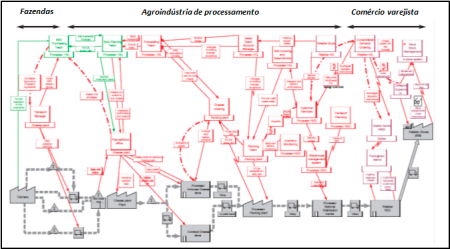
Figure 1 – map showing the complexity of the information flow for the dairy chain.
Source: Food Chain Centre.
In the lean value stream, both materials and information should flow simply and clearly, with as much stability and predictability as possible. For this, there are a number of elements, such as scheduling at a single point in the chain, for example, that can help make the information flow more autonomous between operations and processes. Beginning to see and understand the problem, as these dairy chains did through mapping, is the first step to be taken in this direction.
Demand management
An important part of information management lies in knowing the customer's demand rate, which serves as the basis for all planning and scheduling of production capacity and to guide the provision of resources such as machines, materials and labor. In lean thinking, what is desired is for this rate to be stable and without large variations; otherwise, processes and operations must be sized to meet demand at its peaks, which leads to idleness during slow periods.
In the case of the dairy chains, data collected over approximately one year showed that, although cheese sales to the end customer were quite stable, for the supplying processes the situation was one of variation and instability.
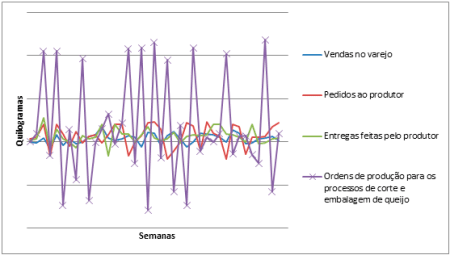
Figure 2. Effect of the amplification of demand signals in the dairy value stream.
Source: adapted from Food Chain Centre.
This demand amplification effect, also known as the ”bullwhip effect,” occurs because, as demand information is passed “upstream” in the chain, it undergoes adjustments that accumulate and generate ever greater distortions toward the raw material. These variations, in turn, affected the quality of information and interfered with the planning and execution of operations in general.
For lean thinking, this situation shows a clear opportunity to connect the steps and tie production to real demand, with a pull system and supermarkets, for example, avoiding the distortions that so strongly influence the production pace.
Data like these show the importance of knowing, in detail, what the current state of the value stream is like. In the study in question, the researchers even point out the need for better tracking and measurement of the chain's performance and, for this reason, some indicators were created, shown in the table below, which compares current and future-state performance levels, already presenting the estimated gains from reducing waste.
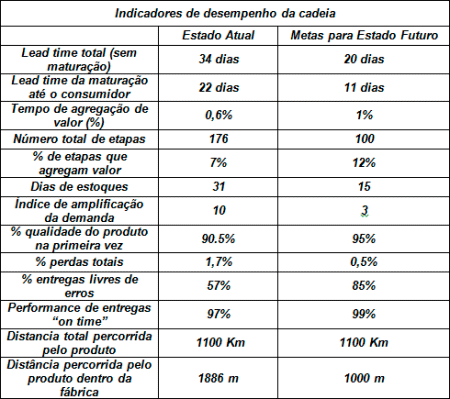
Figure 3. Table of general indicators used to measure the performance of activities in the dairy value stream.
Source: Food Chain Centre
In the milk processing industry, such as pasteurization and filling processes or in cheese and other dairy product plants, some of the opportunities that appeared in the Food Chain Centre study concerned: - Improvements in the layout of operations and equipment – to reduce the movement of products and people, improving the flow as a whole. - Improvements in the efficiency of filling and packaging equipment and processes to reduce machine downtime and losses of packaging and products, which mean rework and waste. - Flexibility – Planning done with the aim of reducing production and storage batch sizes, improving flow and reducing total lead time. In a project carried out by Dairy NZ, in New Zealand, also in dairies, the pilot was developed in 14 production chains, showing many opportunities to apply basic concepts, such as 5S, where simple improvements, such as using “shadow boards” to organize tools and utensils, were able to make work easier, faster and better, generating gains of about 15 min/day/employee (920 hours per year) of time that was previously lost in unnecessary movement and searching for the tools and objects needed to work.
There were also actions regarding work organization and involving people in the change process, with a focus on promoting “self-management” in work teams and in decision-making and problem solving.
Another lean concept widely used in this case was standardized work, using visual management elements to help activities always be performed in the best way or according to the standard, avoiding safety, productivity and quality problems, as well as unnecessary effort.
2. Lean in the fresh produce chain - United Kingdom
Another focus of the Food Chain Centre's study was the application of lean thinking to fresh food production. The pilot project lasted two years and covers production chains for potatoes, apples, leeks, herbs, peas, lettuce and carrots.
Once again, value stream mapping was the tool used to visualize the systemic opportunities. Below is an example of one of the products analyzed in the study:
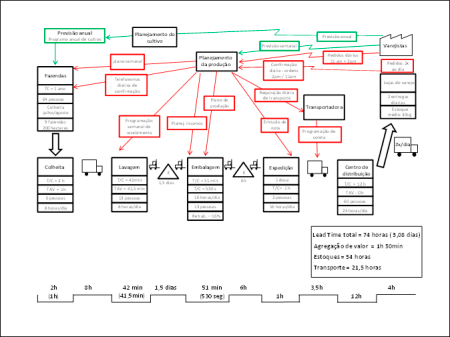
Figure 4 – value stream map for a fresh product sold unprocessed.
Source: Adapted and translated from Food Chain Centre
Fresh foods, such as fruits and vegetables, have very significant loss rates, reaching 50% in some cases. For this reason, as part of the data collection and understanding of the current state, the studies tracked these losses, putting together the chart below, which shows at which points in the chain, from planting the seeds to packaging for the customer, they occur.
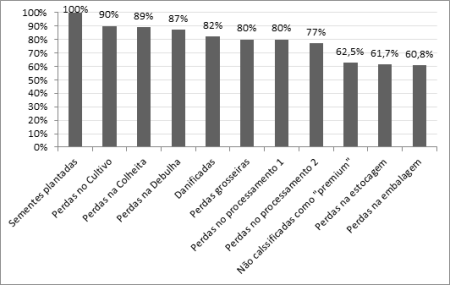
Figure 5 – steps at which product losses occur between planting and the consumer.
Source: Adapted and translated from Food Chain Centre
This type of survey is extremely important in lean management thinking, because it creates the conditions to direct analysis and problem-solving efforts, with the aim of reducing these losses one by one, systematically seeking their root causes. Also as part of tracking and data collection, as was done with the dairies, performance indicators were created to evaluate the chain. The table below compares the original levels with the potential for improvement through implementation of the lean future state, highlighting the reduction in losses in stores from 17% to 1%, as well as significant gains in reducing lead time and inventory.
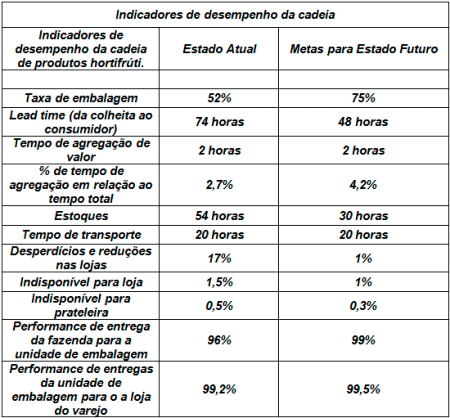
Figure 6. Indicators for the fresh produce chain.
Source: Adapted and translated from Food Chain Centre
Among other very positive conclusions, the study considers that the pilot projects demonstrate significant gains from applying lean concepts in the fresh produce chain, with a potential loss reduction estimated at about 400 million pounds.
3. Lean in the production of seedlings and ornamental plants in nurseries - Canada and the USA
Since 2005, the Van Belle family nurseries in British Columbia, Canada, have used lean thinking concepts in their operations in order to improve performance and achieve a high “plant inventory turnover,” with shorter lead times. Since then, they have applied lean to all activities, from the initial planting and propagation steps to shipping plants to sales centers.
The nursery receives customer orders daily and works with “next-day shipments,” supplying the points of sale it serves in a pull manner and responding quickly to the needs of demand. This is a critical factor in keeping the Van Belle nurseries ahead of the low-cost competitors they face in the market, particularly products from the United States.
With lean thinking, this company managed to increase its production by about 20%, using about 1/3 of its former area for propagation and packaging. For the supply of boxes, an important input for packaging the plants, the pull concept was also used, so that a box supermarket was sized to support four days of customer consumption. This avoids taking up space with large quantities of stored boxes. The same principle is being used for chemicals, such as fertilizers and pesticides.
By studying activities in detail and focusing on waste reduction, they managed to reduce the use of irrigation water by 25% per year for two consecutive years, adopting measures such as reducing nozzle size and reducing the frequency of misting in the greenhouses, which supplied more water than necessary.
This type of thinking is present in every detail of the property. To support the workflow and the management of production information in real time, there is a computerized system that makes it possible to record and monitor information on all products, showing where each batch and type of plant is in the process.
At a quite advanced level in terms of technology, work content such as picking orders is received by operators on tablets. When the plants arrive at the shipping docks, they are checked by another person, who records the output on another tablet. The use of technology in itself is not lean, but it uses the concepts efficiently to provide real-time tracking of inventory and organize the information flow so as to avoid various kinds of waste, such as operators walking around in search of information, rework, etc.
For standardized work, the times of all activities were measured in order to define production capacities and targets. In this way, it was possible to balance activities among employees using standardized work, with the help of visual management, ensuring consistency and greater predictability and avoiding overload or idleness.
The other areas, such as administrative, billing and freight coordination functions, also apply lean in their processes, in order to make information and documents flow through standardized and stable procedures.
To support management, all processes are basically controlled, planned and measured. The differences between planned and actual volumes guide the taking of countermeasures to solve problems.
Behind all this success there is a lean concept that is widely disseminated in the company, the kaizen mindset, through which managers seek to stimulate and develop people's skills to make them more productive not only with their hands, but also with their minds, drawing on their experience and knowledge to make processes more efficient and safe.
In a similar initiative, at Hoffman nurseries in the United States, the concepts are also being taken to the seedling production beds. In this case, the nursery area was divided into several work zones. Thus, all the activities a person needs to perform, as well as the tools and information he or she will use, are within his or her work zone, which are duly planned to avoid unnecessary movement, waiting and unbalanced workloads.
To support visual management of the work, colored tape is used to identify different areas and conditions. For example, spaces for beds and trays are marked off in blue, points of attention are marked in yellow, and places that pose potential risks are marked with red tape. This type of identification prevents errors, rework and accidents, making the environment more controlled, safe and productive. Pull system concepts were also implemented to control processes at the Hoffman nurseries. The kanbans, in some processes such as seedling propagation, are the very trays in which the seedlings are placed. Empty trays, when sent by a downstream process to an upstream one, signal a need for replenishment, thus avoiding overproduction or material shortages.
4. Lean in livestock - Alberta, Canada
In the province of Alberta, Canada, the ministry of agriculture has been working with producers in a rural development support program that includes, among other measures, lean thinking consulting to increase the productivity and competitiveness of local ranches and farms.
The projects began in 2008, initially covering food processing companies. Later, education on the use of lean principles was extended to the primary production sector for vegetables and to livestock.
Joint work between producers and the subsequent links in the chain resulted in better systemic performance, integrating them in the search for better processes, better training and involvement of people, and the appropriate use of technologies that support the information flow.
As in the other cases presented here, mapping activities and analyzing them from the point of view of value creation revealed many opportunities to apply the techniques to increase efficiency, reduce costs and deliver quality gains in all the types of environments studied.
Keith Everts, one of the participants in this program and owner of a cattle ranch in Alberta, emphasizes that “lean provides the steps and processes so that everyone is on the same page and clear about their roles", speaking of the definition of roles and responsibilities as one of the main attractions.
According to him, lean thinking helped them “understand everyone's needs and make sure people have the information and tools they need to make decisions.” He also says that “the opportunity was there, and the ranch was at a point where it needed an extra boost.”
In summary, we can conclude that these are just a few examples of how lean thinking has been adopted on farms and in agro-industries around the world. In most of the initiatives presented, there are incentives from governments and ministries of agriculture to promote the activities, as they consider lean thinking a true competitive differentiator that should be introduced to the production chains of food and other agricultural products, with the possibility of raising production to a new level while reducing costs for producers and consumers.
Discover how Lean consulting in agribusiness can transform processes, reduce waste and increase the operational efficiency of your farm or rural business. Start building more agile and profitable management today. Visit and check it out!
In Brazil, where agribusiness is one of the main sectors of the economy, the opportunities are as great as, or perhaps greater than, those presented in the initiatives of other countries. Despite the enormous potential in the countryside, however, initiatives in agribusiness are still concentrated in the processing agro-industry and in machinery and equipment. In a future article, we will present some of the initial experiences being carried out in the Brazilian primary sector.
References:
Study by the UK's “Food Chain Centre” on applying lean thinking to the dairy chain: Applying Lean ThinkingtotheDairyIndustry- http://www.ifr.ac.uk/waste/Reports/Dairy%20Industry-Applying%20Lean%20Thinking.pdf
New Zealand dairy case: Lean system simplifies management – session 11 - http://www.dairynz.co.nz/file/fileid/44859
“Food Chain Centre” document on applying lean thinking to the fresh produce production chain: Applying Lean ThinkingtotheFreshProduce
Industry - http://www.ifr.ac.uk/waste/Reports/Fresh%20Produce-Applying%20Lean%20Thinking.pdf
Information on the implementation case at the “Van Belle” nurseries in Canada:
http://www.fcc-fac.ca/en/LearningCentre/journal/stories/201205-2_e.asp;
http://vanbelle.com/;http://www.hortidaily.com/article/1515/Canada-Automation,-flexibility-and-motivated-employees-helps-Van-Belle-Nursery-thrive;http://www.flowvision.com/Articles/NMProSept05.pdf
Study on the implementation case at the “Hoffman” nurseries in the United States:
http://aggie-horticulture.tamu.edu/syllabi/431/LeanFlow-EppsIPPS%20Vol%2059-2009.pdf
More information on the Alberta, Canada, provincial project on cases of lean thinking applied to local ranches:
http://www1.agric.gov.ab.ca/$Department/deptdocs.nsf/all/cbd13195/$FILE/casestudysentinel.pdf;http://www.fcc-fac.ca/en/LearningCentre/journal/stories/201205-2_e.asp







