

Lean for higher productivity bears good "fruit" for Vilkun
At Vilkun, we have been working on an innovative product for the past 15 years. Our mission is to select the best Chilean fruits and turn them into dehydrated, freeze-dried and frozen fruits that can be used as ingredients. There are not many references for this type of product, both in terms of recipe and manufacturing process: in fact, when I joined the company, I had a hard time understanding its application.
From an equipment standpoint, our 140-person plant in southern Chile is quite advanced, but that did not stop us from facing a number of problems in our process before lean thinking arrived in our organization in 2020. Our main problems were high operating costs and a lack of standardization across the different shifts, which affected our competitiveness.
The Value Stream Map we drew – the first real step in our lean journey – revealed that the shifts did not work the same way: there were “instructives” in place (standard operating procedures, so to speak), but people did not follow them in practice. The VSM also showed us that we had a lot of work in process in the drying area and that many of the boxes reaching the packaging area were rejected because of quality problems. We had to do something, and lean appeared as a great opportunity to bring organization to our work.
So we developed several experiments and pilot projects. At first, we added every problem we found to the “to be solved” list, but we soon realized that we could not deal with everything at once. We decided to prioritize the problems that, if solved, would give us the most value. At that point, we created work teams, each of which would identify and apply a countermeasure to the problem it was focusing on. That is how we really started making changes.
The work teams began working on three key areas in which we were facing business-critical problems. In particular, they focused on:
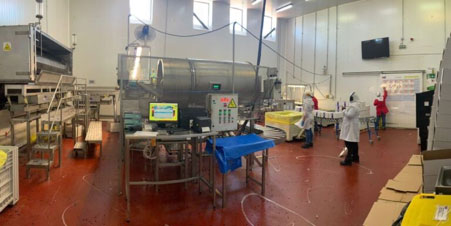
- Standardizing the recipe to ensure the best possible raw material yield and greater product stability (the product must retain its nutritional and texture characteristics until it reaches the customer's dinner table). We ran several experiments with different parameters and changed the process until we arrived at a recipe we were happy with (we also managed to reduce our raw material consumption by 15%).
- Creating a supermarket to ensure the availability of syrup and avoid delays in the process. We analyzed consumption, defined the critical stock we need to always have available and built a pull-based replenishment system.
- In the packaging area, we tried to solve the rework problems we found by increasing the number of “ready to export on the first attempt” by approximately 40%. In trying to do this, we realized that the rework needed to fix the defective boxes was a clear result of the variation between shifts. We used a Pareto to analyze the main reasons for defective boxes and to try to get the product ready for shipping before packing it, thereby avoiding rework. Helping people understand the waste hidden in those rejected boxes was a watershed moment in Vilkun's lean journey.
An obstacle along the way
We were happy with our recipe. It was the result of several experiments and PDCA cycles (and a lot of work). We finally managed to identify the recipe and standardize it across our shifts. We improved yield and were quite confident about what we had achieved, despite the difficulties inherent in working with such an innovative natural product – which is notoriously hard to handle in a factory environment.
When we dried the product, it was usually within parameters, but when it was inspected in our warehouse, we were told it was not free-flowing enough to pack. We had to reduce the amount of water in it. This was a hard blow for the team. We thought we were doing so well! What's more, with the new constraint, we simply could not release the product. Our factory runs 24 hours a day, 7 days a week, and every time we touched the recipe, we had to stop the production process. Orders started to pile up, and the sales department started to put pressure on us.
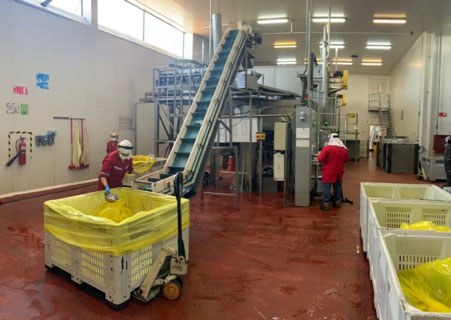
It became clear that we could not procrastinate any longer. We had to go back to square one, no matter how frustrating that was. Marcelo Pinto, from Lean Institute Chile, was on site that day, training one of our teams. He helped us organize our thoughts, and over the next few days we managed to redesign the drying process. Eventually, the hard work paid off, and we managed to improve drying efficiency. It was all a matter of persistence! We received great support during the journey and realized that sharing the burden of figuring out the different steps of the process proved to be the right approach. That is when we learned an important lesson: we can solve any problem if we work together and approach it scientifically.
Another thing that really impresses me about our journey so far is that we have managed to achieve a lot in a short time and without investment. Simple experiments can have an enormous impact, and for our people it is reassuring to know that we can try something new and, if things do not work out, just go back without wasting money.
Lean: a revelation in Vilkun's lean transformation
With lean thinking, we discovered a new way of working, in which we collaborate on problem solving, giving everyone a clear responsibility and following up on what we discuss.
Daily management has been absolutely fundamental for us, to ensure that we could sustain the results achieved and keep using the tools effectively. Now we have adopted it as our way of working, with the packaging department particularly eager to internalize it.
People got excited about lean quickly, although there were some misunderstandings at first, and changes started to compete with one another. They thought we just wanted them to produce more, so we had to explain to them that the idea was to take the appropriate corrective action as early as possible so that we could fix problems before they became too big to address. Today everyone understands this. The atmosphere at work has also improved a lot.
To make sure our people were on board, we taught lean principles and practices to 15 key participants in the business – including supervisors and area managers – so they could share what they learned with the rest of the team. But the change we have experienced would not have been possible without a fundamental change in leadership culture: today, Vilkun's leadership team challenges frontline people more than ever, but also provides the tools they need to do their job in the best possible way. We understand that people come to work not just to operate a machine or complete a task, but to take part in improving processes.
Lean has taught us the importance of encouraging people to ask questions, share their opinions and always bring problems to light. After all, they are in the best position to suggest ways to improve the process, because they know it best. When our team saw that it was okay to change things and that the leaders were there to support them and answer their questions, they embraced the new way of working and never looked back.







