

Lean Maintenance on farms improves management, creates engagement and delivers business results

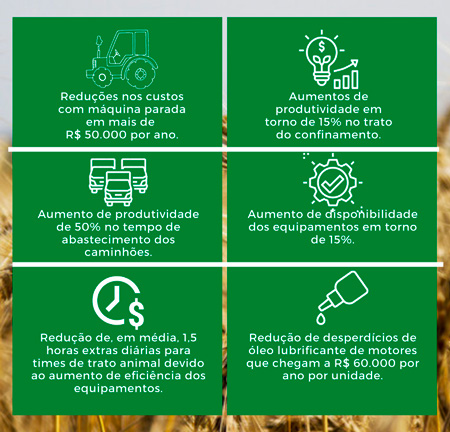
In years of consulting on farms, more specifically in the workshops and maintenance areas of rural properties, we have seen significant gains (all validated with clients) that lean can bring to the sector. That is why, as an institute, we decided to share with the community the benefits it can bring. Typical results we have mapped in our projects can be seen in the infographic below:
Adding up all these gains, the potential return for a farm can reach the millions. And as miraculous as these results may seem, in reality they are delivered by simple actions, empowered by lean, on the small day-to-day problems.
What we saw walking the Gemba
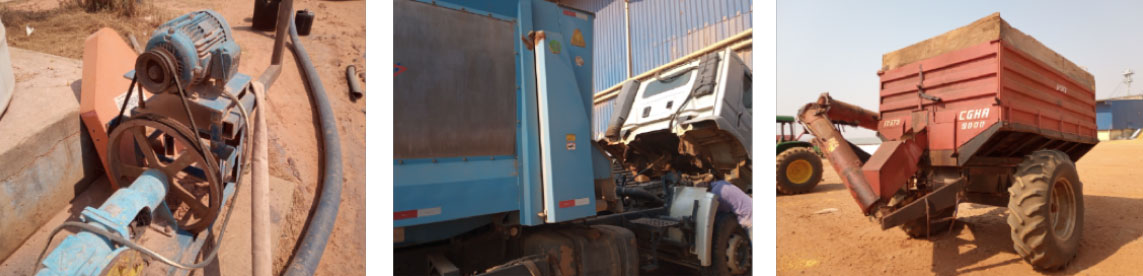
On our walks through the gemba, it is not unusual to see a series of machines stopped waiting for parts or repairs, trucks broken down for lack of lubrication or lack of periodic inspections, equipment performing poorly because of malfunctions… in short, a series of situations caused by the lack or poor quality of preventive maintenance.
Many farms focus their efforts on carrying out maintenance after equipment breaks down or stops (known as corrective maintenance), but as the saying goes – and it applies very much to workshops – “prevention is better than cure”. In other words, doing corrective maintenance can bring countless problems to operations, such as delays, high costs, loss of efficiency, low productivity, etc.
In the traditional view, operators are not involved in maintenance activities and are only responsible for operating the equipment, while mechanics work to repair machines with problems. When this happens, the deadlines for repairs are always short, which creates a scenario of constant pressure on the workshop team (which, to minimize the effects of emergencies, tries to “protect” itself with higher inventory levels of parts, for example).
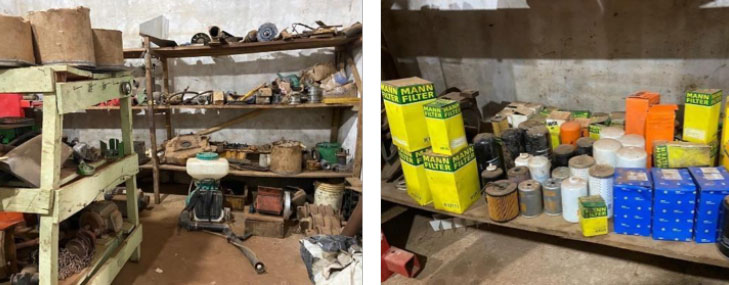
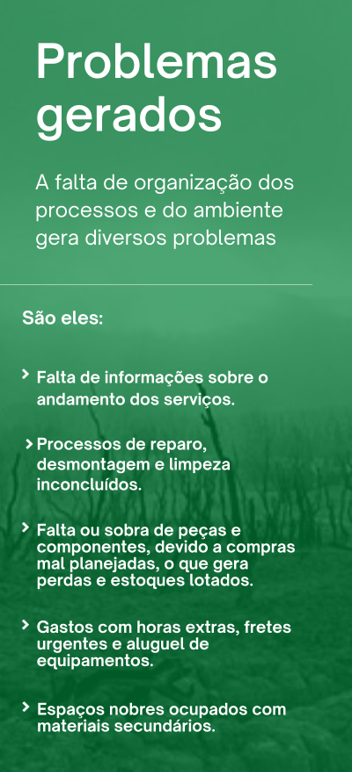
Not only the nature of the service but also the organization of workshop processes deserves attention. Working under pressure becomes even more difficult, less safe and more expensive when the environment is disorganized, which creates countless problems.
Lean concepts and empowering people
It is worth emphasizing that agricultural activities are essentially tied to biological cycles that cannot wait. The harvest point, the cattle feeding schedule, the timing of spraying and vaccinations, among others, are examples of how processes depend on resources that need to be available at the right time and in the right quantity.
In general, in the lean farm consulting projects we carry out with clients, we hear the following: “We know about these problems, but how do we solve them?”.
The key to solving these problems, giving greater support and autonomy to the maintenance team, can come from applying a few lean maintenance concepts:
a) Mapping resources and processes: We use it to identify all the critical processes and resources that we must always keep available and that cannot have unplanned stoppages. In this mapping, we seek to identify gaps related to unscheduled maintenance, waste, disorganization and other improvement opportunities
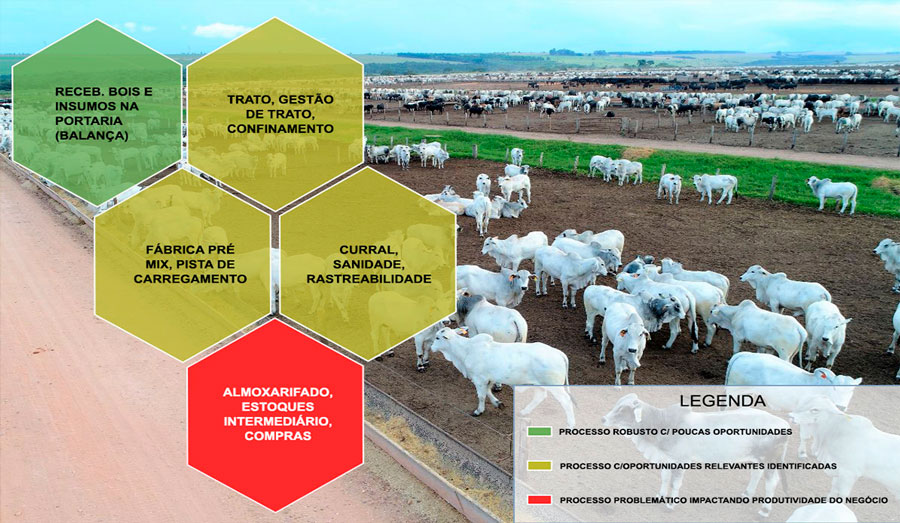

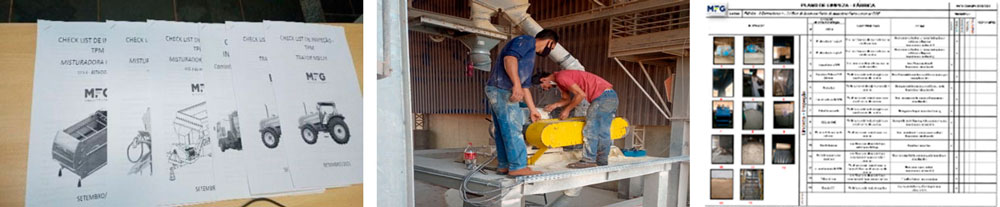
b) Implementing autonomous maintenance and planned maintenance routines: This allows us to reduce the load on the technical and specialized maintenance team, prevent equipment breakdowns, increase availability, increase productivity and increasingly embed a culture in which operators feel like the owners of their own equipment.
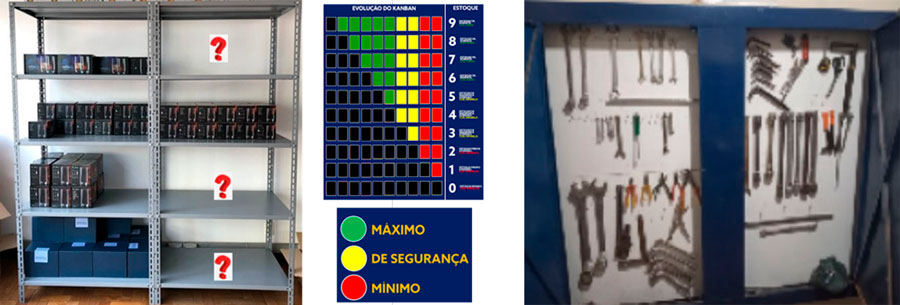
c) Optimizing spare parts/tool inventories and spare parts purchasing processes: Through these implementations, we were able to reduce spending on buying tools that get lost and improve tool management, and we managed to do this in a simple and visual way; with tools available and visible, we ensure faster service when needed. Through inventory management, we were able to maintain adequate levels of spare parts, thus avoiding waste and the high costs of parts that often never even get used, while also ensuring that critical parts are available at the right time.
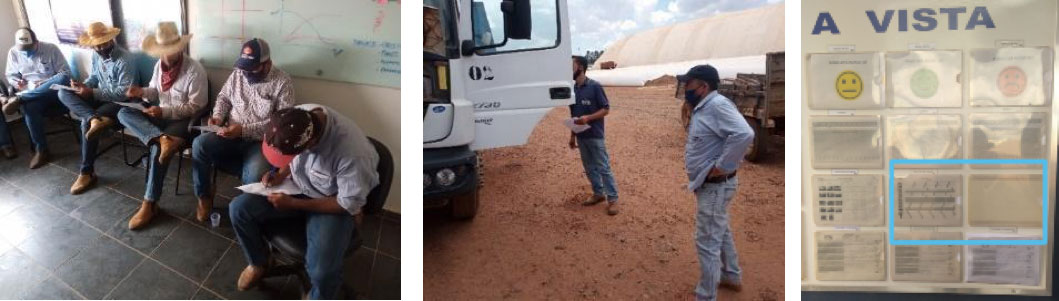
d) Training the operational team in the new practices and follow-up routines with the production team: After implementing the improvements listed above, we developed all the operational teams and leadership so that the concepts were learned, and we also created daily alignment routines for all teams, ensuring that every day the teams discuss the necessary activities, which equipment will undergo maintenance and which equipment needs maintenance, always acting preventively to ensure greater efficiency in the farm's operational processes and results.
Lean maintenance prevents an avalanche of problems
Implementing lean routines and practices in farm maintenance can make a big difference in how processes are served. More than a “support area”, workshops are the center of the business's “operational health”. Planning and managing maintenance areas can therefore mean a significant increase in productivity and resource availability. In addition to the quantitative gains mentioned in this article, practicing lean in the workshop creates better alignment between teams, reduces stress, improves deliveries and builds greater confidence in carrying out the core activities of the operation.
And on your farm, how is the “health of your workshop” ?
Increase productivity and reduce waste on your farm with Lean consulting for agribusiness. Discover how more organized processes and efficient management can generate concrete results harvest after harvest. Take the next step toward a more profitable operation. Visit the page and find out more!







