

Lean supply chain

Some critics of lean thinking applied to the supply chain insist on recalling the disruption of Toyota's chain that occurred with a valve supplier in 1997, in order to cast suspicion on the practice of just-in-time and on the entire lean management system. More recently, the subject has returned to the spotlight because of disruptions in global supply chains, with the supply of microelectronic chips as the main protagonist. This article discusses the mistakes behind these superficial criticisms, which ignore the true meaning of the lean management system in the supply chain, and takes the opportunity to present the foundations for building a lean supply chain grounded in management principles that actually strengthen resilience by increasing the operational capabilities of agility, alignment and adaptability, rather than a narrow and limited focus on merely assessing inventory quantities in isolation. In fact, lean thinking regards inventory as a consequence or symptom of deeper decisions about the balance of four factors in the supply chain: variety, velocity, variability and visibility, the so-called 4Vs of lean supply chain management.
Recalling the facts that serve the critics of just-in-time: in February 1997, a fire broke out at the supplier Aisin Seiki, in the city of Kariya, southwest of Tokyo, destroying the production line that supplied Toyota with the so-called P-valve, used in the assembly of the brake system with the function of modulating braking pressure and preventing skids. The problem was that the Aisin Seiki plant was the sole supplier of that part. It had been designated as such because it was a supplier with an excellent relationship track record, an excellent quality level, machines dedicated to that supply and a fully aligned team. That fire, however, was a disruption of that flow of excellence. With production and deliveries optimized through a series of kaizens over the history of the relationship with that supplier, and as a consequence of the good results and confidence in the processes, the practice of just-in-time had been adopted, whereby the inventory of that part was gradually reduced until it reached just 1 day of stock. After all, the alignment and agility achieved in that logistics flow allowed the valves to be produced and delivered according to the demand of the assembly line. The stoppage of production of almost thirty-three thousand valves a day, at the time, put the entire company at risk: with no stock in the warehouse, there were enough valves to last only one day. Production of all Toyota vehicles was about to stop. The critics thus began to use the fact to declare “This is the fragility of JIT: a surprise event can paralyze entire networks and even industries”, causing disruptions and, therefore, concluding that the system has low resilience.
The mistake of this hasty criticism lies in two points. First, it criticizes the entire management system on the basis of the adoption of one management tool of the pull system, just-in-time, the forerunner of modern demand driven supply chain systems, when in fact the lean supply chain system is more than the isolated use of a specific technique. Second, because the critics do not pursue the analysis and do not deepen their understanding of what enabled the rapid reaction to the disruptive event, which would reveal the true resilience of the lean supply chain management system: in just 3 days, the supply of new parts from alternative sources began for Toyota, increasing steadily until supply was fully recovered by the end of that February.
The supplier Aisin Seiki returned to normal the very next month, in March 1997. Of course, the consequences are not negligible: about 70 thousand vehicles were not assembled, a share that, although very small compared with the millions produced annually, undoubtedly represents a loss. On the other hand, this loss is proportionally very small given the serious event, which reveals the true principles of the lean supply chain, with results far beyond any isolated management tool or forecasting strategic inventories across the whole chain, because it is these principles that make it possible to equip the chain with fast, agile and aligned reactions, allowing it to adapt to critical and unforeseen events.
However hard we try to predict disruptions, it will not be specific quantities of inventory that keep us safe at all times. The rapid reaction in the Toyota case was made possible by the very principles that allowed the choice of a given just-in-time practice, because both are the result of building lean competencies in the supplier network, and these competencies are the true foundations of a resilience that can and should be continuously improved by learning from events.
That is how the events of that year of 1997 were overcome – just as the current disruptions in times of pandemic may come to be corrected in an agile and definitive way – by applying lean principles to the supply chain: suppliers in the chain shared the same approach processes guided by the principles of the lean system (variety for choices) and had a single standardized work for solving problems that allowed the development of several solutions without losing focus or straying from the central problem (right-sized variability), the supplier network had flexibility in adjusting its equipment and production lines (velocity of action), and all of them shared among themselves an open flow of information and knowledge without bureaucratic hurdles (visibility of actions and resources).
Let us look at these principles, the 4Vs of the lean supply chain in their conceptual essence – variety, variability, velocity and visibility (1) –, in order to understand their scope and to what extent each context of the supply network should work to combine them in the most appropriate balance, aiming to achieve resilience through the competencies of agility, alignment and adaptability that these principles provide.
Variety – variety in the design of the lean supply chain network is not understood merely as a greater number of sources for each category of input or component. In fact, it is variety in supply capability, which does not necessarily mean variety in the number of suppliers. What this principle actually aims at is to balance the variety of sources with the variety of the capability to supply continuously, making this principle a key element in the design of the supply tiers. Thus, variety in terms of many and various different suppliers can be a false measure, concealing a limited range of choices in supply regimes and alternatives, because these agents may not have the lean foundation to adapt quickly to different demand situations and adjust their takt time, including in disruption situations. Nothing guarantees that a disruptive event can be more easily overcome by a group of suppliers, if they have rigid lines and teams without multiskilling, than by a single supplier with a high capacity for adaptation through versatile lines and multifunctional teams and, therefore, with a high variety of choices and options, conferring dynamic capability. In terms of lean tools, this means applying not only just-in-time, misunderstood by critics who do not understand the whole system, but using it alongside processes developed with the 3P method (Production Preparation Process) or LPPD (Lean Product and Process Development) (2), developing production lines and products together with suppliers to give them characteristics such as simplicity, minimal investment, one-piece-flow, quick setup, among other practices that equip the production system of the entire supply network with a robust capacity to reconfigure.
Therefore, variety understood as a factor expressed in terms of dynamic capability represents a different way of looking at how to build the supply chain, choosing participants who are aligned with this key issue. Because it is intrinsically a capability expressed in competencies, and not only in quantitative indicators or numbers, it requires constant assessment of the current and objective conditions of the supplier and of the market. Accordingly, it is in this element of variety that the learning resources of the lean process should be exercised in the constant PDCA cycle with suppliers, continuously assessing the risks surrounding this dynamic capability.
Toyota's recovery from the fire at the Aisin plant in 1997, for example, is a story of triumph of this capability, but it is also a lesson about the balance we must strike with regard to tools, not betting everything on a single alternative for rapid response or readjustment without safely assessing the reaction time and taking it into account in protecting just-in-time. That is how the company's executives realized the value of risk assessment to balance recovery time with the minimum inventories operated under just-in-time. They followed what the lean system has been spreading: that the inventory of pull systems should reflect not only waste but also protection for the time needed to overcome possible interruptions, not in the sense of accepting such potential risks, but of keeping them under watch and control until kaizens can reduce them to minimal levels. Toyota thus modified its risk surveillance system by creating a database called the Rescue System, with dozens of companies organized in tiers, their risks regularly assessed under adverse conditions, as well as their reaction capabilities.
The Rescue System, the result of kaizens, is a database for visualizing the supply networks according to each component. In the case of automobile rearview mirrors, for example, mirror suppliers and companies responsible for injection molding, mirror treatment, plastic materials, paints and even electronic adjustment circuits are represented in a diagram, together with tracking of information about their facilities and location.
In the case of single suppliers of exclusive components, variety of reactions is still obtained by sharing information about projects and equipment specifications between their production facilities and suppliers of similar categories.
The company also maintains constant communication with its suppliers and trains employees to operate during disasters, with continuous assessment of the risk to the entire company if links in the network fail. Neither Toyota nor any lean company is truly disaster-proof, but by cultivating networks of mutual trust, the lean supply chain develops resilience. Therefore, resilience is not simply a matter of having supplies on hand; security of supply does not only take the form of inventory. Instead, the lean supply chain broadens the concept and practice of seeking resilience in the capabilities of constant adaptation, agility and alignment (fig. 1).
What the lean supply chain seeks to measure, model and establish is the capacity to react by building alternatives when a crisis arises. And this involves both human and physical capital. True variety involves variety of talent, versatility and execution.
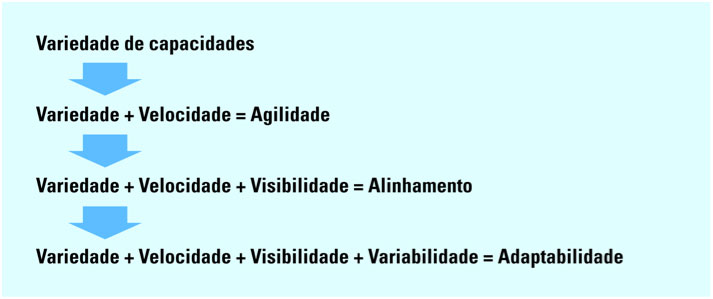
Fig. 1 – The 4Vs of the lean supply chain and the origin of dynamic capabilities
Velocity – velocity in supply chain flows should not be understood as always favoring the highest possible speed, but as the capacity to quickly identify and adjust the speed of each flow to the speed that is most appropriate and synchronized with each type of demand. If the demand is not for the product but for information, and it is urgent, the speed should match that urgency. If it is a product and demand falls, then the speed should be reduced to lower costs. This is the scope of the velocity element when we understand the value of takt time, not only for parts but also for the broad flow of materials and information that runs through supply networks. It is this factor that, together with the variety element, makes it possible to achieve agility. An agile body is one that applies appropriate speeds to the various possibilities or choices of movement. Thus, an agile network presupposes that the various supply choices are made at the speed that demand requires. In this sense, techniques for reconfiguring operating plants and equipment owe a debt to their forerunner, quick setup, which is taken further in the design of networks that quickly reconfigure themselves in response to the required demand at the required speed. The recent chip crisis, seen in the disruption of their supply to the global automotive industry, with the asset specificity that the producing plants have, amounts to a curious paradox in the supply of components that enable high-speed processing, yet lack the appropriate speed to redirect toward an equally nonexistent variety of production choices, so that both elements absent from the network restrict the agility to obtain new sources.
In this sense, using the analysis of the variety element in production capacity could have indicated that there would not be many choices available for a given chip among the chain's participants, so that there would be no speed of readjustment, a problem also of lack of visibility, which prevented alignment between chip suppliers and automakers at the time of the shutdown caused by the pandemic and the subsequent restart. This combination with the third element, visibility, is discussed in the next topic, for achieving adaptability.
David Simchi-Levi, an MIT professor who studies supply chains, recently stated in an interview with a New Yorker Magazine writer last year that “cost is easy to measure, but resilience is much more difficult”. Simchi's observation points to the need to consider efficiency and velocity not only in routines but also with regard to recovering from weaknesses. Based on Simchi's discussions, we propose two questions regarding velocity that can serve as the basis for two agility metrics for achieving resilience:
(i) What is the depletion velocity? Or how long can a business operation last when there is a sudden shortage of some critical good?
(ii) What is the recovery velocity? Or how soon can we restore the supply of some critical good through some alternative?
By quantifying each variable in different scenarios, a company can model its chain's capacity to recover from a cause of disruption, a disaster, for example. In the case of chips, companies can expand the variety of production capabilities in the near future through new product designs and by sharing specifications of specific assets, contributing to a higher recovery velocity. In line with the depletion velocity, the just-in-time protection inventories need to exceed the recovery time, and are also the target of kaizens along the chain to minimize them.
Visibility – visibility of all supply processes in the chain is ensured by sharing aligned indicators among the agents and by close communication of facts and data between specialists who also visit one another at set intervals or, when in-person meetings are not possible, hold regular remote conferences. In these, not only routine problems are discussed, but also a mutual understanding of the current and future situation of the flows. Not only the short-term targets are visible, but the entire structure of the flow, so that the bottlenecks, asset specificities and potential risks are known. In this way, actions and responses are shared, reaching consensus, and their effect is discussed regularly, leading to adjustments or standardization when necessary. Visibility enables the continuous learning of suppliers across their various tiers, leading to knowledge of the variety of capabilities and of the velocities for each type of demand, which, combined with visibility, make it possible to align the whole chain. Risks, specifications and knowledge are shared, and the culture of help is practiced. These processes go beyond signed contracts, surpass contractual clauses and reach a partner and strategic relationship when necessary, through visibility of the criticality assessed with regard to the limitations of variety and velocity.
Routines for exchanging information are established, enabling continuous improvement in serving the chain. In each specific sector, the strengths are exposed, but so are the weaknesses that may be hidden by the indicators, lying latent, ready to explode and become a disruption. The challenge of this visibility, acting through continuous mapping, is to be consolidated in networks with thousands of transactions and assets that can be seen on dashboards. Technology plays an important role here so that such information is incorporated into databases, yet does not remain hidden in code, but is instead displayed visibly for monitoring in control towers, making it possible to present the consolidated status of progress and of the current and future situation in the face of adversity.
Obeya rooms with visualization technology can contribute greatly to building a lean way of establishing such control towers (fig. 2), following the relationships in each part of the chain for later consolidation into maps or diagrams.
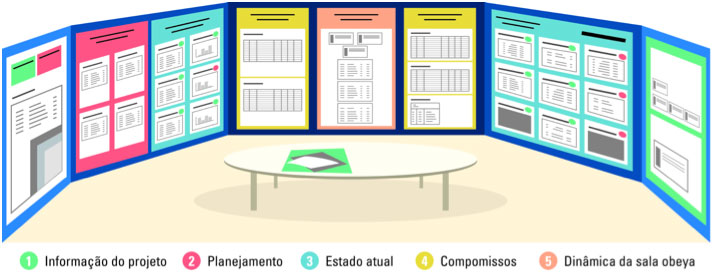
Fig. 2 – obeya rooms
Such forms of representation through maps, as illustrated by the multi-tier diagram (fig. 3), allow easy identification of the critical nodes in the supply tiers, but they need to be fed by those sharing routines, establishing a fundamental alignment between the parties thanks to the addition of the visibility element.
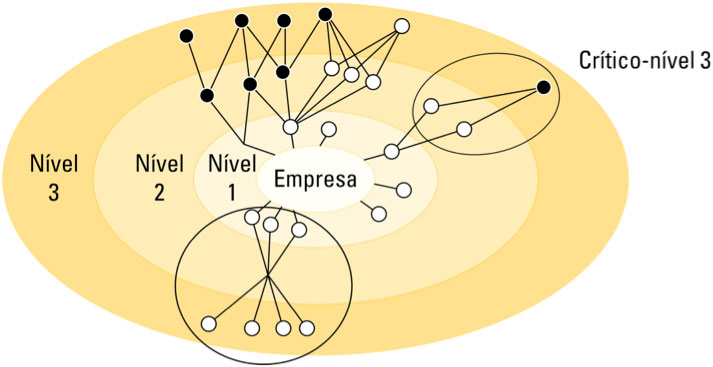
Fig. 3 – Diagram showing the visibility of the chain's critical points
Variability – variability is the chain design element linked to identifying the various variations that sometimes emerge in processes and are sometimes caused by other processes, followed by their classification according to whether they play a role of benefit or of waste for the chain, so that their maximization or elimination can be managed. It is a matter of seeking right-sized degrees of variability according to the specific situation and location in the lean supply chain. If the situation refers to the quality standard flowing through the chain, variability should be as low as possible or within the specifications prescribed for the product, good or service. On the other hand, if we are dealing with the outcome of processes dedicated to problem solving, greater variability in generating alternative solutions is desirable, because it allows greater chances of conceiving, comparing and choosing the best alternative, as demonstrated in experiences with set-based design in LPPD and problem-solving methods.
The design of the lean supply chain should specify the degrees of variability required in each relationship situation in the chain, defining at each point the transitions from sources of high variation in alternatives to low variability in execution. A variability funnel is defined, starting from a wide opening for participation with ideas, proposals and experiments until reaching the standardized and stable, low-variability specification. Figure 4 illustrates this movement of variability, which is designed for each relationship in the chain.
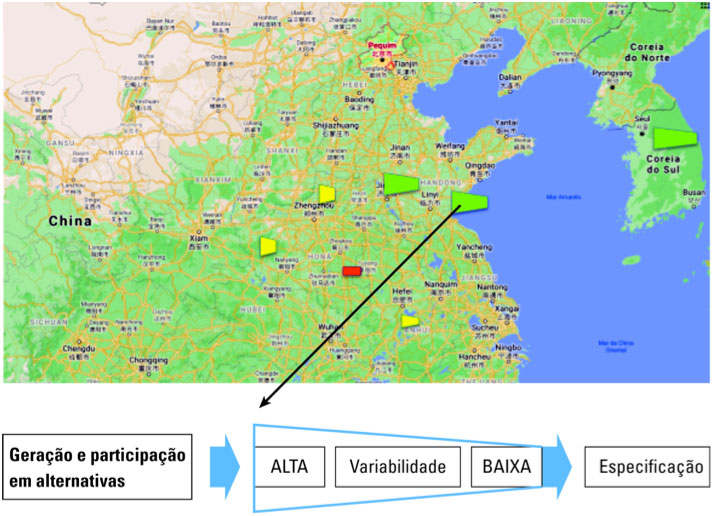
Fig. 4 – distribution of variability in the chain
This is the movement of variability. Together with the other elements, it makes it possible to achieve the dynamic capability of adaptability. On the one hand, the high variability encouraged in the set-based generation of ideas, alternatives and experiments allows a greater possibility of choosing the best adaptation solution for new market situations, which, once achieved, quickly migrates to the stability of that solution in a low-variability execution, in a standard and precise way. It works as a generator in the search for the best form of adaptation, which, once chosen, is standardized throughout the flow with that form and specification.
High variability at one end ensures the redundancy needed to create new opportunities and innovations and, at the other end, low variability in executing the chosen standard is what ensures the deployment of the specification in each process and allows all supply chain flows to quickly learn and operate at the required quality and service level.
In that year of 1997, many alternatives were offered by other Toyota suppliers to solve the problem: reuse of different machines, various devices, many proposals for converting processes to manufacture the P-valve, etc. Some succeeded and others did not, in a wide variability of actions at the start. In the end, they ensured the low variability of the specification when manufacturing of the P-valve resumed, an example of adaptability.
Finally, the lean supply chain pursues the intricate balance of these elements throughout the supply chain, with the combination of the 4Vs making it possible to achieve the dynamic capabilities of agility, alignment and adaptability, which will give the chain greater competitiveness and resilience. In this article we have worked on the concepts, illustrated by the classic case of the disruption at Toyota in 1997 and by the more general and recent one involving automakers, because of chips during the pandemic. Structuring the chain design with the 4Vs is a continuous and complex task that requires the help of digital technologies to gather quantitative and qualitative data in the case of large networks. One can start with a few points in the chain and then proceed to expand until reaching the point where the data set will be of such magnitude that it will naturally require digital conversion for visualization and monitoring, nothing far from the technologies currently available. However, before technology, the concept of the 4Vs needs to be truly understood and experimented with in the work of managing the chain. We hope this article has contributed to the reader's initial reflection and, who knows, to the first steps toward designing your company's lean supply chain.
NOTES
(1) The development of these principles is a reinterpretation of the 4Vs that appear in the work of IYER, SESHADRI and VASHER. Toyota Supply Chain Management, New York: McGraw Hill, 2009. They were given new meaning based on reflections and comparative practices with strategies based on dynamic capabilities. Readers interested in going deeper can consult the case study in A. Davies, M. Dodgson, D. Gann.Dynamic capabilities in complex projects: the case of London Heathrow Terminal 5. Project Management Journal, 47 (2) (2016 April), pp. 26-46 or David Hansen and Niels Møller. Conceptualizing Dynamic Capabilities in Lean Production: What are They and How Do They Develop? In Engineering Management 28(4):194-208, 2016.
(2) To understand LPPD and some of its applications in a variety of supply chain agents, readers can consult articles in TORRES JR., Alvair S. and GAMA, Claudia. Lean development e lean startup: perspectivas brasileiras. São Paulo: Liberars, 2020.
Learn more about lean supply chain in: Construindo o Fluxo de Atendimento Lean







