
How lean contributes to a more accurate and less “painful” accounting close
In purely quantitative terms, M. Dias Branco achieved a 63% reduction in its accounting close time while cutting by 49% the amount of overtime needed to carry out this process, all within just one year.
The numbers are impressive, but behind these figures there was an enormous qualitative gain in reflection on how to achieve goals sustainably and engage people who otherwise just carried out their daily activities without realizing their impact on the final purpose: the delivery to the organization's executives and shareholders.
Beyond results
The engagement of the 29 representatives from accounting and other areas of the company who were appointed to take part in this large undertaking was fundamental to spreading this proposal throughout the entire company. They acted as facilitators and multipliers of this new mindset. As a result, the engagement of people went far beyond these 29, not least because it was a project of the organization, and not only of the controllership area.
Understanding how M. Dias Branco arrived at such significant results is as important as, or more important than, the results themselves.
The challenge
The project began by mapping more than a hundred value streams from the various areas that fed into the accounting close process, which enabled the team to understand the value and weight of each one, identify and analyze the problems and their causes, and only then propose alternative solutions.
During this process, doubts and uncertainties arose, not least because other similar initiatives had already been tried without delivering significant results. However, M. Dias Branco's leadership saw in the lean philosophy the potential to change this cycle and began the effort with the support of Lean Institute Brasil.
Nevertheless, some important questions motivated the teams to review the entire process: “Which activities are really necessary?”, “What value do these activities actually generate?” or “Are the activities being performed properly?”.
“It was a process of diving in to understand the work, understand the activities and improve the flow”, according to Márcio Trévia, head of the costing area.
Besides being an end-to-end process that required in-depth examination of many processes across various areas, it was also necessary to look at the controllership's own activities and at the flows with external suppliers, from a broad systemic perspective.
The challenge was to think outside the box and, above all, to do things differently through simple solutions (since doing the same would bring the same results), with a focus on maximizing deliverables and eliminating waste, waiting times and rework.
This new thinking and this new planning had to be very well orchestrated and very well organized, designing a new value stream that would accommodate all needs and priorities. The tools needed to converge on the desired results.
But beyond achieving the reduction in accounting close time, there was a commitment that this reduction be sustainable, without rushing and without causing a loss in the quality of information or in employees' quality of life. All of this while prioritizing actions that did not primarily involve technology, only processes.
Attacking the causes
The next step required investigating the root causes and defining countermeasures to address them through simple short- and medium-term action plans that were created, tested, implemented and monitored throughout the project.
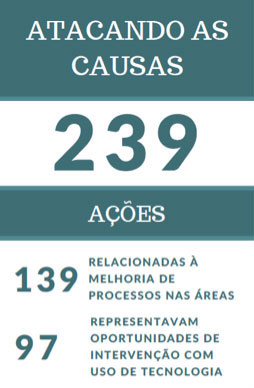
While the actions were being monitored, what was tested and worked was celebrated. Whatever failed in some way or was not enough prompted new discussions, analyses and countermeasures, with new action plans put in place.
The concept of correct and complete was also disseminated. The goal was to eliminate rework and unnecessary checks, and everything was to be generated correctly at the source by eliminating waste and maximizing value, in other words, focusing on what really mattered.
Sustaining the improvements
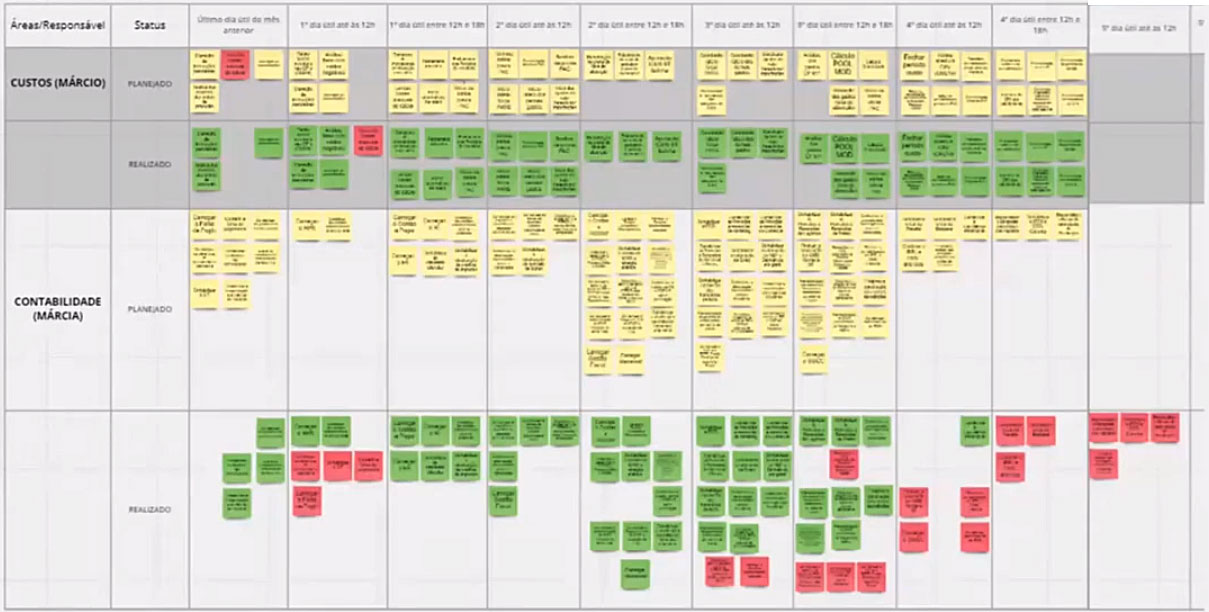
A key point was the use of daily management and visual management of the close, which served as a democratic checking tool that ensured everything that needed to be done was available there and could be revisited several times during the close, giving visibility to the deviations that were taking us away from our goals and enabling a quick search for solutions to problems.
And that is how, by overcoming obstacles, challenging limits and innovating in what mattered, the results started coming in. Not all at once, not as a surprise. But little by little. Reducing and sustaining. Improving the work and incorporating critical thinking.
More results
At the same time as these advances were being made, other benefits were observed: the time to run the company's cost processing routine, for example, was reduced significantly (by around 50%), and greater stability of execution was recorded thanks to the monitoring actions that were intensified by the project.
The future
M. Dias Branco is now seeking to sustain the engagement of the areas so that they can keep moving forward. In addition, they are seeking to continue the action plans, completing those that have not yet been finished, and to monitor the longer-term technology demands.
The dynamic of continuous improvement is already embedded and is encouraged by managers, and daily management of activities is expected to expand to more areas.
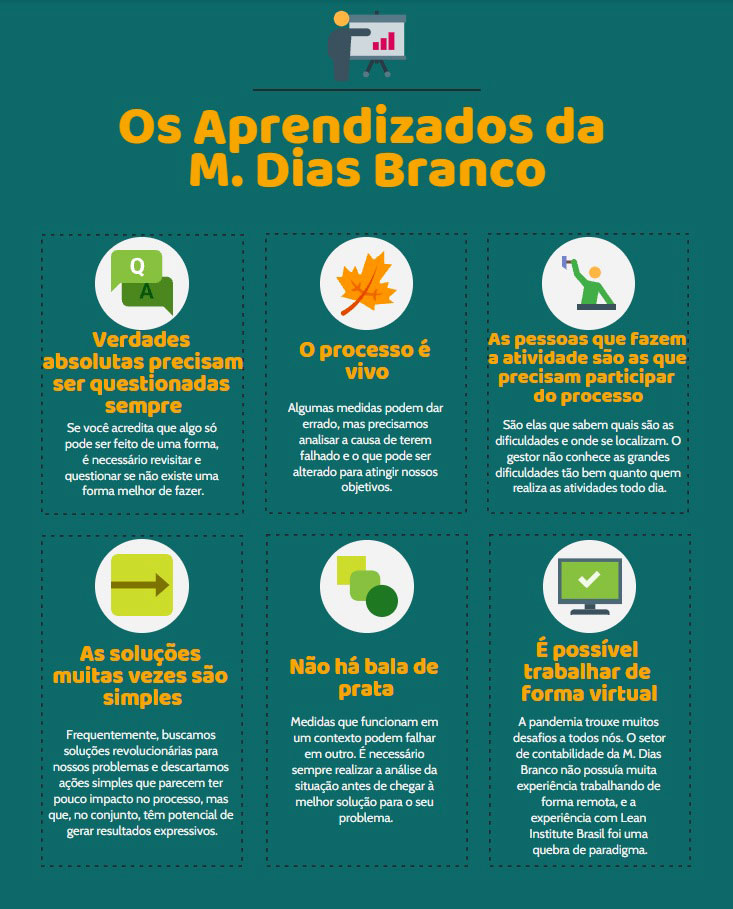
The Lessons Learned
After months working on the project, the M. Dias Branco team set out some important lessons learned.
This M. Dias Branco case shows us that bringing forward the accounting close means having information available earlier and, therefore, more time for analysis, which favors better-grounded decisions.
In the end, it does not matter where we start, but where we want to get to, and for that, leadership support and team empowerment are fundamental. When people understand that they can question the process and that they have the autonomy to propose solutions, the lean transformation begins to become a reality.







