

Lean people: why does transformation start with people?
Many organizations seek growth and innovation through the rigorous implementation of robust tools, but end up failing and do not achieve the expected results. This market pain occurs because the common mistake is to treat the business as a cold machine, forgetting that the true engine of change lies in the web of human connections.
Companies are, in fact, living and dynamic organisms. That is why lean culture must be understood far beyond simple cost reduction or the elimination of technical waste. It fully manifests itself when it promotes an environment of mutual respect and a focus on human development, ensuring that process improvement goes hand in hand with the growth of the people who carry out those processes.
What is Lean Culture and why does it go beyond tools?
The concept of lean is often reduced to a "patchwork quilt of tools," such as 5S, Kanban or Value Stream Mapping (VSM). However, applying these techniques in isolation, without a profound change in mindset, generates only superficial gains that tend to disappear quickly.
True lean culture is, in essence, a sociotechnical revolution. It goes beyond "tool-ification" to transform the management system, changing the way people think, feel and solve problems every day. For this transformation to be sustainable, it is necessary to understand the ingredients of a lean culture, in which the leader evolves toward a socially developed and multidimensional view. Only through this connection between method and human behavior is it possible to sustain a continuous improvement system that generates real value.
Why do so many organizational transformation initiatives fail?
Many attempts at change founder because companies focus on the symptoms rather than on the root causes of failure. Based on the reflections in the article "Where did we go wrong?", the main reasons why transformations fail include:
- Excessive "tool-ification": Treating Lean merely as a set of isolated techniques, ignoring the philosophy behind them.
- Lack of communication: The absence of clear and transparent dialogue generates insecurity and cultural resistance.
- Low engagement from leadership and HR: Without the direct support and active participation of these pillars, initiatives lose strength and priority.
- Authoritarian leadership: The transformation only becomes sustainable when leaders abandon the role of "dictators" and take on the stance of facilitators of human potential, removing obstacles day to day.
If you have ever wondered why the improvements identified are not always implemented, know that the answer almost always lies in the quality of the connection between people and in the transparency of the process.
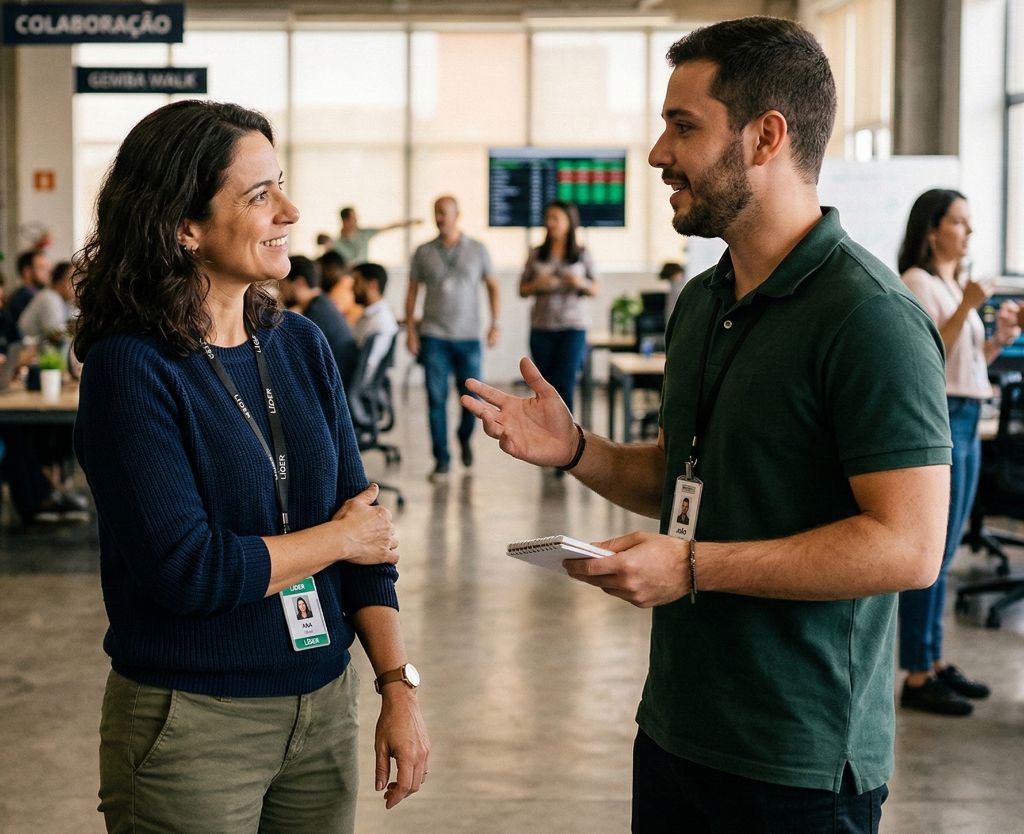
Figure 1 — Leader practicing active listening with an employee in the workplace, exemplifying lean leadership and psychological safety.
Transformational lean leadership: the role of those who guide change
For organizations to achieve sustainable results, it is essential to develop lean leadership capable of moving hearts and minds through new "power skills." Real change does not happen by decree, but through the leader's active presence in the place where the work happens (gemba), practicing intellectual humility and setting a personal example.
The role of this new leader involves:
- The ability to create psychological safety: it is necessary to develop an environment of total candor, where people feel safe to admit mistakes and ask for help without fear of retaliation.
- Vulnerability and genuine connections: the humility to recognize that one does not have all the answers and the courage to be vulnerable are the foundation for building real trust and an authentic connection with the team.
- Leading with respect and inclusion: the leader must ensure that each individual is valued in their diversity, offering autonomy so that everyone can critique and improve their own work.
- Being the example (actions over words): the authority of lean leadership is born from daily practice. If the goal is for the team to meet deadlines, the leader must be the first to meet theirs; if the leader wants people to look for the root cause of problems, he or she must lead that effort by example.
3 pillars for putting people at the center of Lean Culture
For the transformation to be humanized and effective, the organization must base its People Management strategy on three fundamental pillars that prioritize the individual:
- Psychological Safety at Work
- Active Listening and Assertive Empathy
- Daily Management (DM) as a development tool
Silence and fear of retaliation are the greatest enemies of innovation and continuous improvement. Psychologically safe environments are those where people feel free to raise their hand and point out failures before problems reach the end customer. When a mistake is seen as a learning opportunity and not as grounds for punishment, the team becomes more engaged and proactive. To delve deeper into this concept, check out these 5 insights on leading for everyone's psychological safety.
Lean leadership needs to master the art of communication. Active listening goes far beyond just hearing words; it is about understanding the context without judgment and validating the team's feelings. This makes it possible to hold difficult conversations with deep respect, using assertive empathy to separate the problem from the person. By focusing on the process and not on culprits, the leader strengthens the bonds of trust.
Daily Management meetings should not be bureaucratic rituals focused only on looking at cold numbers and performance indicators. DM should work as "listening circles" and technical support. It is the moment when leaders make themselves available to the team, shifting from a stance of demanding results to a transformative question: "How can I help you today?". This regular follow-up is what ensures the sustainability of improvements and the continuous development of employees' competencies.
New release: dive deep with the new book “Gente Lean”
The understanding that organizational transformation depends on people is what separates ephemeral success from sustainable excellence. To illustrate in practice all the pains and solutions discussed in this article, Lean Institute Brasil will soon present the book “Gente Lean” (Lean People), written by Ricardo Augusto Floret Oréfice and Robson Gouveia.
Written in the format of an engaging business novel, the book narrates the journey of Cristina and Eduardo within Grupo Marquez. Through their challenges, the book shows that valuing human beings and investing in real connections is not an obstacle to technical or financial performance; on the contrary, it is the only foundation capable of sustaining extraordinary results in the long term.
“Gente Lean” serves as a mirror for leaders at all levels who want to lead with humanity, empathy and the boldness needed to break with obsolete management models.
Soon, the new book "Gente Lean" will be available at LeanShop to help you discover how to transform your company's culture through human connections. Access it here.
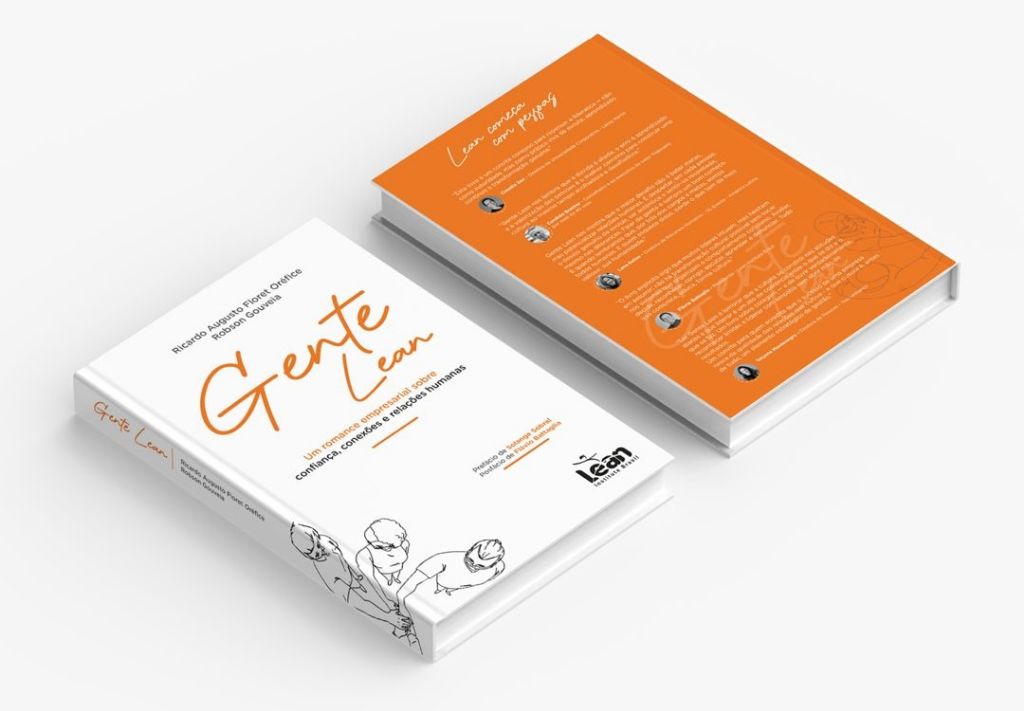
Figure 2 — Mockup of the front and back cover of the book Gente Lean by Lean Institute Brasil, highlighting the work on trust, contexts and human relationships in lean thinking.
Conclusion
True organizational transformation is not the result of isolated technologies or packages of methodologies, but rather of what happens in the hearts and daily attitudes of each employee. Without genuine human connection, there is no trust — and, without trust, lean does not survive.
Sum up your journey: prioritize people, strengthen leadership and reap results that go far beyond operational indicators.
Do you want to develop your leadership for this new scenario? Learn about Lean Institute Brasil's Lean Leadership development and training programs. See the open classes here.


