

Lean audit: what it is for, tools and step-by-step
A lean audit is a structured assessment of the workflow whose central objective is to turn day-to-day observations into concrete improvement actions.
Unlike merely normative or compliance audits, which check whether procedures are being followed, a lean audit combines direct observation (gemba), measurement and analysis to identify waste, bottlenecks and variability — always through the lens of the customer and the value stream.
The focus is on discovering where the process loses time or quality and prioritizing interventions that produce rapid impact (quick wins) and sustainable benefits over time.
Read on to learn more about this operational efficiency assessment.
What is a lean audit?
A lean audit is, first and foremost, a systematic diagnosis. It brings together three fundamental pillars:
- Field observation: at the place where the work happens (gemba);
- Collection and validation of operational data: analysis of cycle times, waiting times, WIP (work in process), rework rate, OTIF, among others;
- Application of a checklist: lean criteria covering work organization, visual management, standardization, maintenance, flow and quality.
With these elements, the audit does not just describe problems: it prioritizes root causes and translates opportunities into an action plan with owners, deadlines and indicators for follow-up.
What is it for and when should it be applied?
A lean audit is a practical assessment of the workflow that identifies waste, prioritizes interventions and generates an action plan with clear targets.
Its objective is to improve the speed, quality and predictability of the process, turning gemba observations into measurable results.
The main objectives of a lean audit include:
- Diagnosing waste and bottlenecks: locating waiting, excess inventory and rework.
- Prioritizing high-impact improvements: selecting actions that deliver rapid results (quick wins) and structural projects.
- Standardizing practices: reducing variation between shifts and operators through procedures and visual management.
- Generating a plan with KPIs: defining owners, deadlines and metrics (lead time, %VA, WIP, OTIF) to monitor gains.
Knowing the objective is not enough; it is also important to understand when to apply this assessment. Below are the main reasons to use it:
- After significant changes (a new system, a change of layout or outsourcing) to validate their impact.
- When lead time or variability increase, clear signs of loss of flow.
- Before automating processes, so as not to automate inefficiencies.
- As a governance routine (e.g., every 6–12 months) in critical processes, to sustain continuous improvement.
How does a lean audit work?
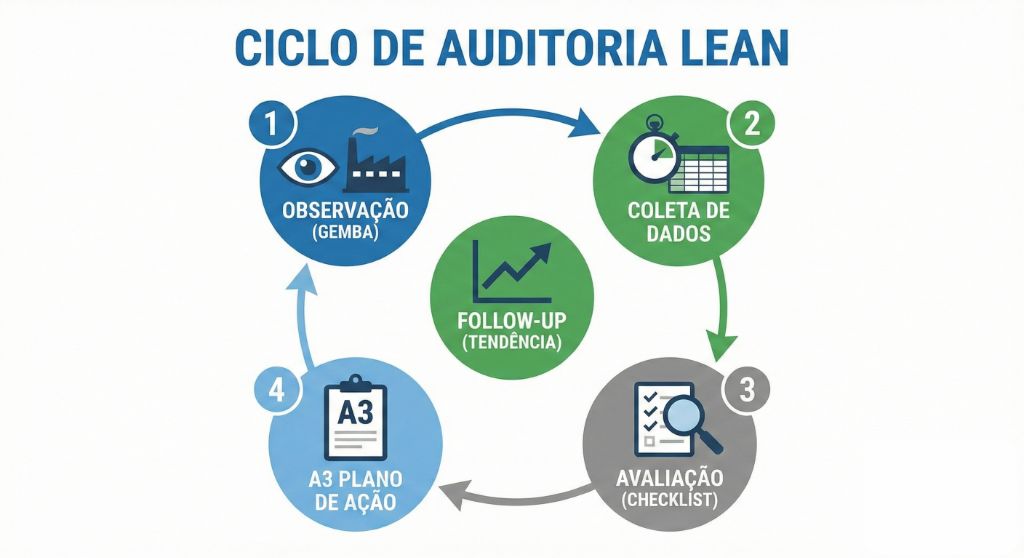
Figure 1 — Infographic of the lean audit cycle: observation at the gemba, data collection, assessment, action plan and follow-up.
In practice, a lean audit is a living management mechanism. It operates continuously within organizations to ensure that lean principles are truly built into day-to-day work, not just as tools, but as a way of thinking and acting.
Its objective is to verify adherence to lean principles and to identify waste and deviations in the flow, placing continuous improvement at the center of operational decisions. More than a one-off assessment, it works like a radar that measures the lean health of processes over time.
The principles assessed include:
- Value for the customer: whether activities actually add value as perceived by the end customer.
- Continuous flow: whether work flows without interruptions, queues or rework.
- Standardization: whether there are clear standards and whether they are followed consistently.
- Continuous improvement (Kaizen): whether there is constant learning from problems and results.
Participation is collaborative. Those involved are:
- Leaders and managers, who ensure resources and strategic direction.
- Operational teams, who contribute observations and insights directly from the gemba.
- Internal auditors or lean facilitators, responsible for collecting evidence and consolidating the diagnosis.
During the audit, processes, routines, indicators and cultural aspects are analyzed — such as operational discipline, behavior in the face of deviations and the use of lean tools. The work combines:
- Direct observation at the gemba, to see how the process really happens.
- Measurements and data analysis, such as cycle times, WIP and rework.
- Interviews with operators and leaders, seeking to understand causes and perceptions.
- Collection of visual evidence, which makes deviations clearer and more objective.
The expected result is a diagnosis of the lean maturity level of the audited area, highlighting good practices, gaps and opportunities for improvement. Based on this diagnosis, concrete actions are prioritized — from simple adjustments to structural projects — which feed the continuous improvement cycle.
Lean audit vs. traditional audits: what is the difference?
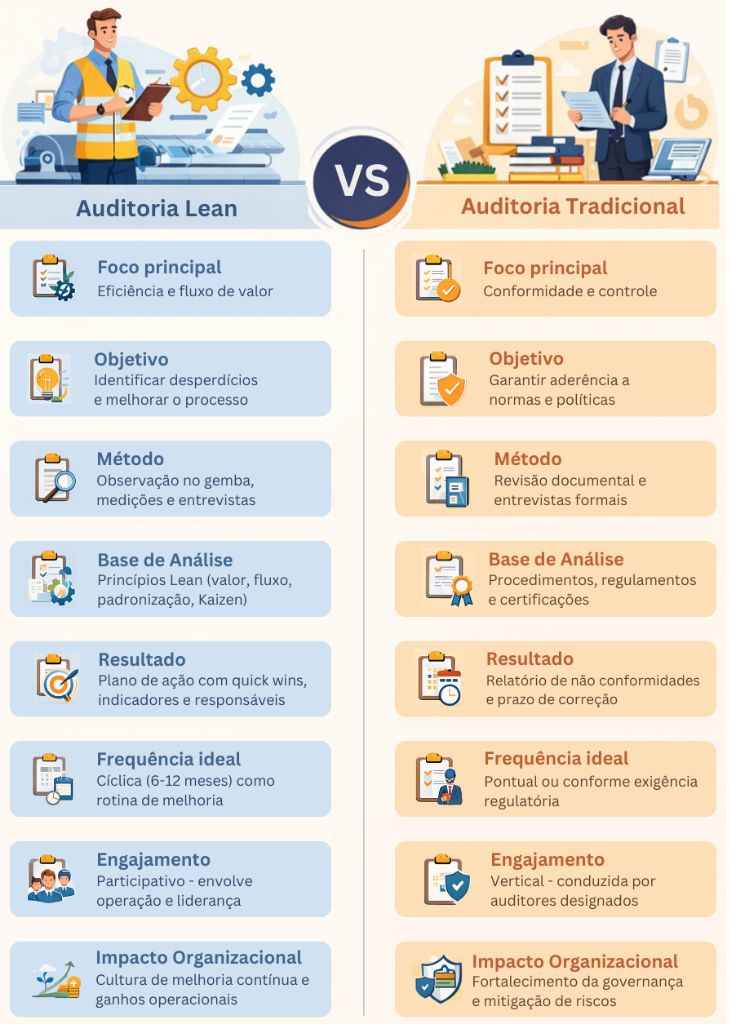
Figure 2 — The infographic summarizes the practical differences between audits oriented to the value stream (lean) and formal compliance audits. Use it as a quick guide to choosing the right approach according to your objectives: operational efficiency or control/regulation.
A lean audit prioritizes observation at the gemba, measurements and actions with immediate impact (quick wins) to improve flow and efficiency. Traditional audits focus on compliance, documentation and risk mitigation. The two types are complementary: choose lean for operational gains and traditional audits for legal requirements and certifications.
What is the strategic role of auditing in the lean methodology?
A lean audit is more than a control: it is a strategic instrument that turns gemba observations into high-impact decisions.
By combining measurement (times, WIP, rework) with operational perception, it reveals waste and prioritizes where to invest to generate the greatest return — reducing lead time and improving OTIF.
In addition, the audit creates operational governance, with reports containing KPIs, owners and deadlines that turn intentions into measurable commitments, making it easier to secure leadership sponsorship and the release of resources.
Culturally, it promotes transparency and engages those who do the work — the solution comes from those who carry out the work, rather than being imposed from the top down.
Before automating or redesigning a layout, the audit ensures that you do not “automate” inefficiencies; it grounds investment decisions in concrete data.
Finally, by documenting the Current and Future States (Current and Future State) and tracking results, the audit becomes a mechanism for organizational learning capable of replicating and scaling gains across units.
How does a lean audit contribute to continuous improvement?
A lean audit feeds a continuous improvement cycle: starting from the gemba and objective measurements, it identifies waste and bottlenecks; it turns these conclusions into action plans with owners and KPIs; it validates the results and restarts the cycle, generating operational discipline and sustainable gains.
Below, see the flow item by item, with an explanation of each step:
- The audit detects opportunities: starting from the gemba and objective measurements (cycle times, WIP, rework), the audit identifies waste, bottlenecks and variability. This evidence shows where the greatest potential for gains lies and serves as the basis for fact-based decisions.
- Action plan: the opportunities are turned into a plan with initiatives prioritized by impact and effort, owners, deadlines and KPIs. This formalization turns insights into operational commitments, making it easier to secure leadership sponsorship and allocate resources.
- Implementation of improvements: the actions are carried out in short cycles — quick wins for immediate results and structural projects for larger changes. The iterative approach (test, adjust, standardize) makes it possible to learn quickly without interrupting the operation.
- Reassessment: after implementation, the KPIs are monitored to confirm the effect of the interventions. If necessary, adjustments are made based on data, ensuring that the changes deliver the expected benefit.
- New audit: a follow-up audit validates gains, updates the flow map and identifies new opportunities. This step closes the loop and ensures that improvements are sustained and do not revert to the previous status.
- Constant evolution: by repeating the cycle (audit → act → measure → re-audit), the organization builds a discipline of continuous improvement. As a result, variability decreases, predictability increases and good practices are replicated across processes and units.
Criteria, questions and standards assessed in a lean audit
The criteria assessed in a lean audit serve as a practical reference for checking the health of the flow and prioritizing interventions.
They combine visual, operational and metric aspects — allowing the team to quickly identify where there is waste, risk or an opportunity for improvement.
Below are the main points assessed and what to look for in each one.
- 5S / organization and cleanliness: check whether the workplace is organized, with materials in the right place, elimination of unnecessary items and a cleaning routine that support efficiency and safety. Good practice reduces search time, prevents losses and makes standardization easier.
- Visual management: assesses whether there are signs, boards and indications that guide the work (instructions, indicators, WIP limits). Visual management makes problems obvious and speeds up decision-making at the gemba.
- Flow and leveling: looks at the existence of queues, batches or imbalances between stations that generate waiting and variability. Identifying where the flow gets stuck makes it possible to prioritize balancing, batch sizes and production policies.
- TPM / maintenance: analyzes whether machines and equipment have a preventive maintenance plan, downtime records and availability indicators. Proactive maintenance reduces unplanned downtime and process variability.
- Quality at the source: checks mechanisms that prevent defects from reaching the customer (checks at the source, poka-yoke, immediate control of nonconformities). Ensuring quality at the point of origin reduces rework and the cost of quality.
- Work standardization: confirms whether there are clear procedures, visual instructions and training that ensure consistent execution across shifts and operators. Well-applied standards reduce human error and make incremental improvements easier.
- Safety and ergonomics: assesses physical risks and postures, focusing on preventing accidents and operator strain. Safer and more ergonomic environments sustain productivity and reduce absences.
- Indicators: checks the existence of, and adherence to, relevant metrics (lead time, cycle time per step, %VA vs NVA, WIP, OTIF, rework rate). Well-defined indicators make it possible to measure the impact of actions and prioritize efforts based on data.
Which lean tools support the audit?
Lean tools are the instruments that turn the audit's diagnosis into concrete actions.
Each tool addresses one aspect of the flow — diagnosis, standardization, control or problem solving — and, when combined, they make it possible to identify causes, test quick solutions and sustain gains over time.
See some examples of tools below:
- VSM (Value Stream Mapping): Maps the current flow (current state), showing lead time, cycle times and the percentage of non-value-added time (NVA). It is the basis for prioritizing where to act: from the map it is possible to design the Future State and calculate potential gains.
Tip: use VSM at the start of the audit to set priorities and measure the impact of actions. - 5S / Value stream: 5S organizes and disciplines the work environment (sense of utilization, organization, cleanliness, etc.), while the focus on flow reduces search times and rework. Together, they create the physical and behavioral conditions for the improvements designed in the audit (audit) to be sustainable.
Tip: implement 5S as a quick win to free up operational time immediately. - Kanban: A visual system for controlling WIP (Work in Process) and leveling production between stations. In audits, Kanban helps translate decisions on limiting WIP and test pull policies without major investments.
Tip: start with simple cards or visual boards before migrating to digital systems. - TPM (Total Productive Maintenance): Structures preventive and autonomous maintenance to reduce unscheduled downtime and equipment variation. In the audit, TPM indicators (MTBF/MTTR, availability) identify risks that affect lead time and quality.
Tip: incorporate TPM checks into the daily checklist to reduce post-audit surprises. - A3 / PDCA: A structured method for diagnosis, root cause analysis and an action plan with verification (Plan-Do-Check-Act). The A3 organizes problems identified in the audit into projects with owners, targets and verification of results.
Tip: use A3s for medium-sized projects that fall outside the scope of quick wins. - Audit checklists and templates: Standardized documents that ensure consistency between audits, make comparisons over time easier and speed up data collection at the gemba. Good templates reduce bias, secure evidence and make follow-up simpler.
Tip: keep a versioned repository of templates and record results for internal benchmarking.
How do you prepare your team for a lean audit?
Preparing the team is an essential condition for a lean audit to produce real results and be received with confidence. Good preparation reduces resistance, ensures the quality of the data collected and speeds up the implementation of the improvements identified.
Below are some practical guidelines that can make a difference in preparing for the audit:
- Advance communication about the objectives (it is not a “hunt” for culprits): clearly explain the purpose of the audit: to diagnose the process and generate improvements, not to punish people. A transparent message reduces anxiety and encourages collaboration, in addition to ensuring that operators contribute real information during the gemba.
- Short training in lean principles and tools: offer an objective briefing (30–60 min) on key concepts — VSM, 5S, standard work and what will be observed — so that everyone speaks the same language. This alignment makes dialogue at the gemba easier and improves the quality of observations and measurements.
- Involving the operation in designing the improvements: invite operators and line leaders to co-create the checklist and validate hypotheses: those who do the work usually have practical solutions and avoid impractical proposals. This involvement increases buy-in for the changes and speeds up the implementation of quick wins.
- Leadership reinforcement — an active sponsor to release resources: make sure a leadership sponsor is committed to removing obstacles, approving resources and tracking results. Executive support is decisive in turning the action plan into real and sustainable changes.
How should indicators be used before and after the audit?
Well-defined indicators turn a lean audit from a one-off diagnosis into a measurable improvement process.
Before the audit, they serve to establish a reference point (baseline) and targets; afterwards, they make it possible to validate whether the actions delivered the expected results and to guide the next steps.
Below is how to use these indicators in practice.
Define the baseline (lead time, %VA, WIP, OTIF)
Before any intervention, measure the current state consistently. To do so, take representative samples (for example, 3–5 measurements per step on different days), record cycle times, queues and WIP, and calculate the door-to-door lead time.
Calculate %VA as:
(%VA) = (total value-added time / total lead time) × 100
For OTIF, clearly define the rule (e.g., complete delivery within the agreed deadline). Document the data sources (spreadsheets, ERP, counts at the gemba) and save the baseline as a reference for comparison.
Set clear, SMART targets
Convert the diagnosis into specific, measurable, time-bound targets — for example: “reduce lead time by 20% in 90 days” or “increase %VA from 25% to 40% in 3 months”.
Break the main targets down into intermediate milestones (30/60/90 days) and assign owners to each action. Realistic, well-communicated targets guide priorities and make it easier to allocate resources.
Monitor with cadence and discipline (dashboards and action triggers)
Set up a simple dashboard with the key indicators and review it at a frequency suited to the operation's cycle: fast processes → weekly meetings; longer processes → biweekly.
Use trend charts (run charts) and, where applicable, statistical control (control charts) to distinguish noise from real change.
Also define action triggers (for example: if lead time increases >10% relative to the target, open a corrective action) and an owner for monitoring and triggering countermeasures.
Celebrate gains and document lessons learned
When an action delivers results, record the evidence (before/after), communicate it to the team and formalize the new standard work.
Celebrating quick wins strengthens engagement and legitimizes the audit as an improvement tool, not just a control tool. In addition, document what worked and what did not (A3/PDCA) in order to replicate and scale good practices in other areas.
Lean audit in practice: step by step
Below is a practical roadmap for conducting a results-focused lean audit. Each step covers what should be done, what evidence to collect and tips for making the action more effective, from preparation to post-implementation follow-up.
Preparing the checklist
Clearly define the scope (start and end of the flow), the objectives of the audit and the criteria to be assessed.
Then put together a concise checklist with lean items relevant to the context (5S, visual management, times, WIP, quality) and prepare support materials (spreadsheets, stopwatch, camera).
Finally, confirm the team (facilitator, key operators, process owner and technical support) and inform the operation in advance, explaining the purpose and the agenda.
Mapping (gemba)
Go to the gemba and observe the process as it is carried out. The focus is on seeing what really happens, not just what is documented.
Then record the flow with photos and notes, and identify points of waiting, rework and deviations from the standard.
And finish by prioritizing visual evidence and operators' accounts to understand exceptions and how often problems occur.
Data collection
Take objective measurements, such as cycle times per step, waiting times, WIP counts, batch sizes and rework rates.
To do so, use consistent samples (several cycles on different days/shifts) to reduce statistical noise. Centralize the data in a standard spreadsheet to make comparison and analysis easier.
Assessment
Analyze the Current State based on the data and the checklist. To do so, identify waste, root causes (5 Whys / Ishikawa) and the points of greatest impact.
Also classify the opportunities by impact × effort to separate quick wins from structural projects. This guides priorities and helps estimate potential gains.
Report
Consolidate the evidence (map, photos, measurements) into an objective document that presents problems, causes and initial proposals.
And include an executive overview with the main gaps and an estimate of impact. The report should be clear for leadership and technical enough for the operation.
Results workshop
Present the Current State, the proposed Future State and the prioritized list of actions in a session with the operation and leadership.
Then validate priorities, deadlines and owners — use the workshop to co-create solutions and secure commitment. Quickly define the first actions (quick wins) to build momentum.
Action plan and implementation
Detail the actions with owners, the resources needed, deadlines and follow-up KPIs.
After that, carry out quick wins immediately to demonstrate results; structure larger projects with milestones and governance.
Do not forget to ensure training and support wherever there is a change of standard or tool.
Follow-up
Monitor the defined KPIs (lead time, %VA, WIP, OTIF, rework) at an appropriate cadence and check whether the actions delivered the expected effect.
Then schedule a follow-up audit or a new VSM to validate gains and identify the next opportunities.
Finally, implement a review routine (gemba walks, A3 meetings) so that improvement becomes an ongoing discipline.
What should you do after the lean audit?
After the audit, turn the diagnosis into action: in other words, consolidate the evidence, prioritize opportunities by impact and effort, and create a plan with clear owners, deadlines and KPIs.
Next, carry out the quick wins first to build momentum, while structuring larger projects (layout, automation, contracts) with governance and milestones.
It is also important to monitor the agreed indicators (lead time, %VA, WIP, OTIF, rework) at a defined cadence and adjust the actions according to the results. And when a change proves effective, standardize it immediately (instructions, checklists and training) to prevent backsliding.
Do not forget to communicate the gains to the team and to leadership, record lessons learned and schedule a verification audit to validate the results and identify new opportunities — that way, improvement stops being a one-off and becomes part of the operational routine.
Want to turn your diagnosis into concrete results?
Request a practical diagnosis with our lean audit experts: we offer an in-company workshop, a prioritized action plan and support all the way through to the implementation of the gains.
Talk to our experts or explore courses and cases from Lean Institute Brasil to request a diagnosis.
Conclusion
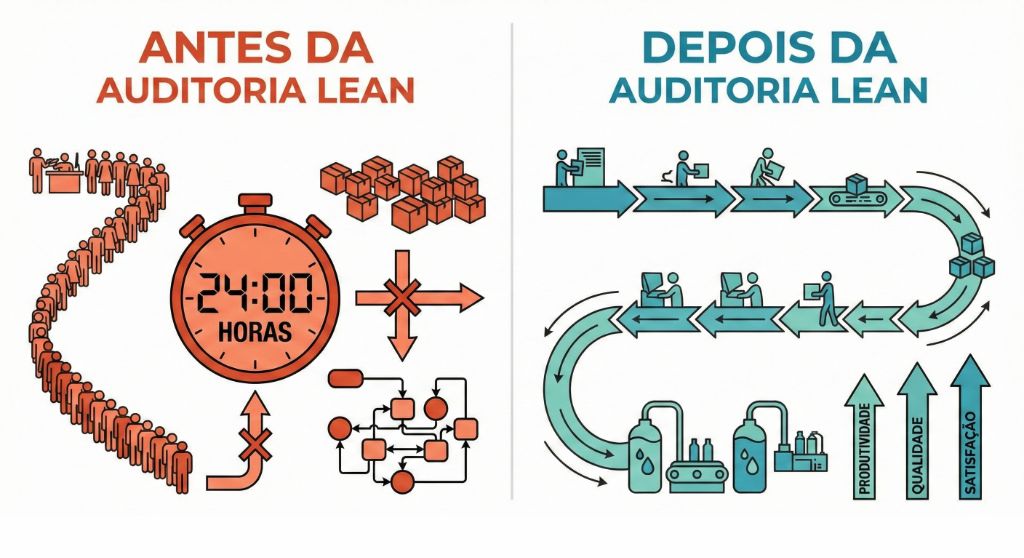
Figure 3 — Before-and-after comparison of a lean audit: reduced lead time and increased efficiency.
A lean audit is an essential tool for converting field observation and data into actions that reduce lead time, cut waste and increase operational predictability.
When applied with a focus on evidence, prioritization by impact and governance in execution, it not only corrects specific problems but also creates a discipline of continuous improvement.
Invest in regular audits, involve the operation and monitor results: this is the path to sustainable change and to scaling good practices in your organization.


