

Why you should connect hoshin kanri to A3 problem solving
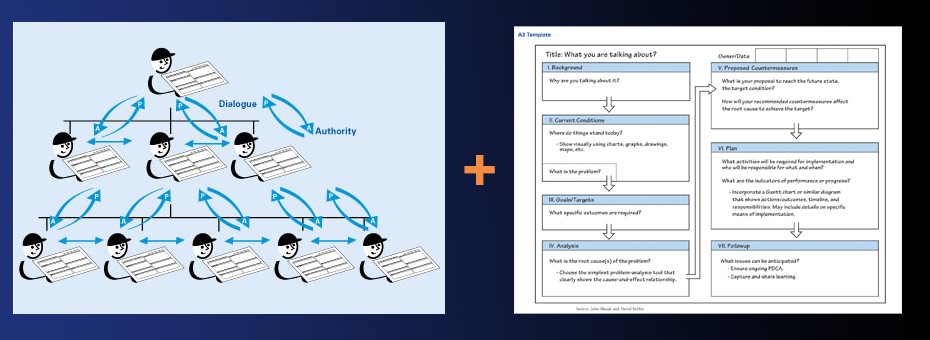
In 2014, I wrote “The body needs both skeleton and muscle to function”, which described the fundamental thinking behind the connection between hoshin kanri and A3 problem solving. In that article, I compared an organization to a human body. If we think of an organization as a human body, the management system represents the skeleton, which holds the organizational structure together. And A3 problem solving works as the muscle, generating movement and action. An organization's problem-solving capability grows stronger through practice, just as our muscles grow stronger through exercise.
An organization that integrates daily problem solving with a robust, long-term-oriented management system generates greater performance gains than an organization that has only one of them, or where the two practices are not connected. The relationship between problem-solving methods and the management system — especially the connection between the two — is crucial to optimizing organizational effectiveness. Combined, the two practices improve how an organization:
- Plans what it does.
- Executes those plans.
- Continuously improves.
Daily Management and practical problem solving
Most organizations, whether in manufacturing, construction, a restaurant chain, a hospital or any other, must manage across two time horizons — daily and for the medium and long term. Dealing with both simultaneously requires that you have both a daily management system and a strategic planning system. Likewise, each system needs a corresponding problem-solving methodology and a set of tools to deal with the problems that arise.
For example, if an assembly line is struggling to meet its daily production targets, the operators will work to fix the problem immediately, right then, or at least on the same day. This type of problem solving is called containment, or type 1 problem solving, by Art Smalley in his book “Four Types of Problems”.
In lean operations, type 1 problem solving, which helps achieve stability, happens when we establish clear standards that allow operators to act quickly on a deviation from the standard or to continuously improve based on the standard. The practice works exceptionally well in any operation that is repeatable (and many are repeatable even if companies think otherwise).
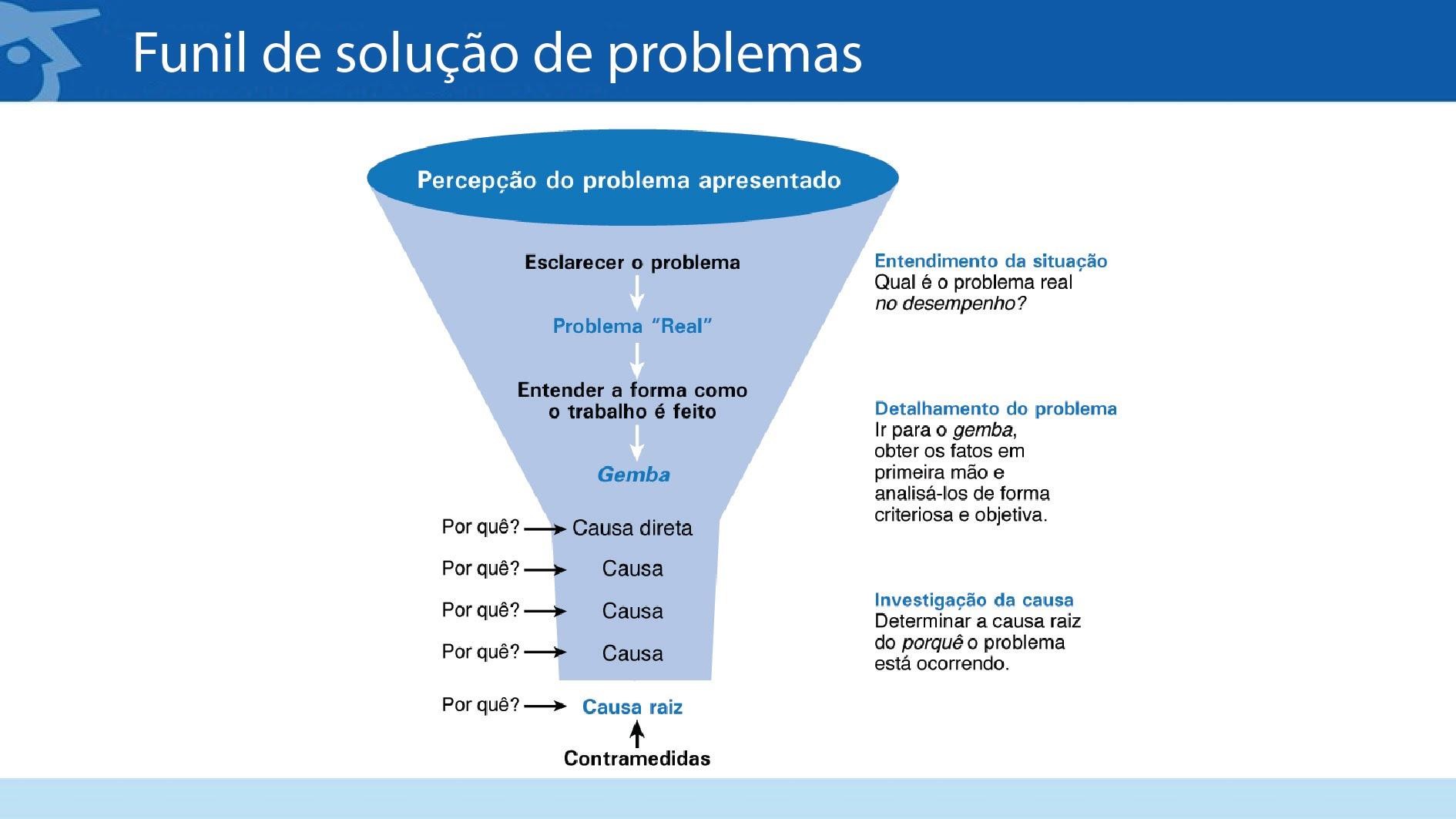
The root cause of this same problem, not achieving daily production, however, may also be a structural problem. For example, if we look across the entire assembly line and realize that a staffing shortage causes our production problem — we need 500 people a day on the line, but we consistently get only 470 —, that is a problem that must be solved using a broader-reaching problem-solving method.
Moreover, if the root cause is not resolved through daily management and problem solving, it is a strategic business problem. This type of problem is likely caused by structural issues and can result in losing ground to competitors. Many years ago, I worked closely with a home appliance manufacturer where this problem occurred. Unable to meet customer demand, it lost shelf space at Home Depot, which set them back significantly relative to competitors. This type of problem cannot be solved simply through daily management and problem solving.
The relationship between hoshin kanri and A3 problem solving
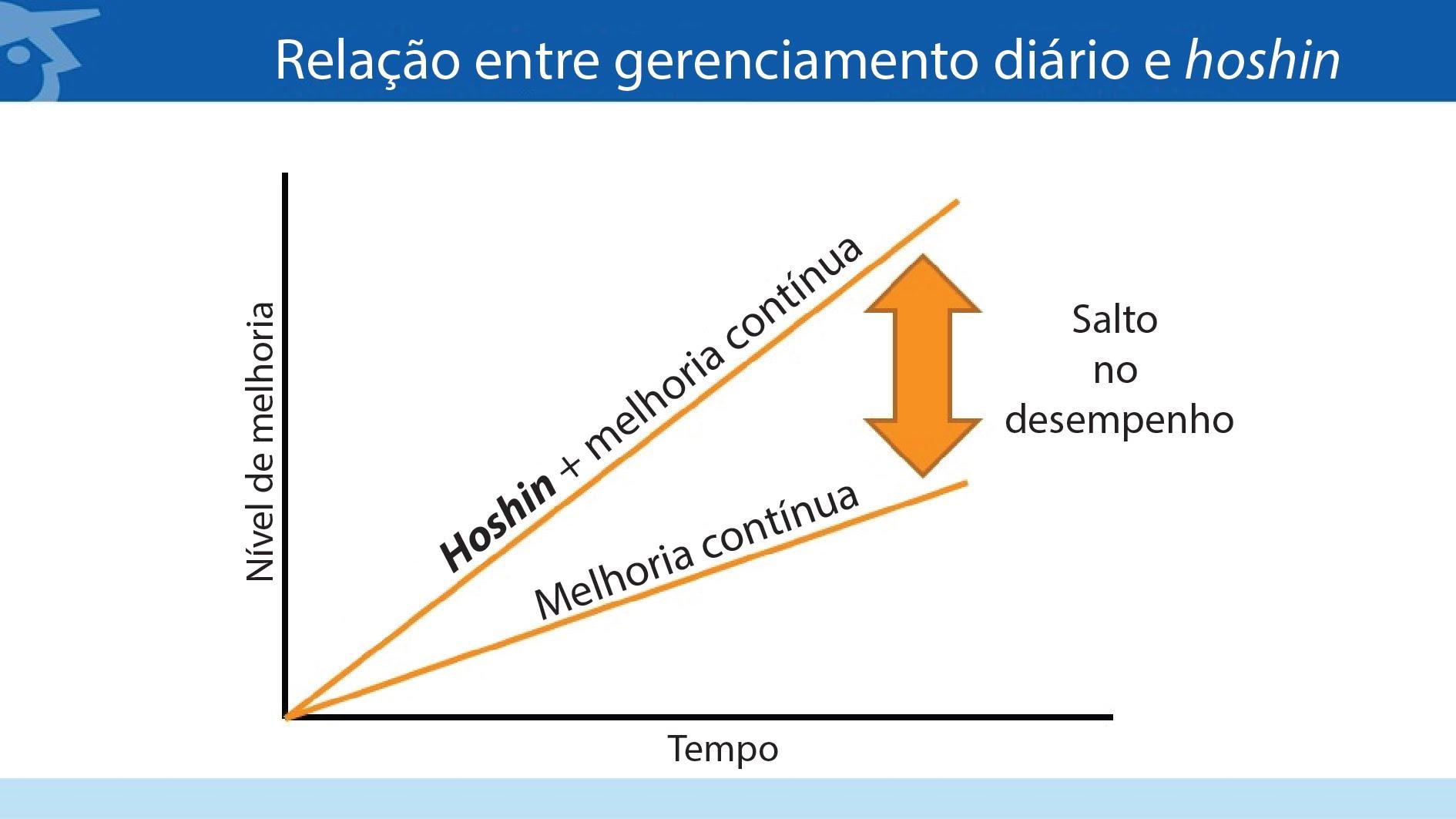
Combining hoshin and continuous improvement through A3 problem solving results in greater performance gains than either practice deployed alone.
Based on what I learned at Toyota, I define hoshin kanri as problem solving at the strategic and structural level — it focuses on innovation and encourages creativity.
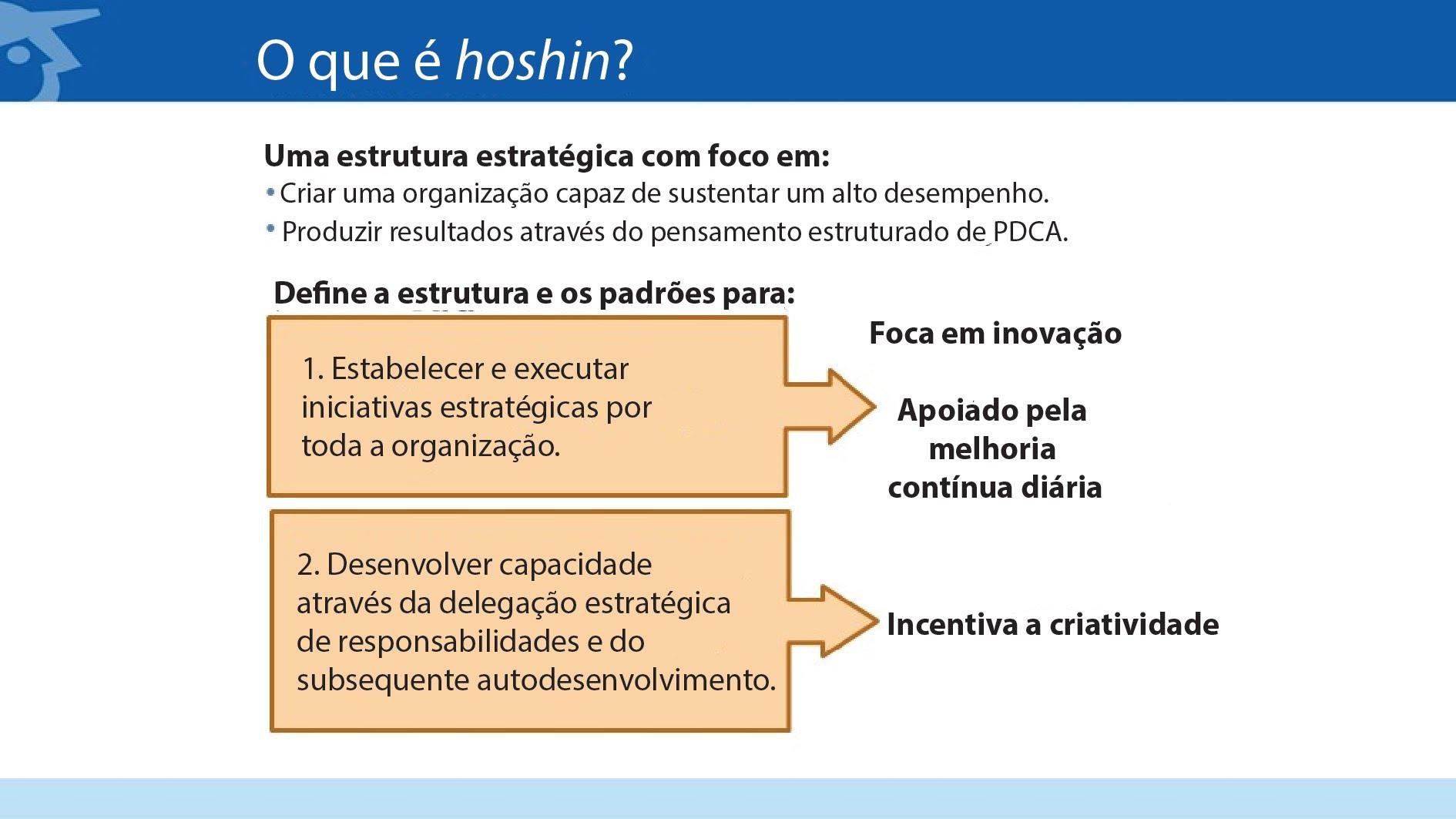
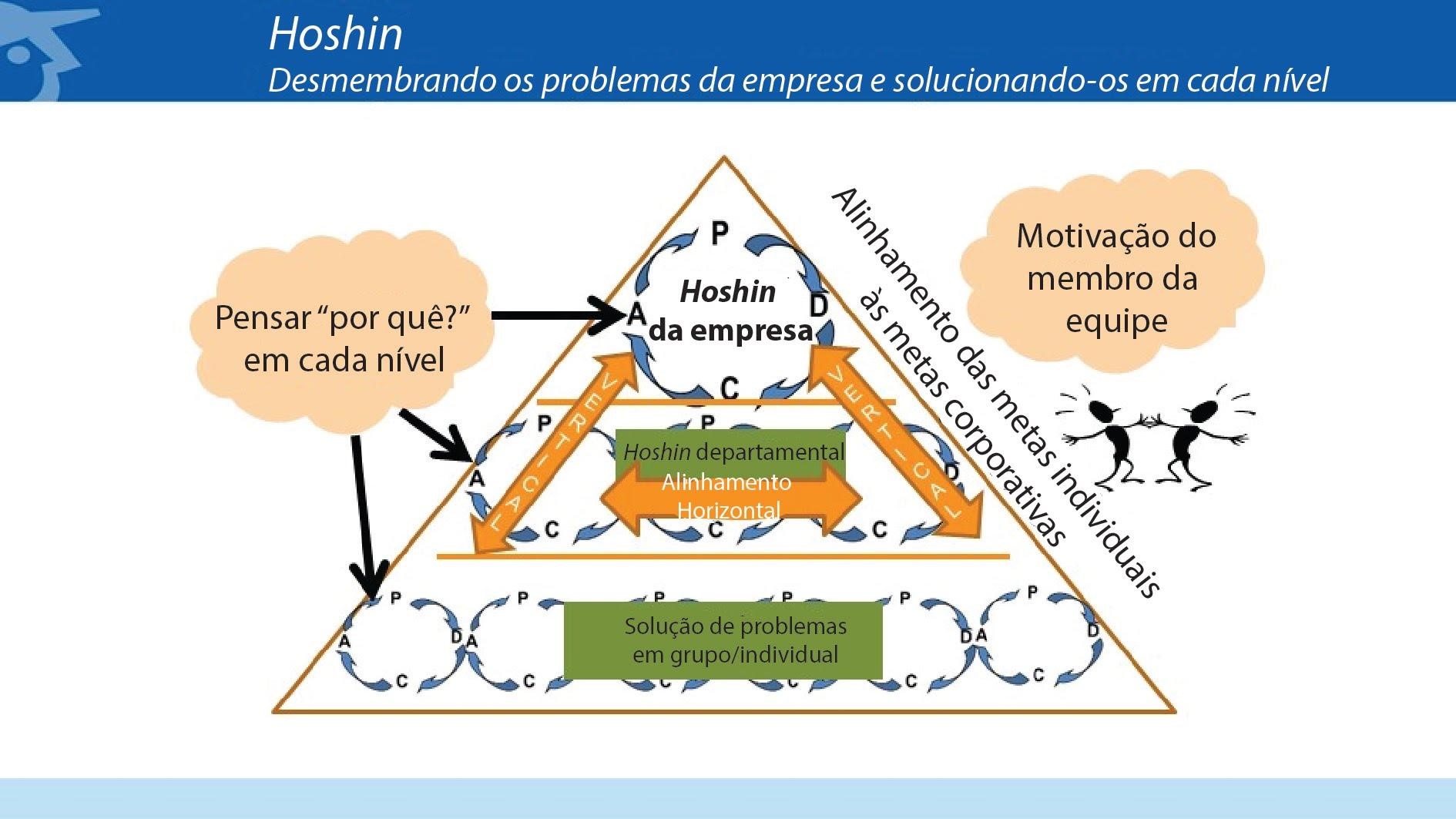
Hoshin kanri is a system that engages everyone in the organization not only as problem solvers, but also as innovators. Built as a top-down and bottom-up idea-generation system, hoshin kanri brings the organization to a higher competitive level based on innovative thinking throughout the organization. I often show this illustration to represent the essential thinking:
So how does A3 problem solving fit in? If we think about the problem we discussed earlier, of missed production targets caused by a staffing shortage, you can imagine many possible root causes. The problem could be caused by wages, working conditions, the market in general, the culture at the production plant, management problems, the level of automation or many other reasons. It is also possible that the problem is not unique to this plant, but something that all of the company's plants are experiencing. The operators cannot solve these problems through containment.
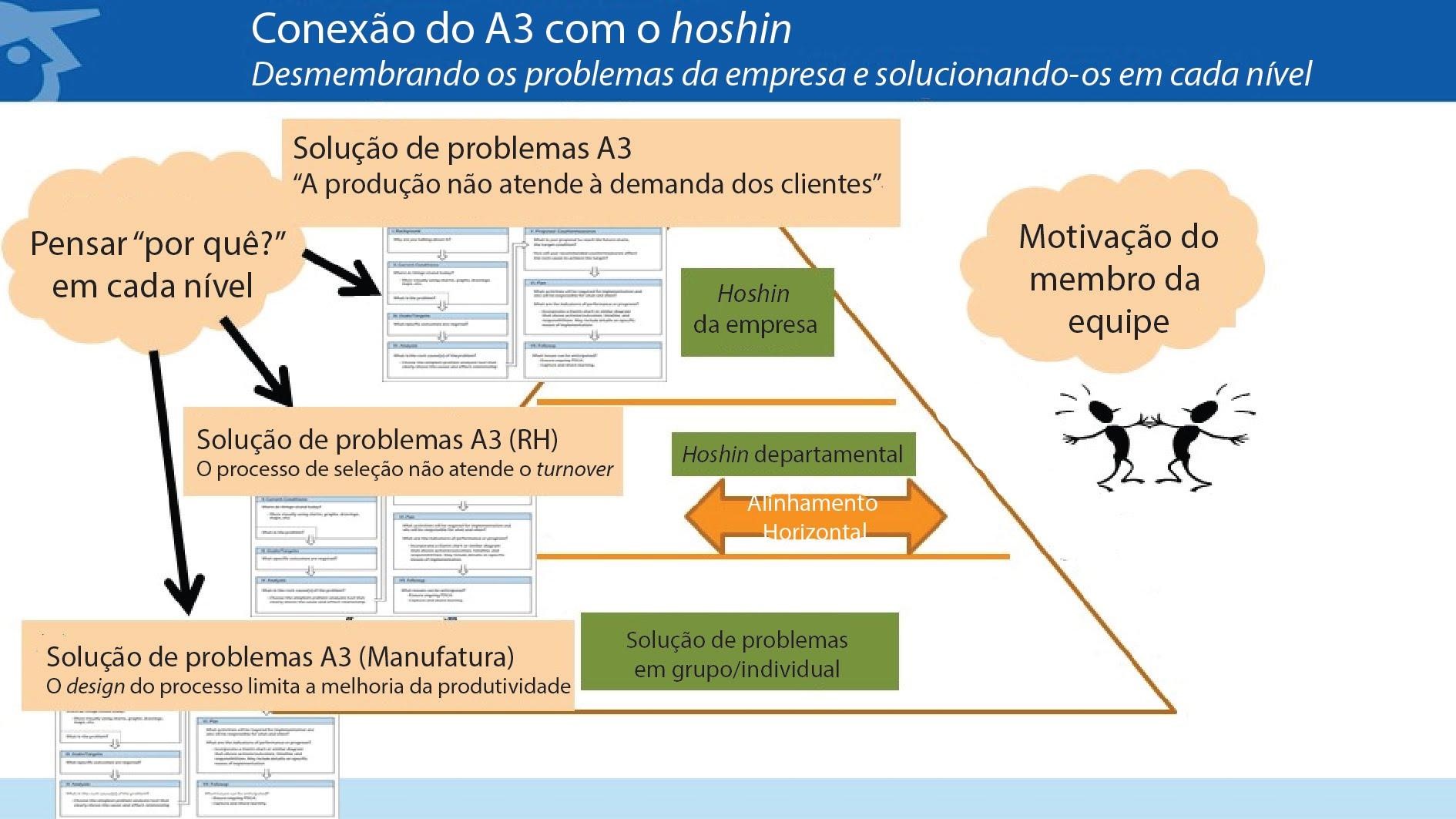
To solve a structural problem like this, you need a problem-solving method that prioritizes and provides what is needed to solve this problem at the corporate level, aligned with many parts of the organization, including manufacturing, engineering, human resources, finance or other departments. The best method is to have A3 problem solving included in your hoshin kanri plan. With the A3 strongly connected to hoshin, the organization will not only solve the problems, but will also have the opportunity to create new ways of operating across the entire business.
Toyota has solved problems of missed production targets over the last 20 years by building its A3 problem-solving muscle within its structural hoshin skeleton. This approach allowed Toyota to innovate in the way it builds vehicles by reducing the difficulty of the work rather than the number of people needed to do it. Its innovations allowed more people to complete work tasks more efficiently. While I was at Toyota, I probably wrote or helped create 500 A3s, and they were predominantly used to solve problems derived from hoshin priorities at the corporate or functional level.
Problem solving = Innovation
Connecting A3 problem solving with hoshin ensures that the company engages people throughout the organization to solve organizational or corporate problems.
In the book “Managing to Learn”, by John Shook, the protagonist Desi Porter is given a problem to solve related to the quality and speed of translating a document. While his assignment starts out as a seemingly simple problem, he discovers that it is very complicated and that solving it will require the involvement of engineers, salespeople and others.
In addition, Desi can clearly see how his A3 connects to and supports the higher-level hoshin objective — launching a new production plant on time — that Ken Sanderson, his boss, is working to achieve.
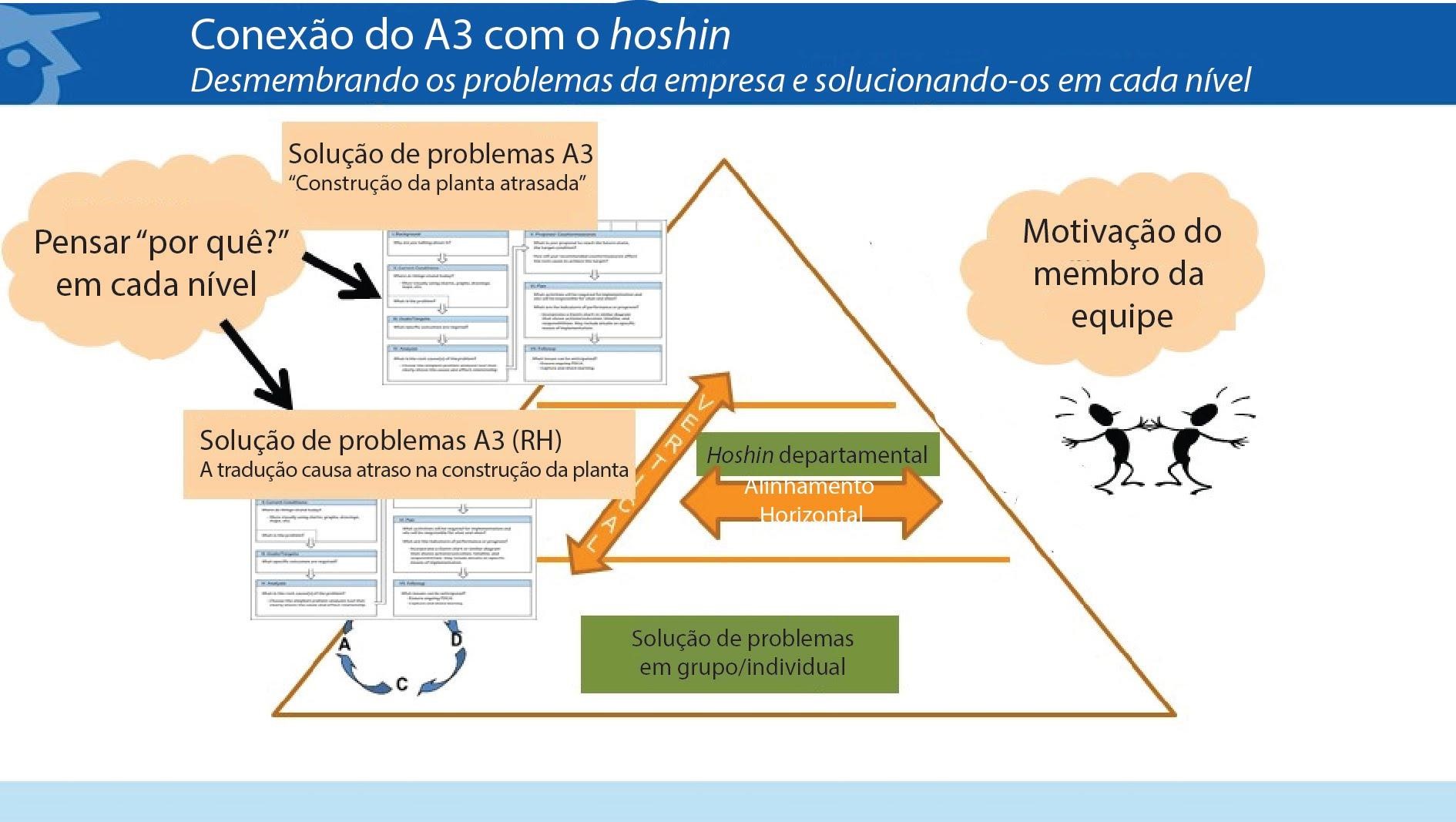
Ultimately, hoshin and A3 problem solving are symbiotic. Like our skeleton and our muscles, one does not work very effectively without the other. Hoshin kanri is necessary to define and align critical strategies throughout the organization, while the A3 is used to solve the problems encountered during the execution of those strategies.







