

Forging set-up learned at Toyota do Brasil
When practicing JIT (just-in-time), forging is the most difficult process for making small lots, because of the set-up. In casting it is not so difficult. In both processes, there is the illusion that it is more efficient to do the same thing repeatedly.
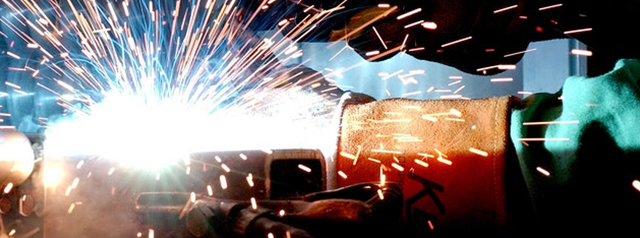
In hot forging, the billet is heated until it is incandescent. It is then placed in the die and pressed. The die also needs to be heated before the operation begins. The billet must be cut to the correct size and heated. If it is overheated, it will melt, and if it is underheated, it will not take the proper shape.
During the forging process, an oxide crust (scale) is produced. It is thrown out of the die, making adjustment very difficult.
Usually, the upper and lower parts of the die are positioned without much precision and one piece is pressed. Then the dimensions are measured, the deviation is corrected and the height adjusted. By processing two or three pieces this way, the die is adjusted. The set-up time in forging is the longest of all.
Replacing the die and making the first good piece takes a long time. That is why, in forging, if large lots are not produced, the financial result is a loss. The forging set-up is the most costly.
Right at that time (1974), Toyota do Brasil acquired a forging press and all forged parts began to be made in-house. More than 60 types of parts had to be forged on a single press.
Production in Brazil was 2 to 3 vehicles a day, and that was the smallest vehicle factory in the world. Even though monthly production now (1982) reaches 400 vehicles, at that time (1974) it was only 40 units a month. As a consequence, there were no forging suppliers in Brazil willing to supply Toyota.
Orders of at least 1000 pieces are common. Just 2 or 3 pieces had no delivery forecast. Producing 1000 pieces of each of the more than 60 items would have meant inventory for many years.
With a daily need of 2 pieces and a monthly need of 40, talking about 1000 pieces without knowing when they would be supplied - perhaps it would take half a year - and waiting in that situation was not possible for a company that was already running a deficit. Enough was enough. 1 press was acquired and all of the more than 60 items began to be produced on that press.
However, no more than 1 O pieces should be produced at a time. If the set-up takes 1 hour and the set-up is done 8 times in an 8-hour day, production is zero.
Therefore, I ordered that it be done in 15 minutes. If it is done in 15 minutes and the part is produced for 15 minutes, 2 types of parts can be made in 1 hour. Doing it this way, 16 dies can be processed in one day. And if there are 60 types of parts, all the parts can be made every week. And that is how the forging set-up was studied at Toyota do Brasil.
Fortunately, Toyota do Brasil had assigned a Japanese man hired there as supervisor. If I spoke with conviction, he believed it could be done. In Japan, speaking the same way, there is reluctance: "You say that, but in reality it can't be done..."
In Brazil, if an arrogant guy with a mustache coming from Japan says "do it", the person thinks it can be done and does it. In Japan, they think it can't be done and do nothing. There is a tremendous difference in attitude.
Thanks to this willingness, the die change was achieved within ten minutes. To do so, several suggestions were made: leave the die prepared outside the press - that is, external set-up - and make the change quickly. By doing this, after a few minutes, the next product comes out.
In forging, because of the scale, it is not possible to leave the guides in place. If the scale sticks to the guides, they burn. And without guides, good-quality forgings do not come out from the first blow. So it was decided to fit the guides anyway.
These guides are not used during forging. They are only used for the external set-up. The height is also adjusted during the external set-up. Using the guide, a good part can be forged from the first blow.
If 2 rejects are made every time 10 pieces are produced, that is a very serious problem. The dies were manufactured in Japan, but all the guide pins were fitted in Brazil. And so, if everything goes well, we will have all types of parts processed on a single press with no part shortages.
Because of the above, this time the reverse was done. Groups of 2 to 3 people were sent to Brazil to study the forging set-up. Thanks to this, in Japan we also put it into practice quickly.
In Brazil, casting is not so difficult. This is because in casting the molten iron flows into the Mold, and it is possible to make different parts, one by one. If the same model is made continuously, the illusion of better efficiency is created. But, depending on the part, there is a difference in material.
There is malleable cast iron and gray cast iron. When casting, if the lot is large, the same type of iron is cast in large quantities. Because the material is different, casting in small quantities is not rational, since it uses a lot of labor, time and heat.
At TMC (Toyota Motor Corporation - Japan) the volume is growing and quantities of 1000 or 2000 pieces are manufactured at once. Because of this, the set-up in casting is no longer a concern.
But at Toyota do Brasil, many different parts are made in small quantities. To do this in melting, the common material is melted and additives are added. This makes it possible to produce small lots. This was also conceived and developed in Brazil.
In this respect, honestly, Toyota do Brasil is a model case, or the best test factory for manufacturing small quantities of a wide variety. It is the place where the best TPS is practiced.
If the volume becomes like that of Toyota in Japan, the positive point is that it becomes self-fulfilling. For any type of vehicle and any type of part, the line is already ready and, honestly speaking, there is no need to do set-ups.
Even in stamping, the need to do a set-up every 5 or 10 sheets has disappeared, which is why I believe the best TPS is practiced at Toyota do Brasil.
When Producing small quantities, it cannot be done as cheaply as in large-scale production. In traditional reasoning, small quantities would generate a large loss. But with this system, it has been showing a profit.
The fact is that, when we started using TPS, Toyota was manufacturing a variety of models at a volume of 3000 to 5000 a month. It was not a high-variety, low-volume operation - it looked more like medium volume (although, obviously, some products were manufactured in low volumes).
Originally, then, TPS was a wonderful system used in a medium-sized company. The Toyota System, in other words, matured while being used in the production of 2000 to 3000 vehicles. But modern high-volume production, as at today's Toyota, manages to produce cheaply even without using the system.







