

A lean hospital Pharmacy
By Maisa Cabete, physician and General Director of HEAB, Bruna Carolina Corrêa, pharmacist and supervisor of the HEAB Pharmacy, Paloma Rubinato and Daniel Henrique Ramos, respectively head of Healthcare and Lean Healthcare specialist at Lean Institute Brasil (LIB)
One of the great challenges of managing a large hospital has always been achieving a sustainable synergy between the “whole” and the “parts”. In other words, given the high complexity of this type of organization, it is not enough to have efficient “macro” management if the different departments do not also have well-designed processes, with employees eliminating waste every day, surfacing and solving problems and seeking to increase value creation in everything they do.
Of course, this is not an easy equation to solve. However, Hospital Estadual Américo Brasiliense (HEAB), located in the city of the same name, in the interior of São Paulo state, recently took a firm step in this direction: it bet on implementing the lean system in the institution's Pharmacy.
It is one of the most “sensitive” departments with regard to patient safety and care, going far beyond simply delivering medications. It is responsible for the complex management of the pharmaceutical care cycle, which runs from standardizing medications that meet patients' needs, through scheduling, purchasing, storage and prescription, to dispensing. It needs to generate clinical integration, in which pharmacists must collaborate daily with the medical teams to prevent drug interactions and medication errors, optimizing therapeutic success and ensuring the rational use of medications.
The HEAB pharmacy operates 24 hours a day and its main purpose is to meet the demand of 76 inpatient beds, including those of the Intensive Care Unit (ICU) and the wards, as well as supporting procedures in various areas such as endoscopy, the specialty outpatient clinic (AME) and the surgical center. To do this, the pharmacy has a team of seven pharmacists, along with a supervisor, 16 pharmacy technicians and an administrative officer.
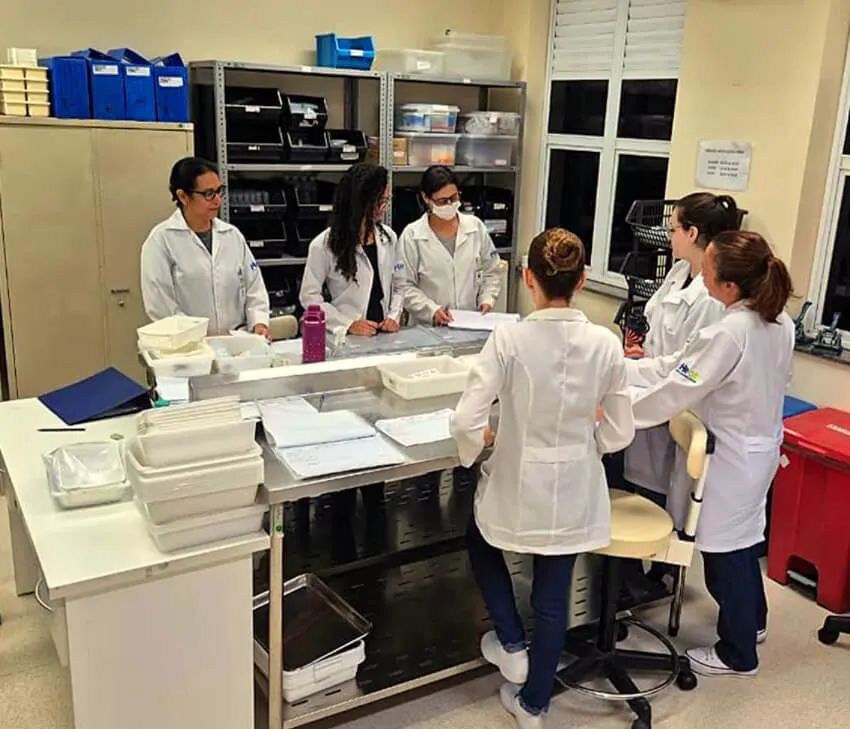
The Pharmacy's “pain points”
Before the lean system was implemented, the team felt overwhelmed by rework and wasted time. One example was the labeling of large quantities of low-consumption medications that unnecessarily took up space in the stockroom, while the most used ones went unlabeled. Other problems were unnecessary transportation and movement of medications. There were also medication purchases based on one-off consumption peaks that were not sustained, wasting resources and time.
In this context, the adoption of the lean system began in this department about three years ago with Value Stream Mapping (VSM), one of the main lean concepts and practices for revealing problems. The mapping revealed a series of unnecessary processes and bottlenecks. As a result, the pharmacy team adopted countermeasures inspired by lean concepts and practices. A striking contrast then became clear between the traditional management model that existed there and the more efficient management that needed to emerge.
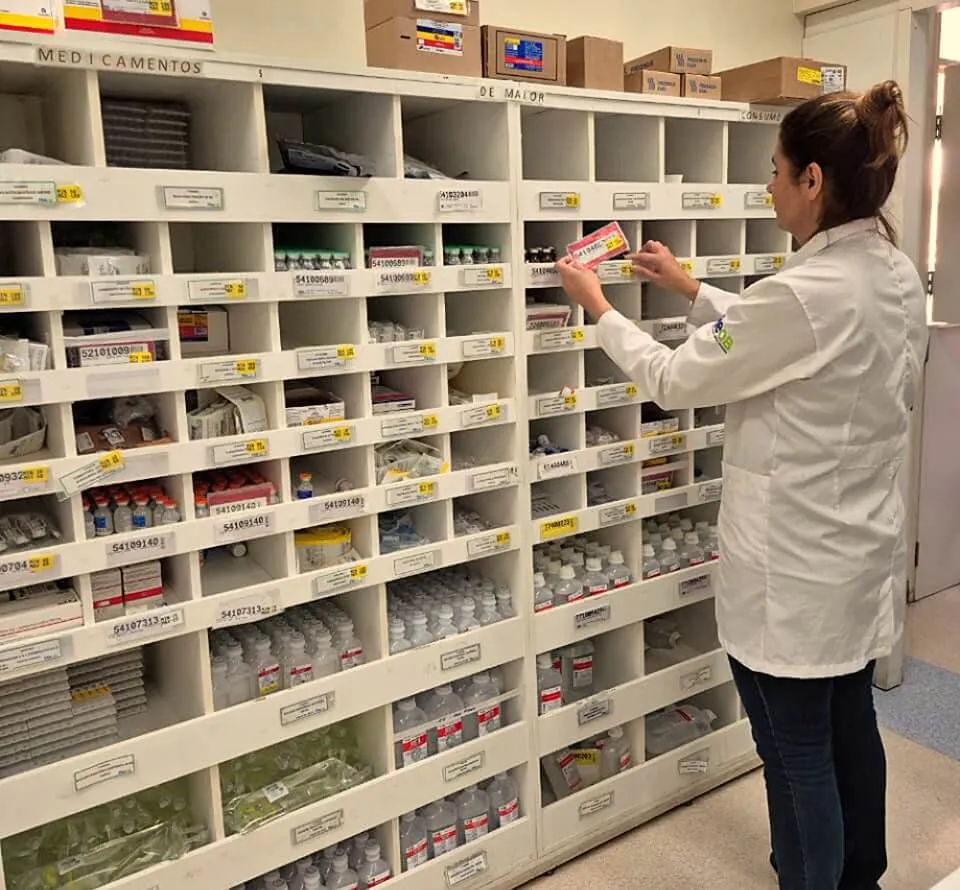
Before and after
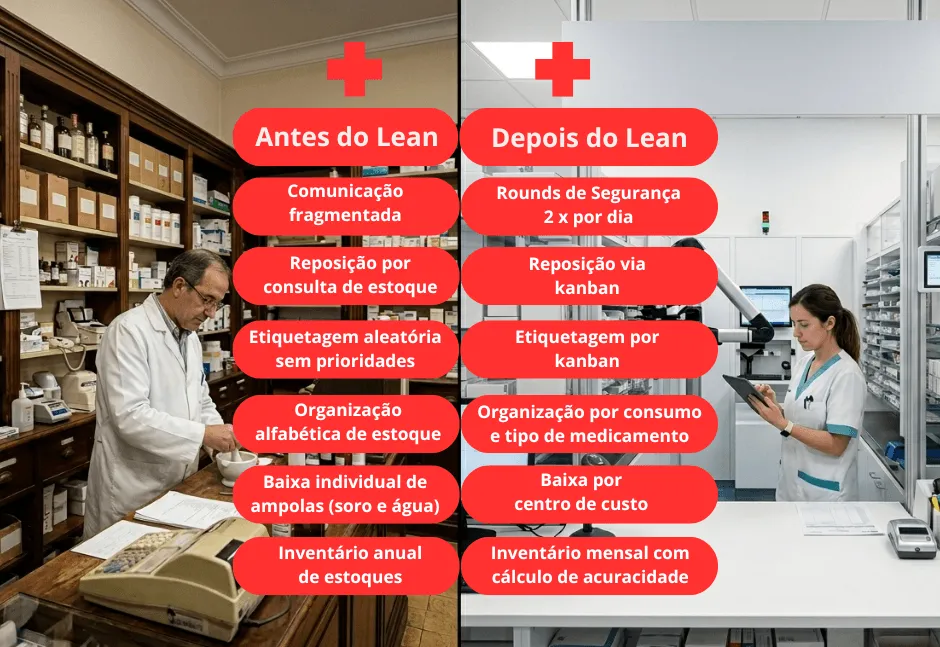
Before lean, the professionals' routine was “guided” by fragmented communication between people, mostly dependent on random personal contacts or sporadic exchanges in WhatsApp groups. This often resulted in the loss of important information, a lack of more in-depth discussions and, consequently, a lack of alignment among team members.
After lean, this scenario gave way to Daily Safety Rounds, brief meetings among the professionals of a team, also known as Safety Huddles, held at least twice a day, which aim to anticipate risks and align hospital operations in real time. Unlike traditional administrative meetings, they usually take place in front of visual management boards, focusing on the immediate identification of problems so that solutions can be devised and carried out quickly.
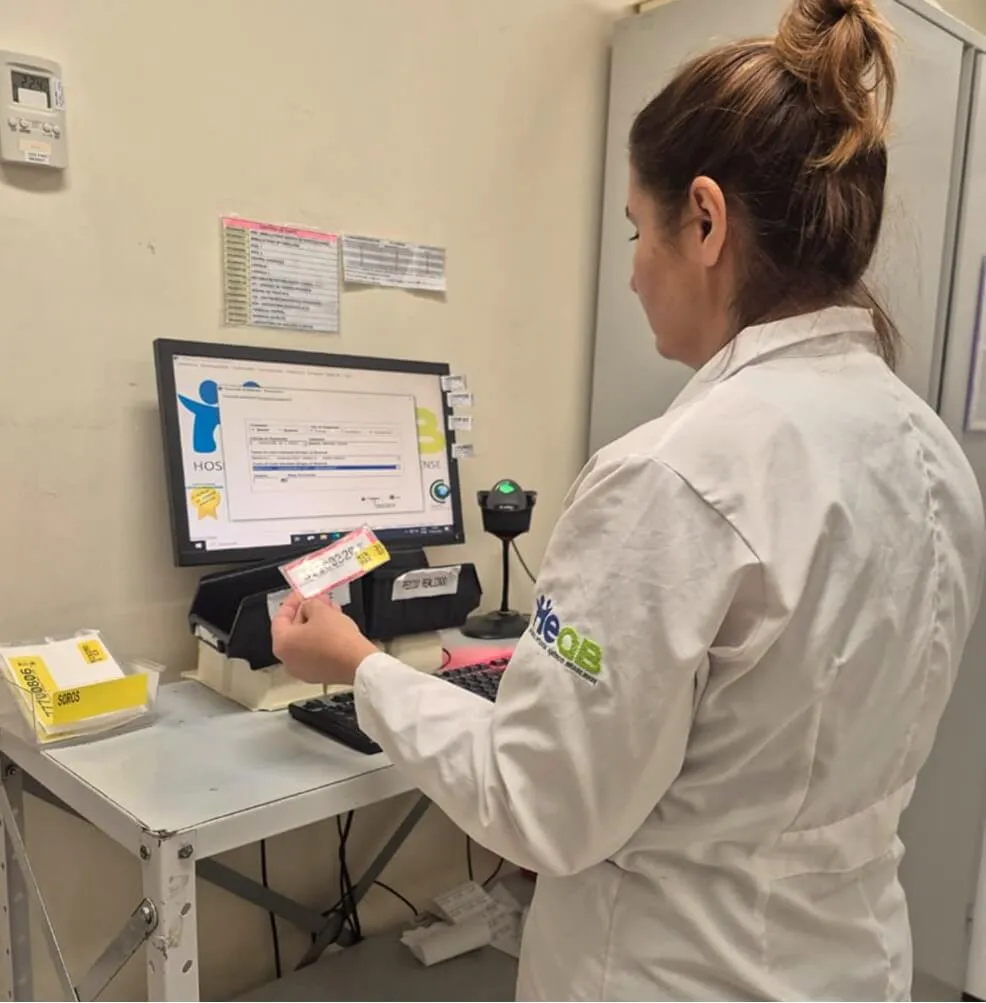
kanban, one of the main lean practices, a visual management method that uses cards or signals to control the flow of work and stock replenishment, ensuring that items are produced or delivered only when there is real demand, avoiding excess and bottlenecks.
At the HEAB Pharmacy, this practice replaced that typical fragmented communication with a centralized and transparent flow of information. This strengthened the safety culture and helped the team develop more harmony and alignment to prevent errors before they occurred.
This change in mindset also changed the replenishment of medications. Before lean, it was necessary to check stock and consumption manually, item by item, every week. This changed drastically with the implementation of the kanban system, one of the main lean practices, a visual management method that uses cards or signals to control the flow of work and stock replenishment, ensuring that items are produced or delivered only when there is real demand, avoiding excess and bottlenecks.
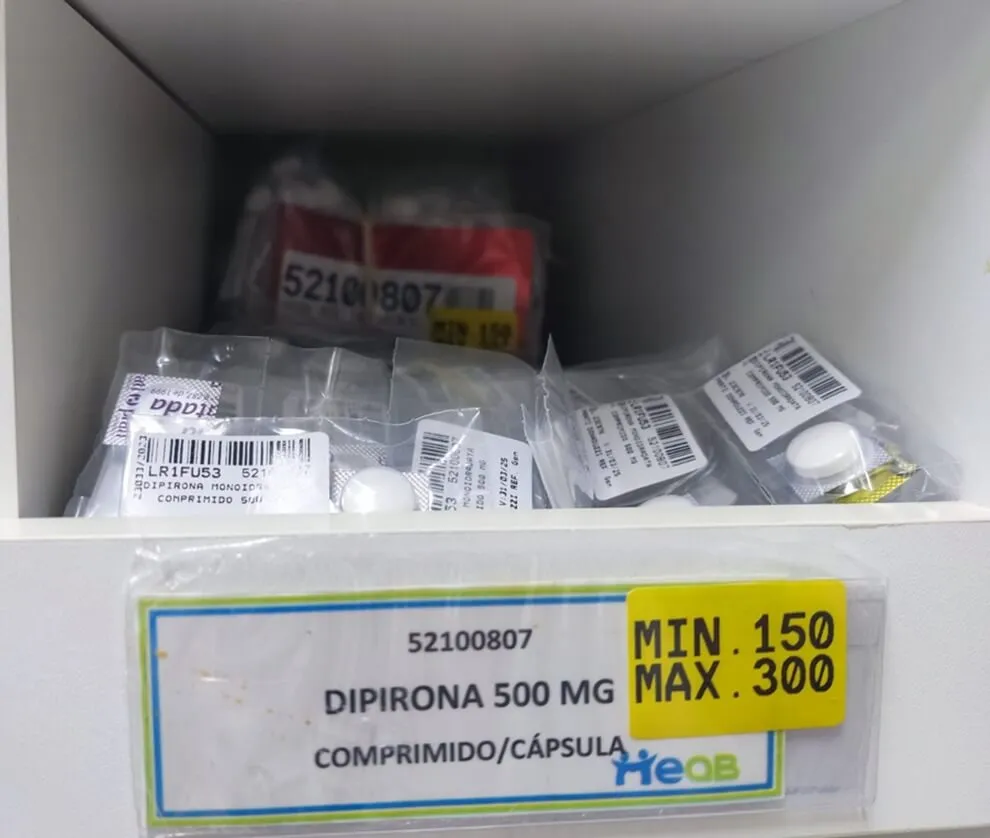
Applied to the replenishment of medications, kanban automated the restocking of the most consumed medications through the use of cards that began to signal when stock was at “minimum”, triggering automatic replenishment without the need for bureaucratic, time-consuming and laborious interventions.
Task prioritization also underwent a metamorphosis at the HEAB Pharmacy. The labeling of medications – which previously happened without criteria and caused the accumulation of slow-moving items while essential ones were lacking – also came to be based on kanban, so that medications were only labeled when necessary.
Even the physical space of the medication stockroom was rethought. The old alphabetical organization of products, which sometimes forced people to make repetitive trips, was replaced by grouping according to a different logic: by consumption groups and outpatient use. This also reduced picking time.
Exhausting manual processes, such as individually writing off ampoules of saline and water per patient – that is, the bureaucratic process of recording in the hospital system each unit of saline or ampoule of distilled water used specifically by patient X or Y –, were simplified into a single record per cost center at the time of replenishment, eliminating steps that did not add value. Thus, instead of the employee entering into the computer "1 ampoule for João, 1 for Maria, 1 for José...", which generated hundreds of clicks a day, the system began to record only the withdrawal by batch.
Finally, stock control, which used to be done through annual and imprecise inventories, was consolidated with monthly inventories and accuracy calculations, ensuring rigorous precision for every item stored in the hospital. This change marks the transition from a "reactive" model to one of preventive control. In the old system, since the inventory was taken only once a year, the hospital only discovered stock irregularities months after they occurred, making it slow, laborious and almost impossible to trace the cause of the error. With monthly frequency, failures are detected and corrected almost in real time.
In addition, the accuracy calculation became a metric that validates this process: it compares what the system says exists with what is physically on the shelf. If the system indicates 100 ampoules and the physical count reveals 100, accuracy is 100%. When this rate is high and constant, the hospital gains the confidence to reduce safety stocks (which tie up money) and ensures that no procedure is canceled due to an unexpected shortage of supplies.
A pharmacy that delivers results
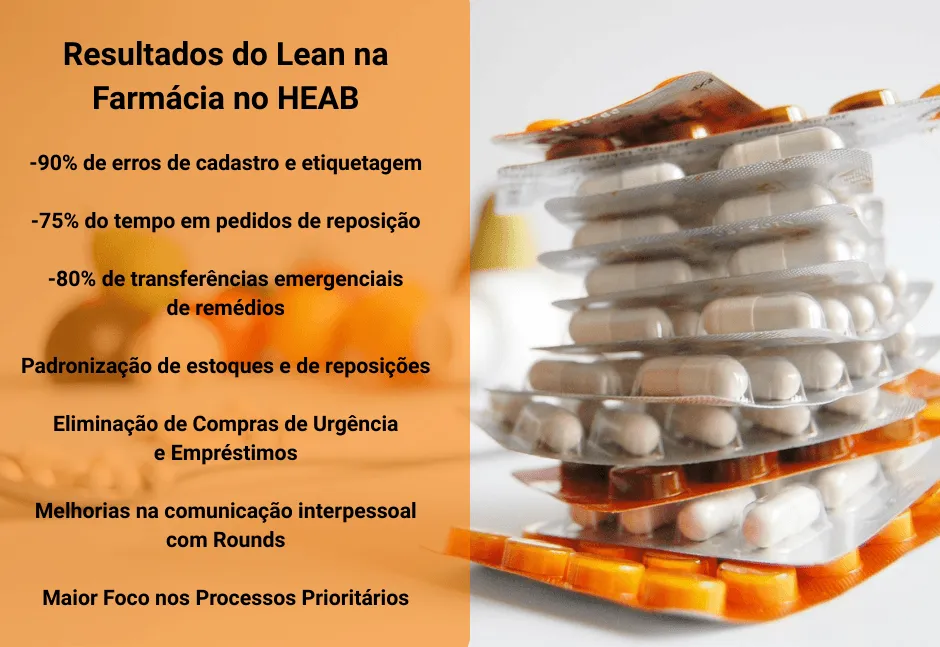
Almost three years after the lean implementation, the results have been remarkable. The transformation journey in the hospital pharmacy resulted in significant advances, starting with a drastic reduction in errors, with a 90% drop in batch and expiration date registration failures at the Pharmaceutical Supply Center (CAF), as well as a 90% reduction in labeling errors.
This transformation was accompanied by remarkable time savings, reducing the time devoted to picking medications at the central pharmacy by about 75%. Logistics efficiency was also optimized, achieving an 80% reduction in the number of unscheduled emergency transfers between the CAF, where the main medication stock is kept, and the hospital's central pharmacy.
All this progress enabled a more efficient organization of the medication control and resupply process. With standardized labeling, stock accuracy and the use of the Kanban system, the need for urgent purchases and unjustified medication loans was practically eliminated.
In relationships between people, communication was strengthened by the Daily Safety Rounds, which concentrated and recorded vital information, ensuring that the whole team was aware of challenges and priorities. As a result of this restructuring, the optimization of routine tasks gave the team more time to devote exclusively to the pharmacy's priority processes.
A “living” pharmacy
This HEAB experience is naturally of great value to the hospital, but it is also an important example for Brazilian healthcare. According to data from the National Registry of Health Facilities (CNES) and the Federal Pharmacy Council (CFF), there are currently between 7,200 and 7,400 hospitals in Brazil (public, private and philanthropic). And since the presence of a pharmacy service is required by law for a hospital to operate, the number of hospital pharmacies existing today is estimated at about 7,300 central units.
If the pharmacies of UPAs (Emergency Care Units) and Health Centers that dispense medications 24 hours a day are included in this count, the number rises considerably, exceeding 15,000 hospital/clinical pharmaceutical care points. This is a more than essential healthcare structure, whose management efficiency needs to be a priority.
This experience of change at HEAB is “living” proof of the power of the lean system to transform the traditional management of such an important department. By focusing on eliminating waste and optimizing processes, the hospital not only improved efficiency and safety, but also empowered the team, which previously felt overwhelmed.
This shows that, with a careful analysis of the "pain points" and a correct application of lean concepts and practices, it is possible to achieve significant results that directly impact the quality of care provided to patients, and to turn a sector as socially relevant as the pharmacy into a truly strategic, humane and care-focused center. In other words, a “lean pharmacy”.







