
8 tips for “passing the baton” to suppliers and customers
In other words, you can have four amazing athletes in a relay race, but if they fumble the handoffs, they won't win. In a supply chain, the handoffs are also the moments when you are most likely to drop the “baton.”
Handoffs occur when supplier processes connect to yours, when your processes connect to customers, when wholesalers connect to retailers, and so on. Processes at the handoffs often have little visibility and discipline.
The scope of the end-to-end supply chain
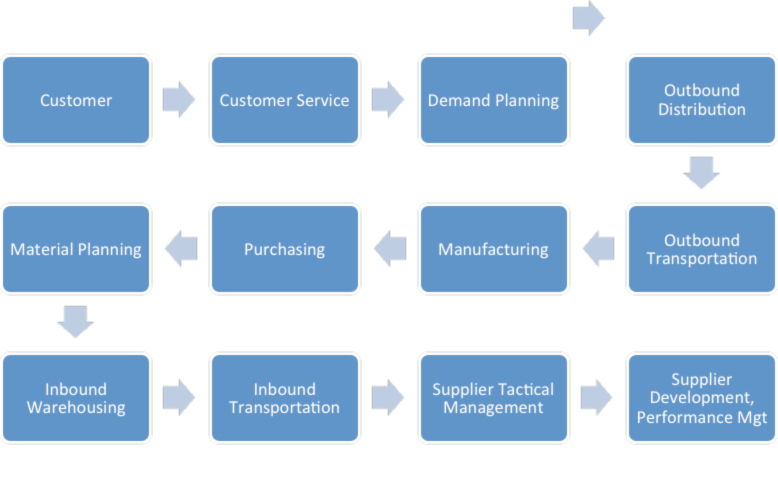
For example, a retailer focused on lowering transportation costs may order in large quantities. The handoff between the retailer and the supplier is then driven by transportation, which will be full of waste, because the supplier is building batches to meet the quantities needed to fill the truck, but those quantities have nothing to do with actual customer demand.
Another example is a plant that doesn't share its production forecasts or doesn't have a disciplined production schedule. Suppliers have to guess what to make, creating a lot of waste when they guess wrong.
Guiding principles for rethinking supply chains
Forward-thinking organizations are now focused on the total cost of fulfillment, end to end, because they are recognizing that waste exists not so much within the supply chain functions but largely at the interfaces where each node connects to the next. This means these leaders are now looking at their supply chains through the lens of how customers consume their product, from the start, looking back through distribution, production, and inbound logistics into their supply base.
As companies do the end-to-end analysis, they begin to question their offshoring strategies, but the goal is not offshoring, nearshoring, or reshoring. The goal is to have the most efficient end-to-end supply chain.
Because supply chains are long and dynamic, you will need to follow eight lean principles that will guide you in analyzing and improving the handoffs with suppliers and customers:
1. Eliminate the seven types of waste in the fulfillment stream so that only value remains:
- System complexity: elaborate scheduling systems and disconnects between the formal schedule and actual needs.
- Lead time: too much time between one step and the next.
- Transportation: excessive transportation between facilities and companies.
- Space: excessive storage space is waste.
- Inventory: at any point in the fulfillment stream.
- Wasted human effort: rework, confusion, and excessive motion.
- Packaging: the wrong types of products in the wrong quantities.
2. Make customer consumption visible to all members of the fulfillment stream so that it is easier for all participants to plan work according to the pull of customer demand.
3. Reduce the lead time of outbound logistics to deliver to the customer faster.
4. Create level flow so that products and information move predictably, consistently, and without interruption based on actual demand.
5. When level flow isn't possible, use pull systems in which each downstream activity can signal its need to the next upstream activity.
6. Increase velocity and reduce variation so you can more easily adjust delivery to match actual customer consumption.
7. Collaborate and use process discipline so that all participants in the value stream are identifying problems through root cause analysis.
8. Focus on the total cost of fulfillment. Be careful not to make decisions that benefit one part of the supply chain at the expense of another.
The lean supply chain relentlessly focuses on reducing lead time by eliminating non-value-adding activities (waste). This is made possible through rigorous process discipline, inventory reduction, and first-time quality.
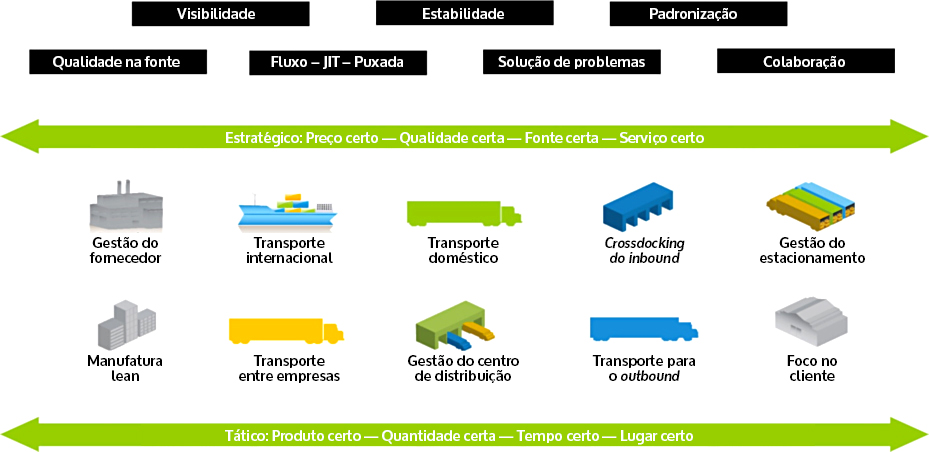
So, if your company has made lean improvements within its four walls and is wondering why it isn't improving further, the answer is that the biggest opportunities now lie in the supply chain – where the baton can be dropped.
The views expressed in this article do not necessarily represent the views or policies of the Lean Enterprise Institute.